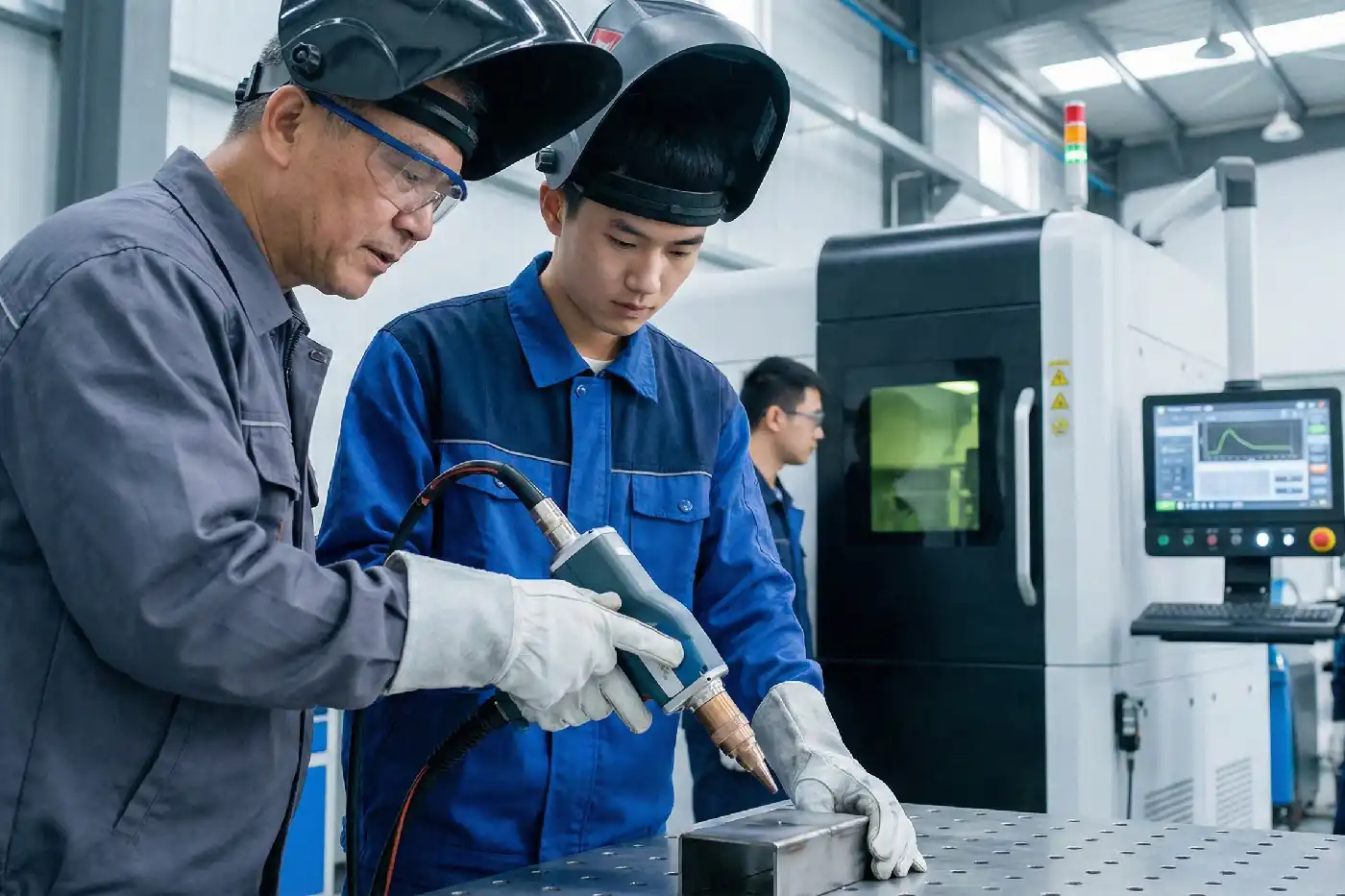
You get the best training for laser welding workers with a step-by-step, hands-on program. This way, you learn safety rules, practice skills, and get help when needed. A safe workplace needs training that fits the system you use.
- You must take training classes to learn about safety before using laser welding systems.
- You should take refresher classes often to remember safety rules.
- If you follow ANSI Z136, OSHA, and ISO 11553 rules, you stay safe and lower risks.
Key Takeaways
- Good laser welding training teaches safety and lets workers practice. This way, workers feel sure and learn skills for real jobs.
- Workers need to take safety classes often. These classes help them remember safety rules and stop accidents at work.
- Workers must know about laser types and dangers. If they know the risks, they can follow safety steps the right way.
- Practicing with real tools helps workers learn better. Workers should spend most of their training time practicing. This helps them get better and make fewer mistakes.
- Putting parts in the right place and taking care of tools is important. These steps help workers make better welds and have fewer problems.
Why Effective Laser Welding Training Matters
Productivity Benefits
When you spend time on good laser welding training, you help workers do better. Skilled workers can use advanced machines and keep things running. If you know how to set up and use machines, you make fewer mistakes. This keeps work moving fast.
Laser welding needs workers who are trained and have experience. If there are not enough trained workers, the welding quality and speed will drop.
In car factories, laser welding helps make strong and quick welds. This technology can make work go over 30% faster. You also get better welds and waste less because laser welding is very exact.
Laser welding lets you weld tiny parts with great accuracy. This is good for small pieces that need careful work. Being exact means you waste less material and get better results.
Safety Improvements
You keep yourself and others safe by following safety training. Good training helps you see dangers and use tools the right way. Companies with safety programs have fewer accidents and save money.
| Statistic Description | Reduction in Workplace Injuries |
|---|---|
| Companies with comprehensive safety training | 50% |
| Construction sites with safety training | 35% |
| OSHA Outreach Training (union carpenters) | 13% (not statistically significant) |
| Financial return on investment | $4.41 saved for every $1 spent on safety training |
| General industry savings | $4-$6 saved for every $1 invested in safety programs |
A strong safety program helps you follow rules and keeps work going well.
- A good laser welding safety program helps you follow rules, stop injuries, and work better.
- Trained teams can spot dangers, follow safety steps, and handle problems well.
Workforce Readiness
You get ready for real jobs by practicing laser welding. New labs have modern machines and simulators to help you learn. At the Washington County Career Center, students use AR simulators and make their own welding tables. This helps you get ready for tests and real jobs.
- Using real tools and AR training makes you better and more sure of yourself.
- Learning what AWS SENSE says you need helps you get ready for tests.
- Learning skills step by step helps you get better and more confident.
Laser Welding Safety Fundamentals
Laser Classifications
You need to learn about laser types before you start. Each type has its own dangers. Safety rules like IEC 60825-1 sort lasers by how risky they are. Here is a table to help you see the differences:
| Laser Class | Description | Risks |
|---|---|---|
| Class 1 | Safe for eyes in all operations | No risk |
| Class 1M | Safe for viewing, but risky with instruments | Risk with magnified viewing |
| Class 2 | Safe unless stared at | Eye injuries possible |
| Class 2M | Safe unless viewed with instruments | Eye hazards possible |
| Class 3R | Higher risk, safe with care | Eye injuries possible |
| Class 3B | Must avoid direct contact | Eye injuries and skin burns possible |
You should always check your laser welding system’s class. This helps you choose the right safety steps.
Hazard Recognition
There are many dangers in a laser welding area. These can hurt you if you ignore safety rules. Some common dangers are:
- Direct laser radiation and toxic fumes
- High-voltage parts and faulty wires
- Moving machine parts and robots
- Toxic fumes from certain materials
- Fire from hot surfaces or sparks
- Repetitive motion and stress
- Poor air quality from bad ventilation
You can stay safe by wearing protective gear. Good ventilation helps you breathe clean air. Keep your work area neat and clean. Always follow safety training and rules.
Beam Path Awareness
You must know where the laser beam goes at all times. This keeps you and others safe. Here are some smart steps:
- Wear certified safety glasses and long sleeves
- Keep flammable things away from your workspace
- Learn where emergency stop buttons are
- Use shields or curtains to block the laser beam
- Keep your work area tidy
Tip: Safety starts with you. Always check your tools and workspace before you begin.
If you follow these steps, you lower accident risks. This makes laser welding safer for everyone.
Practical Skills Development
Hands-On Training
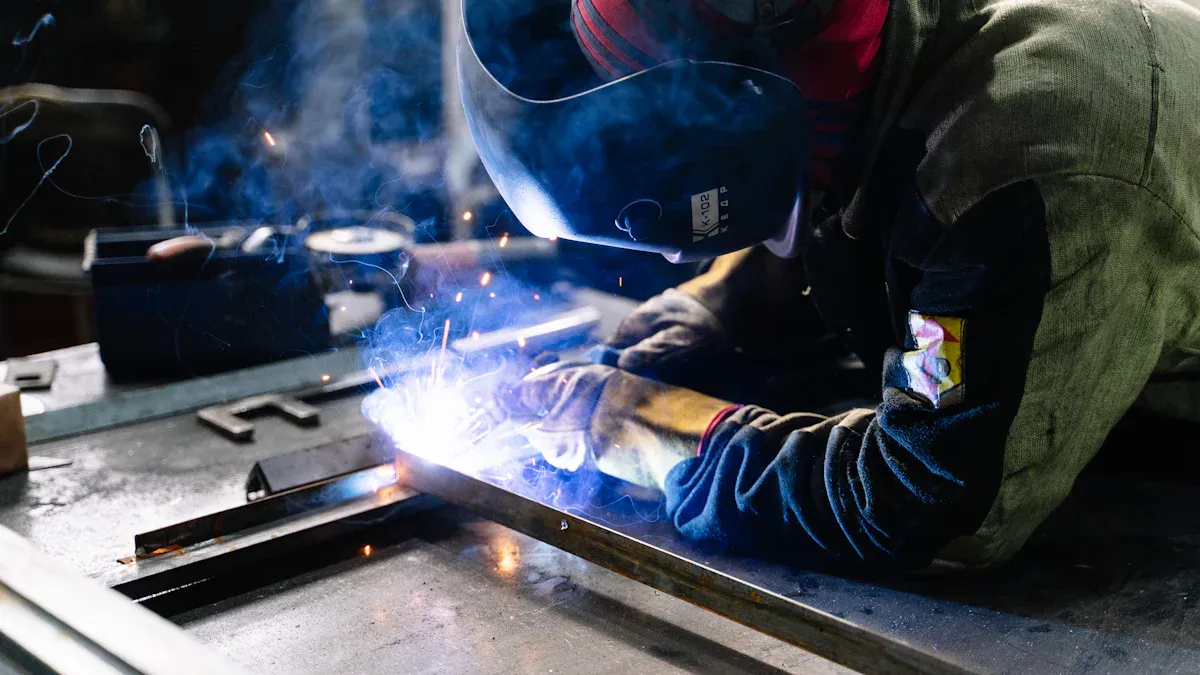
You learn best when you practice with real tools and real parts. Hands-on training helps you build technical skills and solve problems you will face on the job. When you work with experienced welders, you pick up tips and tricks that books cannot teach. On-the-job training lets you see how laser welding works in real situations. You get to try different welding techniques and learn how to fix mistakes.
- You gain practical experience by working in workshops and on-site sessions.
- You remember skills better when you spend more time practicing and less time in the classroom.
- Mentors can guide you and answer your questions as you work.
Tip: Try to spend at least 80% of your training time practicing with the equipment. This helps you remember what you learn and makes you more confident.
You should also learn the basics before you start. This means understanding how laser welding works, knowing the safety rules, and practicing the right way to use the tools.
- Learn the theory behind welding and how the machines work.
- Practice welding with different materials and settings.
- Always follow safety steps to protect yourself and others.
Welding Speeds and Penetration Control
You need to control the speed and depth of your welds to get strong, clean joints. The right welding speed depends on the material and the power of your laser. If you move too fast, the weld may not go deep enough. If you move too slow, the weld can get too wide or even sag.
| Material | Power (Watts) | Welding Speed (m/min) |
|---|---|---|
| Stainless Steel | 1000-2000 | 1-10 |
| Aluminium | 1500-3000 | 1-5 |
| Brass | 1000-2000 | 1-10 |
| Carbon Steel | 1000-2000 | 1-10 |
- Stainless steel needs moderate power and can handle faster speeds.
- Aluminium works best with high power and slower speeds to control heat.
- Brass and copper need high power and sometimes special surface treatments.
When you adjust the welding speed, you change how deep the weld goes and how wide it gets. If you go too fast, you might see cracks or holes in the weld. If you go too slow, the weld can melt too much and lose its shape.
- Higher speeds make the weld shallower and narrower, which can cause defects.
- Lower speeds can make the weld too wide and cause sagging.
- The right speed gives you strong, clean welds with fewer mistakes.
Note: Always test your settings on scrap material before you start on the real part. This helps you find the best speed and power for each job.
Part Positioning Techniques
You must hold and align your parts the right way to get good welds. If the parts move or shift, the weld can turn out weak or uneven. Good part positioning helps you make the same weld every time.
- Use clamps or fixtures to keep parts steady during welding.
- Check that your parts line up with the laser path before you start.
- Try to reduce the number of fixtures when you can. This makes your setup faster and more flexible.
Precise part holding and alignment are key for consistent weld quality. If you do not line up your parts, you might see defects or weak spots in the weld. Some shops use special tools like Variation Simulation Analysis to check for holding problems before they start welding. Others use Weld Distortion Analysis to see how heat will change the shape of the parts.
- Good fixturing keeps your parts in place and reduces errors.
- Advanced fixtures let you adjust quickly for different jobs.
- Stable setups help you get the same results every time.
Remember: Take time to set up your parts before you weld. A few extra minutes can save you from costly mistakes.
You can improve your skills by practicing with different materials and setups. Try welding thin and thick parts, and adjust your settings to see how the weld changes. This helps you learn how to handle any job that comes your way.
System-Specific Training
Equipment Operation
You have to learn how to use each laser welding machine. Every machine is a bit different. You need to practice with the real equipment you will use. Training for equipment operation covers these main ideas: You get to use the machine and see how it works. You learn to use the controls and settings for your own system. You practice being safe by learning about which materials work with your machine and how to set it up. You find out that good training helps you work faster and make fewer mistakes. You also learn that each machine might need a special way to get the best results.
Tip: Always ask questions when you are learning. This helps you stay safe and not make mistakes.
Maintenance Techniques
Taking care of your laser welding machine helps you work better and saves money. You should do these things to keep your machine working well: Watch important things like temperature and power to catch problems early. Get good training so you do not make mistakes that can break the machine. Only use good parts from the company that made your machine. Plan breaks for your machine so it does not get too hot. Upgrade your machine in small steps instead of buying a new one all at once.
A machine that is taken care of gives you better welds and breaks down less.
Material Selection
Picking the right material is important for strong welds. Each material acts in its own way when you use laser welding. You need to think about these things: Different materials have special features that change how you weld them. Thick steel needs extra care because it handles heat differently. You must check how well the material moves heat and how hot it melts before you start. Materials that move heat fast need more laser power. Materials that melt at high temperatures need more energy to weld. The thickness of the material changes how you set up your weld. Laser welding can change the inside of the metal, so you must pick the right settings for each job.
Note: Always test your welds on scrap pieces before you work on the real part. This helps you find the best settings for each material.
Overcoming Training Challenges
Preventing Operator Errors
Learning laser welding can be hard. You might make mistakes if you do not set the welding parameters right. Picking the wrong materials can also cause problems. Fast cooling and not finishing the weld well can make joints weak. You need to pay close attention to every step. The table below lists common problems and how to fix them:
| Challenge | Causes and Solutions |
|---|---|
| Insufficient strength of joints | Use the right welding settings. Pick good materials. Control cooling. Use heat treatment after welding. |
| Poor weld surface quality | Focus the laser in the right spot. Prepare surfaces well. Match speed and power. Control cooling. |
| Heat-affected zone deformation | Plan your welds carefully. Hold parts tight. Manage heating and cooling. |
| Welding cracks | Watch the welding temperature. Lower stress. Keep hydrogen away. |
| Porosity problems | Use dry materials. Keep the area clean. Change settings to let gas out. |
Tip: Always check your setup before you start. Small changes can stop big mistakes.
Managing Equipment Issues
You need to keep your machines in good shape. Regular maintenance helps you find problems early. Check your equipment for worn or loose parts. If you see something wrong, fix or replace it fast. The table below shows good ways to care for your machines:
| Maintenance Practice | Description |
|---|---|
| Regular Maintenance | Find and fix problems before they get worse. |
| Inspection | Look for worn parts, loose pieces, or anything odd. |
| Repair/Replacement | Fix things quickly to keep working and avoid stopping. |
- Take training when you start and every year.
- Learn how to use machines safely.
- Tell someone if you see anything strange.
Note: A well-cared-for machine makes better welds and breaks down less.
Reinforcing Skills
You get better at laser welding by practicing a lot. Training helps you remember safety rules and machine steps. You should take refresher classes and learn new things. Practice with different materials and setups. Ask questions and share ideas with your team. This helps everyone get better.
- Practice makes you more confident and skilled.
- Refresher classes help you remember what you learn.
- Working with others helps you learn faster.
Remember: The more you practice, the fewer mistakes you make. Stay curious and keep learning.
You can make a good laser welding training plan by using easy steps. The table below shows what experts say to do:
| Actionable Step | Benefit |
|---|---|
| Learn process and environment | Lower cost per part, higher profit |
| Build solid skill foundation | Immediate revenue impact |
| Train on your own equipment | Better results, safer operation |
Doing practice with real tools and learning safety rules helps you work quickly and safely. Keep learning new things and talk to equipment suppliers to know the latest updates.
FAQ
What safety gear do you need for laser welding?
You need safety glasses rated for your laser class. Wear long sleeves and gloves. Use shields or curtains to block the beam. Always check your gear before you start.
How long does laser welding training take?
Most programs last from one week to several months. You learn faster with hands-on practice. You should take refresher classes every year to stay sharp.
Can you weld any metal with a laser?
You can weld many metals like steel, aluminum, and brass. Some metals need special settings or surface treatments. Always test your welds on scrap pieces first.
What should you do if the machine stops working?
Turn off the power. Check for loose parts or error messages. Tell your supervisor right away. Do not try to fix the machine yourself unless you have training.
Why is part positioning important in laser welding?
Good part positioning helps you make strong, clean welds. Use clamps or fixtures to keep parts steady. Check alignment before you start. This reduces mistakes and improves quality.
What You Should Know About Laser Welding Cold Welding Technology
What Are the Main Components of a Laser Welding Machine
How to Fix Black Smoke Issues in Laser Welding Machines
Step-by-Step Guide to Figuring Out Laser Machine Hourly Costs