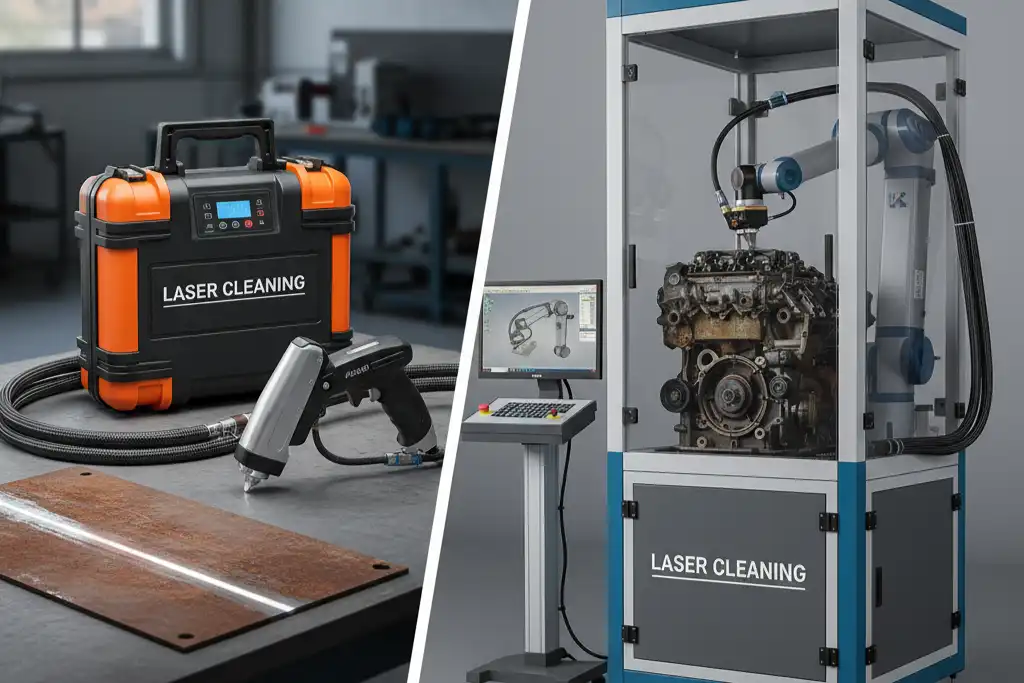
Are you trying to pick between a Portable vs Fixed Laser Cleaning Machine? You should think about how often you need to move your machine. You should also consider how precise you want your cleaning to be. Additionally, think about the type of environment you work in. Most people use portable machines for tasks like removing rust from cars. They also utilize them for cleaning molds in factories or restoring small tools. On the other hand, fixed machines are employed for larger jobs. These tasks include cleaning shipyard metals or preparing surfaces for welding. The choice between a Portable vs Fixed Laser Cleaning Machine ultimately depends on your primary tasks and the locations where you need to operate.
- Portable laser cleaners: remove rust from cars, clean molds, prepare weld seams, restore tools, maintain aerospace parts
- Stationary laser cleaners: remove heavy rust, clean large metal structures, prepare surfaces, work on factory lines, restore industrial parts
Key Takeaways
- Think about how easy it is to move the machine. Portable machines are simple to carry. Fixed machines stay in one spot.
- Think about how exact you need to be. Portable machines are great for small, tricky spots. Fixed machines work well for big jobs and give steady results.
- Look at how the machine works. Portable machines need someone to use them by hand. Fixed machines often work by themselves with robots or computers.
- Think about how much cleaning you need to do. Portable machines are good for small jobs. Fixed machines clean a lot at once and do it well.
- Pick the right machine for your workplace. Portable machines are good for fixing things on-site. Fixed machines are best for factories and making lots of things.
- Check how strong the machine is. Tough jobs need more power. Portable machines usually have 100W to 6000W. Fixed machines can go over 12000W.
- Think about how hard it is to set up. Portable machines are easy to set up. Fixed machines need more planning and safety steps.
- Think about how much money you will spend over time. Portable machines cost less at first. Fixed machines may save more money if you clean a lot.
Portable vs Fixed Laser Cleaning Machine: Key Differences
Comparison Overview
When you look at a Portable vs Fixed Laser Cleaning Machine, you see they are not the same. The table below helps you compare them quickly:
| Feature | Portable Laser Cleaners | Fixed Laser Cleaners |
|---|---|---|
| Mobility | Light and simple to move | Stays in one place, not easy to move |
| Operation | You use your hands or simple controls | Runs by itself, uses robots or computers |
| Precision | Good for small and hard-to-reach spots | Works well for big jobs that repeat |
| Speed & Volume | Slower, best for fewer tasks | Fast, good for lots of work |
| Usability | Fits in tight or strange spaces | Great for cleaning many things often |
| Application Context | Used for fixing, restoring, or repairs | Used in big factories or production lines |
| Efficiency | Quick to set up and change jobs | Works by itself, gives steady results |
Portable machines are easy to move and use in many places. Fixed machines are fast and do the same job again and again with good accuracy.
Main Distinctions
Here are the main things to think about when picking a Portable vs Fixed Laser Cleaning Machine:
- Mobility: You can take portable machines almost anywhere. They are good for jobs at different places or spots that are hard to reach. Fixed machines stay in one spot, like a workshop or factory.
- Precision: Portable machines help you clean small or tricky areas. You can reach corners or odd shapes. Fixed machines are best when you want the same result every time, like on a line that makes things.
- Automation: You control portable machines by hand or with easy buttons. Fixed machines often work by themselves, using robots or computers.
- Consistency: Fixed machines clean the same way every time. Portable machines depend more on how you use them.
- Application Environment: Portable machines are good for fixing old tools, cleaning cars, or doing repairs at different places. Fixed machines are best in big places like factories or shipyards where you need to clean lots of things quickly.
Tip: If you need to move a lot or work on many different jobs, a portable machine is a good choice. If you want to clean many parts every day and want the same result, a fixed machine can help you save time and work.
When you think about Portable vs Fixed Laser Cleaning Machine, look at where you work, how much you need to clean, and how much control you want. This will help you choose the best machine for your needs.
Portable Laser Cleaning Machines
Features and Specs
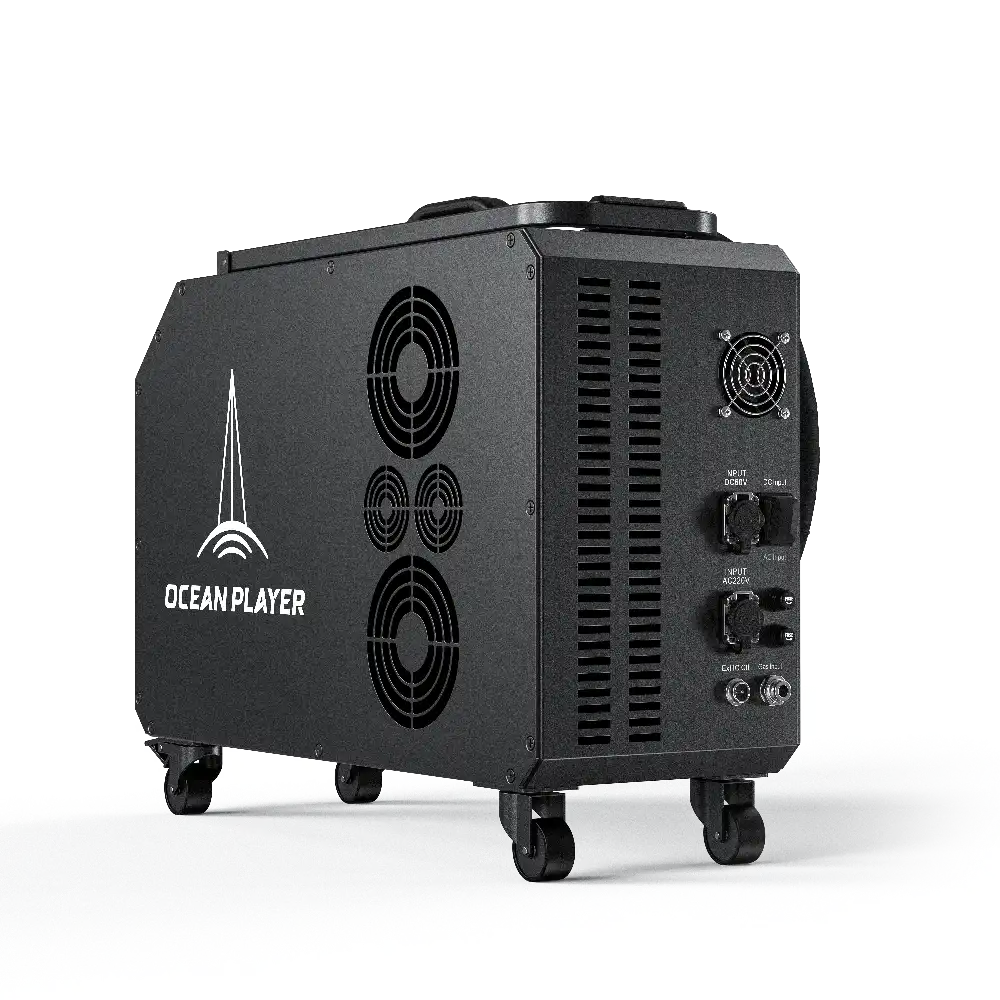
Portable laser cleaning machines are small and easy to carry. Most weigh about 38kg to 39kg. You can take them to different places. The main host is about 11kg. The cleaning head is only 2kg. The power cable is 5 meters long. This lets you reach far spots.
Here are some usual specs:
| Specification | Details |
|---|---|
| Whole Machine Weight | 38-39kg |
| Main Host Weight | 11kg |
| Clean Head Weight | 2kg |
| Machine Size | 680x430x650mm |
| Main Host Size | 404x326x132mm |
| Laser Power | 100W-300W |
| Power Consumption | 1000W-1500W |
| Power Supply Voltage | 100-240V |
| Power Cable Length | 5m |
Most portable laser cleaners use fiber lasers. Some have power stability of ±5%. You can change the beam width up to 270mm or 600mm. Many clean up to 12㎡ each hour. They work in temperatures from 5°C to 35°C. They can handle up to 75% humidity. Water cooling stops them from getting too hot.
Use Cases
Portable laser cleaning machines are great for moving around. They work well in tight spaces. You can use them in many jobs. Car repair shops and art studios use them.
On-Site Repairs
You may need to clean rust off a car part. You might remove paint from a metal beam at a building site. Portable laser cleaners make these jobs simple. You can bring the machine to the spot. In factories, you clean tools and molds without moving big machines. In aerospace, you clean sensitive parts right where they are.
| Industry | Applications |
|---|---|
| Manufacturing | Tool & mold cleaning, paint stripping |
| Automotive | Cleaning metallic components |
| Aerospace | Cleaning sensitive materials |
| Electronics | Surface preservation |
Restoration Tasks
If you work with old buildings or art, cleaning is important. You want to clean without hurting anything. Portable laser cleaners help you remove dirt, rust, or old paint. You can clean statues, stone, or metal. Museums and conservation teams use these machines. They restore old things and keep them looking nice.
| Industry | Applications |
|---|---|
| Art Restoration | Cleaning historical buildings and artifacts |
| Conservation | Restoration of art and historical objects |
| Food Processing | Cleaning without surface damage |
| Mold Making | Precision cleaning for molds |
Tip: If you work in many places or on delicate things, a portable laser cleaner is flexible.
Pros and Cons
Portable laser cleaning machines have good and bad points. Here is a quick look:
| Feature | Portable Laser Cleaning Machines |
|---|---|
| Versatility | High; you can adjust power and focus for many tasks |
| Cost | Lower upfront and running costs |
| Power Output | Lower; best for lighter cleaning jobs |
| Cooling System | Less advanced; may get hot if used for a long time |
| Space Requirement | Small; fits in many locations |
| Automation | Limited; you control it by hand |
You get lots of choices and save money with portable machines. They fit in small spaces and do many jobs. But they may not clean big things as well as fixed machines. If you clean large areas all day, the machine may get hot or need a break.
When you look at Portable vs Fixed Laser Cleaning Machine, think about how much you move. Think about what you need to clean and how much power you want. Portable machines are good for quick jobs and moving around. Fixed machines are better for big jobs you do often.
Fixed Laser Cleaning Machines

Features and Specs
Fixed laser cleaning machines are strong and accurate for big jobs. You can choose from many types. Each type has special features. Some machines need people to use them. Others work by themselves with robots or computers. Factories like these machines because they clean fast. They also give the same results every time.
Here are some common types and what they do:
| Machine Type | Power Range (W) | Key Features |
|---|---|---|
| Manual & Automated Laser Cleaning | 100W-3000W | Good for tricky shapes, lets you change the laser angle, easy to adjust, strong fume control. |
| Conveyor Laser Cleaning | 20W-3000W | Moves itself to the right spot, cleans all sides, made for tough places. |
| Battery Laser Cleaning | 50W-200W | Made for battery cells, keeps cool, fits special needs. |
| Door Laser Cleaning | 20W-500W | Small, saves money, cleans many spots, works in hard places. |
| Rotary Laser Cleaning | 20W-1000W | Cleans lots of things fast, easy to switch jobs, good for quick work. |
These machines clean well without touching the part. This keeps your parts safe. Fixed laser cleaners remove tiny dirt and pollution. You do not need chemicals or extra stuff. This helps the environment.
Use Cases
Fixed laser cleaning machines are best when you need to clean a lot. They work fast and give the same quality every time.
Industrial Production
You see these machines on factory lines. They fit into your work easily. Some use robot arms to clean big or odd parts. Others stay in one spot and clean all day. You can use them for car parts, ships, or electronics. They are good for jobs that need steady cleaning.
| Type of System | Description | Applications |
|---|---|---|
| Robotic Laser Arm | Cleans tricky shapes and big surfaces by itself. | Used in factories for automation |
| Heavy-Duty Stationary | Made for busy lines that need strong cleaning. | Used in big manufacturing jobs |
You might want a special setup. Many sellers help you test machines. This helps you pick the best one for your job.
Repetitive Cleaning
If you clean the same part many times, fixed machines help. They keep the cleaning the same each time. You can set them up to run with little help. This saves time and lowers mistakes.
Tip: Fixed laser cleaners are great for fast, repeat cleaning in one place.
Pros and Cons
Let’s look at what is good and bad about fixed laser cleaning machines:
Pros:
- 🚀 Cleans fast with strong laser bursts.
- 🧼 Cleans well, even tiny bits.
- 🔁 Same results every time because of digital controls.
- 🌱 No chemicals needed, so it is good for nature.
Cons:
- 💰 Costs a lot and needs skilled workers.
- 🔄 Not great for thick coatings or heavy rust; may need more tries.
- 🏗️ Hard to move—best for one spot.
Fixed laser cleaning machines are quick and give steady results. If you have a busy factory or clean many parts every day, these machines make work easier and more reliable.
Mobility and Setup
Portability
When you pick up a portable laser cleaning machine, you feel the difference right away. These machines are light and easy to move. You can carry them to different places without much trouble. If you work in the field or need to clean something on-site, you will love how simple it is to bring your machine along.
- You can perform cleaning tasks right where the problem is.
- No need to haul heavy equipment back and forth.
- The lightweight design lets you move around tight spaces or tricky spots.
- You can handle repairs and maintenance jobs on the go.
- Handheld models make it easy to reach awkward angles or corners.
If you work in car repair, art restoration, or building maintenance, you will find portable machines save you time and effort. You do not have to wait or plan for big moves. Just grab your machine and get started.
Tip: Portable laser cleaners give you the freedom to work almost anywhere. You do not need a big team or special tools to set up.
Installation Needs
Fixed laser cleaning machines need more planning before you can use them. You cannot just plug them in and start. You must prepare your workspace and make sure everything is safe and ready. Here is a quick look at what you need:
| Requirement Type | Description |
|---|---|
| Floor Loading | Make sure your floor can hold the weight of the machine and its cooling system. |
| Space Planning | Leave enough room for the machine, operators, and maintenance. |
| Infrastructure | Set up power, cooling, air supply, and fume control systems. |
| Safety Controls | Use safety enclosures and locked doors to protect everyone. |
| Fume Extraction | Install filters to catch dust and fumes from cleaning. |
| Fire Suppression | Add fire safety systems and check them often. |
| Personal Protective Equipment (PPE) | Make sure everyone has and uses the right safety gear. |
| Electrical Power | Provide steady, high-quality power to avoid problems. |
| Cooling Systems | Use air or water cooling to keep the machine from overheating. |
| Compressed Air | Have a clean, dry air supply for cleaning and keeping optics clear. |
You need to think about these things before you buy a fixed machine. It takes time to set up, but once you do, the machine works fast and steady.
Note: Fixed machines work best in places like factories or workshops where you can control the environment.
Flexibility
Portable laser cleaning machines shine when you need flexibility. You can use them for many different jobs and in many places. Their design lets you move from one task to another without much setup.
- You can clean rust, strip paint, or prepare surfaces for welding.
- The lightweight build helps you reach hard-to-access areas.
- You can work on metal, stone, or even plastic.
- These machines fit well in field maintenance, restoration, and repair projects.
If you need to switch between jobs or work in different locations, portable machines make your life easier. You do not have to worry about moving big equipment or setting up a special space.
😊 With a portable laser cleaner, you stay ready for anything. You can tackle new challenges as they come up, no matter where you are.
Power and Efficiency
Laser Output
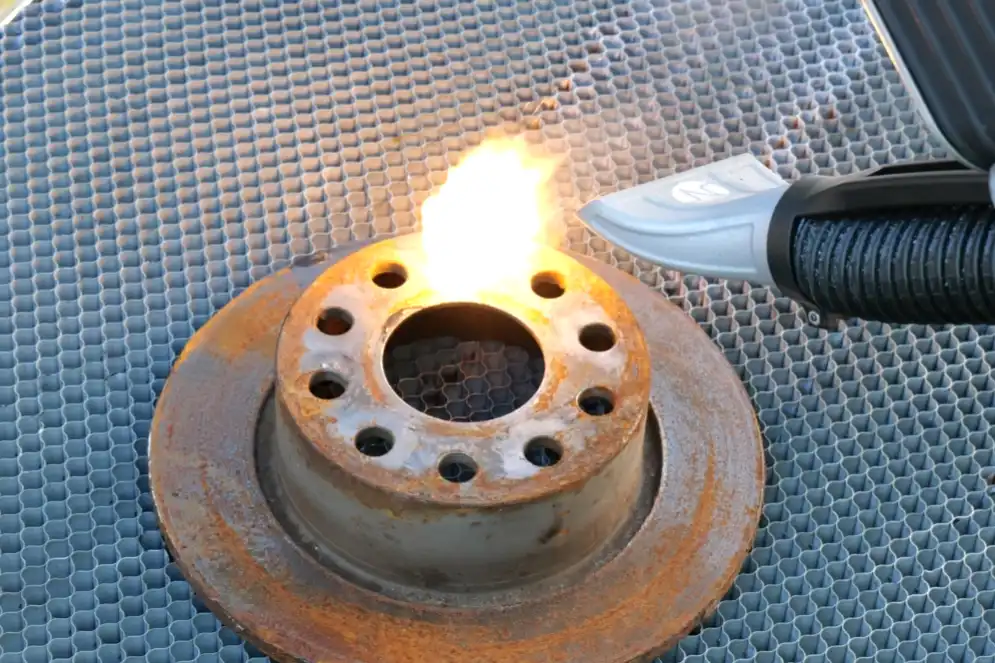
When you look at laser cleaning machines, you will notice that power matters a lot. The laser output tells you how strong the machine is. Portable machines have come a long way. Some models, like the AKQ, offer a laser power range from 1500W up to 6000W. That is a lot of power for a machine you can move around! This means you can handle tough cleaning jobs even if you are not in a factory.
Fixed machines usually have higher power options. They can go above 6000W in some cases. These machines work best for heavy-duty jobs in big spaces. You might see them in shipyards or on production lines where you need to clean large metal parts all day.
Tip: If you need to clean thick rust or paint, pick a machine with higher laser output. For smaller jobs, a lower power setting works just fine.
Here is a quick look at typical laser output ranges:
| Machine Type | Typical Laser Output Range |
|---|---|
| Portable | 100W – 6000W |
| Fixed | 500W – 12000W+ |
Cleaning Speed
Cleaning speed tells you how fast you can finish a job. Portable machines clean at a steady pace. You can expect to clean up to 12 square meters per hour with some models. This speed works well for small or medium jobs, like cleaning car parts or tools.
Fixed machines clean much faster. They can handle large surfaces in less time. If you work in a factory, you will like how quickly these machines finish each part. The speed stays the same every time because the machine does the work for you.
- Portable machines: Good for spot cleaning and small batches.
- Fixed machines: Best for high-volume, repeat cleaning.
Note: If you need to clean many parts every day, a fixed machine will save you time.
Material Suitability
Not all materials react the same way to laser cleaning. You need to match the machine to the job. Portable laser cleaners work well on metals like steel, aluminum, and copper. You can also use them on stone, brick, and some plastics. They are gentle enough for delicate surfaces, like old statues or art pieces.
Fixed machines handle tougher jobs. They clean thick rust, heavy paint, and large metal parts. You will see them used on ship hulls, industrial molds, and big machinery. These machines can also adjust settings for different materials, so you get the best results every time.
| Material Type | Portable Machine | Fixed Machine |
|---|---|---|
| Steel | ✅ | ✅ |
| Aluminum | ✅ | ✅ |
| Stone/Brick | ✅ | ⚠️ (less common) |
| Plastics | ✅ (some types) | ⚠️ (special use) |
| Heavy Rust | ⚠️ (slow) | ✅ |
😊 Always check if your material is safe for laser cleaning. If you are not sure, ask the supplier for advice.
Portable vs Fixed Laser Cleaning Machine: Applications
Best Scenarios for Portable
You may wonder when a portable laser cleaning machine is best. If you go to different job sites, you need a flexible tool. Portable machines are great where big equipment cannot fit. You can use them in car shops, airplane hangars, or outside on bridges.
Here’s a table that shows how people use portable machines in cars and planes:
| Cleaning Task | Application Areas | Benefits |
|---|---|---|
| Rust and Corrosion Removal | Automotive restoration, infrastructure repair | Makes surfaces strong again, helps parts last longer, saves time before work |
| Paint and Coating Stripping | Aircraft paint stripping, automotive coating removal | No chemicals needed, removes only what you want, keeps the base safe |
| Oxide Removal and Surface Preparation | Automotive body assembly, aerospace structures | Makes surfaces clean for welding, helps electricity flow, lowers mistakes |
| Aerospace and Defense Cleaning | Aircraft fuselages, turbine blades | Keeps parts working well, makes less toxic waste, helps parts stick together |
Portable machines help you clean rust, take off paint, and get surfaces ready for welding. You get fast results without using strong chemicals. If you fix old cars or planes, you keep the parts safe and ready.
Tip: Portable machines let you work in small spaces and reach hard spots. You save time because you do not need to move heavy things.
Best Scenarios for Fixed
Fixed laser cleaning machines are best for fast and steady cleaning. If you run a factory or do big jobs, you want a machine that stays put and works all day. You set it up once, and it keeps going with little help.
You might use a fixed machine for cleaning ship hulls, getting metal ready for welding, or taking off thick coatings from big parts. These machines fit into factory lines and do big jobs quickly.
- You get the same results every time.
- You clean large areas without stopping.
- You can use robots to help and make fewer mistakes.
If you need to clean many parts each day, a fixed machine helps you keep up. You do not have to move equipment or change setups often.
Note: Fixed machines are great for places where you need to clean a lot and want the same results every time.
Industry Recommendations
You may ask which jobs use fixed laser cleaning machines most. Here are some fields where these machines are used:
- Energy
- Construction
- Defense
- Maritime
- Manufacturing
- Transportation
If you work in these areas, you probably need a fixed machine for big cleaning jobs. You get steady work and save time on jobs you do over and over.
When you look at Portable vs Fixed Laser Cleaning Machine choices, think about where you work and how much you need to clean. Portable machines give you freedom and let you move around. Fixed machines are fast and steady for big jobs.
Cost and Value
Purchase Price
When you look at laser cleaning machines, price is usually the first thing you notice. Portable machines often cost less than fixed ones. You can find a basic portable laser cleaner for just over $2,000. If you want more power, the price goes up. Fixed machines, especially those with higher wattage or automation, can cost much more.
Here’s a quick look at what you might pay in 2024:
| Model Description | Price Range |
|---|---|
| 100 Watt Pulse Portable Laser Cleaner | $2,029.30 – $2,240 |
| Handheld Laser Cleaning Machine (1500W) | Starting at $3,800 |
| Medium-Power Laser Cleaning System (2000W) | Starting at $5,500 |
| High-Power Portable Laser Cleaning Machine (3000W) | Up to $8,000 |
Fixed machines with advanced features or higher power can go well above these prices. You might see prices in the tens of thousands for large, automated systems. If you only need to clean small parts or work in different places, a portable machine saves you money up front.
💡 Tip: Always think about what you really need. You don’t want to pay for extra power or features you won’t use.
Operating Costs
You might wonder how much it costs to run these machines. Laser cleaning machines use electricity, but they don’t need chemicals or lots of extra supplies. Portable machines usually use less power, so your electric bill stays lower. Fixed machines, especially big ones, use more energy and may need special cooling or air systems.
Here are some things that affect your costs:
- Electricity: Bigger machines use more power.
- Maintenance: Lasers need cleaning and checks, but you won’t buy chemicals.
- Parts: Sometimes you need to replace lenses or filters.
- Labor: Portable machines need someone to operate them. Fixed machines can run on their own, which saves on labor.
If you use your machine every day, you’ll see savings over time. You won’t spend money on chemicals or waste disposal. You also save time because laser cleaning is fast and needs less setup.
ROI
You probably want to know how long it takes to get your money back. Most people see a return on investment (ROI) in one to three years. Many manufacturers say they get their money back in 12 to 24 months. This happens because you spend less on maintenance, use less labor, and finish jobs faster.
Here’s why laser cleaning pays off:
- You cut down on maintenance costs.
- You don’t need to buy chemicals or pay for waste removal.
- You finish cleaning jobs faster, so you can do more work.
- Many companies in the U.S. say their laser cleaning machines pay for themselves in less than two years.
😊 If you use your machine often, you’ll see the savings add up quickly. Laser cleaning is an investment that keeps giving back.
Maintenance and Durability
Maintenance Needs
You want your laser cleaning machine to work well every time you use it. Maintenance is key. Portable and fixed machines have different needs, so you should know what to expect.
Portable laser cleaners are pretty easy to take care of. You just need to check the lens and clean it often. Dust and dirt can build up, so wipe the surfaces with a soft cloth. You should also look at the power cable and cooling system. If you see any damage, fix it right away. Most portable machines have simple parts, so you can handle small repairs yourself.
Fixed laser cleaning machines need more attention. These machines run for long hours, so you must check them often. You should inspect the cooling system, air filters, and laser optics. Sometimes, you need to replace filters or clean the fume extraction system. If your machine uses robots or computers, keep the software updated. You may need a technician for bigger repairs.
Here’s a quick table to help you compare:
| Maintenance Task | Portable Machine | Fixed Machine |
|---|---|---|
| Lens Cleaning | Weekly | Daily |
| Cooling System Check | Monthly | Weekly |
| Filter Replacement | Rare | Regular |
| Software Updates | Not needed | Needed |
| Professional Service | Seldom | Often |
💡 Tip: If you keep up with regular checks, your machine will last longer and work better.
Lifespan
You want your investment to last. Lifespan depends on how you use and care for your machine. Portable laser cleaners usually last five to eight years. If you use them gently and keep them clean, they can last even longer. You might need to replace small parts, but the main system stays strong.
Fixed laser cleaning machines have a longer lifespan. Many work for ten years or more. Factories use them every day, so these machines are built tough. You should follow the maintenance schedule and fix problems quickly. If you do, your fixed machine will keep working for a long time.
Here are some ways to make your machine last:
- Clean the lens and optics often.
- Check cables and connections.
- Keep the cooling system running well.
- Update software if your machine uses it.
- Call a technician for big repairs.
😊 If you take care of your laser cleaning machine, you will get years of reliable service. Regular maintenance helps you avoid costly breakdowns and keeps your cleaning jobs on track.
Operator Skill and Safety
Ease of Use
If you are new to laser cleaning, you want a machine that is simple. Portable laser cleaning machines are easy for beginners. You just plug them in and start working. The buttons are easy to understand. You do not have to read a big manual first. These machines fit well in your hands. You can use them for a long time without feeling tired.
Fixed laser cleaning machines are different. They have more buttons and settings. You may need to learn how to use a computer or special software. These machines are not made for comfort because they stay in one spot. If you like simple tools, portable machines are easier for you.
Here is a quick table to compare:
| Feature | Portable Laser Cleaning Machines | Fixed Laser Cleaning Machines |
|---|---|---|
| Learning Curve | Short, ‘plug and play’ | Steeper, requires training |
| User Controls | Intuitive and user-friendly | More complex |
| Ergonomics | Designed for comfort and ease | Less focus on ergonomics |
| Portability | Highly portable | Stationary |
😊 If you want to start fast, pick a portable machine.
Training
You do not have to be an expert to use a laser cleaning machine. But you still need some training. For both portable and fixed machines, you should learn a few things:
- How lasers work and why safety is important
- What each part of the machine does
- How to use the main features
- How to follow safety rules at work
- How to do simple fixes and care
Portable machines are quicker to learn. You can pick up the basics fast. Fixed machines take longer to learn because they have more features. If you work in a factory, you might need to take a class before using a fixed machine.
Tip: Always ask for a lesson or demo before using a new machine.
Safety Zones
Safety is very important with laser cleaning, especially with fixed machines. You need to set up your workspace the right way. This keeps you and your team safe from laser beams and fumes.
Here are some key safety steps for fixed laser cleaning machines:
| Safety Measure | Description |
|---|---|
| Workspace Design | Block off the area with signs and warning lights. Only trained people enter. |
| Protective Measures | Use matte walls to stop laser reflections. Add safety locks and covers. |
| Emergency Controls | Put emergency stop buttons where you can reach them fast. |
| Ventilation | Set up fans and filters to clear out fumes and dust. |
| Designated Zones | Mark safe zones with curtains or barriers for handheld lasers. |
You do not need as many safety steps for portable machines. But you should still wear goggles and keep others away from the beam. Always follow the safety tips in your machine’s manual.
⚠️ Never skip safety steps. A few minutes of setup can stop accidents and keep everyone safe.
Decision Guide
Checklist
You want to make the right choice. Use this checklist to help you decide which laser cleaning machine fits your needs. Go through each point and see which type matches your work best.
- Do you need to move your machine to different locations often?
- Will you clean small, detailed, or hard-to-reach areas?
- Do you work mostly on-site, like in car repair, art restoration, or building maintenance?
- Is your workspace tight or always changing?
- Do you need fast setup and quick job changes?
- Will you clean large parts or many items every day?
- Do you want a machine that runs by itself, maybe with robots or computers?
- Is your work in a factory, shipyard, or on a production line?
- Do you need the same cleaning results every time?
- Are you ready to set up a special area for safety and machine installation?
📝 Tip: If you answer “yes” to the first five questions, a portable machine might be best for you. If you say “yes” to the last five, a fixed machine could be the right fit.
Matching Needs
Let’s match your needs to the right machine. Think about your daily tasks and where you work. Here’s a quick guide to help you see which machine works better for your situation.
| Your Need or Situation | Best Choice | Why It Works Well |
|---|---|---|
| You travel to different job sites | Portable | Easy to carry and set up anywhere |
| You clean small or delicate objects | Portable | Gentle and precise for detailed work |
| You handle big, heavy-duty cleaning | Fixed | Powerful and fast for large surfaces |
| You want automation and steady results | Fixed | Runs by itself and gives the same results each time |
| You have limited space | Portable | Fits in small or crowded areas |
| You need to clean many parts every day | Fixed | Handles high volume without slowing down |
| You want to switch jobs quickly | Portable | Fast setup and easy to move |
| You work in a factory or production line | Fixed | Built for repetitive, industrial cleaning |
😊 You do not have to guess. Use this table to see which machine matches your work style and space.
When you compare Portable vs Fixed Laser Cleaning Machine options, focus on your main tasks and where you spend most of your time. This way, you pick a machine that helps you work smarter, not harder.
Mistakes to Avoid
Choosing the wrong machine can waste time and money. Many people make the same mistakes when picking between portable and fixed laser cleaning machines. Here’s a table to help you spot and avoid these common errors:
| Mistake | Description |
|---|---|
| Comparing pulse vs. continuous power directly | They serve different purposes. Pulsed lasers work best for delicate cleaning, while continuous lasers suit heavy-duty jobs. |
| Overestimating high power | Too much continuous power can damage your parts. High-power pulsed lasers cost more and may not be needed. |
| Ignoring spot size adjustment | Smaller spots increase power density. This changes how well the machine cleans. Always check if you can adjust the spot size. |
| Neglecting safety | High-power lasers need proper safety steps. Always use radiation shields and fume extraction systems. |
⚠️ Note: Never skip safety checks. Always match the machine’s power and features to your real needs. If you are not sure, ask a supplier for advice or request a demo.
If you keep these points in mind, you will avoid costly mistakes and get the most from your laser cleaning machine.
You now know the key differences between portable and fixed laser cleaning machines. Think about your main tasks, where you work, and your budget. Use the checklist to match your needs. If you still feel unsure, talk to a supplier or ask for a demo.
- Portable machines work best for moving jobs and small spaces.
- Fixed machines shine in factories and high-volume work.
💡 Tip: The right machine helps you work faster and safer. Take your time and choose wisely!
FAQ
What materials can you clean with a laser cleaning machine?
You can clean metals like steel, aluminum, and copper. Some machines also clean stone, brick, and some plastics. Always ask your supplier before you try a new material.
Is laser cleaning safe for old or delicate items?
Yes, laser cleaning works on delicate surfaces. You can change the power and focus. Museums and art experts use these machines to clean statues and artifacts safely.
How much training do you need to use a laser cleaning machine?
You need simple training for portable machines. You learn how to use the buttons and follow safety rules. Fixed machines need more training because they have extra features and software.
Can you use a portable laser cleaner outside?
Yes, you can use portable laser cleaners outdoors. They work well on bridges, cars, and building sites. Keep the machine safe from rain and dust.
How long does it take to clean a surface with a laser machine?
Cleaning time depends on the size and type of dirt. Portable machines clean up to 12 square meters each hour. Fixed machines clean big surfaces faster.
Do you need special safety gear when using a laser cleaning machine?
You should wear safety goggles and gloves. For fixed machines, you need extra protection like shields and warning signs. Always follow the safety steps in your manual.
See also
How to choose a laser cleaning machine with appropriate power
3 simple steps to protect metal with a Laser Cleaning Machine


