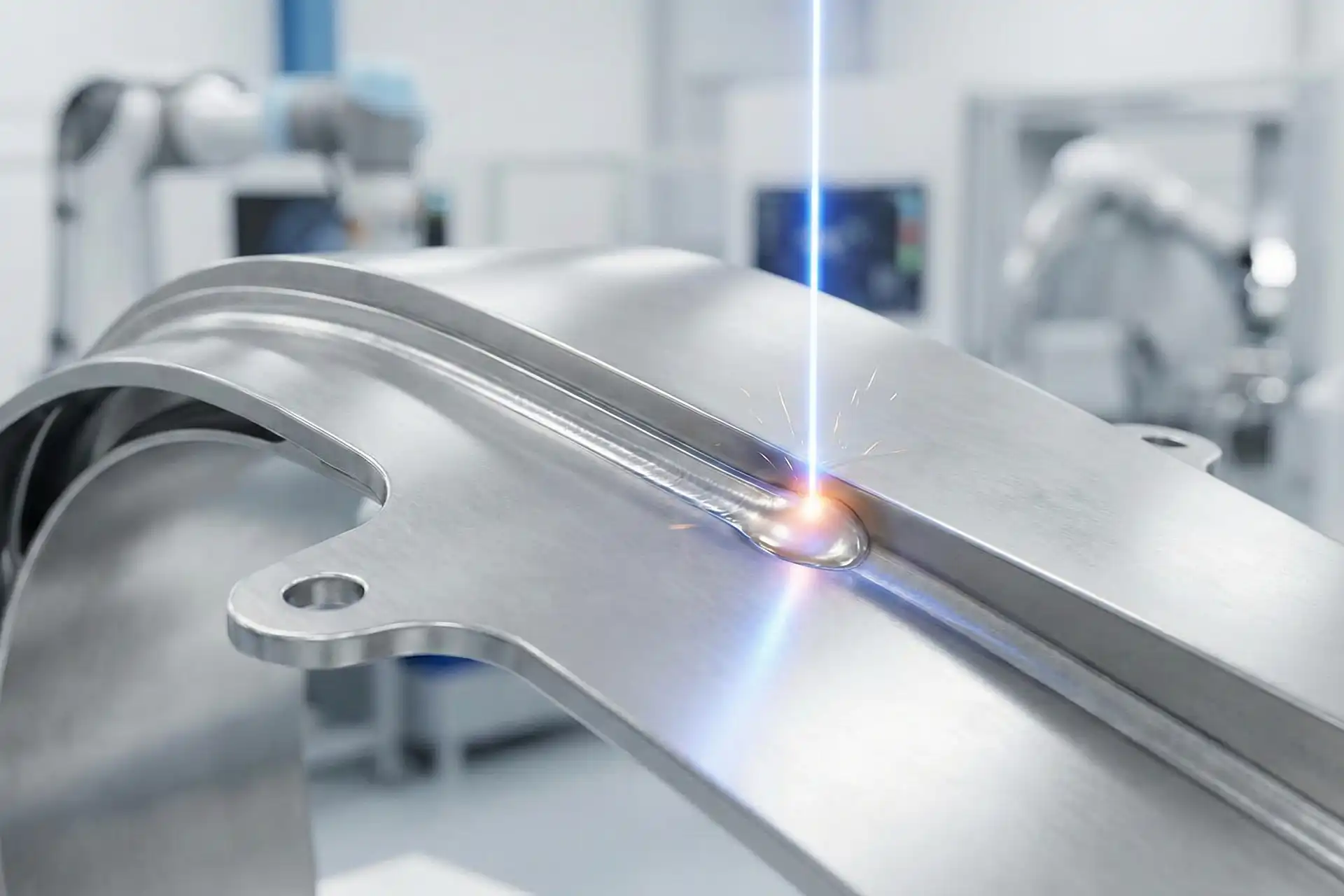
You can get seamless welding because laser welding lets you control things very well. The laser beam is focused and makes thin welds. It does not make much extra heat. This means there is almost no bending or damage from heat. Here are some important features that make laser welding special:
| Feature | How It Helps You Achieve Seamless Welding |
|---|---|
| High Precision and Accuracy | Makes very thin and exact welds, as small as 0.2mm |
| Minimal Heat-Affected Zone | Lowers heat stress and keeps nearby material safe |
| High-Speed Welding | Welds fast for smooth and clean joints |
| Minimal Post-Weld Cleaning | Welds look neat and need little cleaning |
| Versatility | Works on many materials and different thicknesses |
| Ability to Weld Difficult Areas | Gets into tight or tricky spots for perfect welds |
Key Takeaways
- Laser welding is very accurate. It can make thin welds as small as 0.2mm. This helps make smooth joints with no gaps. The process does not make much heat. This keeps the area around the weld safe. It stops bending or damage to other parts. Laser welding is quick and works well. Jobs finish fast and the welds look the same each time. This method can be used on many materials. It works on different thicknesses too. So, it fits many uses. Laser welding makes clean seams. There is less cleaning needed after welding. This saves time and helps people work better.
Laser Welding Precision
Focused Heat Control
You get seamless welds because laser welding gives you exact control over heat. The laser beam focuses energy into a small spot. You can adjust the beam diameter from about 100 to 350 micrometers. This lets you choose the best size for your job. If you need to cut, you use a smaller beam. If you want to weld, you pick a wider beam. This control helps you avoid overheating the metal. You keep the heat only where you need it.
Tip: When you use focused heat, you lower the risk of warping or damaging the material around the weld.
- Laser welding works well for high-precision jobs.
- You can tune the beam for different materials and thicknesses.
- The lower energy density compared to electron beam welding makes it easier for you to control and focus the heat.
Accurate Material Melting
Laser welding helps you melt the metal exactly where you want. You do not get extra melting or unwanted gaps. The process lets you join parts with very small spaces between them. You can weld gaps less than 0.1 mm for proper fusion. In some cases, you can fill gaps up to 0.5 mm if you use beam oscillation or filler wire.
| Minimum Gap Size | Description |
|---|---|
| Less than 0.1 mm | Needed for proper fusion in many applications |
| Up to 0.5 mm | Welded effectively with beam oscillation/filler |
You also get smooth welds with no surface undercuts. For example, at a welding speed of 55 mm/s, you can fill gaps up to 0.5 mm and get weld widths of 2.5 mm.
| Welding Speed | Gap Size | Outcome |
|---|---|---|
| 55 mm/s | Up to 0.5 mm | Complete filling, no undercuts, 2.5 mm width |
You avoid overlaps and gaps because laser welding melts the metal only where needed. This precision is why you see seamless welds in many industries.
Minimal Distortion and Heat-Affected Zone
Reduced Thermal Damage
You want your welded parts to stay strong and keep their shape. Laser welding helps because it uses a focused beam. This beam heats only a small spot for a short time. The rest of the material does not get hot. So, you see less bending or twisting in your finished parts.
Note: Laser welding makes a narrow heat-affected zone, called HAZ. This keeps the area around the weld cooler and unchanged. TIG welding makes a much wider HAZ. The extra heat from TIG welding can make the metal grains bigger. This can make the material less tough.
You can see how laser welding protects your material:
| Aspect | Description |
|---|---|
| Heat-Affected Zone (HAZ) | Laser welding makes a small HAZ, so less heat affects nearby material. |
| Thermal Profile | Controlled heat keeps the color and stops rust from forming. |
| Distortion Reduction | Focused heat means less bending than other welding methods. |
If you use stainless steel, you know it grows more than carbon steel when hot. This makes it easy to bend if you use too much heat. Laser welding lets you control the heat better. You keep your parts straight and strong.
- Laser welding bends parts less than MIG or TIG welding.
- You avoid twisting or warping by controlling the heat.
- You keep the surface smooth and the metal strong.
Seamless, Defect-Free Joints
You want your welds to look neat and work well, even in tough jobs like cars or planes. Laser welding gives you this. The high energy lets you control the weld closely. The weld cools fast, so the metal gets finer and stronger.
| Aspect | Description |
|---|---|
| Energy Density | High energy lets you control the weld very well. |
| Heat Input | Less heat means less stress and bending in the weld. |
| Cooling Rate | Fast cooling makes the weld metal stronger. |
| Heat-Affected Zone | A small HAZ keeps the parts strong and safe. |
| Automation | Robots can do laser welding, so factories work faster. |
You get smooth, strong welds because you do not overheat the metal. This is why laser welding is good for parts that must be strong or look nice. You also save time because the welds are already clean and smooth.
Tip: If you weld parts for cars or planes, laser welding helps you meet strict rules. You get strong welds with less chance of cracks or weak spots.
Speed, Automation, and Flexibility
Fast, Consistent Welding
You achieve seamless welding because laser welding works at high speeds and keeps the process steady. Fast welding means you finish jobs quickly and get smooth, even seams. For example, some machines, like the TruLaser Station 7000, can reach speeds up to 10 meters per minute.
| Machine Model | Maximum Speed (m/min) |
|---|---|
| TruLaser Station 7000 | 10 |
When you use automation, you get even more benefits. Robots guide the laser with great accuracy. You do not have to worry about shaky hands or mistakes. Here is why automation helps you:
- Robotic laser welders create fast and precise seams on car parts.
- Automation removes human error, so every weld looks the same.
- You get better product quality and reliability in factories.
- Laser welding keeps electrical parts strong and cool, which is important for car batteries.
Tip: If you want every weld to look perfect, automation is your best friend.
Filler Material Options
You can use laser welding with or without filler material. This gives you more choices for different jobs. If you need to join parts with a small gap, you can weld them directly. If the gap is bigger or you want to change the weld’s strength, you can add filler metal.
The type of filler metal you choose changes the weld’s properties. For example:
| Filler Metal | Microstructure Characteristics | Mechanical Properties Impact |
|---|---|---|
| Al-5Ti-B | Fine, even grains, little or no cracking | Stronger, better welds |
| Al-5Mg | Long grains, some porosity | May lower weld strength due to small defects |
You get seamless results because you can pick the right method for your needs. If you want a strong, smooth weld, you choose the best filler or skip it for a tight fit. This flexibility is why laser welding works for so many projects.
Clean Process and Material Compatibility
Non-Contact Welding
Laser welding makes cleaner welds because it does not touch the metal. The laser beam works from far away. This means tools do not add dirt or oil to the metal. Not touching the metal helps stop contamination that could make the weld weak. The work area stays cleaner since you do not use electrodes or wires that leave behind mess.
Tip: Shielding gases can be used in laser welding. These gases keep oxygen and nitrogen away from the weld. Oxygen and nitrogen can make the weld weak or cause cracks. Shielding gases help make the weld stronger and more reliable.
You keep your tools clean by doing easy things: Wipe the laser gun and nozzles after using them. Check the CNC equipment often to see if it works right. Clean the lenses with the right cloth so they do not get scratched or dusty.
Doing regular maintenance keeps the process clean. You get better welds and higher quality when you care for your machines.
Seamless Results Across Materials
Laser welding works on many metals and alloys. You can even join different materials together. You get seamless welds because the laser gives you exact control over heat. You can change the settings to fit each type of metal.
Here is a table that shows how laser welding works with different materials:
| Metal/Alloy | Compatibility with Laser Welding | Challenges and Advantages |
|---|---|---|
| Aluminum | Hard to weld because it reflects light and moves heat fast. | Can get holes or cracks; needs strong lasers and good methods. |
| Copper | Very hard to weld because it reflects light and moves heat fast. | Needs a lot of energy; new laser technology helps. |
| Titanium | Good for laser welding because it does not move heat fast. | Can get dirty from air; needs special gas to protect the weld. |
| Dissimilar Metals | Hard to weld because metals melt at different temperatures. | Careful heat control helps; needs lots of testing to work well. |
Laser welding gives better results than resistance welding. It is more exact and faster. You can join thin or tricky parts with less heat and less bending. You also lower the chance of making bad compounds between metals. This means you get strong, seamless welds even with hard materials.
Note: If you make medical devices, you need clean and exact welds. Laser welding helps you meet strict rules for cleanliness and quality.
Comparison with Traditional Welding
Seam Quality Differences
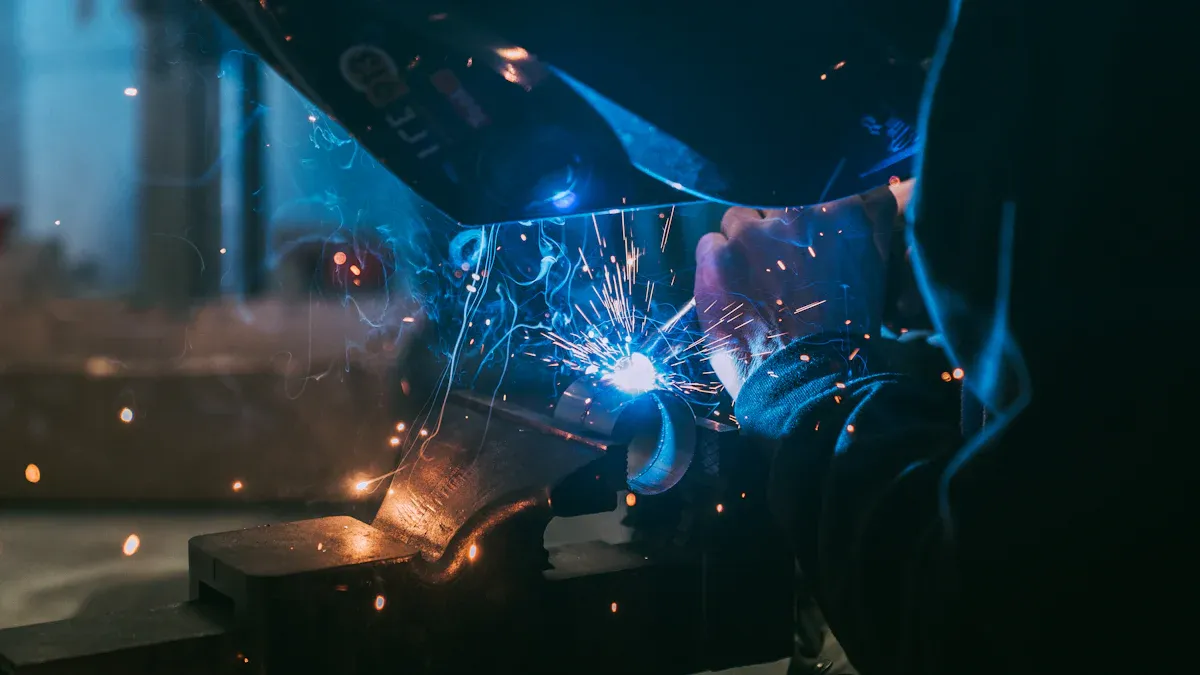
Laser welding and arc welding make seams in different ways. Laser welding lets you control heat very well. It makes cleaner and more exact welds. Arc welding uses more heat and can bend thin metals. You can see how they compare in this table:
| Aspect | Laser Welding | Arc Welding |
|---|---|---|
| Heat Input Control | Precise control, minimal distortion | Higher heat input, more distortion |
| Heat-Affected Zone | Small, reduces risk of thermal distortion | Larger, increases risk of distortion |
| Weld Strength | Can match or exceed arc weld strength | Generally lower in precision applications |
| Speed | 3 to 10 times faster than arc welding | Slower compared to laser welding |
| Thickness Capability | Can weld up to ~20 mm in a single pass | Limited thickness capability |
| Distortion in Thin Metals | Better at joining without damage or distortion | Significant distortion often occurs |
Laser welding makes seams that are smoother. You do not need to fix or clean them much. The small heat-affected zone keeps your parts strong. Your parts also stay in the right shape.
Advantages of Laser Welding
Laser welding gives you many good things. Here are some reasons why people pick it:
- You get very exact welds for small or tricky parts.
- Laser welding works fast, so you finish jobs quickly.
- The laser does not touch the metal, so it does not hurt delicate parts.
- You can join many kinds of materials, even hard ones.
- You see less bending from heat, so you do not need much fixing.
- Laser welding makes strong connections in electronics like microchips.
- You can use it for batteries in electric cars and phones.
- You save time and money because you do not need much cleaning.
Tip: Laser welding helps you waste less and spend less money. It uses less heat and makes fewer mistakes.
You pick laser welding when you want strong seams and less work after welding. This way, you get better results when you need high quality and speed.
You get seamless welding with laser technology because you can control important things. The table below explains why each detail matters:
| Factor | Description |
|---|---|
| Laser Power | Matches how thick the material is for strong welds. |
| Beam Spot Size | Focuses energy to make deep or wide seams. |
| Welding Speed | Balances melting and heat so you avoid problems. |
| Surface Condition | Clean surfaces help you get better welds. |
Laser welding has very few defects, only about 0.8%. It helps you save money over time. You fix things less often, waste less material, and your products are stronger. Today, factories use laser welding because it is very exact and dependable.
FAQ
Why does laser welding create less distortion than other welding methods?
You get less distortion because the laser focuses heat in a small area. The rest of your material stays cool. This keeps your parts straight and strong.
Why can you use laser welding on different metals?
Laser welding works on many metals because you control the heat and energy. You adjust the settings for each metal. This helps you join even tricky materials.
Why do laser welds look cleaner and smoother?
Laser welds look cleaner because the process does not touch the metal. You avoid dirt and extra material. The focused beam melts only what you need for a smooth finish.
Why is laser welding faster than traditional welding?
You finish jobs faster with laser welding because the beam moves quickly and melts metal in seconds. Automation helps you keep every weld steady and fast.
Why do you need less post-weld cleaning with laser welding?
You need less cleaning because laser welding makes neat seams. The process leaves little spatter or residue. Your welds come out smooth and ready to use.
Why is handheld laser welding machine so popular?
How to train laser welding workers effectively
What You Should Know About Laser Welding Cold Welding Technology
What Are the Main Components of a Laser Welding Machine