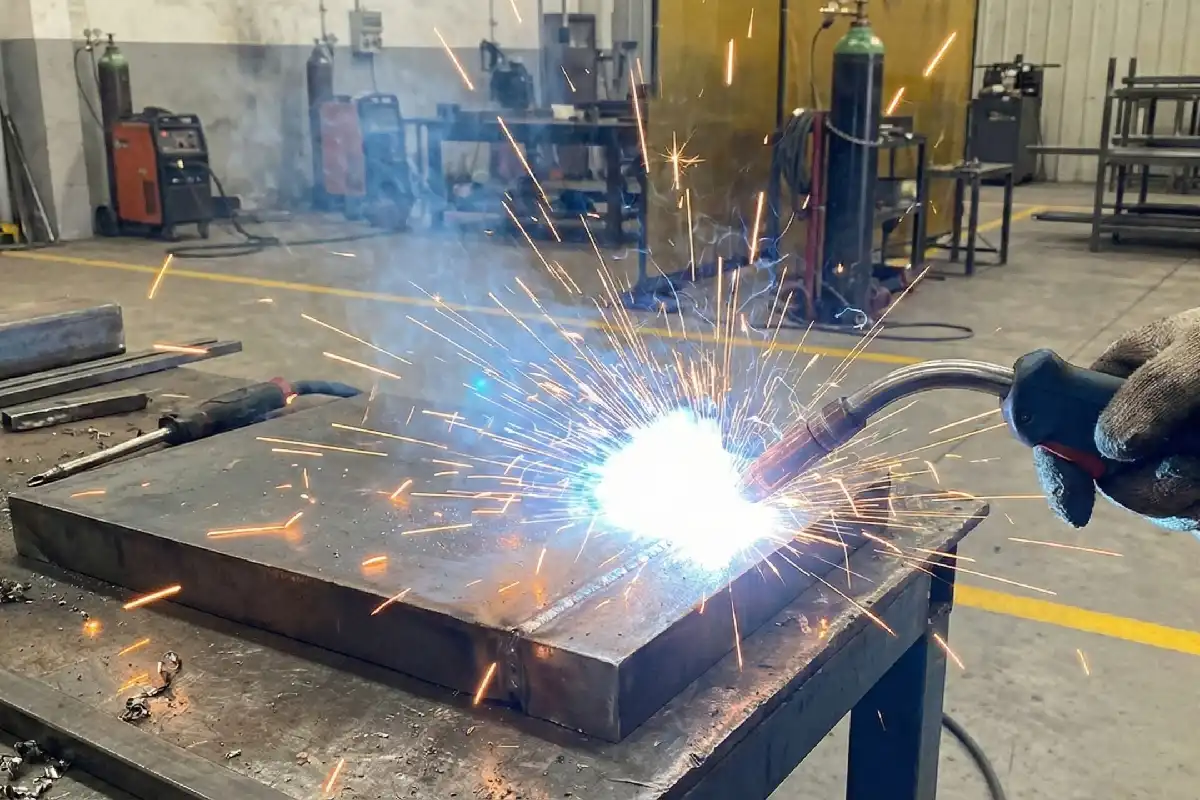
You may notice sparks when you weld aluminum, but you see them less often than with steel. Aluminum spark can appear during welding due to specific conditions. If you watch closely, you will see that these sparks happen for clear reasons.
Key Takeaways
- Aluminum makes fewer sparks than steel because it melts at a lower temperature and spreads heat fast. This means aluminum melts fast and does not keep heat inside.
- Sparks can happen when welding aluminum if it gets too hot, if there is dirt, or if the alloy has magnesium. Keeping your work area clean helps stop sparks.
- You can make fewer sparks by changing welding settings, like using less current and voltage. Changing these settings helps keep the weld smooth and stops spatter.
- Picking the right welding method, like TIG or MIG, can also help stop sparks. These ways let you control heat and keep out dirt better.
- Always clean aluminum before you weld to get rid of dirt and oil. A clean piece of aluminum stops reactions that make sparks and keeps welding safer.
Does Aluminum Spark?
Typical Welding Behavior
When you weld aluminum, you usually see a bright arc. You do not see many sparks like with steel. This is because aluminum melts at a lower temperature. The metal turns into a liquid fast and stays together. The weld often looks neat and smooth. Most of the time, sparks do not fly off the aluminum. This makes welding aluminum look calmer than welding steel.
But sometimes, you may see sparks. This happens for special reasons during welding. Aluminum does not spark as easily as steel. Still, some things can make it spark. It is important to know what causes these rare sparks.
When Sparks Occur
Sparks can show up if the welding temperature gets very high. The heat can get so strong that the metal melts and even boils. When the hot aluminum leaves the weld pool, it touches oxygen in the air. This meeting causes oxidation to happen fast. The reaction gives more energy to the sparks. This makes them look brighter and easier to see.
Sometimes, an aluminothermic reaction can happen. This is when aluminum particles react with metal oxides. It happens more if you weld or grind near steel. The reaction can make sparks as hot as 4,500ºF. These sparks are very bright and can surprise you.
Oxidation is a big reason for these sparks. It makes the sparks stronger and more visible. If you see sparks, it means something changed during welding. High heat, mixing metals, or dirt can cause this effect.
Tip: To stop sparks, keep your workspace clean and watch the welding temperature.
Causes of Aluminum Spark
High Heat and Arc Pressure
Aluminum spark happens more when the welding gets very hot. Heat changes how the metal acts. If you weld aluminum above 300 °C, sparks are more likely. The welding spatter can get as hot as 2000 °C. At these high heats, the metal melts fast and sometimes boils. Strong arc pressure pushes melted drops away from the weld pool. These drops hit oxygen in the air and catch fire, making sparks you can see. Using too much current or voltage adds more heat and arc force. This makes the weld deeper but also causes more spatter and aluminum spark.
Note: You can control heat and arc pressure by changing welding settings. Lowering current and voltage helps stop sparking and keeps your weld steady.
Contaminants and Magnesium
Contaminants are a big reason for aluminum spark. Dirt, oil, and oxide layers on the metal react with the melted aluminum. These reactions give off energy and make sparks. Magnesium is often in aluminum alloys and can cause more sparks. Magnesium burns at a lower temperature than aluminum and reacts fast with oxygen. If you weld aluminum with lots of magnesium, you will see more sparks. Bad gas coverage lets air touch the weld, which adds more contamination and increases aluminum spark.
Here are some common reasons for sparking from contaminants and magnesium:
- Dirty surfaces or leftover oil
- Thick oxide layers
- High magnesium content in the alloy
- Not enough shielding gas
Cleaning the metal and using good gas coverage lowers the chance of aluminum spark.
Electrode Condition
The state of your welding electrode changes sparking. If the electrode face wears out, it cannot move heat well. High use and heat make the electrode wear out faster. This raises electrical resistance and makes more contact with melted aluminum. This leads to more weld spatter and aluminum spark.
Electrode wear and dirt can cause sparks in these ways:
- Using the wrong polarity, like DCEN, lets dirt from the oxide layer in and causes more sparks.
- Bad gas coverage lets dirt reach the weld, making more sparks.
If you use alternating current (AC) and check your shielding gas, you can stop many electrode sparks.
Tip: Always check your electrode before welding. Change worn electrodes and use the right polarity for aluminum welding.
Table: Factors That Increase Aluminum Spark
| Cause | How It Increases Sparking | What You Can Do |
|---|---|---|
| High Heat & Arc Force | Melts and boils metal, creates spatter | Lower current and voltage |
| Contaminants | Reacts with molten aluminum, releases energy | Clean surfaces, use good gas coverage |
| Magnesium Content | Burns easily, reacts with oxygen | Choose alloys with less magnesium |
| Electrode Condition | Increases resistance, causes spatter | Use AC, replace worn electrodes |
Early welding experts thought sparking was linked to heat. Researchers like Urban and Omar studied how hot metal pieces catch fire and how their size and speed change sparking. These studies show that controlling heat and dirt helps you manage aluminum spark.
The environment matters too. Wind can mess up shielding gas, and high heat can change how aluminum fits together. You should watch your workspace and make changes to lower aluminum spark.
Aluminum vs Steel Sparks
Why Steel Sparks More
You may wonder why steel sparks much more than aluminum during welding. Steel has a higher melting point and lower thermal conductivity. When you weld steel, the metal does not melt as quickly. The heat builds up in small areas. This causes tiny pieces of hot metal to break away from the weld pool. These pieces react with oxygen and create bright sparks.
Steel also contains elements like carbon and iron. These elements burn easily and add energy to the sparks. You see bright flashes and flying particles when you weld steel. The sparks look intense and can travel far from the weld. If you use high current, the effect becomes even stronger.
Here is a table that shows how melting point and thermal conductivity affect spark generation:
| Metal Alloy | Melting Point | Thermal Conductivity | Spark Generation Behavior |
|---|---|---|---|
| 6061 Aluminum Alloy | Low | High | No bright sparks observed |
| 304 Stainless Steel | High | Low | Bright sparks observed |
| Q235 Steel | High | Low | Bright sparks observed |
| TC4 Titanium Alloy | High | Low | Bright sparks observed |
| H62 Bronze Alloy | Low | High | No bright sparks observed |
| AMAK3 Zinc Alloy | Low | High | No bright sparks observed |
| AZ31B Magnesium Alloy | Low | High | No bright sparks observed |
Steel’s high melting point and low thermal conductivity trap heat. This makes sparks more likely and more visible.
Aluminum’s Unique Properties
Aluminum acts differently when you weld it. The metal has a low melting point and high thermal conductivity. You see the metal melt quickly and spread heat fast. The weld pool stays smooth and does not break apart easily. You rarely see bright sparks fly off aluminum.
Aluminum does not contain much carbon or iron. These elements help steel make sparks. Instead, aluminum cools down fast and does not let hot particles escape. If you keep the metal clean and control the heat, you can avoid most sparks. You may notice a calm, steady arc when you weld aluminum.
Tip: If you want fewer sparks, choose metals with low melting points and high thermal conductivity. Aluminum and magnesium alloys work well for clean welding.
You can see that the main reason steel sparks more than aluminum comes from their physical properties. Steel traps heat and releases it in bursts. Aluminum spreads heat and melts smoothly. This difference explains why you see more sparks with steel and fewer with aluminum.
Reducing Aluminum Spark
Cleaning and Preparation
You can make fewer sparks if you clean aluminum before welding. Clean metal helps stop bad reactions that make sparks. When you take away dirt and oil, you keep them from mixing with the melted aluminum. This also stops oxidation, which can make sparks brighter and happen more often.
Here are some steps you should follow:
- Use a stainless steel wire brush or a special aluminum cleaner to take off the oxide layer and dirt.
- Wipe the metal with acetone or another cleaner to remove grease and sticky stuff.
- Clamp the piece tightly. This keeps it still and stops it from bending, which can heat it unevenly and make sparks.
- Always use clean filler rods and keep your work area free of dust.
- Clean edges and joints with abrasive pens or small wire brushes. Dirt can hide in these places.
- Rinse the metal with a neutral pH solution. This helps stop rust and keeps the surface safe.
- Dry the metal all the way with a heat gun or soft cloth. Wet spots can add hydrogen, which causes holes and sparks.
- Wear clean gloves after cleaning the metal. This keeps new dirt off the surface.
Laser cleaning helps a lot. Studies show laser cleaning lowers weld seam holes from 9.68% to 2.91%. Cleaning in argon drops it even more to 1.59%. You get deeper welds and fewer sparks when you clean well.
Tip: Clean metal means fewer sparks. Take time to get your aluminum ready before welding.
Choosing the Right Process
You can also get fewer sparks by picking the best welding method. Some ways work better for aluminum and help you control heat and dirt.
| Welding Process | How It Minimizes Sparks |
|---|---|
| TIG Welding | Uses AC polarity to stabilize the arc and lower sparking |
| MIG Welding | Shielding gases protect the weld from contamination |
| Laser Welding | Concentrated beam and shielding gas keep welds clean |
| Electron Beam Welding | Vacuum chamber removes impurities and stops sparking |
| Resistance Welding | Direct fusion reduces the risk of sparks |
| Friction Welding | Solid-state process avoids shielding agents and sparks |
TIG welding is good for thin aluminum. You get a steady arc and not many sparks. MIG welding uses gas to cover the weld pool. Laser welding makes clean welds with less mess. Electron beam welding happens in a vacuum, so dirt cannot make sparks. Resistance and friction welding join metal with pressure and heat, not an open arc, so sparks do not show up much.
Note: Pick the right method for your project. You will see fewer sparks and get better welds.
You see sparks when welding aluminum because of high heat, dirt, and magnesium in the metal. These things react with oxygen in the air. Steel makes more sparks because it melts at a higher temperature and does not spread heat as fast. Aluminum needs to be cleaned well before welding. You also need to weld it faster than steel.
| Property | Aluminum | Steel |
|---|---|---|
| Cleaning Needed | Yes | Less important |
| Heat Management | Very important | Easier to control |
| Spark Risk | Not as high, but possible | Higher |
To stay safe, wear clothes that do not burn easily. Use the right gloves and keep your work area clean. Always have a fire extinguisher close by. You can stop most sparks if you follow these steps.
Aluminum does not spark as much as steel, but you can stop most sparks if you get ready and stay safe.
FAQ
Why do you see fewer sparks when welding aluminum compared to steel?
Aluminum melts at a lower temperature. It also spreads heat fast. This means the metal does not hold heat in one spot. Aluminum does not break apart like steel. That is why you see fewer sparks.
Why does dirty aluminum produce more sparks during welding?
Dirt and oil mix with melted aluminum. This mixing makes energy and causes sparks. If you clean the metal first, you will see fewer sparks.
Why does magnesium in aluminum alloys increase sparking?
Magnesium burns very easily. It reacts quickly with oxygen in the air. If your aluminum has more magnesium, you will see more sparks.
Why should you adjust welding settings to control aluminum sparks?
High heat and strong arc pressure move melted drops away. These drops can make sparks. Lowering current and voltage helps stop sparks. It also keeps your weld smooth.
Why is cleaning important before welding aluminum?
Cleaning takes away dirt and oil. This stops oxidation and sparks from happening. You get a safer and cleaner weld if you clean the metal.
What Happens When You Get a Laser QBH Alarm
How to Diagnose Button Response Issues in Laser Welding Machines
The light emission characteristics of laser welding machines
Why choose a laser welder manufacturer direct from China