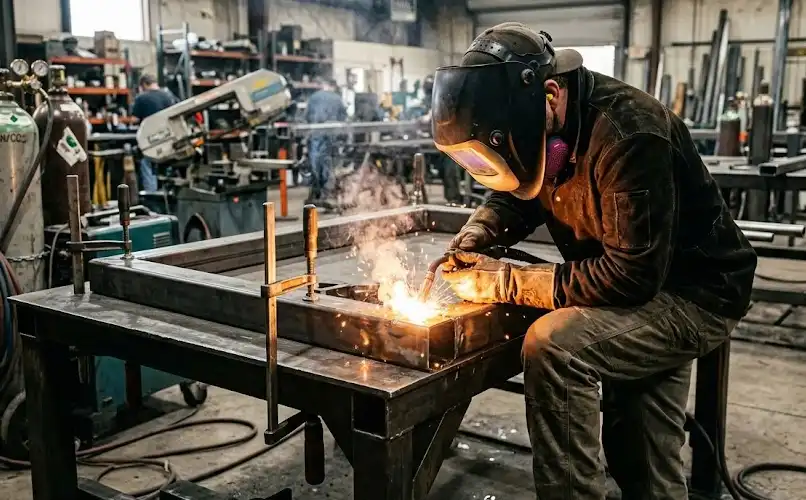
Switching from a desk job to a skilled trade can feel like stepping into a new world. The good news: welding offers a clear, practical path to your first paycheck if you focus on the right skills and milestones. This guide shows you exactly how to become a welder in six to twelve months, with step-by-step checkpoints you can follow while working nights and weekends.
You will learn where to start, which process to prioritize first, what safety training actually matters, how entry-level certifications work, and how to present yourself to employers with confidence. Everything here is grounded in U.S. regulations, widely used industry codes, and current labor market data.
Key takeaways
- You can become job-ready in 6–12 months with a MIG-first training plan, targeted practice hours, and one or two code-aligned tests.
- OSHA 10 is widely requested by employers and owners but is a voluntary hazard awareness course at the federal level; prioritize real shop safety and PPE.
- The fastest on-ramp is MIG for production and fabrication, with early exposure to Stick for structural and outdoor work and later TIG specialization.
- Entry-level testing happens at an AWS Accredited Test Facility and is process and position specific; align your test to the job code you want.
- Most states do not license welders, but some jurisdictions do; verify local rules before you apply.
- Budget for tuition or course fees, PPE, and test costs; anchor ROI using BLS wages and local demand.
How to become a welder: the 6–12 month plan
The roadmap below is built for career changers. If you have a full-time job, use the part-time cadence: three weeknights at two hours each plus a longer weekend session. If you are full-time, compress the schedule with longer daily shop blocks. Either way, track your “hood time” like training miles and move only when you meet clear acceptance criteria.
Month 0–1 — Safety, eligibility, and PPE
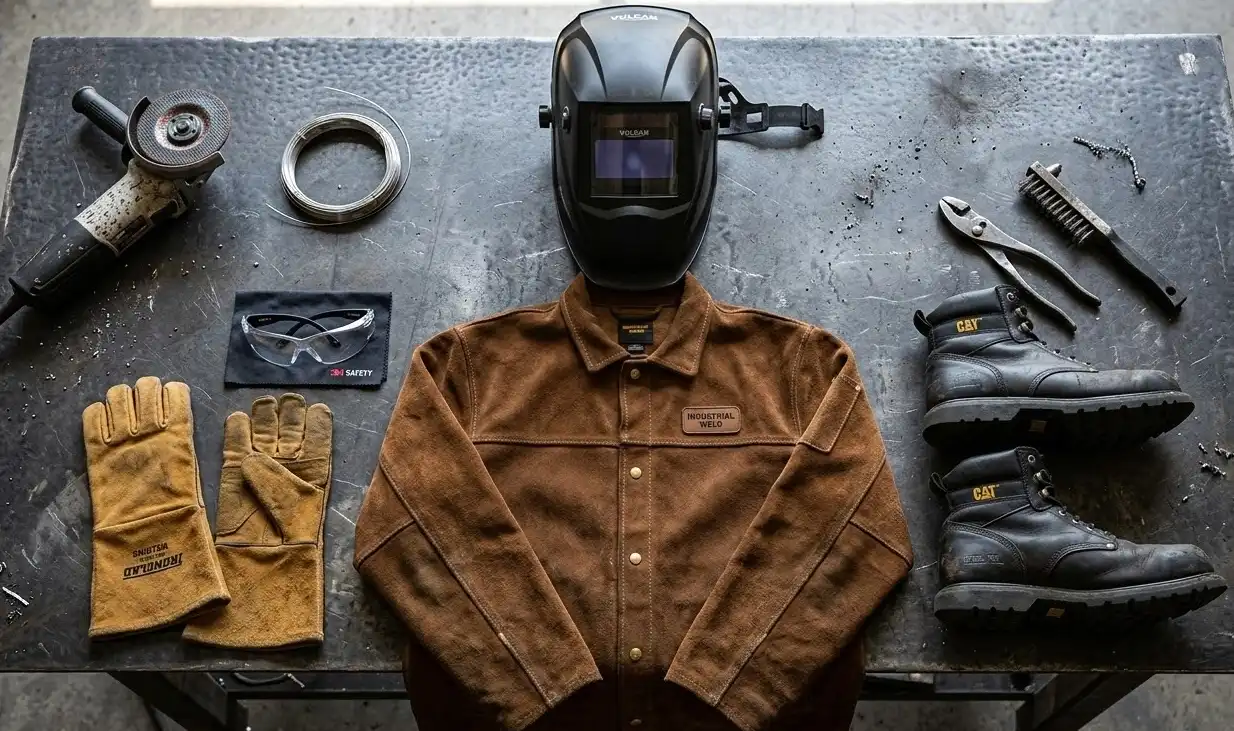
Start with safety. Learn the basics of welding, cutting, and brazing hazards, including fire prevention, guarding, ventilation, and housekeeping. Federal rules for general industry are outlined in OSHA’s welding standard 29 CFR 1910.252. Select and use PPE under 1910.132 and understand when respiratory protection per 1910.134 applies. Those three references set the safety baseline in most training environments.
OSHA’s Outreach Training (often called OSHA 10 or OSHA 30) is a voluntary hazard-awareness program at the federal level. Many owners and employers still request the OSHA 10 card for jobsite access, so it is smart to complete it early even though it is not mandated by OSHA standards.
- Read the general welding safety standard in the official text: see the guidance in the section on welding, cutting, and brazing under general industry on OSHA’s site: OSHA 1910.252 Welding, Cutting, and Brazing. Also review OSHA’s general PPE requirements and Respiratory Protection.
- Confirm the Outreach program’s status and find a course through OSHA: OSHA Outreach Training Program overview.
Acceptance criteria for moving on: You can explain fire watch basics, select proper shade and gloves for MIG, set up a booth with fume extraction, and demonstrate safe grinder use.
Months 2–6 — Hands-on training and MIG first
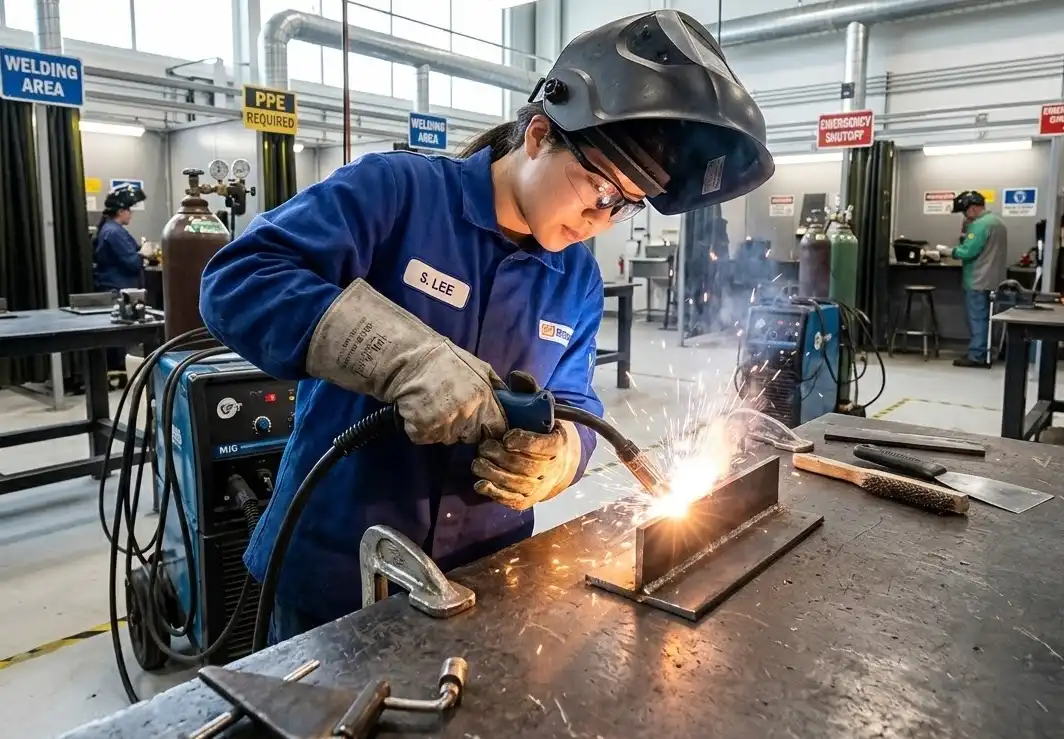
Enroll in a training path that fits your schedule and budget. Community colleges, workforce programs, private trade schools, and union apprenticeships all work. What matters is consistent booth time and qualified instruction. In your first months, make MIG—also called GMAW—your primary focus. MIG is the fastest on-ramp to production and fabrication roles and will let you assemble a portfolio of clean fillet and groove welds on mild steel in multiple positions.
Meanwhile, get exposure to Stick (SMAW), which prepares you for structural and outdoor work, and to TIG (GTAW) for thin materials and stainless later on. If your target is structural or heavy fabrication, expect to see Flux-Cored Arc Welding in job postings too; learn how FCAW differs from solid-wire MIG.
Practice targets for this phase: 100–150 hours under the hood, a repeatable fillet weld in 1F, 2F, and 3F, and solid progress on a 3G plate weld with backing. Start photographing your best coupons with labels showing process, material, position, parameters, and WPS followed.
Months 4–9 — Book an AWS Accredited Test Facility and lock an entry test
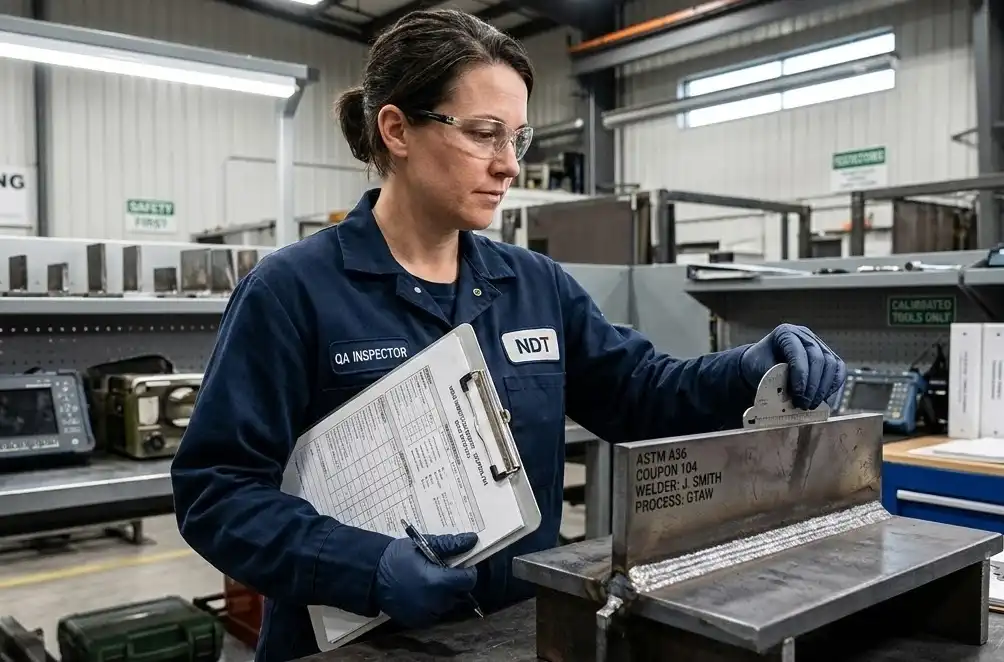
As your welds pass consistent visual inspection by an instructor, schedule a performance test at an AWS Accredited Test Facility. The AWS Certified Welder program is process and position specific and follows a written procedure with acceptance criteria. Your goal is to pick a test that matches your first-job target, such as an AWS D1.1 structural plate in 3G and 4G for shop and field roles.
Typical fees vary by facility and test type. As a representative example, Mohave Community College published April 2024 pricing showing a single-position plate test up to one inch at $299 and a single-position pipe test up to six-inch Schedule 80 at $349, with retests at 50 percent of the original cost when approved. Use that as a reference point and confirm current pricing and lead times at your local ATF.
- Learn how the program works and what an ATF is on AWS’s site: AWS QC47 overview and ATF program page.
- See a real ATF pricing example to budget your test day: Mohave Community College AWS Testing Pricing, April 2024 PDF.
Continuity matters after you pass. Keep your credentials active per program rules and follow the test facility’s instructions for renewing or documenting continuity so your qualification stays usable for employers.
Acceptance criteria for moving on: At least one passed plate test aligned to your target code or a strong instructor recommendation that you are test-ready, plus a portfolio of labeled coupons across positions.
Months 6–12 — Apply, pass employer tests, and verify local rules
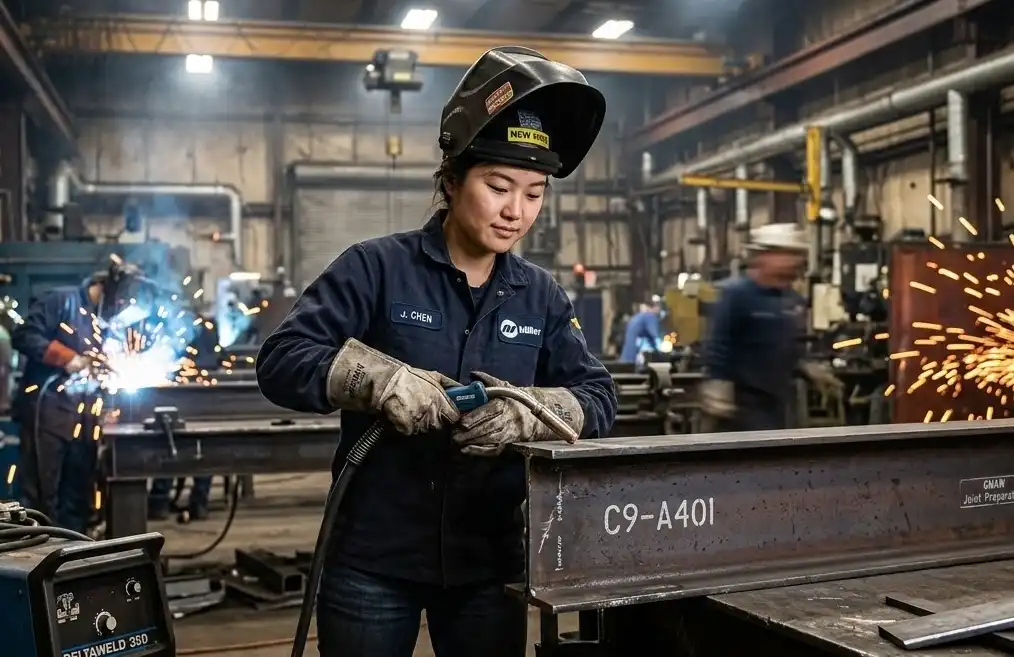
Begin applying to fabrication shops, construction contractors, repair and maintenance teams, and transportation equipment manufacturers. Expect employer weld tests on arrival. They often mirror code tests but are tailored to the shop’s work. Arrive early with PPE, follow the WPS as written, and ask clarifying questions before you strike an arc.
Most U.S. states do not require a welder license. However, some jurisdictions do. For example, New York City roles often reference a city welder license in official job postings. Always check local requirements so your paperwork matches the job.
- Confirm the kind of city licensing language to watch for by reviewing an official listing: New York City job posting referencing a welder license.
Acceptance criteria for graduation from the roadmap: a documented test pass, a few solid employer interviews or a job offer, and a plan for your next code test based on the work you are stepping into.
Credentials and codes explained simply
Employers hire to the work they do, and that work follows a code. Understanding how testing maps to real jobs will help you choose the right target.
- AWS Certified Welder is a performance-based credential administered at an ATF. You weld to a written procedure under supervision, and your welds are evaluated visually and, if required, by bend or other testing. The credential is tied to process and position, so passing a 3G plate does not automatically qualify you for a 6G pipe. See the program overview on AWS for the framework and facility accreditation.
- AWS D1.1 is the common structural steel code for buildings and bridges. If you want structural shop or field work, expect fillet breaks and 3G or 4G plate tests aligned to D1.1 requirements.
- ASME Section IX governs procedure and performance qualifications for pressure work. If you are eyeing boilers, pressure vessels, or piping in industrial facilities, this is the world you will enter. Read the Section IX overview to see how welder performance qualifications are documented and what “ranges of qualification” means.
Authoritative references to keep your research on track:
- Program framework and test facilities: AWS QC47 overview and ATF program
- Pressure-related qualifications background: ASME Section IX overview
Here’s the rule of thumb: read the job posting, note the process and code language, and choose your practice and test plan to match exactly what employers ask for.
What it costs and the ROI reality
Budgets vary by region, residency status, and schedule. Use the ranges below as planning anchors, then confirm current figures with your chosen school or test facility.
- Tuition or course fees: Short certificates and focused modules can run from low thousands to mid single-digit thousands of dollars. Community and state colleges often publish costs per hour or per credit hour. Private trade schools compress timelines into seven to ten months and price accordingly. Check the public pages of nearby programs to compare schedules and total hours.
- PPE and basic tools: Expect a few hundred dollars for a helmet, jacket, gloves, safety glasses, and boots. Add more if you plan to outfit a home practice space.
- Testing and retesting: Budget a few hundred dollars per test based on ATF price sheets and allow for a possible retest.
A simple way to think about ROI: compare total upfront costs to entry wages and your time-to-first-paycheck. According to the latest Occupational Outlook Handbook figures for welders, the median annual wage in May 2024 was $51,000, with about 45,600 openings per year on average from 2024 to 2034. Use those numbers to benchmark payback, then layer in your local market data from postings.
- Wage and outlook reference: U.S. Bureau of Labor Statistics Occupational Outlook Handbook for Welders
Two quick ROI scenarios:
- Part-time learner: Spend $3,000–$6,000 over six to nine months on courses, PPE, and tests while keeping your day job. Land an entry role at a wage aligned to local postings; your cash payback typically starts within the first year of employment.
- Full-time learner: Spend more in a shorter window for an intensive program and hit the job market in seven to nine months. The faster ramp can offset higher short-term costs if you secure a role quickly.
Job-ready materials and interview prep
Treat your portfolio like a miniature quality record. Include high-resolution photos of your best coupons with labels showing process, position, base material, filler, parameters, and the WPS you followed. If you have bend results or other test records, add them. Keep everything dated and organized so an inspector or supervisor can skim quickly.
Resume bullets should translate practice into job outcomes. Instead of “took welding class,” write “produced repeatable 3G GMAW groove welds on A36 plate to WPS, verified by instructor visual inspection; prepared for ATF plate test.” Add safety language that demonstrates you understand the culture: lockout and tagout awareness, hot work permits, fire watch, and adherence to PPE policies.
On employer test day, arrive early with clean PPE. Read the procedure, prep your material carefully, clean the joint, and control heat input. If something looks wrong—fit-up, bevel, root opening—ask before welding. Then weld like you practiced and present your work with confidence.
Common pitfalls and quick fixes
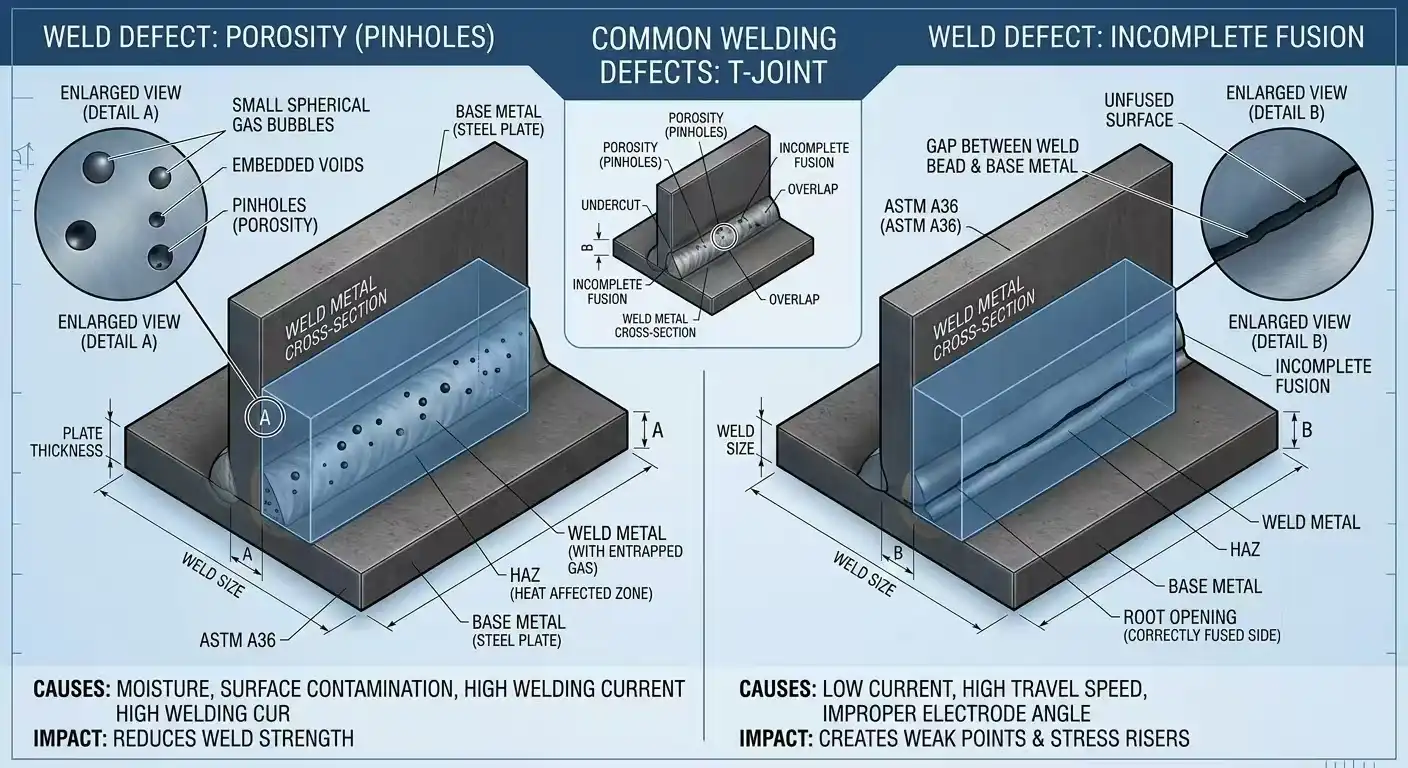
- Porosity: Clean more aggressively, adjust travel speed to stabilize the puddle, verify gas flow and nozzle angle, and avoid drafts in the booth.
- Incomplete fusion: Increase heat slightly, improve work angle, slow down enough to tie in both side walls, and clean mill scale before you start.
- Slag inclusion with Stick or FCAW: Tighten your technique on weave and arc length, maintain proper drag angle, and chip and brush thoroughly between passes.
Think of these defects as feedback loops. Fix the cause, run another coupon, and compare results against your acceptance criteria before you move on.
FAQs for fast decision making
- Which process should I learn first to get hired fastest? MIG on mild steel in multiple positions, then add Stick exposure if you are targeting structural or outdoor work. Bring TIG in as a specialization when a job requires it.
- Do I need a license to weld in my state? Usually no. Some municipalities or states have specific requirements. Review local rules and lookout for city postings that mention a welder license as a condition of employment.
- Is OSHA 10 mandatory? OSHA 10 is a federal outreach program for hazard awareness and is voluntary at the federal level. Many owners and employers request it for jobsite access, so it is a smart early milestone.
Closing thoughts
This plan is your mile-by-mile route for how to become a welder without wasting time or money. Prioritize safety, build MIG fundamentals, align every practice hour to the code language in your target job postings, and lock in a realistic test date. Keep your portfolio tight, speak the language of procedures and acceptance criteria, and you will be ready for weld test day—and for your first offer.