You want the best results for your welding project. Wire feeding laser welding works well on thick or gap-prone materials. No wire feeding fits jobs that need high precision or thin metal. Think about weld quality, material compatibility, cost, efficiency, and ease of use. Wire feeding laser welding vs no wire feeding welding depends on your project’s needs. Always match the method to your goals.
Key Takeaways
- Wire feeding laser welding works well for thick materials or ones with gaps. It uses filler material to make welds stronger. This helps fill gaps better.
- No wire feeding laser welding is good for thin metals and detailed work. It makes clean and small welds. It does not use extra material.
- Think about what your project needs. Pick the welding method that fits the thickness and type of your materials. This helps you get the best results.
- Wire feeding systems can cost more at first. They may save money later because they work faster and cost less to run.
- Check your skill level and what tools you have. Wire feeding needs more control and setup. No wire feeding is easier for beginners.
Wire Feeding Laser Welding vs No Wire Feeding Welding Overview
Main Differences
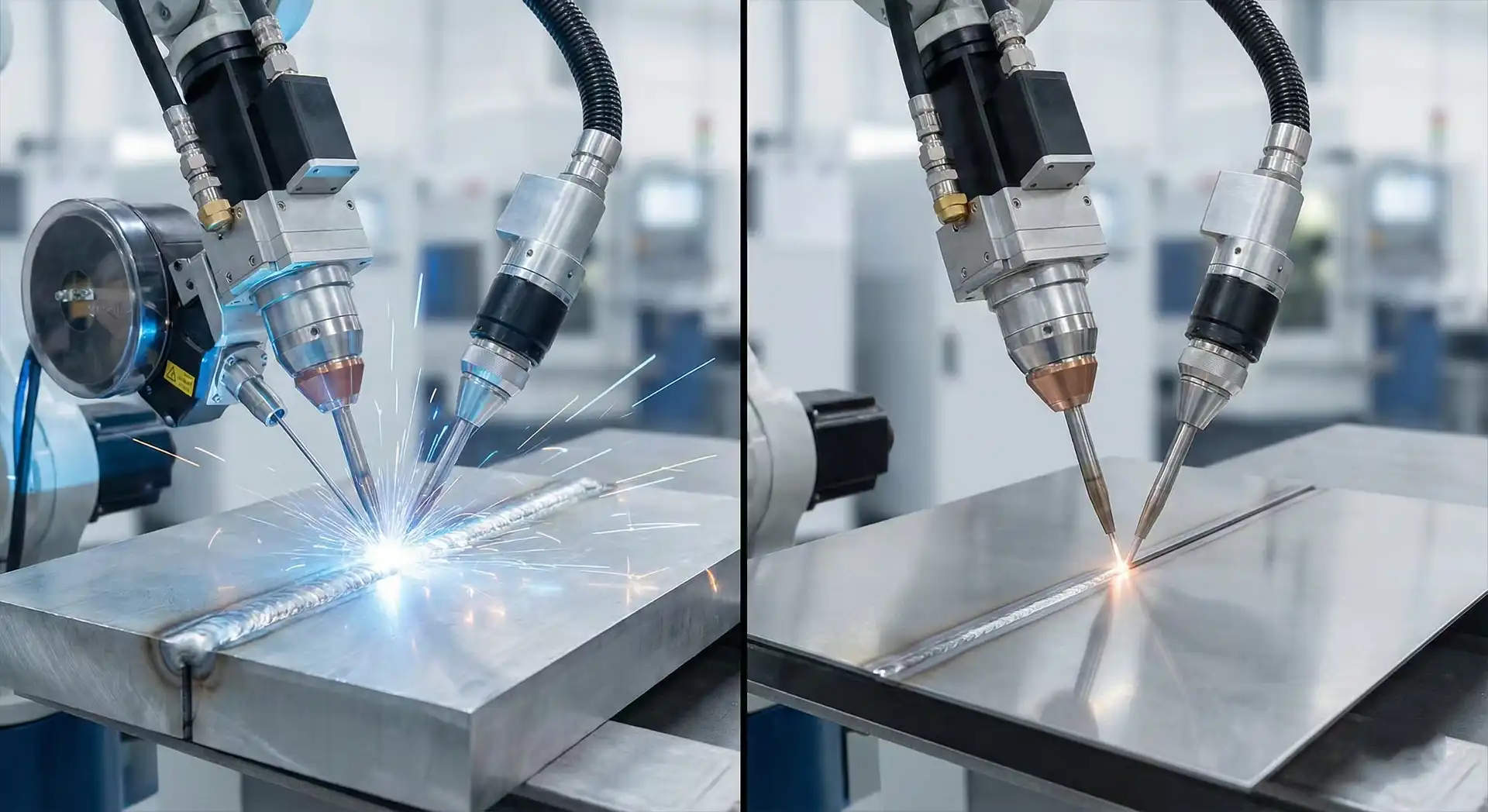
You should know the main differences before picking a welding method. Wire feeding laser welding and no wire feeding welding are not the same. They work in different ways and give you different results. The table below lets you see how they compare:
| Feature/Aspect | Wire Feeding Laser Welding | No Wire Feeding Laser Welding |
|---|---|---|
| Configuration | Uses a single wire as filler material | No filler material used |
| Deposition Rate | Limited by wire design | Often higher without filler |
| Material Versatility | Supports many wire diameters and materials | Limited to base materials |
| Application Flexibility | Good for general-purpose tasks | Best for high-speed and advanced jobs |
| Complexity and Cost | Simpler and more cost-effective | More complex and may cost more |
| Maintenance | Easier to operate and maintain | Needs skilled workers for operation |
Wire feeding laser welding adds extra material while you weld. This helps fill spaces and join different metals together. No wire feeding laser welding only melts the metal you are working on. It is good for thin metals and jobs that need careful work.
The way you set up each process is also different. With wire feeding, you have to change the wire speed for the best weld. If you set the speed right, you can work faster. No wire feeding welding is usually quicker because you do not add wire. The welds are smaller and not as deep. You get good results because the laser melts the metal right away.
Tip: If you weld faster, the weld pool stays steady and you get fewer holes. Using less laser power can also make the weld better.
Typical Uses
People use wire feeding laser welding and no wire feeding welding for different jobs. Here are some ways each method is used:
- Wire feeding laser welding is strong when you need to fill spaces or join metals that are not the same. You use it for brazing and welding when you need extra metal to make a strong connection.
- You can pick soft or hard wire for your project. How you set up the wire feeding system is important for good results.
- No wire feeding laser welding is best for fast work and new types of making things. You use it for thin metals, electronics, and jobs that need very careful welds.
You should choose the method that fits your project. If you need to weld thick things or fill spaces, wire feeding laser welding works better. If you want to work fast and need careful welds, no wire feeding laser welding is the best pick.
What Is Wire Feeding Laser Welding
How Wire Feeding Works
You use wire feeding laser welding when you want to join metals with extra strength. This method feeds a thin wire into the weld area while a laser melts both the wire and the base metal. The wire acts as a filler, making the weld stronger and filling any gaps.
The wire feeding system has several important parts. Each part has a special job. Here is a table to help you understand:
| Component | Function |
|---|---|
| Control part | Lets you set the wire speed and other settings. |
| Drive part | Moves the wire forward as you weld. |
| Wire feed nozzle part | Guides the wire to the right spot near the laser. |
| Adjustable preload rod | Presses the wire with the right amount of force. |
| Driving wheel | Turns to push the wire, powered by a motor. |
| Driven wheel | Adds friction so the wire feeds smoothly into the groove. |
You can choose different types of wire for your project. Stainless steel, aluminum, titanium, nickel, and copper alloys are common choices. Each type has its own strengths, like resisting rust or handling high heat.
When you use wire feeding, you control how fast the wire moves. This changes how much heat goes into the weld. If you use more heat, the weld area gets bigger, but it can become less tough. Less heat makes the weld stronger, but it can also cause small cracks or holes.
Benefits of Wire Feeding
Wire feeding laser welding gives you many advantages, especially for thick or gap-prone materials. You can fill spaces between parts, which helps make a strong joint. The wire also helps you join metals that are not the same.
Here are some key benefits:
- You fill gaps and seal joints, making the weld stronger.
- You control the amount of filler, so you get the right weld every time.
- You manage heat better, which protects the metal from damage.
- You can use many types of wire for different jobs.
Wire feeding laser welding vs no wire feeding welding is a common question. If you need to weld thick pieces or fill spaces, wire feeding is often the better choice. You get stronger welds and more control over the process.
Tip: Use the right wire type for your project. This helps you get the best results and keeps your welds strong.
The wire feeding method also lets you adjust the weld for special needs. You can make the weld harder or tougher by changing the wire speed and heat. This helps you match the weld to the job, whether you need strength, toughness, or both.
What Is No Wire Feeding Laser Welding
How No Wire Feeding Works
No wire feeding laser welding joins metals without adding extra material. The laser melts the edges of the base metals. When the melted parts cool, they stick together. You do not need to add wire or filler. This method works best for thin materials or jobs that need careful welds.
You can change the laser’s power and speed for your material. The laser makes a small and clean weld. You can use this method on metals like stainless steel and aluminum. It also works on some plastics. The laser only heats a tiny spot, so the finish looks neat.
Note: No wire feeding laser welding is great for electronics, medical devices, and fine jewelry. You do not add extra bulk and the weld area stays small.
Benefits of No Wire Feeding
No wire feeding laser welding gives you many good things. This method is fast, accurate, and saves money. It works for big jobs and special projects.
Here is a table that shows the main benefits:
| Advantage | Description |
|---|---|
| Speed | Laser welding is fast and accurate, suitable for high-volume production and custom work. |
| Precision | Lasers focus energy on a tiny spot, allowing for controlled and accurate welds, reducing errors. |
| Versatility | Can be used on various materials and thicknesses, including metals and plastics. |
| Reduced Consumable Use | Uses fewer consumables like feed wire and flux, lowering costs compared to traditional methods. |
| Minimal Heat Affected Zones | Small heat-affected zones reduce thermal stress, maintaining material integrity and quality. |
You can work faster and make fewer mistakes. The laser only heats a small area. You do not need wire or flux, so you use less material. Your parts stay safe from heat damage. The weld is strong and looks clean.
- Speed helps you finish jobs fast.
- Precision lets you make neat welds with few mistakes.
- Versatility means you can weld many materials.
- Using less material saves you money.
- Small heat zones keep your materials safe.
Wire feeding laser welding and no wire feeding welding give different results. If you need to weld thin or delicate parts, no wire feeding laser welding is often the best choice. You get clean, strong welds and save money.
Comparing Weld Quality and Efficiency
Strength and Integrity
You want strong welds that last. Wire feeding laser welding gives you extra strength because the wire fills gaps and adds material. This method works well when you need to join thick metals or parts with spaces between them. You can trust the weld to hold up under stress.
No wire feeding laser welding melts only the base metal. You get a clean and neat weld. This method works best for thin metals or parts that need a smooth finish. You may notice that the weld is not as strong as one with extra filler. If you work with delicate pieces, you can avoid damage and keep the metal’s shape.
Here is a table to help you compare:
| Method | Weld Strength | Best For | Integrity Level |
|---|---|---|---|
| Wire Feeding Laser Welding | High | Thick or gap-prone parts | Very strong |
| No Wire Feeding Laser Welding | Moderate | Thin, precise jobs | Clean and reliable |
Tip: If you need maximum strength, choose wire feeding. For neat and precise welds, no wire feeding works best.
Speed and Distortion
You want to finish your project quickly. No wire feeding laser welding lets you work fast. The laser melts a small area, so you spend less time on each weld. You also get less heat distortion. Your parts stay in shape and look good.
Wire feeding laser welding takes more time. You need to feed the wire and control the speed. The extra material can cause more heat, which may bend or warp the metal. You must watch for distortion, especially with thin parts.
Consider these points:
- No wire feeding is faster and causes less distortion.
- Wire feeding is slower but gives you stronger welds.
Wire feeding laser welding vs no wire feeding welding gives you different results. You should pick the method that matches your project’s needs for speed and quality.
Material Compatibility and Cost
Suitable Materials
You need to know which materials work best for each method. Wire feeding laser welding makes strong joints on many kinds of steel. You can use it on stainless steel, mild steel, and carbon steel. These metals let you weld fast and get clean, deep welds. Galvanized steel works too, but you must have good airflow.
Here is a table that shows which steels work with fiber laser welding:
| Steel Type | Compatibility with Fiber Laser Welding | Notes |
|---|---|---|
| Stainless Steel | Excellent | Clean, strong joints |
| Mild Steel | Excellent | Fast welding speed |
| Carbon Steel | Excellent | Deep penetration possible |
| Galvanized Steel | Good | Proper ventilation is needed |
No wire feeding laser welding is good for thin metals and small jobs. You can use it for electronics, medical tools, and jewelry. You get neat welds and protect the material from heat. Pick the method that fits your material and project.
Tip: Always check your material’s thickness and type before you pick a welding method.
Cost Factors
You want to spend less money on your project. Wire feeding laser welding uses wire as filler, and wire costs less than powder. For example, titanium, tantalum, Inconel 625, and stainless steel 316 all cost much less when you use wire instead of powder. The chart below shows how much cheaper wire is for these materials:
Wire feeding systems need more care, like cleaning and changing parts. You pay more at first, but you save money later because these systems work faster and need less work. No wire feeding systems cost less to buy, but you pay more for running them and for labor.
Here is a table to help you compare costs:
| System Type | Initial Costs | Operational Costs | Efficiency |
|---|---|---|---|
| Wire Feeding Systems | Higher | Lower | Increased |
| No Wire Feeding | Lower | Higher | Potential Inefficiencies |
- Automated wire feeding systems cost more at first but save money later.
- Manual systems without wire feeding cost less at the start but need more work and time.
You should think about both material and system costs before you choose your welding method.
Pros and Cons of Each Method
Wire Feeding Pros and Cons
Wire feeding laser welding has many good points. It helps you make strong welds. You can save money on big jobs. You do not need a sealed chamber to work. The results look cleaner and there is less waste. Wire feeding works for lots of projects.
Here is a table that shows the main advantages and disadvantages:
| Advantages | Disadvantages |
|---|---|
| Improved weld quality | Not always ideal for thin materials |
| Increased manufacturing efficiency | May need more setup time |
| Cost savings | Wire supply must match project needs |
| Higher deposition rate than powder-feed | Wire feeding system adds complexity |
| Cleaner and more environmentally friendly | |
| Larger build volume with almost no size limits | |
| More cost-competitive than metal powders | |
| No need for a sealed chamber |
Tip: Use wire feeding if you want strong welds. It is best for thick materials and big projects. This method fills gaps well.
No Wire Feeding Pros and Cons
No wire feeding laser welding is fast and precise. You use less heat, so parts stay safe. You spend less time cleaning after welding. This method is good for thin metals and small parts.
Here is a table that lists the main advantages and disadvantages:
| Advantages | Description |
|---|---|
| Minimal thermal impact on surrounding surfaces | Lasers heat only the weld seam, protecting nearby areas. |
| Decreased post-weld processing costs | Welds are clean, so you do not need much grinding or finishing. |
| Increased weld speed | You finish jobs faster than with traditional welding. |
| Disadvantages | Description |
|---|---|
| High cost | Laser welding machines cost more and need special care. |
| Limited penetration depth | This method does not work well for thick materials. |
| Sensitivity to materials | Some metals, like shiny ones, can be hard to weld with lasers. |
Note: Pick no wire feeding if you want quick, clean welds. It works best on thin materials. You save time and get neat results.
Choosing the Right Method for Your Project
Project Requirements
You need to look at your project’s details before you pick a welding method. Start by checking the thickness of your materials. Thicker plates often need wire feeding laser welding. This method lets you add filler material, which helps fill gaps and makes the weld stronger. If you work with thin plates or need very clean welds, no wire feeding laser welding may fit your needs better.
Here is a table to help you match plate thickness with the right wire diameter and laser power for wire feeding:
| Plate Thickness | Recommended Wire Diameter | Recommended Laser Power |
|---|---|---|
| 0.5–1.5 mm | 0.8 mm | Around 1000W |
| 1.5–3.0 mm | 1.0 mm | 1500W–2000W |
| 3.0–4.5 mm | 1.2 mm or 1.6 mm | 2000W–3000W or higher |
| ≥ 3 mm (high filler demand) | Dual 1.0 mm wires | 2000W–3000W or higher |
If your project uses plates thicker than 3 mm and needs a lot of filler, you can use a dual-wire feeder. This setup helps you finish the job faster and keeps the weld strong.
Think about the type of material you want to weld. Wire feeding works well with many metals, like stainless steel and carbon steel. No wire feeding works best for thin metals, electronics, and small parts. You get clean welds and less heat damage.
You should also consider the shape and fit of your parts. If you see gaps or uneven edges, wire feeding helps fill those spaces. For parts that fit tightly and need a neat finish, no wire feeding gives you a smooth result.
Tip: Always match your wire diameter and laser power to your plate thickness. This helps you avoid weak welds or overheating.
Skill Level and Resources
You need to think about your own skills and the tools you have. Wire feeding laser welding systems can look complex, but they give you more control. You can adjust the wire speed and laser power to fit your project. If you have experience with welding or access to training, you can use wire feeding for many jobs.
No wire feeding laser welding systems are easier to set up. You do not need to handle extra wire or worry about feeding speed. If you are new to welding or want a simple process, this method can help you get started. You can focus on moving the laser and watching the weld.
Here are some points to help you decide:
- If you have advanced skills or want to weld thick or tricky parts, wire feeding gives you more options.
- If you want a fast, easy setup and work with thin materials, no wire feeding is a good choice.
- Check if you have the right equipment. Wire feeding systems need wire feeders and extra controls. No wire feeding systems need less equipment but may cost more for the laser itself.
| Method | Best For | Skill Level Needed | Equipment Needed |
|---|---|---|---|
| Wire Feeding Laser Welding | Thick/gap-prone materials | Intermediate–Advanced | Wire feeder, controls |
| No Wire Feeding | Thin/precision materials | Beginner–Intermediate | Laser system only |
Note: If you feel unsure, you can ask a welding expert for advice. The right method depends on your project, your skills, and your tools.
You can choose the best welding method by looking at your project’s size, the materials you use, and the results you want. Take time to match your needs to the method. This helps you get strong, clean welds every time.
You should choose wire feeding laser welding for thick materials or projects with gaps. No wire feeding works best for thin metals and jobs needing clean seams. Review the table below to match your material and settings:
| Material Type | Thickness (mm) | Wire Diameter (mm) | Feed Speed (mm/s) | Peak Power (%) | Wobble (mm) |
|---|---|---|---|---|---|
| Stainless Steel | 1.0–1.5 | 0.8–1.0 | 15–18 | 30–45 | 2.5–3.0 |
| Carbon Steel | 1.5–2.5 | 1.0–1.2 | 10–12 | 40–70 | 3.0–4.0 |
| Aluminum | 1.0–2.0 | 1.0–1.6 | 10–15 | 50–85 | 2.5–4.0 |
Consider joint quality, heat control, and productivity. If you feel unsure, you can ask a welding expert for advice on your specific application.
FAQ
What is the main advantage of wire feeding laser welding?
You get stronger welds with wire feeding. The wire fills gaps and adds material. This method works well for thick or uneven parts. You can use it for many types of metals.
When should you choose no wire feeding laser welding?
You should use no wire feeding for thin metals or when you need clean, precise welds. This method works best for electronics, jewelry, and medical tools. You finish jobs quickly and avoid extra heat.
Does wire feeding laser welding cost more?
Wire feeding systems cost more at first. You save money over time because wire is cheaper than powder. You also finish big jobs faster. You need to check your project size and budget.
Can you weld aluminum with both methods?
Yes, you can weld aluminum with both methods. Wire feeding works better for thick aluminum. No wire feeding fits thin sheets. Always match the method to your material thickness.
Do you need special training for laser welding?
You need some training for both methods. Wire feeding systems require more setup and control. No wire feeding is easier to start with. You should always follow safety rules.
Essential Laser Welding Parameters Guide for Beginners
What tests are required for laser welding seams