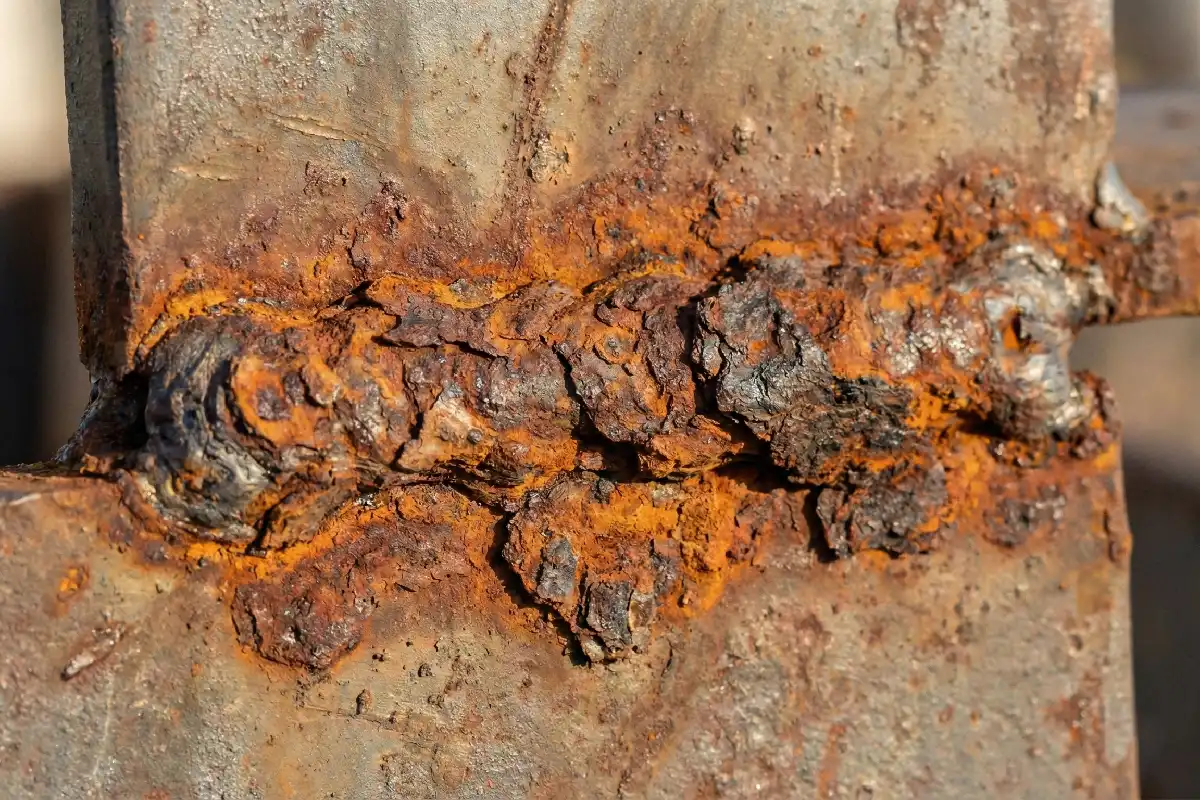
You often see rust at a weld seam because welding changes the metal. The heat from welding creates a zone where the metal structure becomes weaker. This area is called the Heat Affected Zone, or HAZ. Tiny cracks or crevices can form here. These spots trap water and air, which speed up rust. You also get changes in the metal’s chemistry during welding, making rust more likely.
Key Takeaways
- Weld seams rust faster due to changes in metal structure from welding. Heat creates weak spots that trap moisture.
- Tiny gaps and crevices at weld seams hold water and chemicals, making rust more likely. Regular inspections can catch these issues early.
- Grinding and smoothing weld seams help prevent rust. Clean surfaces allow coatings to stick better and reduce moisture retention.
- Using protective coatings on weld seams blocks air and water, which protects against rust. Always apply coatings to clean, smooth surfaces.
- Regular maintenance and checks on weld seams keep your metalwork strong. Look for cracks or color changes to catch rust before it spreads.
Welding Effects on Metal
Heat Affected Zone and Grain Structure
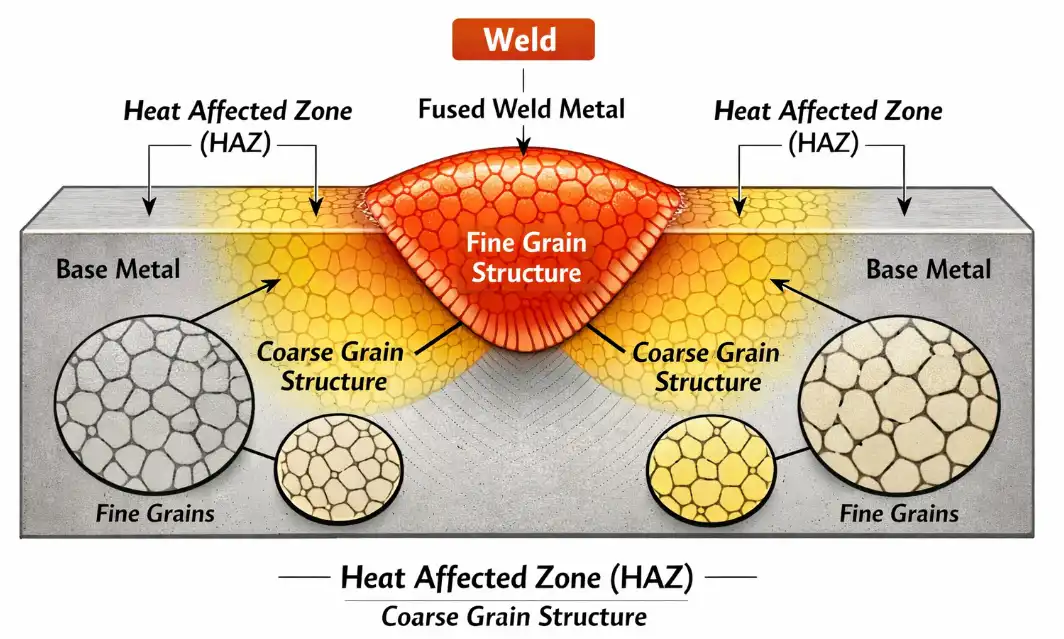
When you weld metal, the area next to the weld seam heats up and cools down quickly. This area is called the Heat Affected Zone (HAZ). The HAZ changes the way the metal looks and acts. You can see different zones in the HAZ, such as coarse-grained and fine-grained areas. The fine-grained zone has smaller grains, which makes it tougher. The coarse-grained zone has larger grains, which makes it weaker and more likely to rust.
Rapid heating and cooling during welding cause grain coarsening. Larger grains mean less strength and toughness. This makes the HAZ more open to rust and damage.
Here is a table showing how heat input changes the microstructure and toughness of metal:
| Heat Input (kJ/cm) | Microstructural Changes | Low Temperature Toughness (J) |
|---|---|---|
| 150 | More acicular ferrite and granular bainite | 174 |
| 350 | More grain boundary ferrite, larger grain size | 67 |
Chemical Composition Changes
Welding mixes the base metal and the filler material. This mixing changes the chemical makeup at the weld seam. If the base metal and filler are different, the weld seam can have a new composition. High heat input increases this mixing, which can make the weld seam less able to fight off rust.
- The fusion ratio controls how much the weld seam changes.
- Dilution happens when the filler and base metal mix.
- Too much dilution can make the weld seam weaker.
When the weld seam has smaller grains, it has more grain boundaries. These boundaries can attract bacteria and speed up rust, especially in wet or salty places.
Residual Stress After Welding
Welding leaves behind stress in the metal. This stress is called residual stress. It builds up near the weld seam and can make cracks form more easily.
| Measurement Type | Distance from Weld (mm) | Tangential Stress (MPa) | Axial Stress (MPa) |
|---|---|---|---|
| Pre-SR | 7 | -50 | -300 |
| Pre-SR | 12 | Varies | Approaches 0 |
High residual stress makes the weld seam more likely to crack and rust. You need to know about these changes to protect your metalwork from rust.
Rust Causes at Weld Seams
When you look at a weld seam, you may see rust there before you see it anywhere else. This happens because welding changes the metal in many ways. These changes make it easy for rust to start and spread.
Crevices and Voids Trap Corrosive Agents
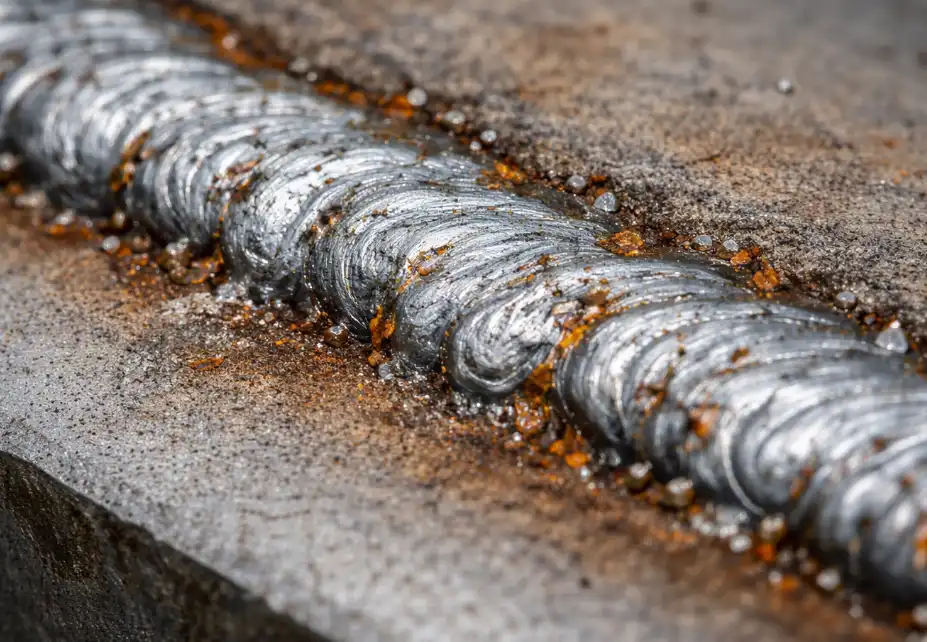
Welding can leave behind tiny gaps or holes at the weld seam. These small spaces catch water, dirt, and chemicals. When water gets stuck, it cannot dry out fast. This makes a good place for rust to grow.
- Crevices and voids keep water and chemicals trapped, so air and water stay in these spots.
- Strong ions, like chlorides from salt or other chemicals, build up here and attack the metal.
- The trapped water turns the area sour, which makes rust happen faster.
Studies show that the shape and size of these gaps matter. Bigger or longer gaps change how much air and acid get inside. This changes how fast the metal rusts. If a weld seam has lots of gaps, you will see more rust there.
Tip: Always look at weld seams for hidden gaps. Even a small hole can cause big rust problems later.
Metallurgical and Manufacturing Defects
Welding can also make mistakes in the metal. These mistakes help rust start. Some common problems are pitting, cracks, and welds that are not finished. Each problem makes a weak spot for rust to attack.
| Failure Mechanism | Description | Primary Cause at Weld |
|---|---|---|
| Pitting Corrosion | Small holes or pits that eat through the metal quickly | Loss of protective film in the heat-affected zone |
| Crevice Corrosion | Fast rusting in narrow gaps with little air movement | Flaws like incomplete welds or gaps between metal pieces |
| Stress Corrosion Cracking | Cracks that grow quickly when the metal is under stress and in a harsh place | High stress from welding and exposure to chemicals |
| Intergranular Corrosion | Rust that follows the grain boundaries inside the metal | Changes in the metal’s chemistry during welding |
Porous welds let water and dirt get inside the metal. If the weld does not join the base metal all the way, it leaves a gap. Both problems give rust a place to start and grow.
Accelerated Chemical Reactions
The weld seam is a special place where chemical reactions happen faster. Welding changes the metal’s structure and makes new areas with different chemicals. These changes set up tiny batteries, called galvanic cells, between the weld seam, the heat-affected zone, and the base metal.
- The heat-affected zone often becomes the anode in these cells, so it rusts first.
- The base metal stays safer, but the weld seam and nearby areas rust faster.
- Chemical reactions speed up in these spots, causing more pits and deeper rust.
Research shows that how fast weld seams rust depends on how the metal’s structure changes and how easy it is for ions to move in trapped water or rust. If a weld seam has lots of mistakes or gaps, these reactions go even faster.
Note: If you know more about these chemical changes, you can protect your metalwork from rust better.
Table: Main Factors That Cause Rust at Weld Seams
| Factor | Description |
|---|---|
| Metallurgical changes | Welding changes the metal’s resistance to rust, especially in the heat-affected zone. |
| Environmental influences | Heat from welding changes the surface, making it easier for rust to start. |
| Corrosion types | Weld seams can suffer from pitting, stress corrosion, and crevice corrosion. |
| Composition differences | Different metals at the weld seam can create tiny batteries that speed up rust. |
| Microstructural changes | The new structure after welding can make the area weaker and more likely to rust. |
Now you know why weld seams rust more than other parts of metal. The mix of gaps, mistakes, and fast chemical reactions makes these spots rust first. If you want your metalwork to last, always check the weld seams.
Preventing Weld Seam Rust
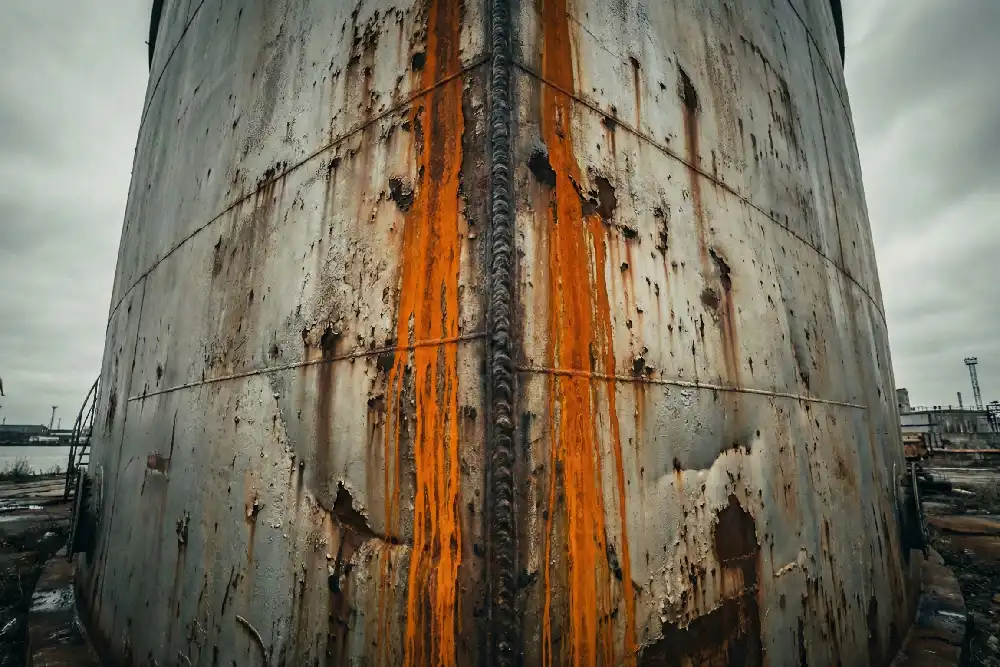
Grinding and Smoothing Welds
Grinding and smoothing the weld seam helps stop rust. Grinding takes away oxide scale, slag, and spatter. This shows clean metal, so coatings stick better. Smooth weld seams do not hold water or dirt as much. Cleaning and grinding make it harder for rust to start.
- Grinding helps coatings stick to the metal.
- Smoother welds last longer and fight rust better.
- Grinding also gets rid of small cracks and holes.
| Technique | Effect on Weld Visibility |
|---|---|
| Unground Seams | Weld lines are easy to see after galvanizing |
| Ground and Blast-Cleaned | Weld lines are much harder to see but not gone |
| Pre-Galvanizing Grinding | Hides mill marks and flaws before galvanizing |
Tip: Always look for rough spots after welding. Smoother welds mean less rust.
Protective Coatings and Treatments
The right coating keeps air and water away from the weld seam. Clean the weld first with blasting or solvent to remove dirt and oil. Then put on coatings like RustSeal or Cavity Coater. These coatings make a strong shield that blocks water and air.
- Stripe coating adds more protection to seams and edges.
- Epoxies and zinc-rich primers work well in harsh places.
- Always follow the rules for how thick and dry the coating should be.
Good lighting helps you see if you missed a spot. Let the coating dry right so it stays strong.
Regular Inspection and Maintenance
Check weld seams often to find rust early. Look for cracks, bubbles, or color changes. Use tools like DFT probes or adhesion tests to check the coating.
- Check weld seams every month or year for leaks or damage.
- Do a full outside check every five years.
- Plan an inside check every ten years or sooner if you see rust.
| Maintenance Practice | Description |
|---|---|
| Near-white grade (Sa2.5) finish | Removes rust and dirt, helps coatings stick better |
| Anti-corrosion coatings | Epoxy, vinyl, and phenolic coatings protect straight seam welded pipes |
| Rust removal techniques | Shot blasting removes rust and keeps maintenance costs low |
Taking care of your weld seams keeps your metal strong and free from rust for a long time.
You see more rust at a weld seam because welding changes the metal’s surface, traps moisture, and creates weak spots.
- Ripples and gaps hold water, which speeds up rust.
- Energy from welding changes the metal and makes it easier for rust to start.
- Movement and stress at the seam can break coatings and let rust in.
You can stop rust by grinding, using strong coatings, and checking your work often. Industry experts say that good preparation, the right tools, and regular care keep your metal strong for years.
FAQ
Why do weld seams rust faster than other areas?
You see weld seams rust first because welding changes the metal’s structure. The heat creates weak spots and traps moisture. These changes make rust start and spread quickly.
Why does grinding help prevent rust at weld seams?
You remove rough spots and expose clean metal when you grind weld seams. Smooth surfaces do not trap water or dirt. This makes it harder for rust to form.
Why should you use special coatings on weld seams?
Special coatings block air and water from reaching the metal. You protect the weld seam from rust by sealing these weak spots. Coatings last longer on clean, smooth welds.
Why is regular inspection important for weld seams?
You catch early signs of rust or damage when you inspect weld seams often. Early action stops rust from spreading. This keeps your metalwork strong and safe.
Why do different metals at the weld seam cause more rust?
You create tiny batteries when you join different metals. These batteries speed up rust at the weld seam. The area with the weaker metal rusts first.
What Are Fibre Laser Welding Machines and How Do They Work
What Makes Laser Cleaning Technology Different from Traditional Methods
How to correctly replace the protective lens of a laser welding machine
The necessity of using pure water in laser welding water coolers