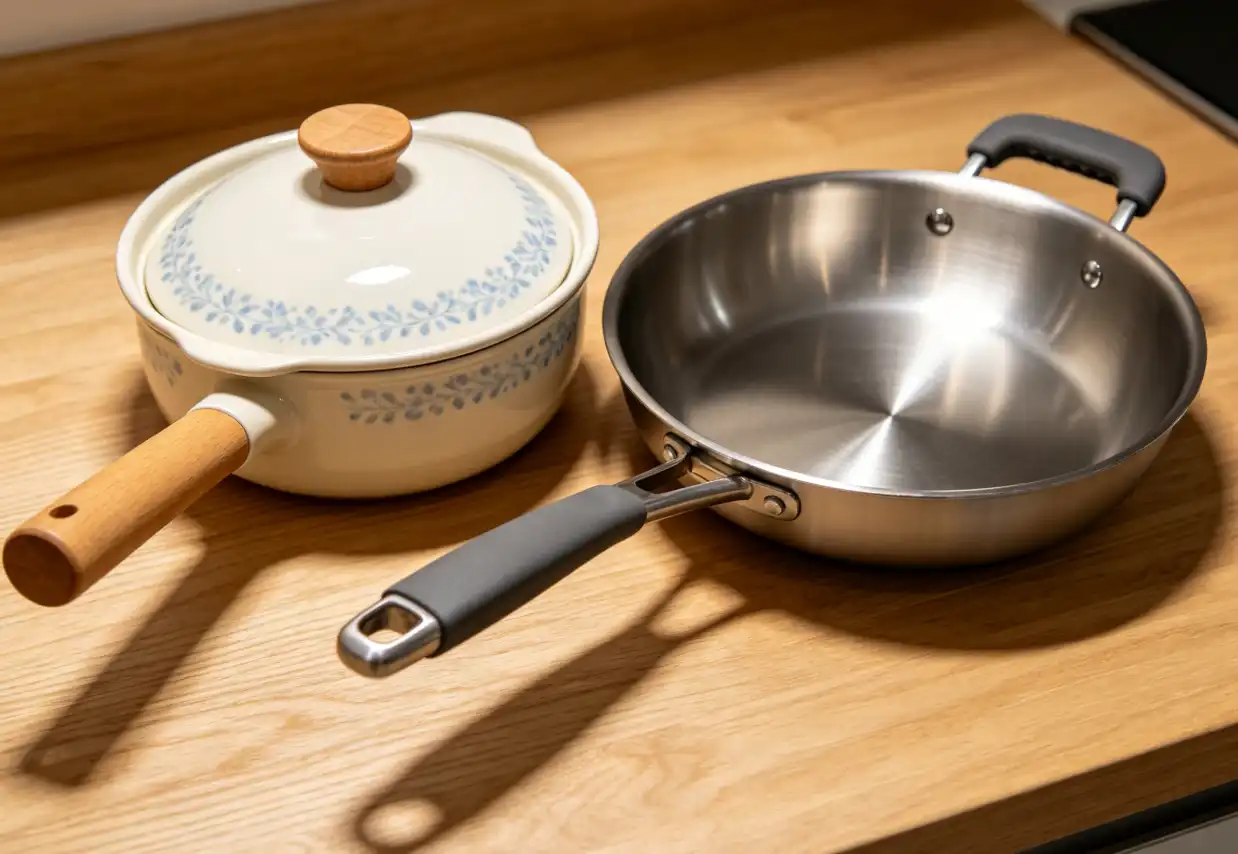
The global cookware market hit $28.5 billion in 2023, according to Grand View Research — and the single most common question driving purchase decisions is ceramic vs stainless steel cookware: which one actually performs better in a real kitchen? The short answer is that ceramic excels at low-fat, non-stick cooking right out of the box, while stainless steel delivers superior durability, heat tolerance, and searing capability that improves with technique. Choosing between them depends less on which is “better” and more on how you cook, what you cook, and how long you expect your pans to last — all of which we tested and compared below.
Ceramic vs Stainless Steel Cookware at a Glance
Before diving into the details, here’s a quick snapshot. The table below captures the core differences in ceramic vs stainless steel cookware — from construction to cost — so you can see where each material wins and where it falls short.
| Feature | Ceramic Cookware | Stainless Steel Cookware |
|---|---|---|
| Construction | Aluminum core with sol-gel ceramic coating | Multi-ply layers (typically 18/10 steel + aluminum or copper core) |
| Non-Stick Ability | Excellent when new; degrades within 1–2 years | Minimal — requires fat or proper technique |
| Heat Conductivity | Good on low-to-medium; coating can crack above 500 °F | Excellent and even, especially tri-ply; safe above 600 °F |
| Durability | 2–3 years average lifespan | 15–20+ years with proper care |
| Oven Safe | Up to ~450 °F (varies by brand) | Up to 600 °F+; often broiler-safe |
| Price Range | $30–$150 per pan | $50–$300+ per pan (All-Clad, Demeyere tier) |
| Best For | Eggs, pancakes, quick weeknight meals | Searing, deglazing, fond-building, all-purpose cooking |
The short version? Ceramic cookware wins on convenience and upfront affordability. Stainless steel wins on longevity, heat tolerance, and versatility. Your choice between ceramic vs stainless steel cookware ultimately depends on whether you prioritize easy food release or a pan that can handle decades of hard use.
Quick rule of thumb: If you replace ceramic pans every two years at $60 each, you’ll spend $600 over 20 years — roughly the same as one premium stainless steel set that lasts the entire time.
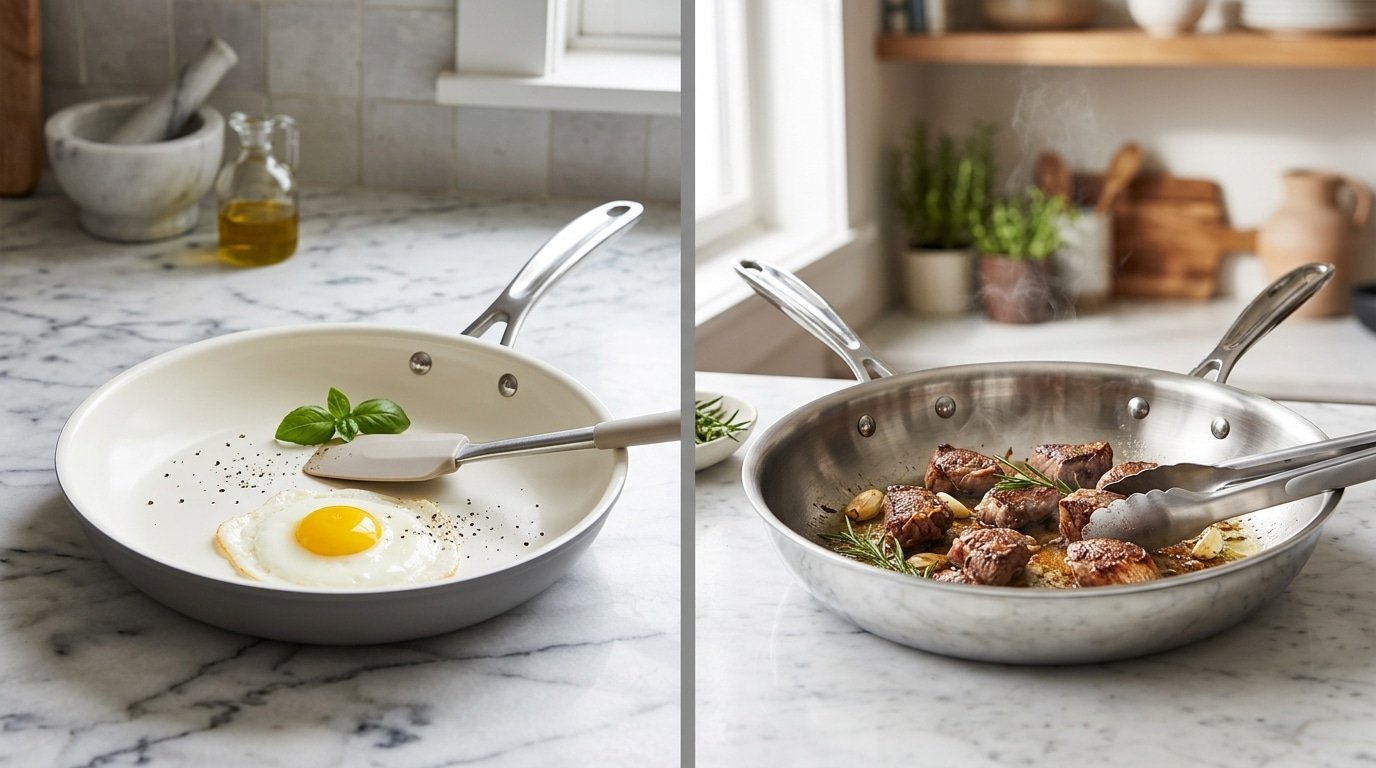
Ceramic vs stainless steel cookware side-by-side comparison on kitchen counter
How Each Type of Cookware Is Actually Made
Most people assume ceramic cookware is made from clay or kiln-fired pottery. It’s not. The vast majority of “ceramic” pans on the market — brands like GreenPan, Caraway, and Our Place — start with a pressed or forged aluminum core. That core is then coated with a sol-gel finish derived from silicon dioxide (essentially, sand). The sol-gel process creates a smooth, non-stick surface without PTFE (Teflon). Typical coating thickness? Around 20–40 microns — thin enough that the aluminum underneath does most of the thermal work.
Stainless steel cookware takes a fundamentally different approach. There’s no coating at all. Instead, manufacturers bond multiple layers of metal — usually 3-ply or 5-ply — through a process called cladding. A common configuration: an 18/10 stainless steel interior, an aluminum or copper core for heat conduction, and a magnetic stainless steel exterior for induction compatibility. All-Clad popularized this tri-ply design in the 1970s, and brands like Demeyere and Tramontina have since refined it with variations up to 7-ply.
Why does this matter for the ceramic vs stainless steel cookware debate? Because the build dictates everything — heat distribution, durability, reactivity with acidic foods, and how long the pan actually lasts. A ceramic pan’s performance ceiling is limited by its coating lifespan. A stainless steel pan’s performance is limited only by the quality of its cladding.
Think of it this way: ceramic cookware is a coated tool; stainless steel cookware is a solid structure. One wears down. The other doesn’t.
Understanding this construction difference makes every comparison that follows — from heat conductivity to long-term value — far more intuitive.
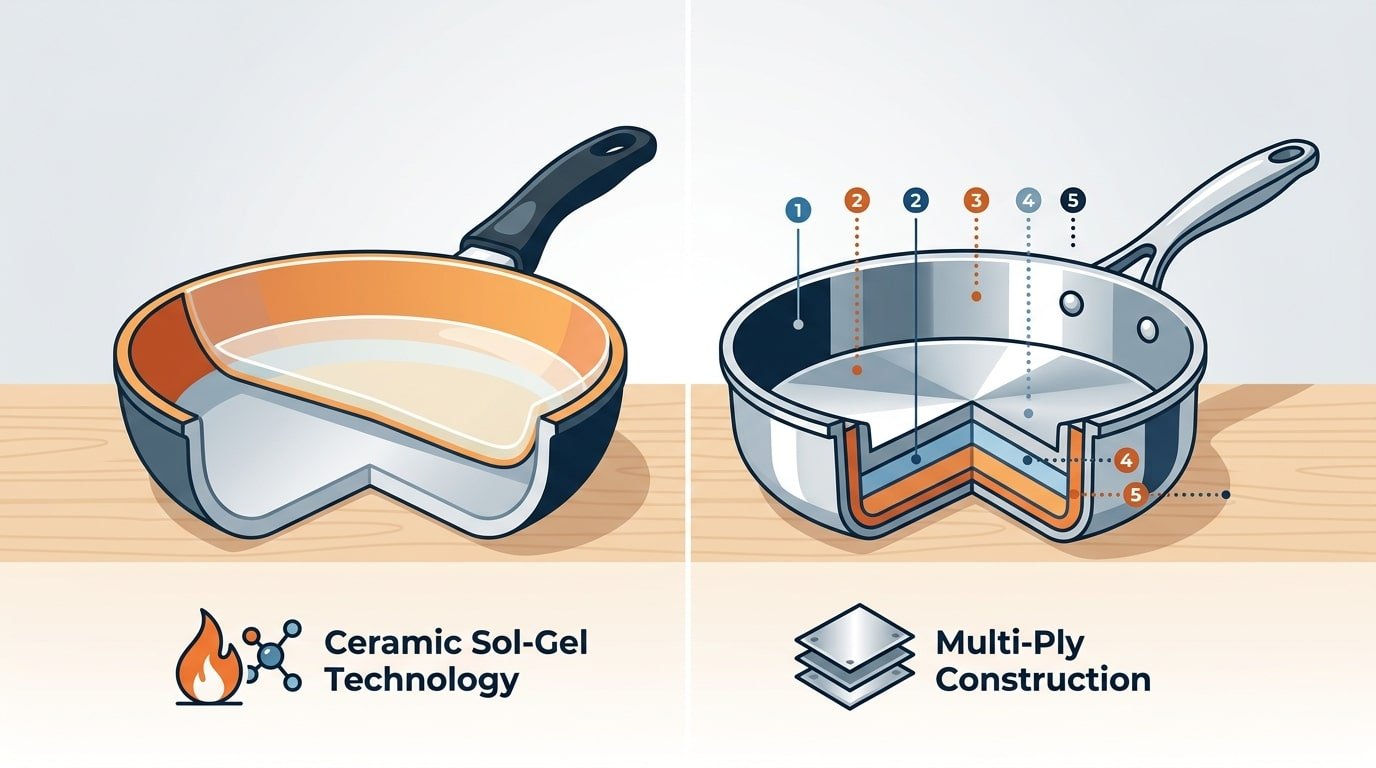
Ceramic vs stainless steel cookware construction cross-section showing sol-gel coating and multi-ply cladding
Heat Conductivity and Real-World Cooking Performance
Stainless steel wins the heat game — but only when it has help. Most quality stainless steel pans use an aluminum or copper core (tri-ply or five-ply construction) that pushes thermal conductivity up to roughly 205 W/m·K for aluminum-core models. That translates to even heat distribution across the entire cooking surface, minimal hot spots, and a sear that actually develops a uniform Maillard crust on a steak.
Ceramic cookware tells a different story. The aluminum base underneath heats quickly — often reaching 400°F in under 90 seconds — but the sol-gel ceramic coating itself is a poor thermal conductor. The result? Noticeable hot spots centered directly over the burner, with cooler edges. Pancakes brown unevenly. Delicate sauces scorch in the middle while staying lukewarm at the rim.
When comparing ceramic vs stainless steel cookware for high-heat tasks like searing, deglazing, or wok-style stir-frying, stainless steel with a bonded core outperforms ceramic by a wide margin.
Where ceramic holds its own is low-to-medium heat cooking. Eggs, sautéed vegetables, reheated grains — these tasks rarely exceed 350°F, and the nonstick surface compensates for uneven heat by preventing food from sticking to cooler zones. Preheating on medium for 60–90 seconds is usually sufficient.
Stainless steel demands patience. Proper preheating — the water-droplet “mercury ball” test — takes 2–3 minutes but pays off with superior browning and fond development. According to testing by America’s Test Kitchen, fully clad stainless pans from brands like All-Clad and Demeyere consistently score highest for heat evenness across gas, electric, and induction cooktops.
Bottom line: pick stainless steel for any recipe where precise, even heat matters. Reserve ceramic for quick, gentle cooking where convenience outweighs thermal performance.
Non-Stick Ability and Food Release Tested Side by Side
Crack an egg onto a brand-new ceramic pan and it glides like a hockey puck on ice. Do the same on bare stainless steel without preheating or fat, and you’ll be scraping for five minutes. That initial experience is exactly why ceramic cookware outsells stainless steel among first-time buyers — but the story changes dramatically after six months of regular use.
Ceramic coatings rely on a sol-gel layer (a silicone-based polymer) that starts with an extremely low coefficient of friction. Independent testing by consumer groups like America’s Test Kitchen has shown that most ceramic non-stick pans lose meaningful food-release performance within 6–12 months of moderate use, even when cared for properly. High heat, metal utensils, and dishwasher cycles accelerate the decline. Once that coating degrades, there’s no restoring it.
Stainless steel takes the opposite approach. There’s no coating to lose. The trick is technique: preheat the pan over medium heat for 2–3 minutes, add oil, and wait until the oil shimmers before adding protein. This creates a temporary non-stick effect through the Leidenfrost principle — a thin steam barrier that lifts food off the metal surface. Master this, and your results stay identical on day one and day 1,000.
When comparing ceramic vs stainless steel cookware for non-stick ability, the real question isn’t which performs better on day one — it’s which performs better on day 300.
Brands like GreenPan and Caraway have improved ceramic longevity with diamond-infused coatings, but even premium options show measurable degradation after roughly 200 cooking cycles. Stainless steel from All-Clad or Demeyere, by contrast, can deliver consistent food release for decades if you respect the preheat-and-oil ritual. The learning curve is steeper, but the payoff compounds over time.
Durability and Realistic Lifespan You Can Expect
Here’s the blunt truth about ceramic vs stainless steel cookware durability: one lasts a generation, the other lasts a couple of years. That gap isn’t marketing spin — it’s material science.
Ceramic Coating: A Ticking Clock
Ceramic non-stick coatings are made from a thin sol-gel layer, typically only 20–40 microns thick. Under normal home-kitchen use — cooking 4–5 times per week — expect the effective non-stick performance to degrade noticeably within 1 to 3 years. Brands like GreenPan and Caraway acknowledge this reality indirectly through their warranty terms, which rarely exceed 2 years for the coating itself.
What accelerates the decline? Three things destroy ceramic coatings fastest:
- Metal utensils — even a single scrape from a stainless steel spatula can gouge the surface
- Thermal shock — running a hot ceramic pan under cold water causes micro-fractures in the coating
- Stacking without protectors — pan-on-pan contact chips the finish within months
Stainless Steel: Measured in Decades
Quality stainless steel cookware from brands like All-Clad, Demeyere, or Tramontina routinely lasts 20–30+ years. There’s no coating to wear off. Scratches from metal utensils are cosmetic, not functional. You can overheat it, stack it carelessly, and toss it in a commercial dishwasher — the pan keeps performing.
A warped stainless steel pan is almost always the result of extreme thermal shock on a thin-gauge model. Invest in tri-ply or five-ply construction, and warping becomes nearly impossible under home-kitchen conditions.
When you compare long-term cost, replacing a $50 ceramic pan every 2 years costs $250 over a decade. A $130 stainless steel pan bought once costs exactly $130. The math is decisive.
Health and Safety Concerns with Both Materials
Safety is often the deciding factor when comparing ceramic vs stainless steel cookware — and rightly so. You cook in these pans daily, so what leaches into your food matters more than any marketing claim.
Ceramic Coatings: PFAS-Free but Not Worry-Free
Ceramic-coated pans are genuinely free of PTFE (Teflon) and PFAS, the “forever chemicals” linked to thyroid disease and certain cancers. That’s a real advantage. However, cheaper ceramic glazes can contain trace amounts of lead or cadmium, especially imports that skip rigorous testing. Look for California Proposition 65 compliance or FDA food-contact certification before buying. Brands like GreenPan and Caraway publish third-party lab results confirming their coatings are free of heavy metals.
Stainless Steel: Chemically Inert, with One Caveat
High-quality 18/10 stainless steel is about as inert as cookware gets. It won’t off-gas, degrade, or react with acidic foods like tomato sauce. The one concern? Nickel. A 2013 study published in the Journal of Agricultural and Food Chemistry found that stainless steel can leach small amounts of nickel and chromium into food, particularly during the first few uses. For most people this is negligible, but if you have a diagnosed nickel allergy, opt for nickel-free stainless steel (look for 18/0 grade).
Certifications Worth Checking
- FDA food-contact safe — baseline requirement for any cookware sold in the U.S.
- California Prop 65 — stricter limits on lead, cadmium, and other toxins
- SGS or Intertek tested — independent lab verification of manufacturer claims
Bottom line: stainless steel is the safer long-term choice for anyone concerned about chemical exposure. Ceramic is safe too — but only from reputable brands that back their PFAS-free claims with verifiable test data.
Cleaning, Daily Maintenance, and Dishwasher Compatibility
Cleanup is where ceramic vs stainless steel cookware differences hit you daily. Ceramic pans wipe clean in seconds — when they’re new. A soft sponge, warm water, and a drop of dish soap handle 90% of meals. But here’s the catch: abrasive scrubbers, steel wool, and harsh cleaners destroy the sol-gel coating fast. One aggressive scrub session can start the decline.
Stainless steel demands more effort upfront. Stuck-on food is practically a given if you skip preheating or fat. The fix? Deglaze with water while the pan is still hot, or soak it for 10 minutes. For stubborn residue, Bar Keepers Friend (an oxalic acid–based cleanser) restores stainless steel to a mirror finish in under a minute. That option simply doesn’t exist for ceramic — you’re stuck with gentle methods only.
Dishwasher Reality Check
Most manufacturers label both types “dishwasher safe,” but that label is misleading for ceramic. Dishwasher detergents contain alkaline compounds that erode ceramic coatings over time. GreenPan, for example, recommends hand washing to preserve nonstick performance. Stainless steel, by contrast, genuinely survives the dishwasher cycle after cycle without degradation. Brands like All-Clad and Demeyere confirm full dishwasher compatibility.
Bottom line: stainless steel looks better at year three than ceramic does at year one — precisely because it tolerates aggressive cleaning that ceramic cannot.
If low-maintenance cleanup matters to you, stainless steel wins the long game despite requiring slightly more work per meal. Ceramic is easier day-to-day but far less forgiving of mistakes.
Price, Long-Term Value, and Which One to Choose
A decent ceramic pan costs $25–$60. A quality stainless steel pan from brands like All-Clad or Demeyere runs $100–$250. The sticker shock is real — until you do the math per year of actual use.
Ceramic cookware lasts 1–3 years before the coating degrades. At $40 per pan replaced every two years, you’re spending $20/year. A $200 stainless steel pan lasting 20+ years? That’s $10/year or less. Stainless steel wins the long-term value calculation by a wide margin.
The cheapest option upfront is almost never the cheapest option over a decade.
So when weighing ceramic vs stainless steel cookware, your decision should hinge on three things:
- Budget right now: Tight on cash? A ceramic set gets you cooking immediately without financial pain.
- Cooking style: Mostly eggs, pancakes, and quick sautés? Ceramic handles those beautifully. Searing, deglazing, and building fond? Stainless steel is non-negotiable.
- Patience for technique: Stainless demands proper preheating and fat management. If that sounds tedious, ceramic keeps things simple.
The smartest move for most home cooks? Own both. Grab one or two ceramic pans for delicate tasks and invest in a tri-ply stainless steel skillet plus a saucepan as your kitchen workhorses. This hybrid approach — roughly $150–$300 total — covers every cooking scenario and delivers the best cost-per-use ratio over five years.
Frequently Asked Questions About Ceramic and Stainless Steel Cookware
Is ceramic cookware safer than stainless steel?
Both are considered safe. Ceramic coatings are free of PTFE and PFOA, which reassures many home cooks. Stainless steel can leach trace amounts of nickel and chromium, but research published in the Journal of Agricultural and Food Chemistry found these levels far below harmful thresholds. If you have a diagnosed nickel allergy, ceramic is the safer bet. Otherwise, either material is fine.
Can I use metal utensils on ceramic pans?
You can, but you shouldn’t. Metal spatulas and whisks scratch the sol-gel coating, accelerating the loss of non-stick performance. Stick with silicone, wood, or nylon tools to protect the surface and extend the pan’s usable life beyond the typical 2–3 year window.
Does stainless steel work on induction cooktops?
Yes — most stainless steel cookware is induction-compatible because it contains a magnetic steel base layer. Check for an induction symbol on the packaging or test with a refrigerator magnet. Many ceramic pans lack a magnetic base and won’t work on induction unless specifically designed for it.
Is replacing ceramic cookware every few years actually worth it?
That depends on what you value. Spending $40 every two to three years adds up to roughly $200 over a decade. A single quality stainless steel pan costs $100–$150 and lasts 20+ years. When comparing ceramic vs stainless steel cookware on lifetime cost, stainless steel almost always wins — unless you simply prefer the effortless non-stick experience and treat ceramic pans as consumables.
See also
7 Best 18/10 Stainless Steel Cookware Sets (Chef Tested)
Best Hybrid Stainless Steel Cookware (Tested and Reviewed)
9 Best Stainless Steel Cookware Sets for Induction (Tested)