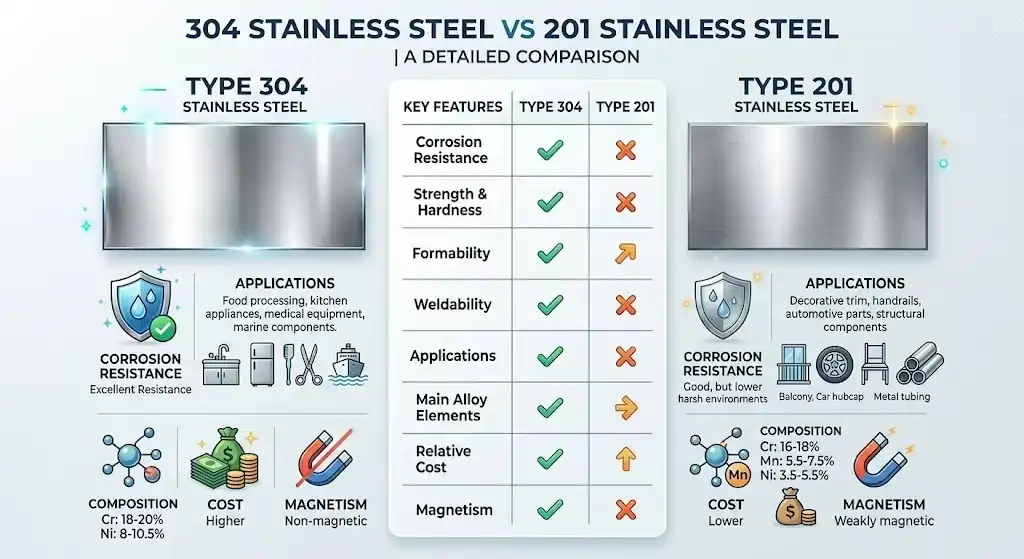
You can see the main difference between 304 stainless steel and 201 stainless steel by looking at their chemical makeup, how well they fight rust, and their price. 304 stainless steel has more chromium and nickel. This makes it better at stopping rust and gives it a nicer look. 201 stainless steel costs less money but works better for things used inside. Here is a quick comparison:
| Property | 201 Stainless Steel | 304 Stainless Steel |
|---|---|---|
| Corrosion Resistance | Lower | Higher |
| Mechanical Strength | More rigid | Better fatigue resistance |
| Price | More affordable | More expensive |
| Typical Uses | Door knobs, indoor hardware | Food containers, hygienic tools |
| Appearance | Less appealing | More appealing |
Picking the right type helps you get the best value and performance for your project.
Key Takeaways
- 304 stainless steel has more chromium and nickel. This makes it better at stopping rust and stains than 201 stainless steel.
- 201 stainless steel costs less money. It works well for things inside that do not face tough conditions.
- Use 304 stainless steel for things outside, in wet places, or with food. It is good when you need something strong and clean.
- 201 stainless steel is good for hardware inside, decorations, and simple uses. You do not need strong rust protection for these things.
- 304 stainless steel is stronger and tougher. It does not bend or get tired as easily as 201 stainless steel.
- 201 stainless steel can turn magnetic after shaping. 304 stainless steel mostly stays non-magnetic.
- 304 stainless steel has a shiny and smooth surface. It keeps its shine longer. 201 stainless steel looks darker and duller as time goes on.
- Pick the right stainless steel based on your money, where you use it, and how long you want it to last.
Quick Comparison
304 Stainless Steel Overview
You see 304 stainless steel in kitchens and hospitals. It also shows up in factories. This type has a lot of nickel and chromium. These parts help it fight rust and stains. You can use it where things must stay clean. It stays strong when near water or chemicals. People use it for food containers and medical tools. It is also used for outdoor equipment. The surface looks shiny and smooth. You can clean it without much trouble. This grade costs more money. But it works better and lasts longer.
201 Stainless Steel Overview
You find 201 stainless steel in door handles and indoor hardware. It is also used for decorations. This type has less nickel and more manganese. It does not fight rust as well as 304 stainless steel. You should use it inside or in dry places. It works well for things that do not face tough conditions. The surface may not look as shiny. You can save money by picking this grade for easy jobs. It costs less and still has good strength for many uses.
Main Differences
You can see the main differences by looking at what is inside each type, how well they fight rust, how strong they are, their price, and what they are used for. Here is a table to help you compare:
| Attribute | 304 Stainless Steel | 201 Stainless Steel |
|---|---|---|
| Composition | Higher nickel content | Lower nickel content |
| Corrosion Resistance | Superior corrosion resistance | Inferior corrosion resistance |
| Mechanical Properties | Higher durability and versatility | Slightly inferior durability |
| Price | Generally more expensive | More cost-effective |
| Uses | Commonly used in food processing and various applications | Suitable for less critical applications |
- 304 stainless steel protects better against rust.
- 201 stainless steel costs less but is best for inside use.
- 304 stainless steel is used where safety and cleanliness matter.
- 201 stainless steel is good for things that do not need strong rust protection.
Tip: Pick 304 stainless steel for outdoor or food projects. Pick 201 stainless steel if you want to save money and use it inside.
You can choose quickly by thinking about where you will use the material and your budget. The type you pick changes how long your project lasts and how well it works.
Chemical Composition
Chromium and Nickel Content
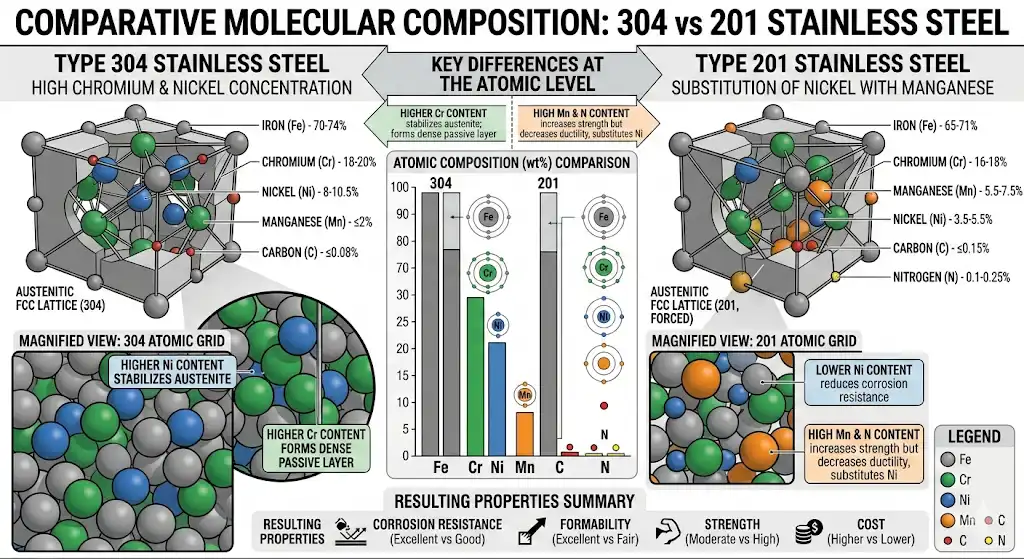
Chromium and nickel are the main elements that set 304 stainless steel and 201 stainless steel apart. You can see the difference in their typical content by looking at the table below:
| Stainless Steel Grade | Chromium Content | Nickel Content |
|---|---|---|
| 201 | 15% | 5% |
| 304 | 18% | 9% |
Chromium helps create a thin, invisible layer on the surface. This layer protects the metal from rust and stains. Nickel makes the steel stronger and helps it resist corrosion. When you choose 304 stainless steel, you get more chromium and nickel. This means better protection and longer life, even in tough places. 201 stainless steel has less chromium and nickel, so it does not protect as well against rust.
Manganese and Other Elements
Manganese is another important element, especially in 201 stainless steel. You will find that 201 stainless steel has more manganese, usually between 5.5% and 7.5%. Manganese helps make the steel easier to shape and form. It also makes the steel harder and stronger. Because 201 stainless steel uses more manganese, it can use less nickel. This makes it a more affordable choice. In 304 stainless steel, manganese is present but in smaller amounts. Other elements, like carbon and nitrogen, also play a role, but they are present in lower amounts and have less effect on the main properties.
Effect on Properties
The chemical makeup of each grade changes how it works in real life. When you pick 304 stainless steel, you get a metal that resists rust and stains very well. The higher chromium and nickel levels help form a strong, stable layer on the surface. This layer keeps out water and air, so the metal stays shiny and clean. You can use it in kitchens, hospitals, and outside, where it faces water or chemicals.
201 stainless steel does not have as much chromium or nickel. This means it forms a weaker protective layer. It can rust or stain more easily, especially if you use it outside or in wet places. The extra manganese in 201 stainless steel makes it stronger and easier to shape, but it cannot match the corrosion resistance of 304 stainless steel. You should use 201 stainless steel for indoor items or where you do not need the highest level of protection.
Note: The higher nickel and chromium in 304 stainless steel give it better strength, ductility, and resistance to damage. The lower levels in 201 stainless steel make it less tough and more likely to rust, but also more affordable.
Corrosion Resistance
304 Stainless Steel Performance
When you look at 304 stainless steel, you see a material known for its excellent corrosion resistance. This steel contains more chromium and nickel than other types. These elements help it fight rust, stains, and acids. You can use 304 stainless steel in places with water, chemicals, or even salt. It keeps its clean look even after long use in harsh conditions. You do not have to worry about rust spots or dull surfaces. Many people choose this steel for kitchens, hospitals, and outdoor equipment because it stays strong and shiny. The high chromium and nickel content make it a top choice for areas that need strong rust resistance.
201 Stainless Steel Performance
201 stainless steel offers good corrosion resistance, but it does not match the level of 304 stainless steel. This type has less nickel, which makes it more affordable but also less able to resist acids and harsh cleaners. Over time, you may notice rust or pitting if you use it in wet or salty places. The corrosion resistance of 201 stainless steel works well for indoor items, like door handles or furniture. If you use it outside or in kitchens, it may develop stains or rust spots. The lower nickel content means it is not the best choice for areas with lots of moisture or chemicals.
| Grade | Rust Resistance |
|---|---|
| 201 | Good (prone to pitting in severe environments) |
Tip: If you want a material that stands up to acids and salt, pick 304 stainless steel. If you only need basic protection indoors, 201 stainless steel can work.
Environmental Suitability
You should always think about where you plan to use your stainless steel. 304 stainless steel fits many environments. You can use it outside, in kitchens, or in places with chemicals. It resists rust and stains in both dry and wet conditions. This makes it a safe pick for tough jobs.
201 stainless steel works best indoors. It handles dry air and mild conditions well. If you use it in places with salt, water, or strong cleaners, it may start to corrode. You should avoid using it in harsh or outdoor environments.
| Stainless Steel Type | Corrosion Resistance | Suitable Environments |
|---|---|---|
| 201 | Moderate | Indoor dry environments |
| 304 | Excellent | Various corrosive environments |
Note: Always match the steel grade to your environment. This helps your project last longer and look better.
Mechanical and Physical Properties
Strength and Toughness
You can compare how strong and tough each type is by seeing how they handle force and hits. 304 stainless steel is stronger, with a tensile strength of about 515 MPa. This means it can stretch more before it breaks. 201 stainless steel has a tensile strength between 380 and 450 MPa. Both types have almost the same yield strength, close to 200 MPa. But 304 stainless steel bends and stretches better without cracking. It also handles impacts well, even when it is cold. 201 stainless steel is strong and stiff, but it is not as tough as 304 stainless steel.
| Property | 201 Stainless Steel | 304 Stainless Steel |
|---|---|---|
| Tensile Strength | 380-450 MPa | 515 MPa |
| Yield Strength | ~200 MPa | ~205 MPa |
| Ductility | Lower | Higher |
| Impact Toughness | Good | Excellent |
Note: If you need metal that stretches and takes hits, 304 stainless steel works better.
Fatigue and Deformation Resistance
Fatigue resistance means how well a metal holds up when bent or moved again and again. 304 stainless steel does better at this. You can use it where the metal needs to bend or move a lot. It keeps its shape and strength for a long time. 201 stainless steel is hard and tough, but it does not fight fatigue as well as 304 stainless steel. You might see bending or cracks sooner if you use 201 stainless steel in places with lots of stress.
| Property | 201 Stainless Steel | 304 Stainless Steel |
|---|---|---|
| Fatigue Strength | Greater hardness | Better fatigue resistance |
| Deformation Resistance | Good | Excellent |
- 304 stainless steel stays strong when moved many times.
- 201 stainless steel is good for stiff parts but may not last as long if it moves a lot.
Magnetic Properties
You might wonder if these steels stick to magnets. Both 201 and 304 stainless steel are not magnetic at first. The difference comes from what is inside them. 201 stainless steel has more manganese, so it can become magnetic after being shaped or bent. 304 stainless steel stays non-magnetic or just a little magnetic, even after working with it.
| Stainless Steel Type | Magnetic Properties | Composition Influence |
|---|---|---|
| 201 | More magnetic | Higher manganese content |
| 304 | Typically non-magnetic | Lower manganese content |
Tip: If you do not want your metal to attract magnets, 304 stainless steel is a better pick.
- Both types start out not magnetic.
- 201 stainless steel can turn magnetic after working.
- 304 stainless steel mostly stays non-magnetic.
Mechanical and physical properties help you pick the right stainless steel for your job. If you want something tough, good against bending, and not magnetic, choose 304 stainless steel. If you want something hard and do not mind some magnetism, 201 stainless steel is fine.
Price and Cost
Material Cost Comparison
When you compare 304 stainless steel and 201 stainless steel, you notice a clear difference in price. 201 stainless steel usually costs less. This lower price comes from its chemical makeup. 201 stainless steel uses less nickel, which is an expensive element. Instead, it has more manganese, which costs less. Because of this, you often see 201 stainless steel in products where saving money matters most.
304 stainless steel costs more. The higher price comes from its greater nickel and chromium content. These elements make 304 stainless steel stronger and more resistant to rust. You pay more for 304 stainless steel, but you get better performance in tough environments.
Here is a simple table to help you see the differences:
| Stainless Steel Grade | Cost | Corrosion Resistance | Suitable Applications |
|---|---|---|---|
| 201 | Lower | Moderate | Economic applications |
| 304 | Higher | Superior | Harsh environments, food processing, marine, medical equipment |
Note: If you want to save money and do not need top-level rust protection, 201 stainless steel gives you a budget-friendly option. If you need strong rust resistance, 304 stainless steel is worth the higher price.
Value for Different Uses
You should think about value, not just price. Value means what you get for the money you spend. 201 stainless steel works well for indoor items, decorations, or places where rust is not a big problem. You get good strength and a nice look at a lower cost. This makes 201 stainless steel a smart choice for furniture, indoor railings, or parts that do not face water or chemicals.
304 stainless steel gives you more value when you need long-lasting performance. You see this grade in kitchens, hospitals, and outdoor equipment. It resists rust, stains, and harsh cleaners. You pay more, but you avoid repairs and replacements. This saves you money over time.
Global supply and demand trends also affect the price you pay. When nickel prices drop, the cost of both 304 and 201 stainless steel can go down. If demand for stainless steel parts is low, prices may stay weak for a while. You might notice that market changes can make stainless steel more affordable or more expensive, depending on the timing.
- 201 stainless steel offers good value for simple, indoor uses.
- 304 stainless steel gives you better value for tough jobs and harsh environments.
Tip: Always match the grade to your needs. This helps you get the best value for your project and budget.
Appearance and Identification
Visual Differences
You can spot differences between 304 stainless steel and 201 stainless steel by looking at their color and shine. 304 stainless steel has a bright, silvery finish. It keeps its shine for a long time, even when you use it in tough places. 201 stainless steel looks darker. The higher manganese content gives it a less shiny look. Over time, 201 stainless steel can lose its luster and may appear dull, especially if you use it in harsh environments.
Here is a table to help you compare their appearance:
| Stainless Steel Type | Appearance Characteristics | Luster Retention |
|---|---|---|
| 201 | Darker due to manganese content | Less luster over time, may appear dull in harsh environments |
| 304 | Shiny, silvery finish | Maintains luster longer, superior resistance to oxidation and corrosion |
Tip: If you want a bright and shiny look that lasts, 304 stainless steel is the better choice.
Surface Finish
You can also tell the difference by feeling and looking at the surface. 304 stainless steel has a smoother and more reflective finish. Many people describe it as brushed or satin. This makes it a popular choice for things that need to look good, like kitchen tools or appliances. The surface feels even and looks clean.
201 stainless steel has a duller and hazier surface. You may see more lines or grain patterns. The finish is less smooth and does not reflect light as well. This type works well for items where appearance is not the most important factor.
- 304 stainless steel has a smoother, more reflective finish.
- 201 stainless steel has a duller, hazier surface appearance.
- The finish of 304 is often described as brushed or satin.
- 201’s surface finish may show more visible lines or grain patterns.
Note: You can often feel the difference by running your hand over the surface.
How to Tell 304 from 201
You can use several methods to tell 304 stainless steel from 201 stainless steel. The easiest way is to check the paperwork from the supplier. Material Test Reports (MTRs) or certifications will tell you the exact type. If you do not have these, you can look at how the metal reacts in different places.
- 304 stainless steel resists rust and stains better. If you see a shiny surface that stays bright in kitchens or outdoors, it is likely 304.
- 201 stainless steel may show dull spots or rust if you use it in wet or salty places.
- 304 stainless steel has higher chromium and nickel content. This gives it better corrosion resistance.
- 201 stainless steel contains more manganese and less nickel. This makes it less resistant to corrosion.
- You often find 304 in food processing equipment, medical devices, and marine products.
- 201 is common in indoor structures or places where the air is dry.
Tip: If you need stainless steel for a harsh or wet environment, choose 304. For indoor or decorative uses, 201 can be a cost-effective option.
You can use these clues to pick the right stainless steel for your project. Always match the grade to your needs for the best results.
Applications and Selection
Common Uses for 304 Stainless Steel
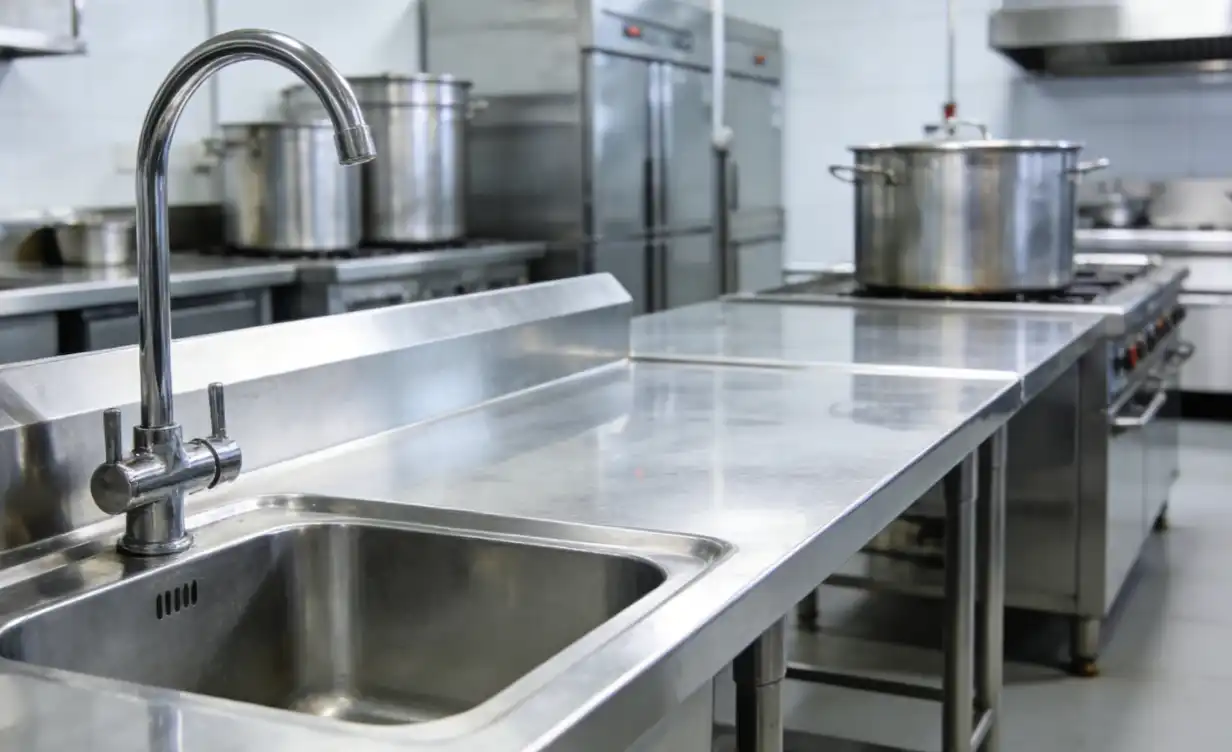
304 stainless steel is used in many places. It fights rust well and stays strong. Hospitals use it for tools, beds, and carts. You see it in operating rooms and on food prep tables. Food factories use it for tanks, sinks, ovens, and utensils. Its smooth surface is easy to clean. This stops germs from growing. Builders use it for parts of buildings, gutters, and outdoor chairs. It looks shiny and stays strong near water or chemicals.
- Medical tools and equipment
- Food storage tanks and preparation surfaces
- Kitchen utensils and sinks
- Outdoor furniture and structural parts
Tip: Pick 304 stainless steel if you need something clean and strong for tough places.
Common Uses for 201 Stainless Steel
201 stainless steel is used when saving money matters. It works best where conditions are not harsh. Makers use it for pots, pans, utensils, and bowls. You see it in kitchen machines because it resists water and weak acids. Architects use it for walls, railings, and building frames. Car makers use it for light parts, trim, and decorations. It works well for exhaust pipes and car body parts that need some rust protection.
| Industry | Applications |
|---|---|
| Kitchenware | Cookware products like pots, pans, utensils, and mixing bowls |
| Automotive | Lightweight technology, trim, and decorative components |
| Architecture | Claddings, railings, and structural frameworks for public buildings |
- Kitchen appliances and utensils
- Architectural facades and decorative panels
- Automotive exhaust systems and body parts
Note: Use 201 stainless steel for things inside or in gentle conditions.
Choosing the Right Grade
Pick the stainless steel type that fits your project. If you want to spend less and your project is not tough, 201 stainless steel is a good choice. It works for jobs that do not last long or need less strength. If your project faces water, chemicals, or needs to last, 304 stainless steel is better. You pay more at first, but you will not need to fix or replace it soon.
| Stainless Steel Grade | Corrosion Resistance | Food Safety Compliance | Suitability for Food Processing |
|---|---|---|---|
| 304 | High | FDA, NSF compliant | Excellent for food contact |
| 201 | Moderate | Generally safe for light applications | Limited for harsh environments |
- 304 stainless steel is best for food, medical, and outside uses.
- 201 stainless steel works for kitchenware and indoor decorations.
Tip: Think about your budget, where you will use it, and how strong it needs to be before picking a stainless steel type.
You now understand how 304 and 201 stainless steel are different. 304 lasts longer and needs less care. It also fights rust better. This makes it great for outside or tough jobs. 201 is good for inside projects that do not cost much.
If you want to save money and use the steel inside, 201 is a smart pick. If you need something strong that will not rust and will last a long time, 304 is better.
| Criteria | 304 Stainless Steel | 201 Stainless Steel |
|---|---|---|
| Durability | High | Moderate |
| Maintenance | Low | Medium |
| Best Use | Harsh or wet environments | Indoor, less demanding settings |
Pick the type that fits your needs, where you will use it, and your budget. This helps you get the best results.
FAQ
What makes 304 stainless steel more expensive than 201?
304 stainless steel costs more because it contains higher amounts of nickel and chromium. These elements improve corrosion resistance and durability. You pay extra for better performance and longer life.
What happens if you use 201 stainless steel outdoors?
201 stainless steel may rust or stain when exposed to rain, salt, or chemicals. You should use it indoors or in dry places. Outdoor use can shorten its lifespan.
What is the best way to tell 304 from 201 stainless steel?
You can check the material’s paperwork or test its reaction to magnets. 304 stainless steel usually stays non-magnetic. 201 stainless steel often becomes magnetic after bending or shaping.
What are the main uses for 304 stainless steel?
You find 304 stainless steel in kitchens, hospitals, and outdoor equipment. It works well for food containers, sinks, medical tools, and building parts that need to resist rust.
What are the main uses for 201 stainless steel?
201 stainless steel works best for indoor items. You see it in door handles, kitchenware, furniture, and decorative panels. It offers good strength at a lower price.
What should you consider when choosing between 304 and 201 stainless steel?
You should think about your budget, where you will use the steel, and how much rust protection you need. Pick 304 for tough, wet, or outdoor jobs. Choose 201 for indoor or decorative uses.