Introduction
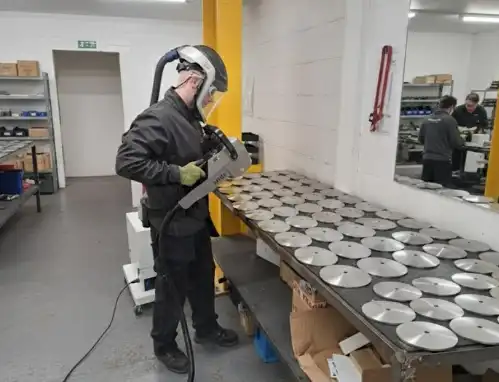
Class 4 laser cleaning is powerful—and unforgiving. The same energy that ablates coatings and oxides produces intense optical hazards, thermal byproducts, and laser-generated airborne contaminants (LGAC). That’s why PPE for Class 4 operations must be selected, verified, and documented as rigorously as the equipment itself.
This guide maps hazards to PPE using U.S. baselines—ANSI Z136 concepts for eyewear, OSHA 29 CFR 1910.134 for respirators, and OSHA 29 CFR 1910.95 for hearing—while cross-referencing EN 207/208 markings for readers who work with EU-rated eyewear. We’ll standardize decision points and records for four PPE groups: eyewear, respiratory, clothing/gloves/boots, and hearing.
Key takeaways
- Laser cleaning PPE must be matched to specific hazards and verified against recognized standards; “close enough” doesn’t pass an audit.
- For eyewear, compute or reference the required OD from wavelength and mode, then verify lens and frame markings (ANSI or EN 207/208) before each use.
- For LGAC, prioritize engineering controls (LEV/enclosures) and use NIOSH-approved respirators within an OSHA-compliant program.
- FR apparel, heat-resistant gloves, ASTM F2413 footwear, and hearing protection round out non-beam hazard controls.
- Keep auditable records: eyewear OD/labels, respirator APFs/fit tests, maintenance logs, and hearing conservation documents.
Laser eyewear selection (ANSI Z136/EN 207)
Selecting laser eyewear isn’t just “OD 7 at 1064 nm and done.” You need OD that’s appropriate for the wavelength, operating mode, and worst‑case exposure—and documentation proving it.
Determine OD by wavelength and mode
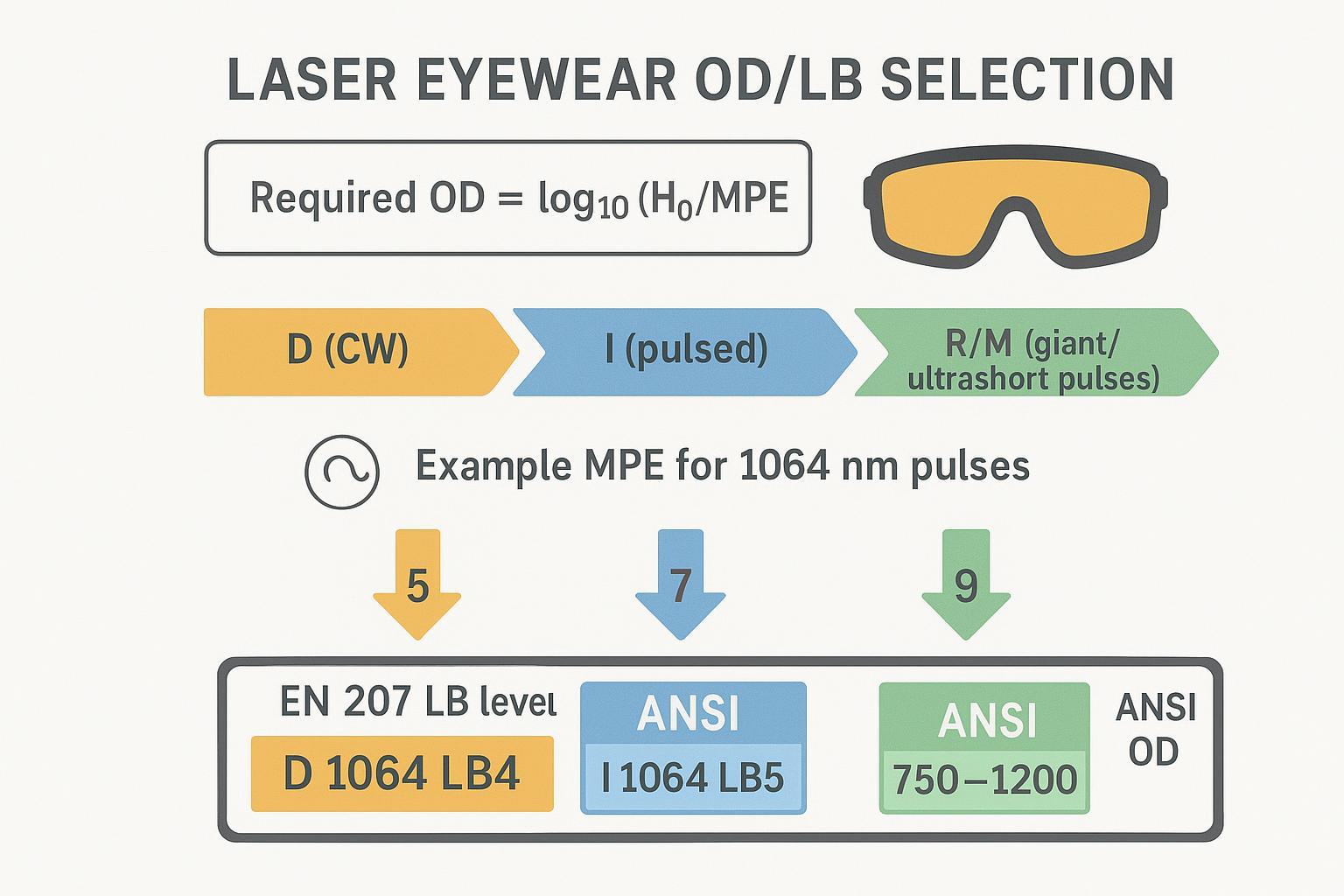
At its core, eyewear must reduce exposure at the eye below the Maximum Permissible Exposure (MPE). A common relationship used in EHS programs is:
- Required OD = log10(H0/MPE)
Where H0 is the potential eye exposure at the eyewear (energy or irradiance), and MPE depends on wavelength and exposure duration. University and institutional manuals describe this calculation pathway and selection approach; see, for example, the University of Chicago’s guides to MPE and NHZ calculations, which explain how ANSI Z136.1 tables inform the MPE and how selection follows from that logic. For an overview of the calculation method, see the University of Chicago’s MPE and NHZ calculation guide.
Illustrative example for 1064 nm pulsed fiber cleaning:
If the worst‑case on‑axis pulse energy density at the eye is estimated at H0 = 1 mJ/cm² and an example training scenario yields MPE/pulse ≈ 0.052 mJ/cm², then Required OD ≈ log10(1/0.052) ≈ 1.28. You would select eyewear with OD ≥ 2 at 1064 nm in the correct pulse mode band to ensure a margin. Your Laser Safety Officer (LSO) must determine H0 and MPE for your exact system geometry and pulse parameters using ANSI Z136.1 methods and site procedures. A worked, didactic 1064 nm example appears in Sabanci University’s appendix on MPE limits; see the Sabanci FENS MPE example (2023).
For EU readers, EN 207 uses LB ratings that combine optical attenuation with damage‑threshold robustness. Mode codes indicate operation: D (CW), I (long pulses), R (Q‑switched/giant pulses), and M (ultrashort pulses). Typical markings look like “R 750–1200 LB6,” meaning protection against giant pulses across 750–1200 nm at a level corresponding to at least OD 6 with defined robustness. For background on EN markings and interpretation, see UVEX Laservision’s standards overview and Lasermet’s EN 207 explainer.
Authoritative program practices include the University of Chicago’s Laser Eyewear Inspection Program and OSHA’s Technical Manual — Laser Hazards for non‑normative control measure context.
Verify markings and frame ratings
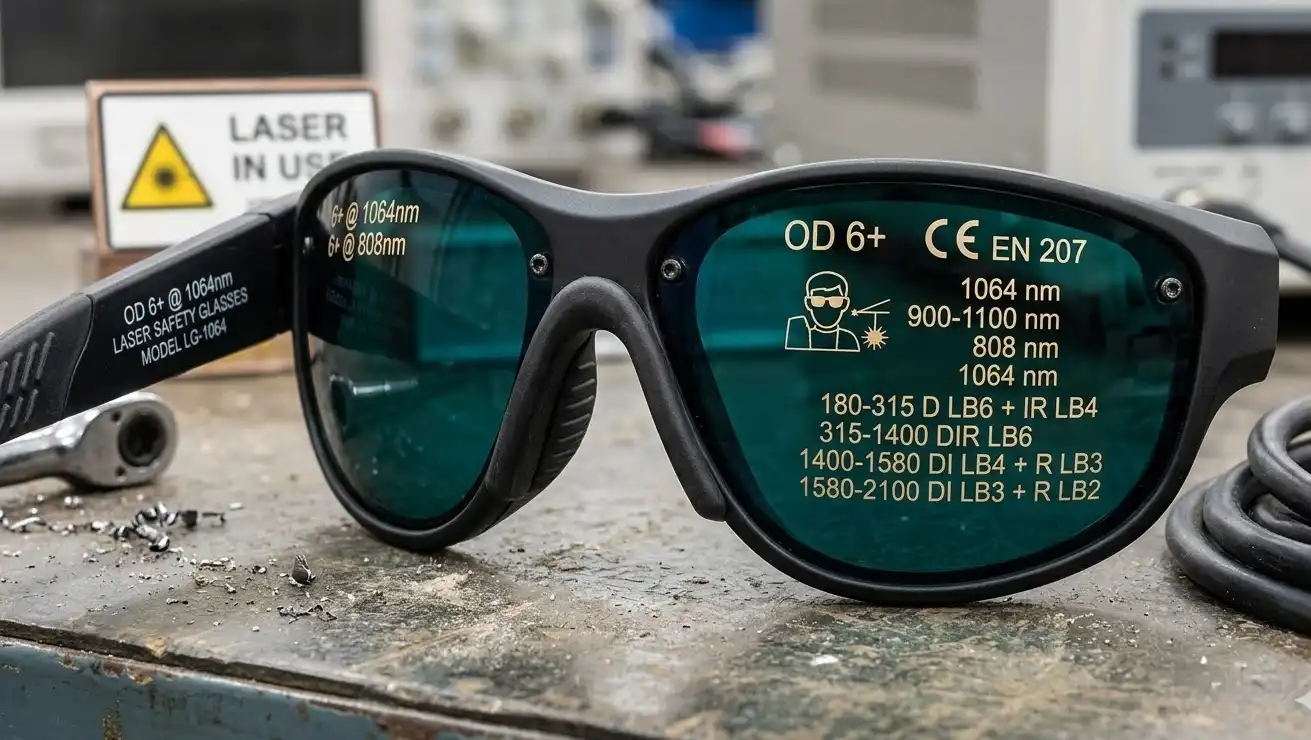
Before first use and at each pre‑use check:
- Confirm the wavelength band on the lens/frame matches your system (e.g., 1064 nm; 750–1200 nm band).
- Verify the mode designation: ANSI OD with pulse note in manuals, or EN 207 D/I/R/M code with LB level.
- Inspect the frame for manufacturer ID, model, and certification marks (e.g., CE for EN eyewear), and confirm that frames are rated for the lenses installed.
- Check for damage, discoloration, burns, delamination, or illegible markings—any of which is a removal‑from‑service trigger.
University EHS programs outline these verification steps and the meaning of markings; for example, see UC Berkeley’s eyewear selection appendix and Purdue’s laser safety guidelines.
Document use, inspection, and replacement
Create and maintain an eyewear inventory and inspection log that includes:
- System wavelength(s), operating mode, pulse parameters, and required OD or LB rating; selected model and attenuation band.
- Lens and frame markings (verbatim); condition notes; inspector initials/date.
- Inspection cadence (e.g., before each use plus semiannual audit); replacement triggers (scratches, burns, faded/illegible markings, manufacturer end‑of‑life guidance).
Many university programs publish templates and inspection frequencies; the University of Chicago’s Laser Eyewear Inspection Program is a useful reference for structuring records and cadence.
Respiratory protection for LGAC
Laser ablation ejects ultrafine particles, metal fumes, and gaseous byproducts. Engineering controls—enclosures and local exhaust ventilation (LEV)—should capture LGAC at the source. When exposures may exceed limits or controls aren’t sufficient, implement respiratory protection under a compliant OSHA 29 CFR 1910.134 program. OSHA’s Technical Manual on laser hazards highlights the need for point‑of‑generation capture and supplemental PPE when necessary.
Prioritize LEV; select NIOSH-approved respirators
- Follow the hierarchy of controls: enclosures and LEV first, then respirators as needed per exposure assessment.
- Select only NIOSH‑approved respirators and filters; verify approvals using the NIOSH Certified Equipment List and avoid counterfeit products.
- Choose particulate filtration suited to LGAC: P100 (HEPA) filters for ultrafine particles; add appropriate cartridges (e.g., OV) if vapor‑phase byproducts are present.
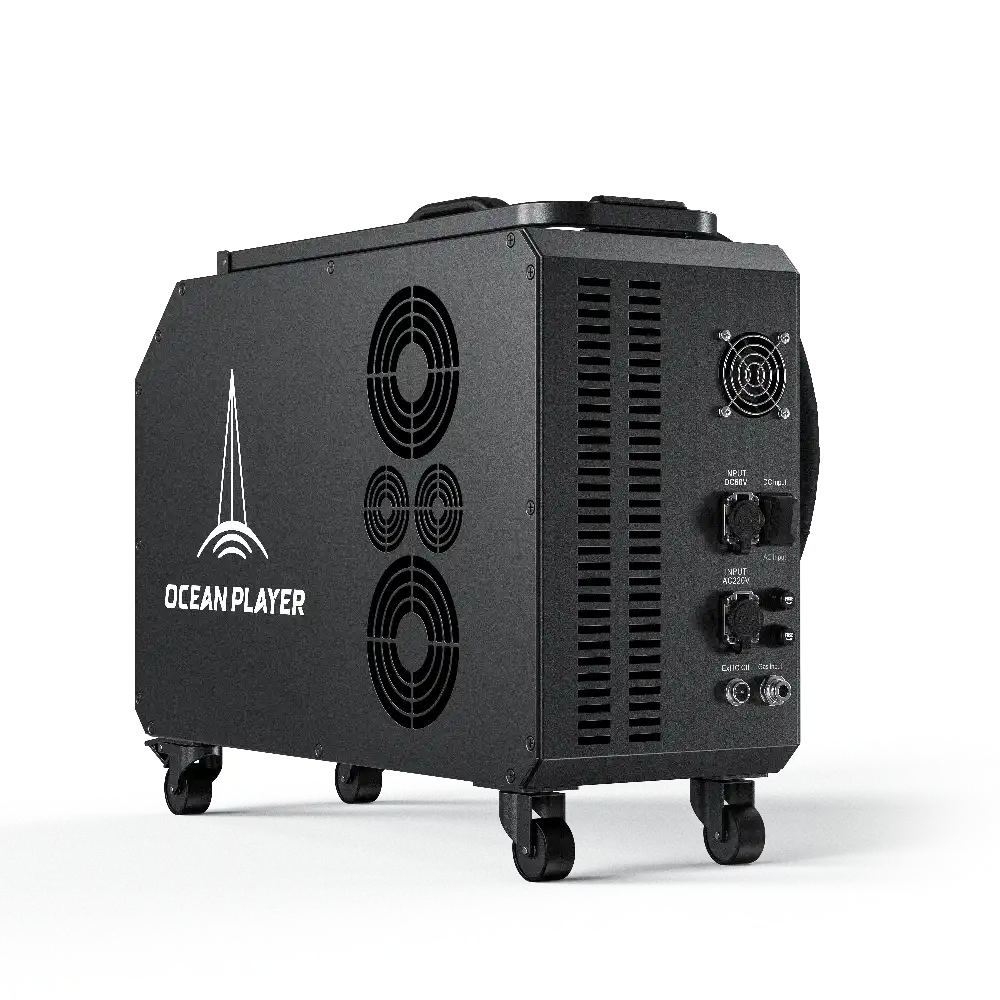
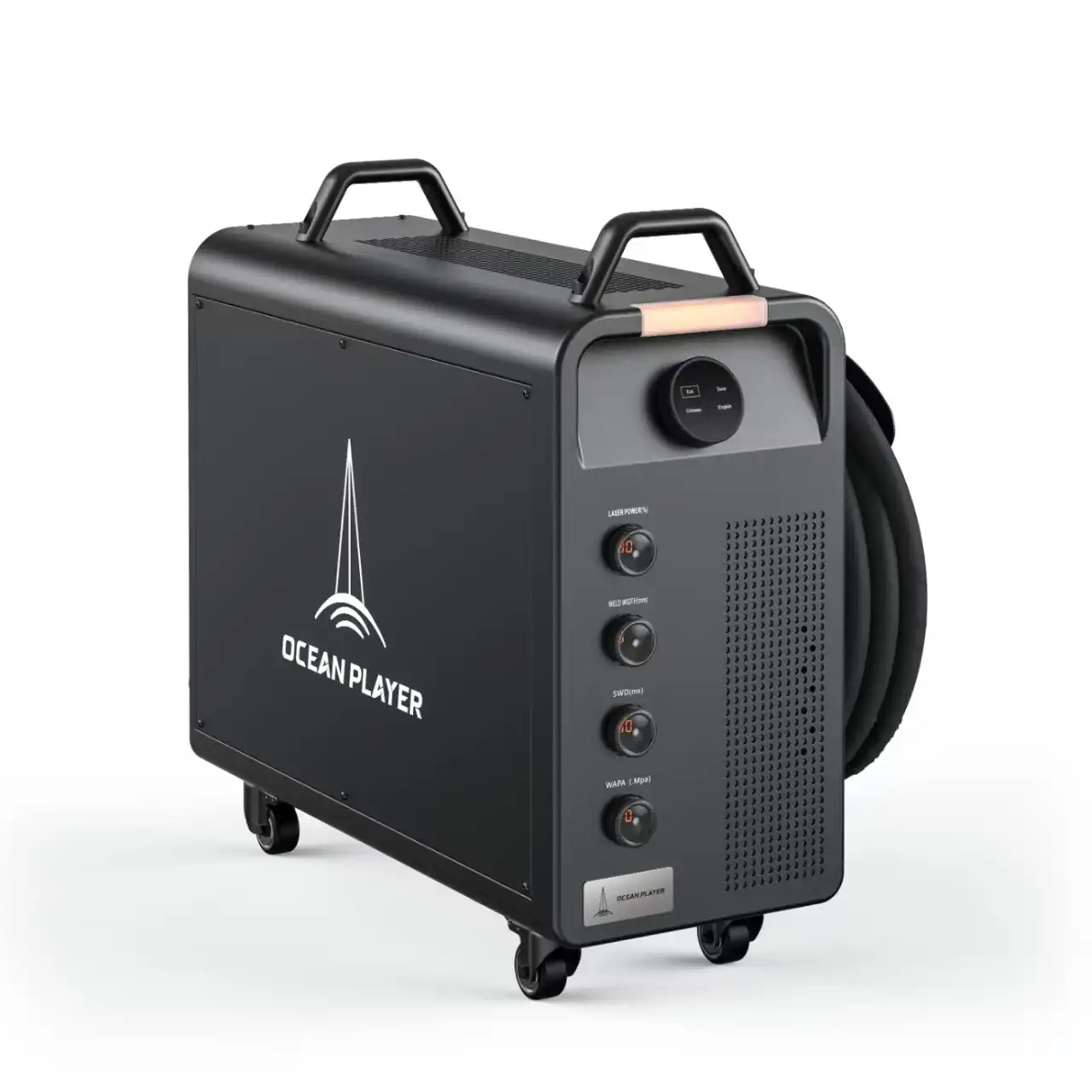
Disclosure: OceanPlayer is our product. In enclosed or semi‑enclosed cells, integrate LEV with a near‑nozzle intake to capture LGAC at the source.
Citations and guidance: See OSHA’s Respiratory Protection eTool — respirator selection and Air‑Purifying Respirators fact sheet and NIOSH’s Air‑Purifying Respirators guide (2018‑176) for filter series and efficiencies.
Fit testing, medical clearance, and APFs
Under OSHA 29 CFR 1910.134, your Respiratory Protection Program (RPP) must include medical evaluation by a PLHCP before fit testing/use, selection based on Assigned Protection Factors (APFs), annual fit testing for tight‑fitting respirators, user seal checks each use, training, maintenance, and program evaluation.
Assigned Protection Factors (common particulate options):
| Respirator type | Typical APF |
|---|---|
| Filtering facepiece (disposable N/R/P95/100) | 10 |
| Elastomeric half facepiece (with P100) | 10 |
| Full facepiece APR (with P100) | 50 |
| Loose‑fitting PAPR hood/helmet | 25 |
| Tight‑fitting PAPR full facepiece | Up to 1000 (per manufacturer) |
| Supplied‑air respirator (SAR), continuous flow | 50–1000 |
- Perform initial and annual fit tests for tight‑fitting models; re‑test if facial changes or respirator model changes occur.
- Ensure workers can achieve a passable fit; if not, consider loose‑fitting PAPRs where appropriate.
References: OSHA’s selection guidance and APFs and NIOSH’s approved respirators page.
Maintenance, change schedules, and training
- Establish filter/cartridge change schedules based on service life, loading, breakthrough indicators, or manufacturer guidance; document dates and criteria.
- Clean, inspect, and store respirators per OSHA Appendix B‑2; maintain logs for cleaning, repairs, and part replacement. See OSHA’s RPP chapter in the Technical Manual for program structure.
- Train users on limitations, don/doff, user seal checks, maintenance, storage, and recognition of symptoms indicating inadequate protection.
Clothing, gloves, footwear, and hearing
Non‑beam hazards in laser cleaning include hot particles, sharp scale, and high‑noise tools (air movers, vacuums, and extraction systems). Address them with the right ensemble and records.
FR apparel and heat-resistant gloves
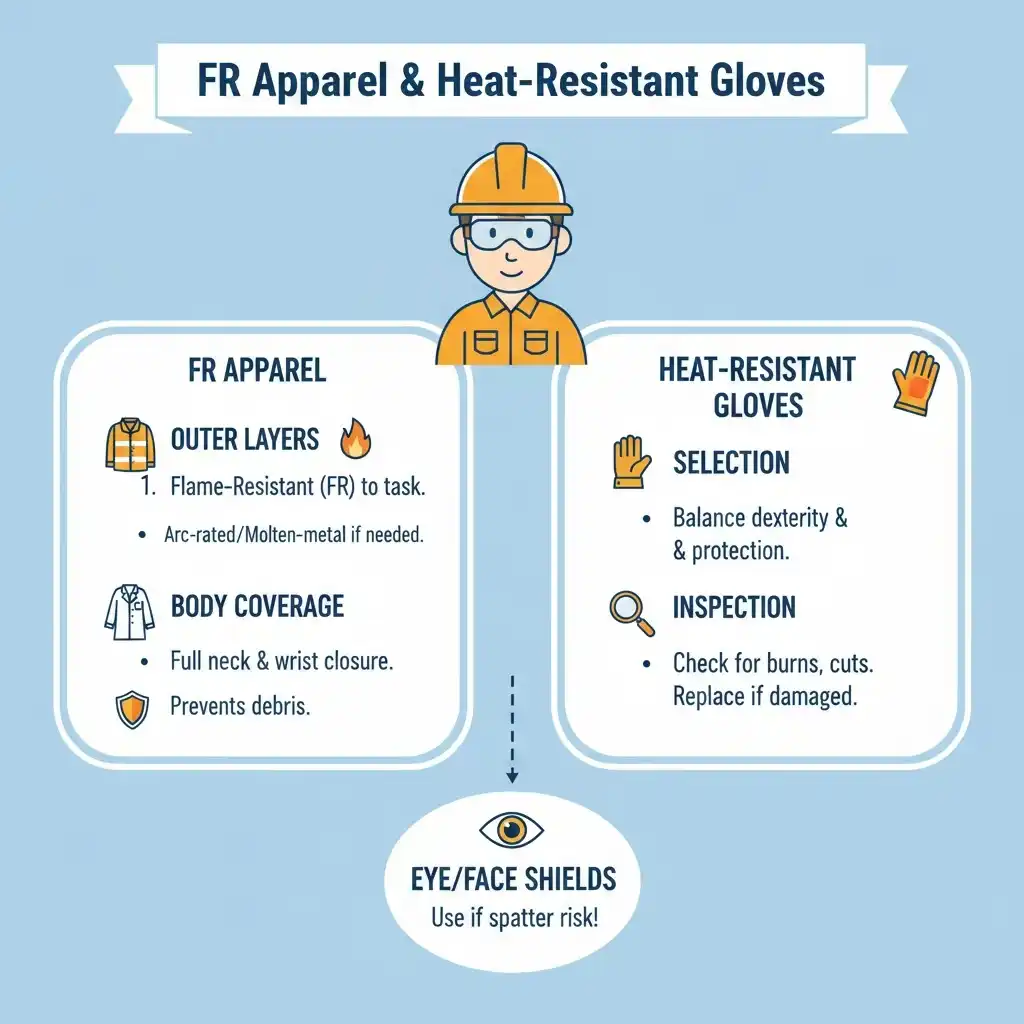
- Wear flame‑resistant (FR) outer layers appropriate to the task and potential thermal byproducts; consider arc‑rated or molten‑metal‑resistant options where warranted by the substrate and process.
- Select heat‑resistant gloves that balance dexterity with thermal protection. Inspect for burns, hardening, or cuts; replace if degraded.
- Add eye/face shields where spatter risk exists; use lab coats or jackets that close fully at the neck and wrists to prevent debris ingress.
OSHA’s Technical Manual — Laser Hazards and university EHS manuals outline non‑beam hazard controls; align selections with your Job Hazard Analysis (JHA).
ASTM F2413 safety footwear
Footwear should meet ASTM F2413 with markings that indicate protection features, for example: “ASTM F2413‑24 M I/75 C/75 PR EH.”
- I/75 and C/75 denote impact and compression resistance for toe protection.
- PR indicates puncture resistance; EH means electrical hazard resistance; SD denotes static dissipative properties; Mt indicates metatarsal protection.
For labeling and feature details, see ASTM’s F2413 standard overview and the ANSI.org explainer on F2413‑24 updates.
Hearing protection per OSHA 1910.95
If an 8‑hour TWA noise exposure reaches 85 dBA (action level), enroll affected workers in a Hearing Conservation Program (HCP) per OSHA 29 CFR 1910.95. Core elements include:
- Noise monitoring and reassessment when processes change.
- Audiometry: baseline (typically within 6 months of first exposure; 14 hours noise‑free or hearing protection), then annual tests at 500–6000 Hz; track standard threshold shifts (STS) and take follow‑up actions.
- Hearing protectors provided and used; training on selection, fit, and care.
- Recordkeeping: maintain exposure records (at least 2 years) and audiometric records for the duration of employment plus 30 years.
See OSHA’s 1910.95 regulation page and OSHA’s hearing conservation brochure for practical program details.
Conclusion
Match PPE to hazards, verify standards and markings, and document everything. That’s the path to safe, efficient, and audit‑ready Class 4 laser cleaning.
Audit‑ready checklist
- Eyewear
- Required OD documented from wavelength/mode; ANSI OD or EN 207 LB verified on lens/frame.
- Pre‑use inspection and semiannual audit recorded; damaged or unmarked eyewear removed from service.
- Respiratory
- LEV/enclosure implemented; NIOSH‑approved respirators selected (P100/PAPR/SAR as justified by exposure and APF requirements).
- Medical clearance obtained; initial and annual fit tests (tight‑fitting); training and maintenance logs current; filter change schedule defined.
- Clothing/gloves/boots
- FR apparel appropriate to process; heat‑resistant gloves with adequate dexterity.
- Safety footwear marked to ASTM F2413 with required features (I/75 C/75, PR, EH/SD, Mt as needed).
- Hearing
- HCP in place at ≥85 dBA TWA8: monitoring, audiometry, training, protector use, and records per §1910.95.
Selected references for further action
- OSHA’s Technical Manual — Laser Hazards: LGAC and controls overview in laser operations.
- Respirators — selection and approval: OSHA’s Respiratory Protection eTool and NIOSH’s approved respirators page for APFs, filter series, and device verification.
- Eyewear programs and MPE/OD concepts: University of Chicago’s MPE/NHZ guide and Eyewear Inspection Program; EN markings explained by UVEX Laservision and Lasermet; general guidance also in Purdue’s laser safety guidelines and UC Berkeley’s appendix.