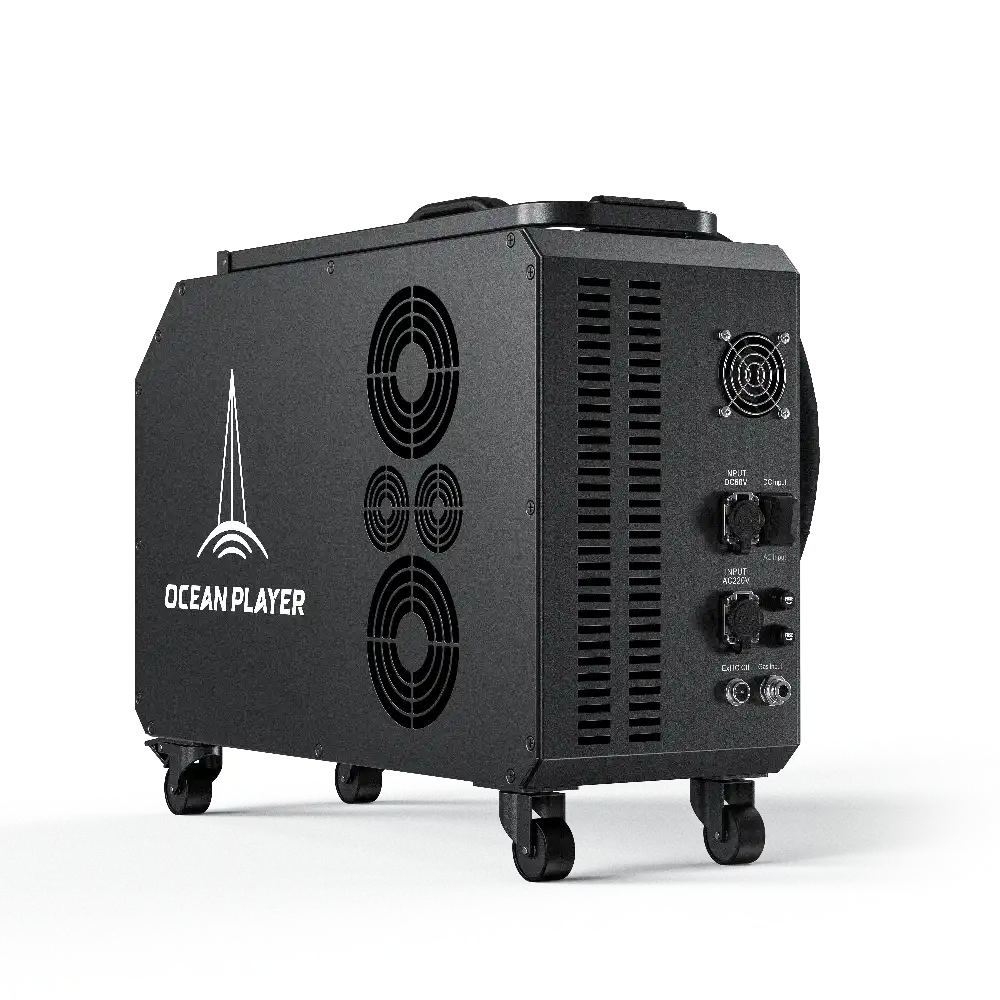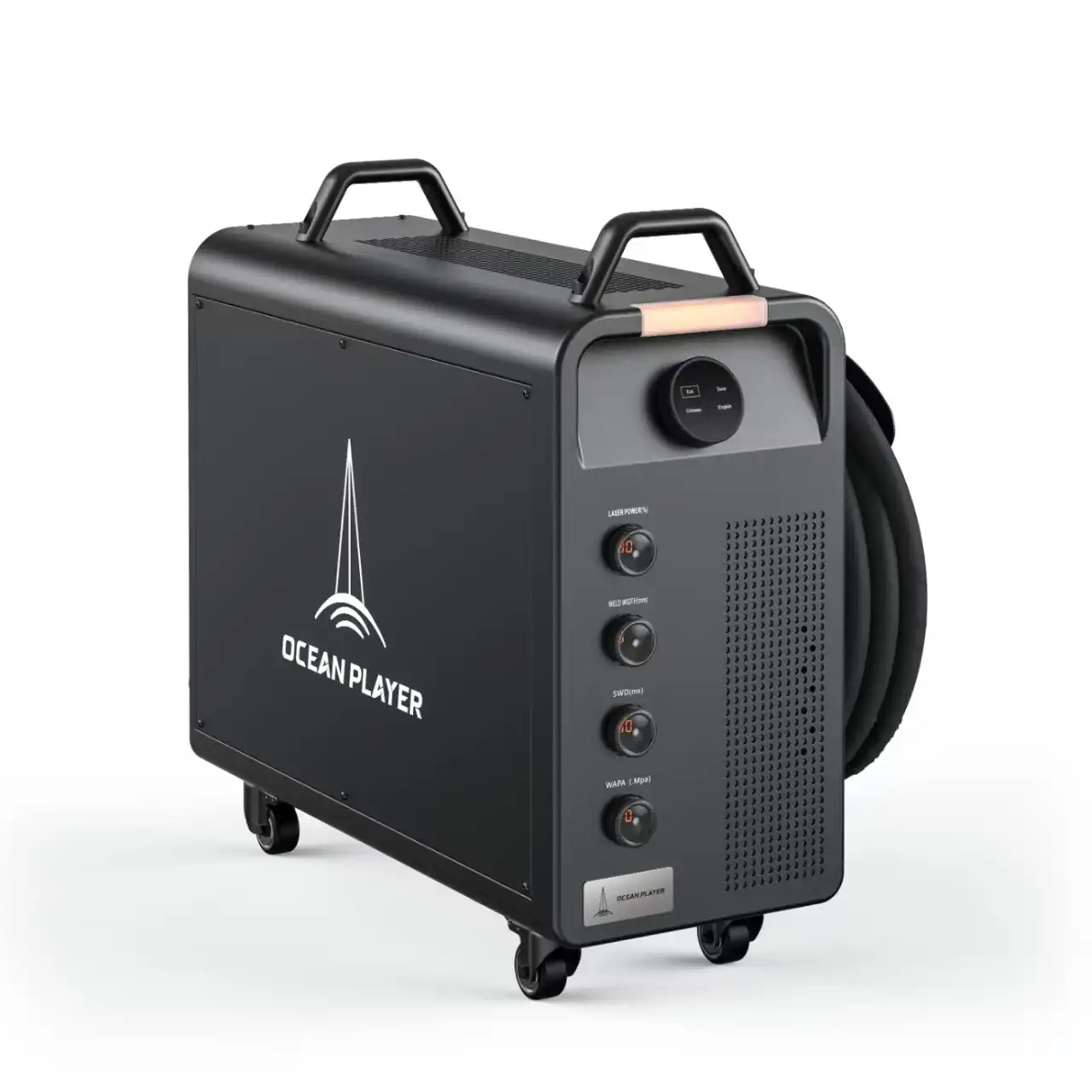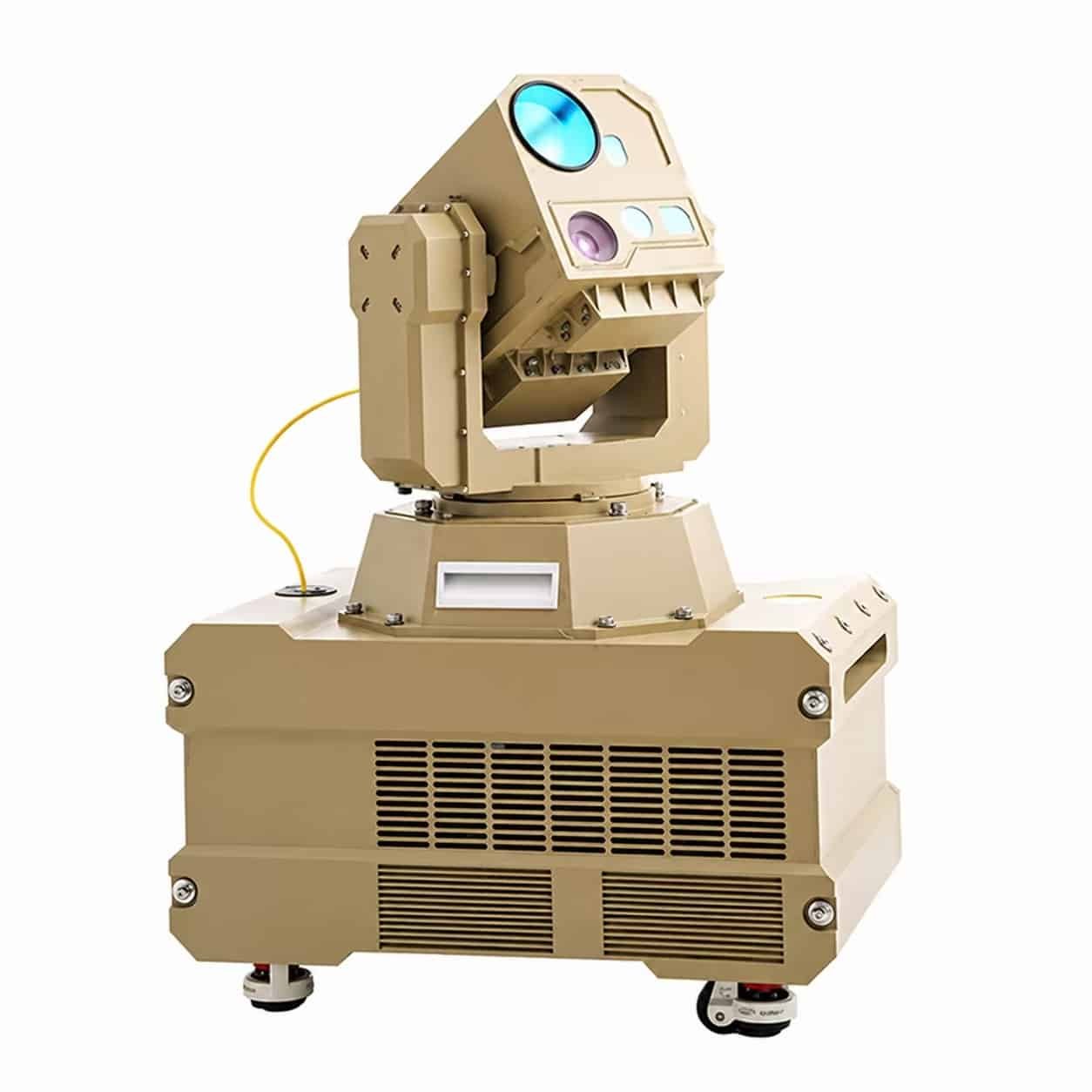
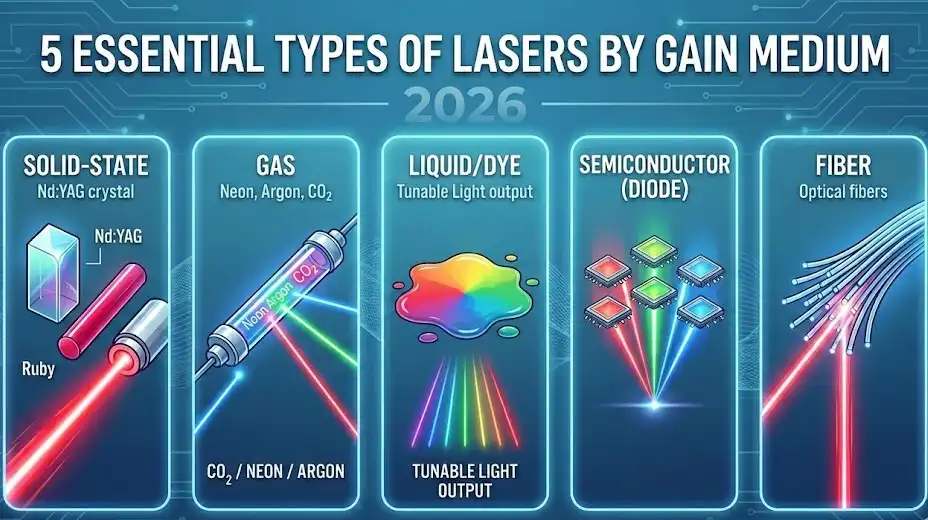
Engineers often compare laser options by “what it cuts” or “how bright it is,” but the most reliable way to frame a choice is by the gain medium. The gain medium largely sets the emission wavelength, power scalability, wall‑plug efficiency, beam quality (M²), and even maintenance cadence.
This guide gives you an engineer’s view of the five main categories—solid‑state, gas, diode, dye, and fiber—so you can map wavelength to material absorption, estimate operating costs, and anticipate safety controls. For quick orientation, it ranks attributes by material coupling, beam quality, power scalability, efficiency, maintenance, integration, and TCO.
- Quick resource: Before trials, grab a neutral laser safety checklist and a wavelength–material coupling cheat sheet from a recognized standards or training source. It’s a practical way to compare the main types of lasers by gain medium at a glance.
Key takeaways
- Fiber lasers around ~1 µm combine excellent beam quality with high efficiency and scale cleanly to multi‑kilowatt CW—strong fits for metals processing.
- CO₂ gas lasers at 9.3–10.6 µm couple well to polymers/organics for engraving and cutting but couple poorly to bare metals.
- Diode (semiconductor) lasers are compact and efficient across many wavelengths; beam shaping is often required at higher powers.
- Solid‑state DPSS (Nd:YAG/YVO₄) deliver 1064/532/355 nm with very good mode quality for fine marking and micromachining.
- Dye lasers are lab‑oriented, broadly tunable across the visible, and maintenance‑intensive compared with solid‑state or fiber.
What is a gain medium and why it matters
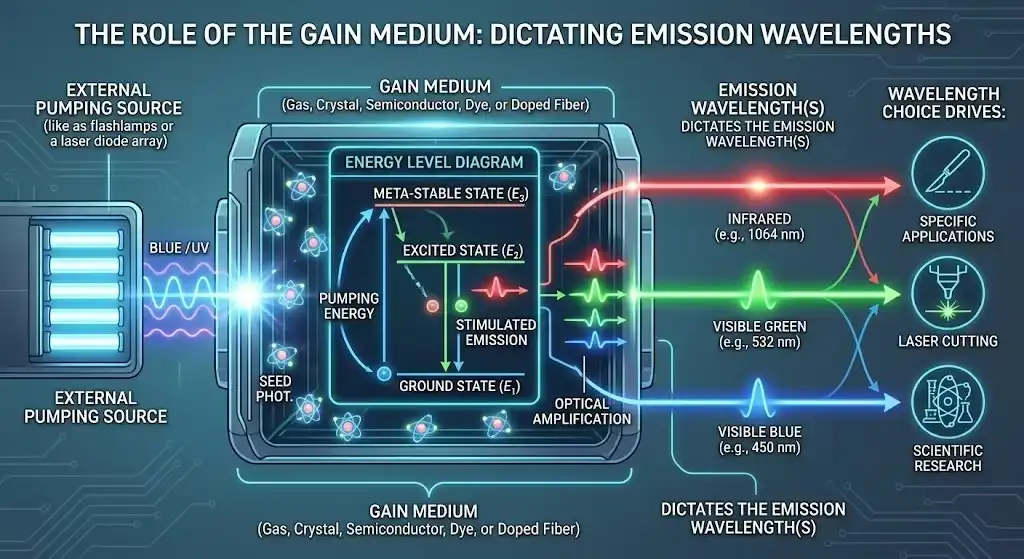
A gain medium is the lasing material (gas, crystal, semiconductor, dye, or doped fiber) whose atoms or ions are excited—or “pumped”—to create optical amplification. Because its energy levels are quantized, the medium dictates the emission wavelength(s). That wavelength choice, in turn, drives:
- Material coupling: metals often absorb ~1 µm well; polymers/organics absorb strongly at 9.3–10.6 µm and many absorb UV.
- Power scalability and thermal behavior: some media (e.g., fiber) shed heat efficiently and scale to high CW powers.
- Beam quality (M²) and focusability: single‑mode fiber and many DPSS sources can approach diffraction‑limited beams for tight spots.
- Maintenance and uptime: sealed gas tubes, solid crystals, semiconductor junctions, and dye solutions all have different upkeep needs.
Methodology — how we compared the types of lasers by gain medium
We evaluated each gain‑medium category using a weighted rubric commonly used in engineering selection:
- Material coupling and wavelength suitability (22%)
- Beam quality and focusability (18%)
- Power scalability and stability (16%)
- Wall‑plug efficiency and thermal management (14%)
- Maintenance burden and uptime (12%)
- Integration and workflow fit (10%)
- Total cost of ownership (8%)
Evidence priority: authoritative vendor datasheets/notes and neutral explainers. We avoid absolute claims and present ranges where vendors vary.
Quick comparison table
| Laser type | Pump method | Typical wavelength(s) | Power scalability | Efficiency | Beam quality | Applications | Maintenance/consumables | Notes/limits |
|---|---|---|---|---|---|---|---|---|
| Fiber | Diode‑pumped active fiber | ~1030–1080 nm (Yb), ~1550 nm (Er) | Tens of W to multi‑kW CW; high peak in QCW | High (≈40–50%+ wall‑plug) | Excellent; single‑mode options (M²≈1) | Metals cutting/welding, precision marking | Low; keep fiber ends/connectors clean | Strong metal absorption near 1 µm |
| Gas | Electrical discharge (RF‑excited CO₂) | 9.3–10.6 µm (CO₂); 632.8 nm (He‑Ne) | CO₂ ~10 W to 500 W+ sealed OEM; He‑Ne mW‑class | CO₂ moderate (~10–20% typical); He‑Ne very low | CO₂: good multimode; He‑Ne: near‑TEM₀₀ | CO₂: organics/polymers; He‑Ne: alignment | CO₂ optics cleaning/cooling; He‑Ne minimal | Metals reflect CO₂; choose ~1 µm for metals |
| Diode | Electrical injection (emitters/bars/stacks) | 405, 450, 520 nm; 780–980 nm; 905 nm; 1270–1330 nm | mW modules → multi‑kW stacks | High (mid‑40% class in systems) | Elliptical; multimode at high power | Pumping, direct polymer work, sensing | Low; thermal management critical | Needs beam shaping or fiber coupling |
| Solid‑state | Diode‑pumped crystal + harmonics | 1064 nm; 532 nm; 355 nm | Tens of W avg (marking), higher variants | Moderate (~10–20% system‑level) | Very good; often M²≤1.2–1.3 | Fine marking, PCB, ceramics | Low–moderate; alignment/cooling | UV improves polymer absorption/low HAZ |
| Dye | Optically pumped (e.g., N₂, DPSS) | Broadly tunable ~400–700+ nm | Lab‑scale CW/pulsed | Few‑percent CW; pulsed varies | Very good possible (TEM₀₀) | Spectroscopy, tunable excitation | High; dye replacement/filtration | Operational complexity, solvents |
The five main types by gain medium
Fiber lasers — Yb/Er doped
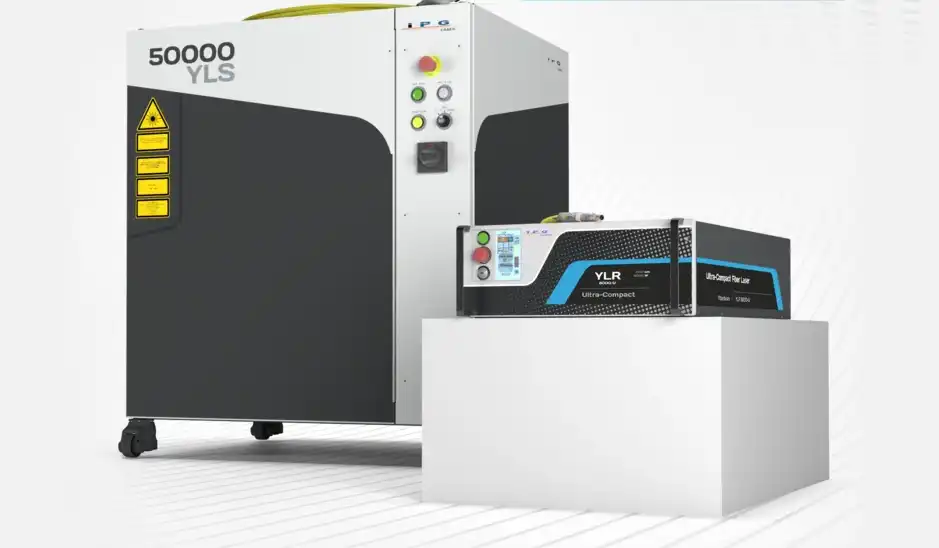
- 1‑line positioning: High‑efficiency, high‑beam‑quality workhorses for metals processing and precision marking around 1 µm.
- How it works / pump: Diode‑pumped rare‑earth‑doped fiber (typically Yb at ~1.03–1.08 µm; Er at ~1.55 µm) with resonator built into fiber.
- Typical wavelengths: ~1030–1080 nm (Yb); ~1550 nm (Er).
- Power range & efficiency: From tens of watts to multi‑kilowatt CW; wall‑plug efficiency commonly ~40–50%+.
- Beam quality / focusability: Single‑mode families achieve M² near 1 for tight focusing; multimode options improve throughput.
- Common applications: Metals cutting/welding, precision marking/engraving, additive manufacturing, telecom (Er at 1.55 µm).
- Pros / Cons:
- Pros: High efficiency; excellent beam quality; broad power scalability.
- Cons: Higher entry price vs. small CO₂/diode modules; fiber cleanliness is critical; polymers may absorb poorly at 1 µm.
- Safety class notes: Industrial units frequently Class 4; requires interlocks, PPE, and controlled areas per ANSI Z136.1.
- Price range notes: Industrial sources are commonly quote‑only; published “from” pricing is limited and configuration‑dependent.
- Evidence links: Efficiency and beam quality in vendor docs: High‑Power CW Fiber Lasers; Single‑Mode & Low Order Mode CW Lasers.
Gas lasers — CO₂ focus, He‑Ne reference
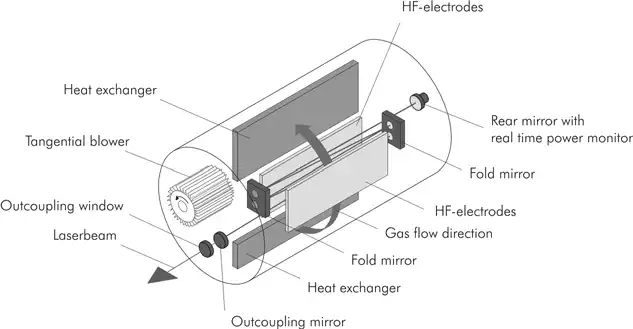
- 1‑line positioning: CO₂ lasers dominate organic/polymer processing at 9.3–10.6 µm; He‑Ne remains a metrology/alignment staple at 632.8 nm.
- How it works / pump: Electrical discharge excites gas mixtures; RF excitation common in sealed CO₂ designs.
- Typical wavelengths: 10.6 µm (common), 10.2/9.6/9.3 µm options (CO₂ lines); 632.8 nm (He‑Ne).
- Power range & efficiency: CO₂ sealed OEM heads from ~10 W up to 500 W+; He‑Ne mW‑class; system wall‑plug efficiency for CO₂ often cited around the 10–20% class; He‑Ne very low.
- Beam quality / focusability: CO₂ processing beams are typically good multimode; He‑Ne often M² < ~1.1.
- Common applications: CO₂—plastics, wood, paper, films, organics; He‑Ne—alignment, interferometry, metrology.
- Pros / Cons:
- Pros: Strong polymer/organic absorption; multiple CO₂ lines for process tuning; mature ecosystem.
- Cons: Poor coupling to bare metals; cooling/optics maintenance per spec; He‑Ne is low power only.
- Safety class notes: Many CO₂ systems are Class 4; ensure appropriate enclosures, interlocks, and eyewear rated for 10.6 µm.
- Price range notes: Low‑power sealed CO₂ modules have been sold via distributors; higher‑power industrial units are quote‑only; prices vary by cooling and RF drive.
- Evidence links: CO₂ sealed families and wavelengths per vendor docs: DIAMOND C/Cx Series; He‑Ne beam quality/wavelength notes via distributor technical PDFs: He‑Ne Laser Specs (Edmund).
Diode lasers — semiconductor emitters
- 1‑line positioning: Compact, electrically efficient sources spanning visible to near‑IR; used directly and as pump engines.
- How it works / pump: Electrical injection into semiconductor junctions; built as single emitters, bars, or stacks; often fiber‑coupled for delivery.
- Typical wavelengths: ~405/450/520 nm visible; 780–980 nm; 905 nm; 1270–1330 nm variants.
- Power range & efficiency: From mW modules to multi‑kW stacks; wall‑plug efficiency for industrial systems reported in the mid‑40% class.
- Beam quality / focusability: Intrinsically asymmetric divergence; multimode at higher powers; beam shaping or fiber coupling recommended.
- Common applications: Pumping other lasers, plastics processing/marking, illumination, sensing, LiDAR.
- Pros / Cons:
- Pros: High efficiency; wide wavelength coverage; compact and scalable packaging.
- Cons: Beam is elliptical/aniso‑divergent; linewidth/wavelength stability may need VBG/thermal control.
- Safety class notes: Higher‑power arrays are typically Class 4; thermal hazards and stray reflections require controls.
- Price range notes: mW‑class alignment modules can start in the low hundreds USD via distributors; high‑power stacks are quote‑only.
- Evidence links: Industrial high‑power diode efficiency and packaging: HighLight DL HPR/HPS Datasheet; representative diode module listings and pricing bands: Laboratory Laser Diode Modules.
Mid‑list safety resource: Review laser classes and control measures before shop trials via an authoritative overview of ANSI Z136.1 programs: ANSI Z136.1 overview (LIA).
Solid‑state lasers — DPSS families (Nd:YAG, Nd:YVO₄)
- 1‑line positioning: Diode‑pumped crystals output 1064 nm and harmonics (532/355 nm) with very good mode quality for fine marking and micromachining.
- How it works / pump: Diode‑pumped gain crystal; frequency doubling/tripling creates green (532 nm) and UV (355 nm).
- Typical wavelengths: 1064 nm; 532 nm; 355 nm.
- Power range & efficiency: Common marking subsystems deliver ~6–20 W average (higher exist); system wall‑plug typically moderate (~10–20%).
- Beam quality / focusability: Often M² ≤ ~1.2–1.3; supports small spots and crisp edges.
- Common applications: Electronics and PCB work (UV depaneling), fine marking on metals and plastics, thin‑film processing.
- Pros / Cons:
- Pros: Excellent mode quality; multiple harmonics for process tuning; mature industrial subsystems.
- Cons: Conversion stages add complexity; thermal stability and alignment matter; lower overall efficiency than fiber.
- Safety class notes: Typically Class 3B/4; eyewear must match wavelength(s), including harmonics.
- Price range notes: Industrial marking systems are often quote‑only; configuration and wavelength drive cost.
- Evidence links: UV marking and subsystem examples: AVIA LX — nanosecond DPSS UV and PowerLine E 6/12 QS Datasheet.
Dye lasers — liquid, tunable sources
- 1‑line positioning: Broadly tunable visible sources used in spectroscopy and labs where wavelength agility is critical.
- How it works / pump: Organic dye solutions pumped optically (e.g., N₂ lasers or frequency‑doubled solid‑state), with intracavity gratings/filters for tuning.
- Typical wavelengths: Roughly 400–700+ nm, depending on dye (e.g., coumarins: blue‑green; rhodamines: yellow‑red).
- Power range & efficiency: CW efficiency is typically a few percent; pulsed efficiencies vary by setup.
- Beam quality / focusability: TEM₀₀ possible with proper resonator design.
- Common applications: Spectroscopy, wavelength‑selective excitation, laboratory research.
- Pros / Cons:
- Pros: Very broad tunability; narrowband selection with gratings.
- Cons: Photobleaching; chemical handling; higher maintenance vs. solid‑state/fiber.
- Safety class notes: Often Class 3B/4 systems; also consider chemical/solvent handling and high‑voltage pump sources.
- Price range notes: Specialized lab systems; pricing is quote‑only; ongoing dye/solvent/filtration costs apply.
- Evidence links: Tunability and maintenance context: AZoOptics — laser types overview and Newport — dye laser tuning.
Safety and standards in practice
- Classification and labels: IEC 60825‑1 defines hazard‑based laser product classes and labeling for 180 nm to 1 mm radiation. See the official listing: IEC 60825‑1:2014 webstore page.
- Workplace programs (U.S.): ANSI Z136.1 is the foundational standard for safe use of lasers in industrial, R&D, and educational settings. Overview: ANSI Z136.1 program summary (LIA). Many facilities also reference OSHA guidance: OSHA laser hazards page.
- Practical controls: For Class 3B/4, expect interlocked enclosures, beam dumps, key control, eyewear matched to wavelength/OD, training, and signage. Calculate NOHD where appropriate and coordinate through your Laser Safety Officer (LSO).
FAQ
- What are the main laser types by gain medium?
- Solid‑state, gas, diode, dye, and fiber. Each offers characteristic wavelengths, efficiencies, and maintenance profiles that drive application fit.
- Is continuous‑wave or pulsed better for my use case?
- CW is preferred for steady energy delivery (e.g., welding, many cuts). Pulsed (Q‑switched, QCW, or ultrafast) concentrates energy for ablation, fine features, or thermal control. Match pulse width and peak power to material and feature size.
- Which wavelengths couple best to metals vs. polymers?
- Metals generally absorb ~1 µm (fiber/solid‑state IR) better than 10.6 µm CO₂; polymers/organics absorb strongly at 9.3–10.6 µm; many polymers and thin films also respond well to UV (355 nm) for low‑HAZ micromachining.
- How do maintenance needs differ across types?
- Fiber/DPSS typically have low routine maintenance; keep optics and fiber ends clean. CO₂ systems may need optics cleaning and specified cooling. Dye lasers demand frequent dye replacement/filtration and solvent care. He‑Ne requires minimal upkeep.
Next steps
- Run small sample trials at candidate wavelengths (e.g., 1.06 µm vs. 10.6 µm vs. 355 nm) to validate coupling and edge quality.
- Review safety classifications and establish controls with your LSO before energizing any Class 3B/4 source.
- Build a simple TCO model that includes energy (guided by wall‑plug efficiency), consumables (e.g., gases, dyes), maintenance time, and uptime assumptions.
- Consult reputable vendor application notes and standards summaries to refine process windows.