
Introduction
If you’ve ever priced a laser cleaner and thought, “That’s a lot,” you’re not wrong. The upfront price reflects the laser source, safety controls, extraction, and—when needed—automation. This guide explains why laser rust removal cost feels high, what truly drives it, and when it pays off. We’ll break down CAPEX vs. OPEX, discuss throughput and utilization in real‑world conditions, and compare alternatives like abrasive blasting, dry ice, and chemicals. Use the structure here to build a simple, defensible payback model tailored to your plant.
Key takeaways
- Laser’s CAPEX reflects power class, safety containment, and extraction; prices vary widely by channel and integration level, not just watts.
- OPEX is relatively predictable—primarily electricity, filters, and routine service—unlike blasting or chemical methods that consume media.
- Throughput depends on rust severity, geometry, and access; handheld excels at flexible maintenance, while automation wins on repeatable parts.
- ROI is driven by utilization hours, avoided consumables and rework, and wage/energy rates; a US Midwest preset makes assumptions transparent.
What drives laser rust removal cost
Power class and integration
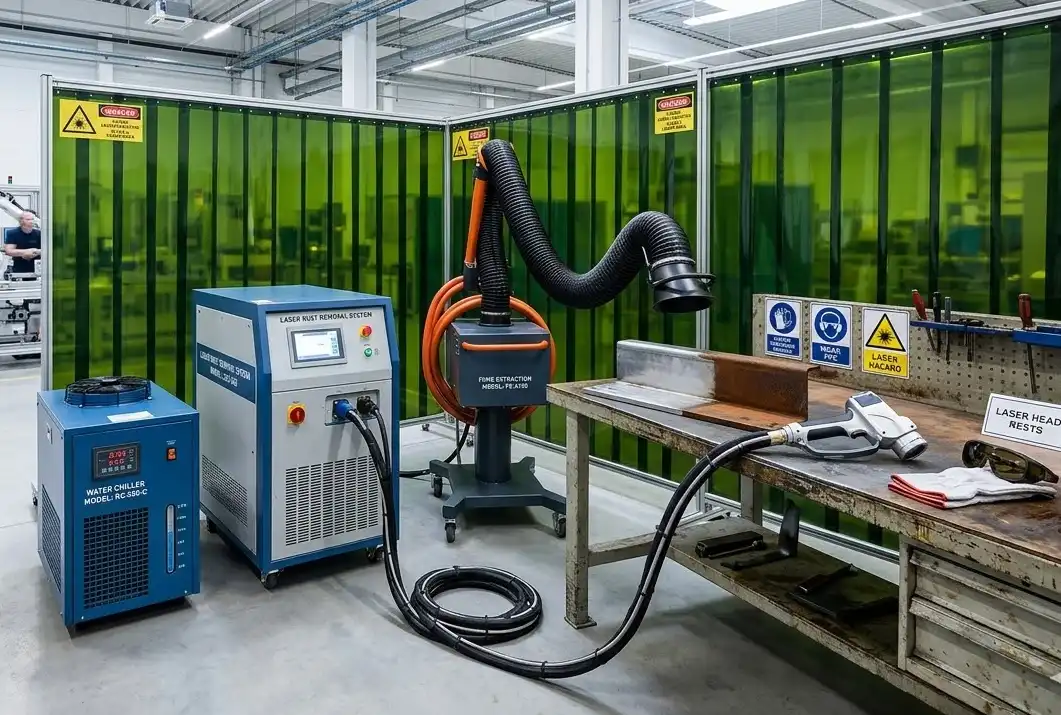
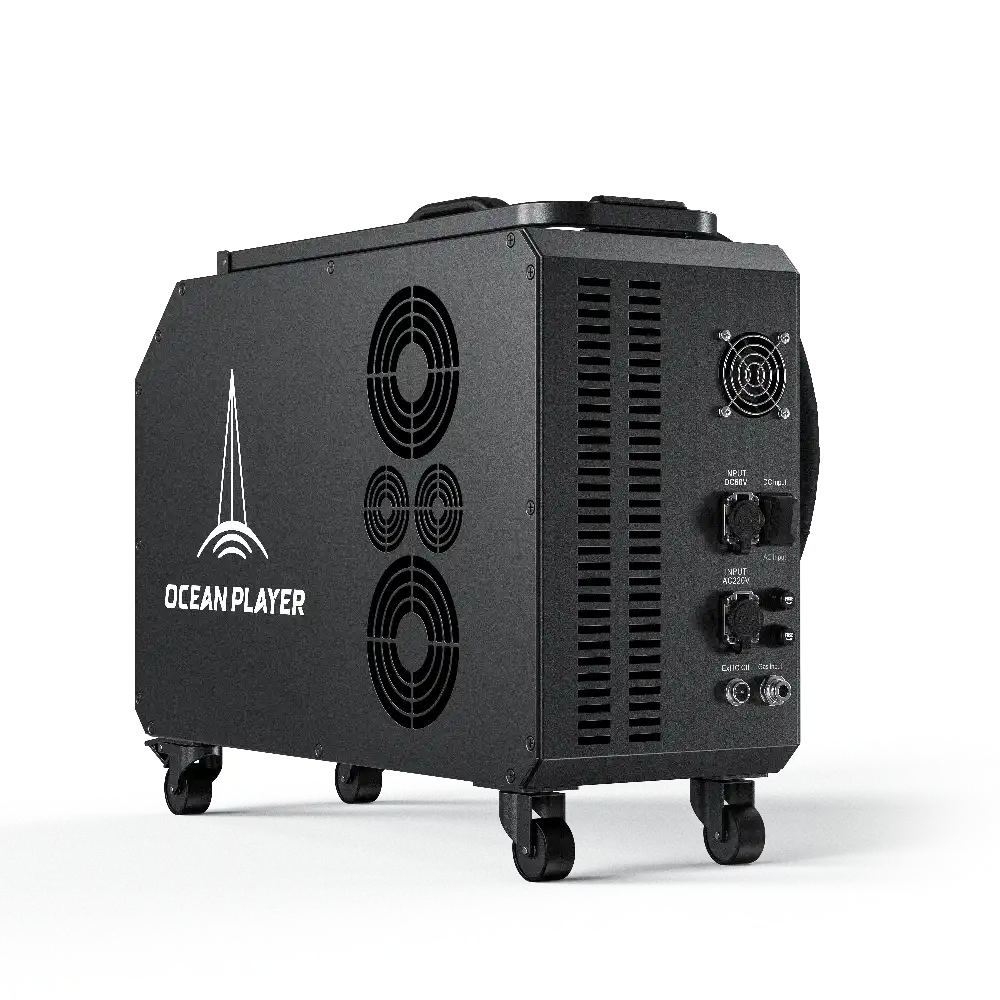
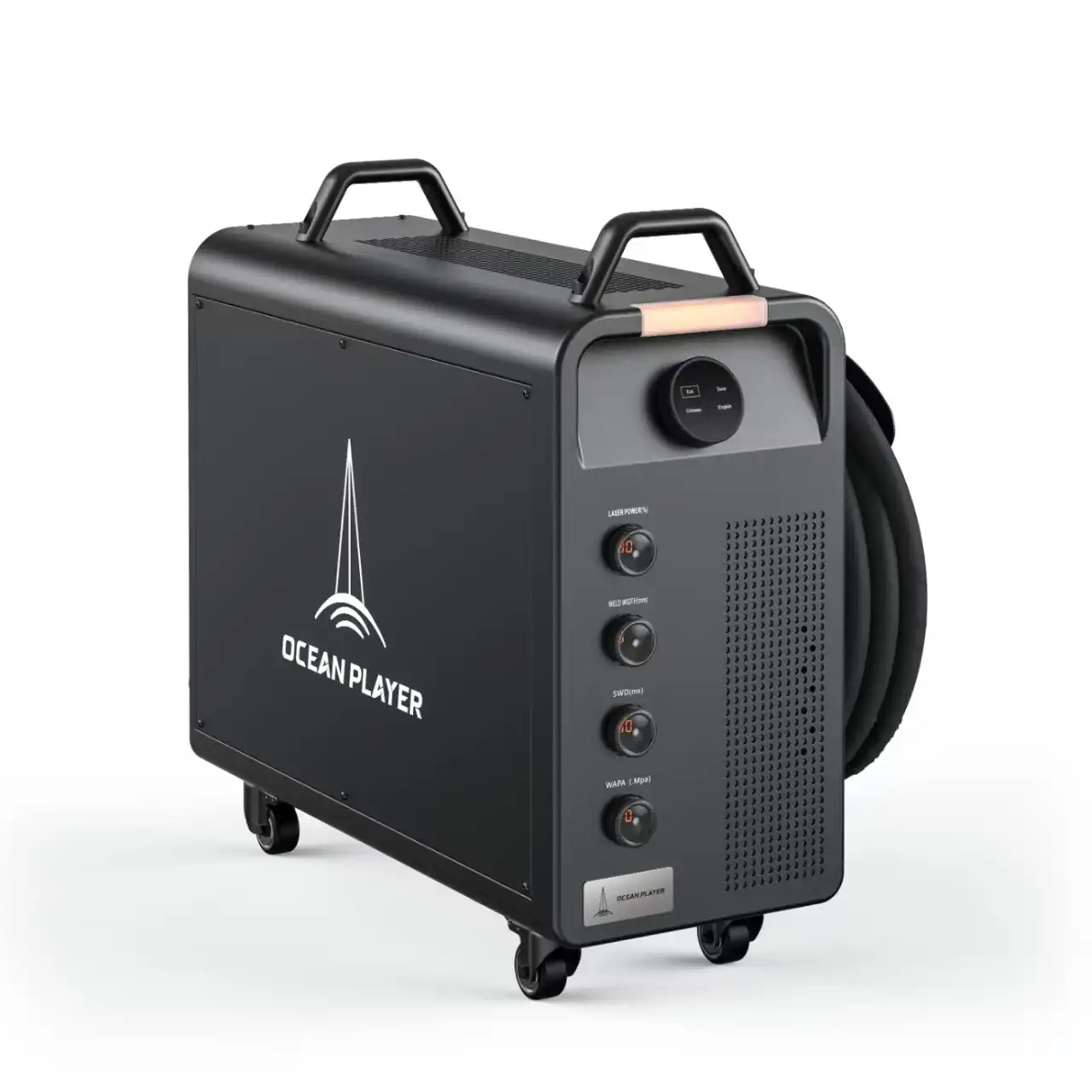
Think in power classes and how the machine is integrated into your line. Entry handheld lasers in the 50–200W pulsed range often list in the mid four to low five figures, with 300–500W pulsed models stepping up from roughly the low‑to‑mid teens based on public listings and vendor explainers accessed in 2026. For example, STYLECNC’s pricing guidance shows how power and configuration move the number, and integrators report that professional/industrial configurations (roughly 300–2000W with appropriate safety and extraction) can span into the high five figures when fully equipped. See indicative ranges in STYLECNC’s cost overview and integrator bands from Clean Laser Technologies (sources accessed 2026).
- Reference examples: STYLECNC’s cost explainer outlines power‑linked pricing drivers and product tiers in plain language: see the vendor’s overview in “What is the Cost of Owning a Laser Rust Removal Machine” (accessed 2026) at the STYLECNC site. Clean Laser Technologies communicates typical professional ranges for portable/industrial systems in the U.S. (accessed 2026) across several pages.
A compact way to visualize line items you may see on quotes:
| CAPEX component | What it covers | Typical impact |
|---|---|---|
| Laser source & scan head | Fiber source, handheld head or scanner, controller | The core cost driver (scales with power class) |
| Cooling | Air or water chiller sized to power and duty | Adds utility load and price |
| Fume extraction | LEV unit sized for metals fume/particulates | An added line item; required for EHS |
| Safety containment | Curtains, barriers, windows, interlocks | Varies by workspace and compliance plan |
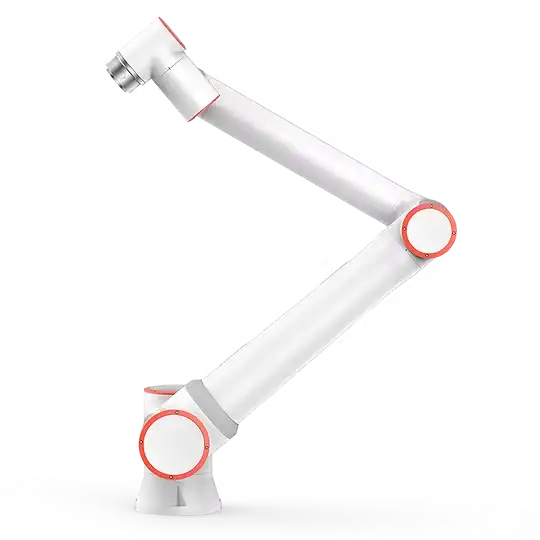
| Integration & fixtures | Racks, motion, robot/CNC, vision | Step‑change when moving to automated cells |
| Training & install | Operator training, setup | Smaller in cost, large in adoption impact |
Public examples illustrate the variance: a 300–500W air‑cooled handheld listed by a U.S. reseller slots around the low‑to‑mid teens depending on options, whereas a Western‑branded 200W model is shown “starting from” the mid‑thirty‑thousand range; at the other end, some high‑power 3 kW CW bundles are advertised near the mid‑teens but with different feature sets and support models. These are directional and should be validated with current quotes.
- Evidence anchors: STYLECNC cost explainer and catalog (accessed 2026); SFX/Print & Laser handheld listings (accessed 2026); CanCam CleanSaber 200W “starting from” pricing (accessed 2026); LasersOnly 3 kW bundle example (accessed 2026).
Safety and compliance adders
Laser cleaning with a Class 4 source demands controls. OSHA’s Laser Hazards guidance (accessed 2026) calls for engineering controls and, where practicable, containment that achieves Class 1 operation, plus appropriate eyewear, access interlocks, and local exhaust ventilation to capture laser‑generated fumes and particulates. Containment components add real dollars. For instance, Kentek publishes price anchors for laser curtains, barriers, and windows that help budget a controlled area—think several thousand dollars for a modest curtain kit or barrier set, with ranges depending on size and features (accessed 2026). You’ll also factor a properly sized extractor and filters to prevent recirculating contaminants.
- Authority and examples: See OSHA’s Laser Hazards chapter in the OSHA Technical Manual and related standards pages (accessed 2026). Kentek’s publicly listed curtains/barriers/windows provide order‑of‑magnitude pricing for containment components (accessed 2026).
Accessories and support
Accessories can shift the total: advanced scanning heads, nozzles for better fume capture, and optics can add cost but protect throughput and quality. Support model matters, too. Channel‑layered offerings often bundle training, local support, and extended warranties; source‑factory models can reduce purchase price but may rely on remote support and scheduled parts shipments. The configuration that fits your plant’s skills and EHS plan is usually the most economical over time.
Operating costs you can predict
Electricity and uptime
A clean way to estimate electricity is to use a simple formula:
Cost per hour = Rate ($/kWh) × Electrical load (kW) × Duty cycleDuty cycle reflects how hard the system runs during a shift; the electrical load should include the laser and the chiller. For a US Midwest scenario, industrial rates often land in the low‑teens cents per kWh; use your actual utility bill or consult the U.S. Energy Information Administration’s annual “Electric Sales, Revenue, and Average Price” series (Table T4, accessed 2026) for state averages.
- Reference: See the EIA hub for state‑level industrial electricity averages (accessed 2026).
Optics, filters, and service
Local exhaust ventilation is non‑negotiable for laser cleaning. Filter costs depend on the extractor and pollution load. BOFA’s support materials (accessed 2026) note that certain combined filters are commonly replaced on a roughly annual cadence, with pre‑filters changed based on saturation indicators. In practice, you amortize filter sets to a $/hour figure using supplier quotes and recommended intervals. Routine service (cleaning optics, checking interlocks, extractor maintenance) is part of a predictable schedule.
- Reference: BOFA FAQs and maintenance guidance (accessed 2026) and Nederman’s extractor product literature for general practices (accessed 2026).
Training and labor
Handheld cleaning is a single‑operator task. In the US Midwest preset, plan for a fully burdened technician wage of $28–$40/hour (user selection). Automated cells shift labor from touch‑time to programming and setup; they can reduce per‑part labor at higher utilization, provided fixturing and motion are dialed in.
Throughput and utilization realities
Light vs. heavy rust scenarios
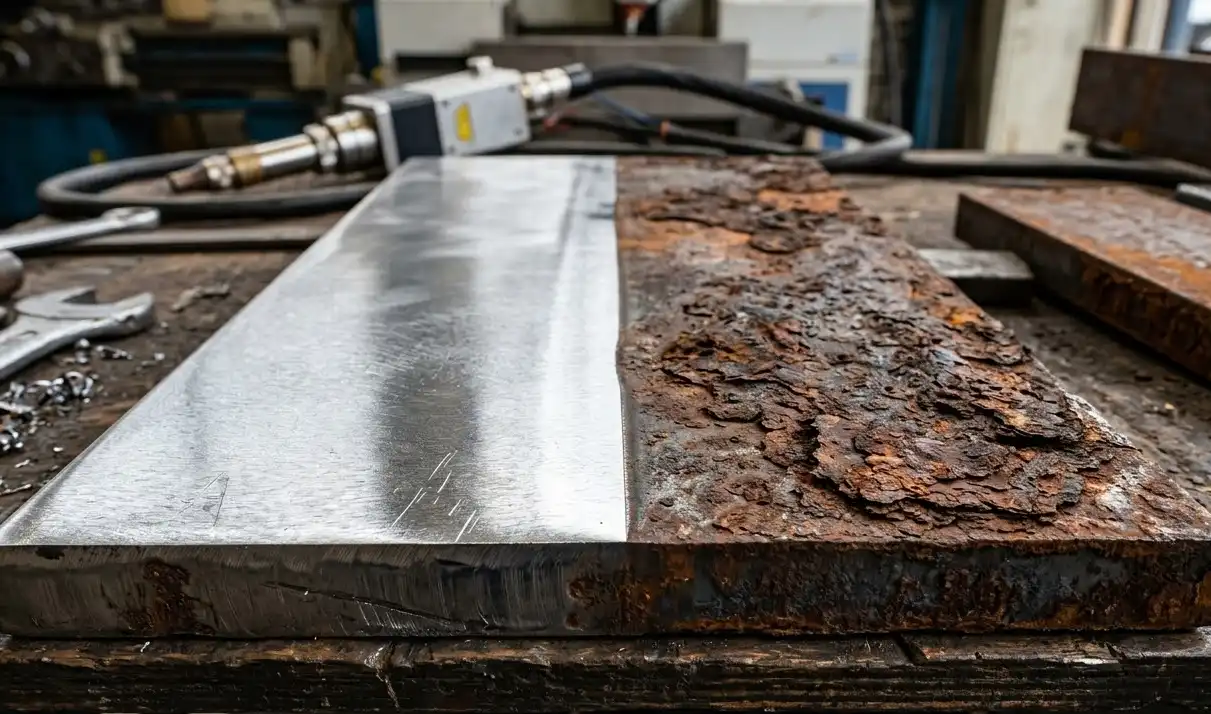
Throughput isn’t a single number. It changes with rust severity:
- Light flash rust with no pitting responds fast at wider scan widths and higher traverse speeds, often needing a single pass.
- Medium oxidation with light pitting slows things down and may need one or two re‑passes.
- Heavy scale, pitting, and mixed coatings run slowest—narrower scans, multiple passes, and more careful parameter control.
Treat these as relative multipliers in your model rather than universal ft²/hour claims. The right question is: how many hours per week can you convert from your incumbent process at an acceptable surface quality?
Part geometry and access
Flat plates are forgiving. Inside corners, tubes, fasteners, welds, and mixed‑metal assemblies break rhythm and shrink your effective scan width. They also increase the value of good fixtures and extraction nozzles that stay close to the beam. If you clean complex assemblies, run trials and time studies before you lock in a payback target.
Handheld vs. automated cells
Handheld systems win for flexible maintenance, rework, and field service. Automated cells earn their keep on repeatable parts with fixtures, guarding, and interlocks built in; the result is safer Class 1 operation and more stable takt. The decision often pivots on utilization: if a workcell can run two shifts at steady cadence, the economics shift toward automation.
ROI: when it pays off
High-utilization precision work
Laser shines when you clean the same geometry hour after hour, where avoiding surface damage has financial value (e.g., aerospace fixtures, precision molds, medical device tooling). The fewer reworks and rejects you generate, the more savings compound. Third‑party ROI guidance highlights that credible models include labor, consumables/waste, energy, changeover, and rework avoidance—not just purchase price—so your spreadsheet reflects the full picture. For a concise variables list and structure, see NewEquipment’s ROI explainer featuring Laserax perspectives (accessed 2026).
- Reference: NewEquipment/Laserax “Calculating the Return on Investment of Laser Cleaning” (accessed 2026).
Large-area, thick-rust cases
For heavy rust on large structures, abrasive blasting can outpace handheld laser on raw removal rate. Laser can still win where substrate preservation, confined‑space work, or waste minimization matters. If automation and fixtures let you maintain a steady scan at higher power with good extraction, the throughput gap narrows and safety improves—but plan those capital adders into your model.
Sensitivity: hours, wages, energy
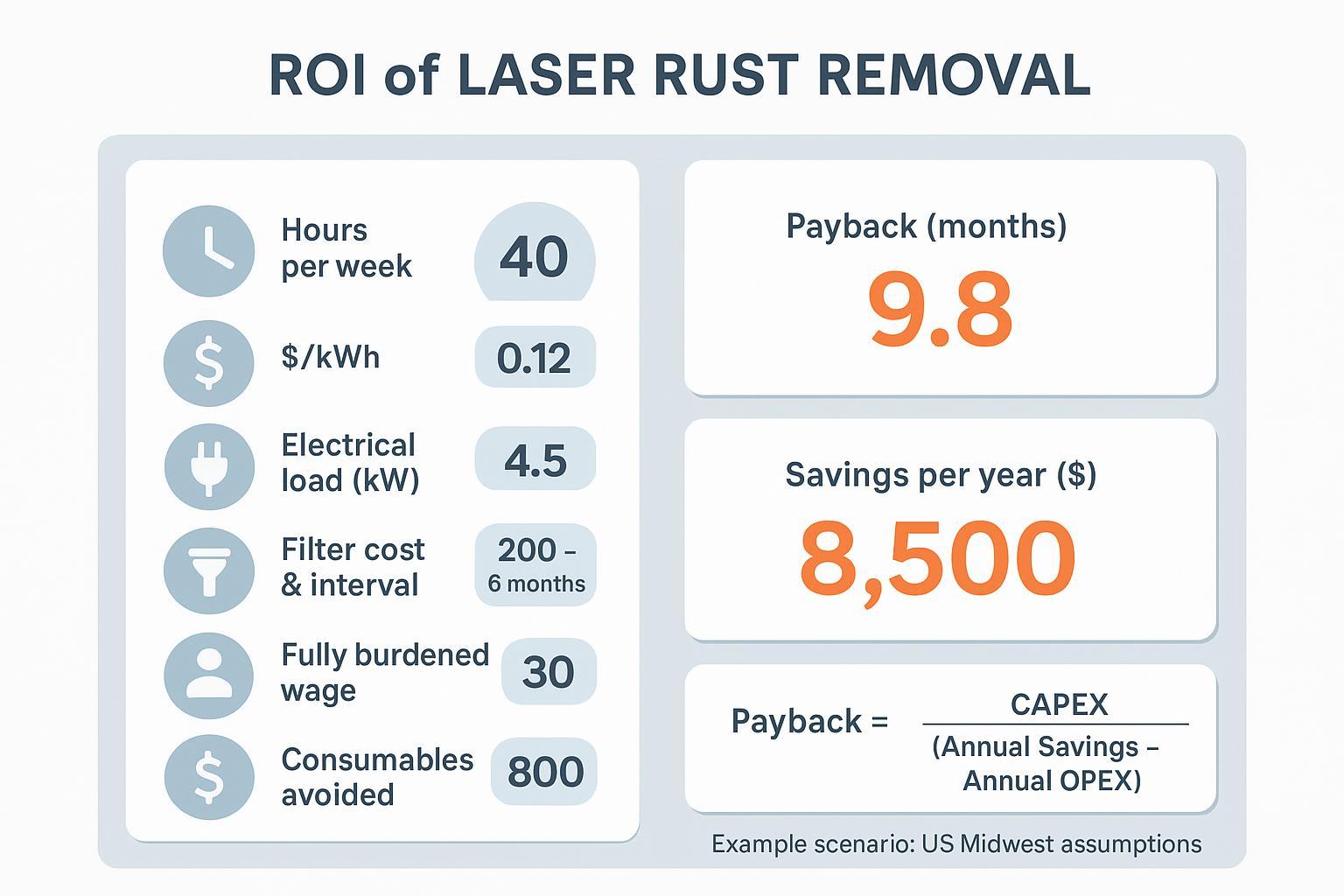
Here’s a simple, auditable way to model payback for a US Midwest plant. Adjust the inputs to mirror your environment.
Assumptions (set these explicitly in your spreadsheet):
- Electricity rate: $0.12–$0.16/kWh (state industrial averages; validate with your bill).
- Electrical load: use your vendor’s spec (laser + chiller). If not available yet, bracket a planning range and mark it as an assumption.
- Filters/service: quote your extractor’s main filter set and expected interval; amortize to $/hour.
- Labor: $28–$40/hour fully burdened for handheld operation; automation changes the mix.
- Utilization: two shifts, 60–80% monthly.
- Savings sources: avoided consumables (media/chemicals/dry ice), avoided disposal/PPE where applicable, labor saved vs. incumbent method, and rework reduction.
Core formulas:
- Annual hours = Available machine hours × Utilization × Duty cycle
- OPEX/hour = (kWh/hour × $/kWh) + Filter$/hour + Routine service$/hour + Labor$/hour (for handheld)
- Savings/hour = Avoided consumables + Avoided disposal + Labor saved + Rework reduction value
- Payback (months) = CAPEX ÷ (Savings/year − Added OPEX/year) × 12
Illustrative micro‑example (educational, not a quote):
- Two like‑for‑like 1.5 kW handheld setups, same extractor and safety plan.
- Scenario A uses a channel‑priced package; Scenario B uses a source‑factory priced package.
- If Scenario B’s CAPEX is lower for the same power class and the OPEX is predictable due to zero consumables, the simple‑payback months shrink for any utilization above your breakeven. A vendor like Oceanplayer represents the “source‑factory pricing” model in the market; the point isn’t promotion—it’s that lower CAPEX with the same utilization improves the numerator in the payback formula, while zero‑consumables keep the denominator (net annual savings) stable.
Sensitivity tips:
- Hours drive everything. If you swing from 20 to 35 laser hours per week at the same wage and $/kWh, payback can compress dramatically.
- Wages matter most when you’re replacing labor‑heavy incumbent methods; higher wages speed ROI if laser reduces touch time.
- Energy moves the needle less than labor for most handheld cases, but it’s worth tracking as power climbs and duty cycles rise.
Alternatives and trade-offs
Abrasive blasting economics
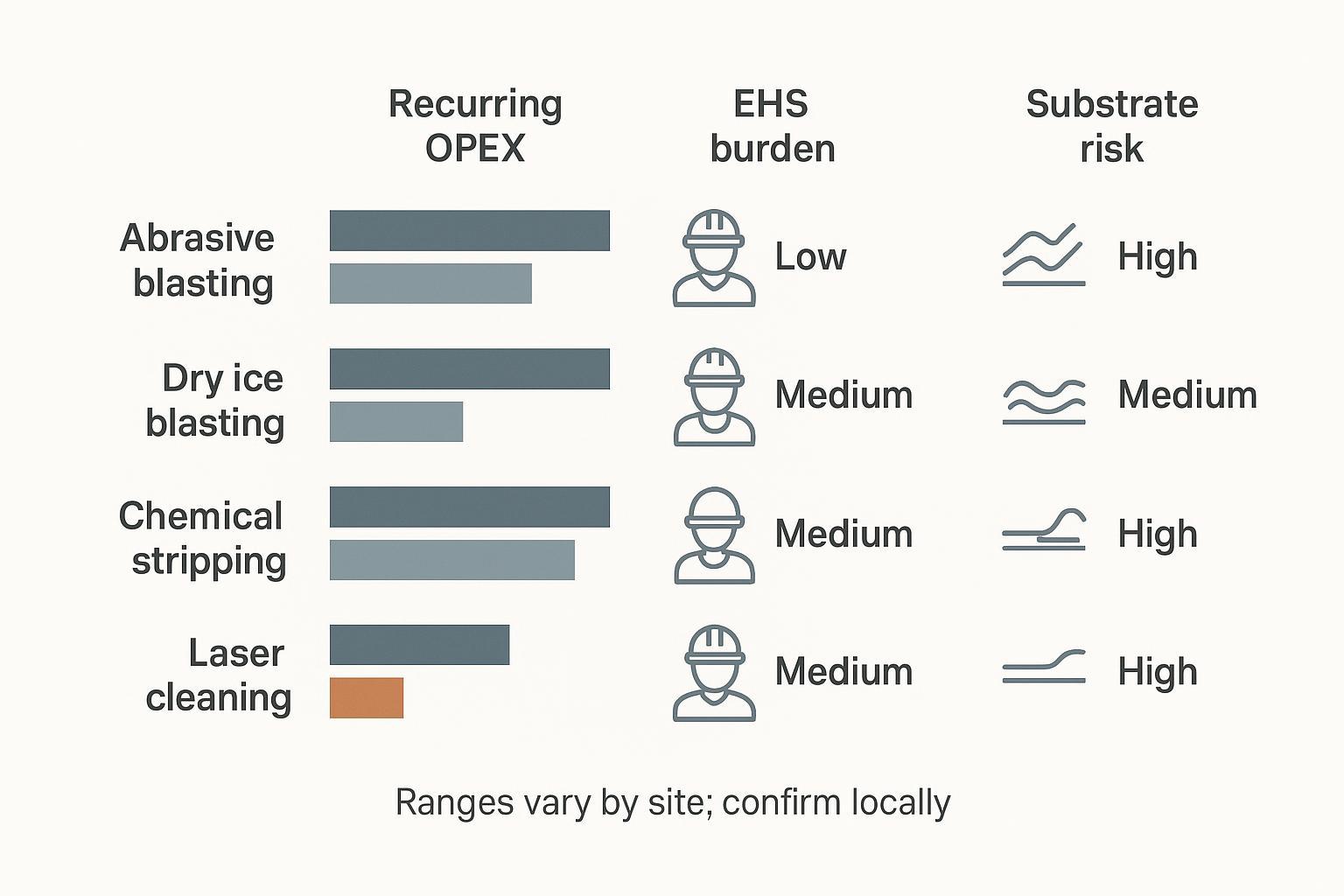
Blasting is proven for heavy corrosion and thick coatings at scale, but it carries recurring media purchases, media recovery or disposal, PPE and dust control, and potential permitting. Environmental rules acknowledge closed or controlled blasting configurations, and related compliance steps can add to TCO depending on coatings and site. Use blasting when raw removal rate and large areas dominate, and budget the consumables and waste stream explicitly.
- Context: U.S. EPA materials on controlled abrasive blasting and NESHAP frameworks provide compliance background (accessed 2026).
Dry ice blasting situations
Dry ice is non‑abrasive and leaves little residue, which helps in sensitive facilities. The catch is recurring pellet logistics and media cost, plus noise and PPE. Vendor guides outline machine costs and typical media consumption patterns; use those inputs to build your OPEX line rather than assuming parity with sand.
- Reference: Cold Jet’s dry ice blasting guides summarize operating considerations and media handling (accessed 2026).
Chemical stripping pros/cons
Chemical stripping reaches complex geometries and can undercut oxides and coatings, but chemicals, dwell time, neutralization, and hazardous waste handling accumulate cost and risk. If your EHS program aims to reduce hazardous waste and air monitoring burdens, laser’s no‑media approach can be attractive—provided throughput and surface quality are acceptable.
- Safety anchors: OSHA ventilation principles and NIOSH sampling methods offer the boundary conditions for safe air quality management around any process that generates fumes or vapors (accessed 2026).
Conclusion
Laser cleaning’s upfront cost can feel steep because you’re buying power, precision, safety, and extraction in one move. But the operating side is tame and predictable compared with media‑based methods. The economics hinge on fit and hours: match power and method to rust thickness, area, geometry, and your EHS goals, then run the payback math with your actual wage and energy numbers. If your model shows healthy weekly hours and steady quality gains, laser tends to earn its keep. Next step: collect two or three configuration‑true quotes (including extraction and containment), plug the numbers into your spreadsheet using the formulas above, and pressure‑test utilization with a pilot shift before you commit.
References and further reading
- STYLECNC, “What is the Cost of Owning a Laser Rust Removal Machine” and catalog pages — vendor price drivers and examples (accessed 2026): https://www.stylecnc.com/blog/rust-removal-laser-cost.html; https://www.stylecnc.com/laser-cleaning-machine/
- Clean Laser Technologies, U.S. integrator pages — indicative professional ranges and mobile package components (accessed 2026): https://cleanlasertechnologies.com/laser-cleaning-machines-in-iowa/
- OSHA Technical Manual, Laser Hazards — engineering controls and Class 4 operations (accessed 2026): https://www.osha.gov/otm/section-3-health-hazards/chapter-6
- Kentek Laser Store — curtains, barriers, and windows with published prices (accessed 2026): https://www.kenteklaserstore.com/products/laser-containment/freestanding-laser-barriers
- U.S. EIA, Electric Sales, Revenue, and Average Price (Table T4 landing page, accessed 2026): https://www.eia.gov/electricity/sales_revenue_price/
- BOFA International — extractor maintenance and filter replacement guidance (accessed 2026): https://bofainternational.com/en/support/faqs/
- NewEquipment (feat. Laserax), “Calculating the Return on Investment of Laser Cleaning” (accessed 2026): https://www.newequipment.com/plant-operations/article/21254041/laserax-calculating-the-return-on-investment-of-laser-cleaning
- Cold Jet, “The Definitive Guide to Dry Ice Blasting” (accessed 2026): https://info.coldjet.com/the-definitive-guide-to-dry-ice-blasting
- OSHA OTM, Ventilation principles; NIOSH NMAM 5th Ed. (accessed 2026): https://www.osha.gov/otm/section-3-health-hazards/chapter-3; https://www.cdc.gov/niosh/nmam/pdf/NMAM_5thEd_EBook-508-final.pdf