
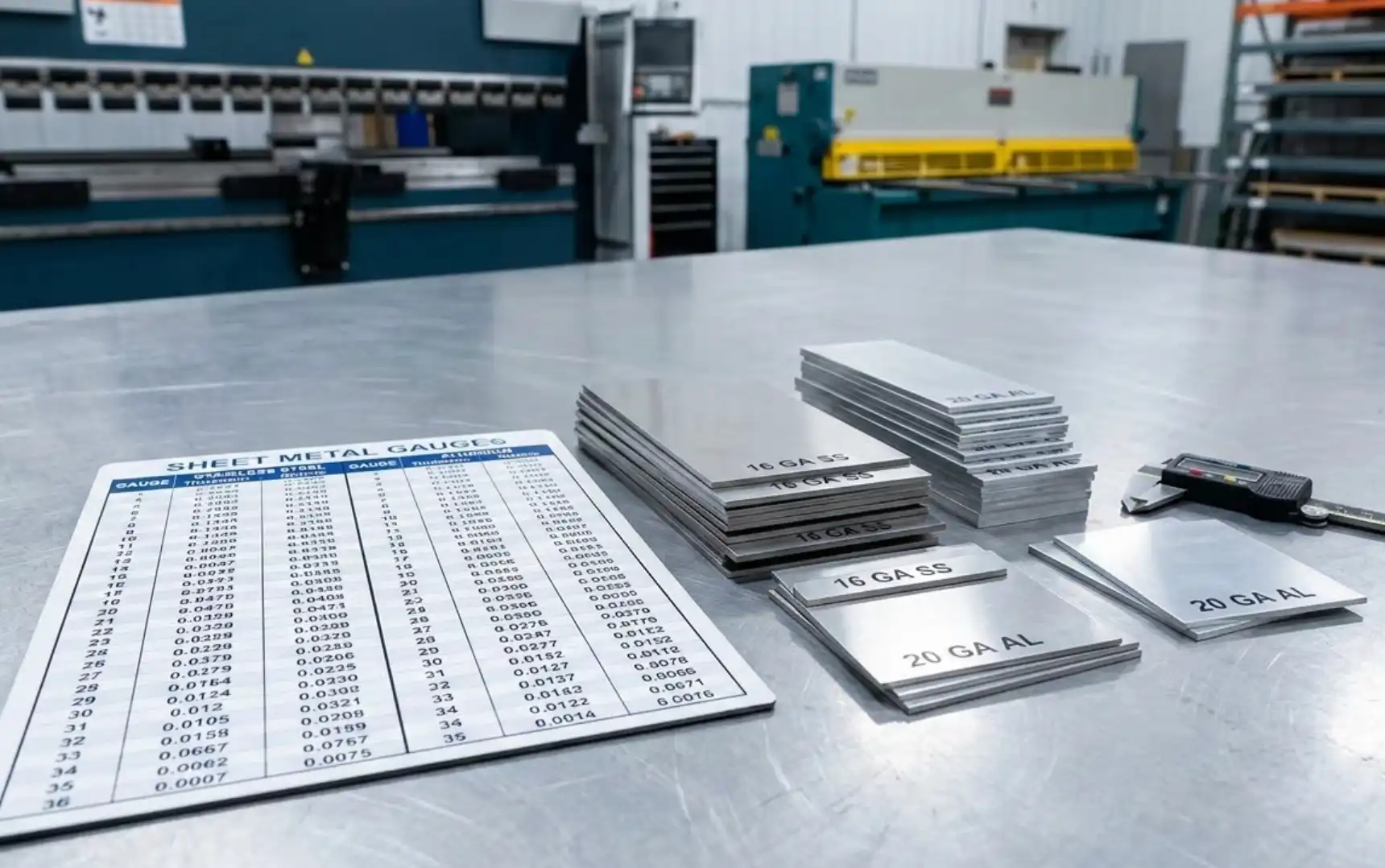
You can use a sheet metal thickness table to pick the right metal fast and not get confused. Knowing about sheet metal thickness helps you choose the best material for strength and bending. The table gives you exact sizes, so you do not mess up. People who are new and people with experience both find this tool helpful.
Tip: Always look at the table before you begin your project to save time and supplies.
Key Takeaways
- A sheet metal thickness table helps you pick the right metal fast for your project.
- Always look at the thickness before you start to save time and stop mistakes.
- Different metals can have different thicknesses even if they have the same gauge number, so always use the right chart.
- Thicker sheets are stronger, but thinner sheets are easier to bend and cut.
- Think about what the material can do and what your project needs when you choose the metal thickness.
- Use both gauge numbers and real thickness measurements to make sure you are correct.
- Try out different thicknesses with test pieces to see what works best for your project.
- Ask an expert for help if you are not sure about the right gauge or thickness for hard projects.
What is a sheet metal thickness table
A sheet metal thickness table helps you compare the thickness of different metals quickly. You can use it to find the right size for your project. The table lists common materials like aluminum, steel, copper, and stainless steel. Each row shows the thickness for each metal in both gauge numbers and millimeters. This makes it easy to see how thick or thin a piece of metal is before you buy or cut it.
Purpose of thickness tables
You need to know the thickness of metal for every project. The thickness affects how strong and flexible the metal will be. For example, a thicker sheet gives you more strength, while a thinner sheet bends more easily. If you pick the wrong thickness, your project might not work as planned. A sheet metal thickness table gives you the exact numbers you need, so you do not have to guess.
When you look at a table, you see how different materials compare. Here is a quick look at some common metals and their properties:
| Material | Strength | Durability | Notes |
|---|---|---|---|
| Stainless Steel | ⭐⭐⭐⭐ (High) | ⭐⭐⭐⭐⭐ (Excellent) | Excellent in both strength and long-term durability. |
| Cold Rolled Steel | ⭐⭐⭐⭐ (High) | ⭐⭐ (Low–Moderate) | Strong and rigid, but prone to rust if not coated. |
| Copper Sheet | ⭐⭐⭐ (Moderate) | ⭐⭐⭐⭐ (Good) | Offers moderate strength with excellent corrosion resistance. |
| Galvanized Steel | ⭐⭐⭐ (Moderate) | ⭐⭐⭐⭐ (Good) | Slightly weaker than raw cold rolled steel due to the zinc layer. |
| Aluminum Sheet | ⭐⭐ (Low–Moderate) | ⭐⭐⭐⭐ (Good) | Lightweight and corrosion-resistant. Strength varies by alloy. |
Note: Evaluating mechanical properties is important. You want to match the thickness and material to your project’s needs.
You can also see how thickness changes for different metals at the same gauge. For example, a gauge 5 steel sheet is thicker than a gauge 5 aluminum sheet. This chart shows the difference:
Who uses sheet metal tables
Many people use sheet metal gauge tables. If you work in construction, you need to know which thickness will hold up a building. If you design cars or airplanes, you want the right balance of strength and weight. Electricians use these tables to pick copper sheets for wiring. Even artists and hobbyists check the table to make sure their metal is easy to cut or bend.
Here are some of the most common materials you will find in a sheet metal thickness table:
- Aluminum
- Brass
- Copper
- Steel
- Titanium
- Tin
- Stainless Steel
You can see that these tables help everyone from builders to engineers. They make sure you pick the right thickness for your job. When you use a sheet metal thickness table, you avoid mistakes and save time.
Reading sheet metal thickness table
When you know how to read a sheet metal thickness table, you can make good choices for your project. The table has numbers and columns. Each part gives you important details. If you understand what the columns show, you will not make mistakes. This also helps you save money.
Columns and units explained
Sheet metal thickness tables have many columns. Each column tells you something different. You will see the material type, gauge number, and thickness in inches and millimeters. These units let you compare sizes easily, no matter what system you use.
Here is a sample table with common columns and units for different materials:
| Material Type | Common Columns | Units |
|---|---|---|
| Galvanized Steel | Gauge, Decimal Equivalent [in], Decimal Equivalent [mm] | inches, millimeters |
| Stainless Steel | Gauge, Decimal Equivalent [in], Decimal Equivalent [mm] | inches, millimeters |
| Aluminum | Gauge, Decimal Equivalent [in], Decimal Equivalent [mm] | inches, millimeters |
Gauge numbers
Gauge numbers show how thick or thin the sheet metal is. You will see numbers like 10, 16, or 24. A smaller number means the metal is thicker. A bigger number means the metal is thinner. This can be confusing, so always check the table before you pick.
The same gauge number does not always mean the same thickness for every material. For example, 10 gauge stainless steel is thicker than 10 gauge aluminum. You need to look at the table for each material to find the right thickness.
Inches and millimeters
Sheet metal thickness tables show thickness in both inches and millimeters. This helps you if you use the imperial or metric system. You can see the decimal equivalent for each gauge number. Here is a table that matches gauge numbers with inches and millimeters:
| Gauge | Decimal Equivalent [in] | Decimal Equivalent [mm] |
|---|---|---|
| 3 | 0.239 | 6.07 |
| 4 | 0.224 | 5.69 |
| 5 | 0.209 | 5.31 |
| 6 | 0.194 | 4.94 |
| 7 | 0.179 | 4.55 |
| 8 | 0.164 | 4.18 |
| 9 | 0.150 | 3.8 |
| 10 | 0.135 | 3.42 |
| 11 | 0.120 | 3.04 |
| 12 | 0.105 | 2.66 |
| 13 | 0.090 | 2.28 |
| 14 | 0.075 | 1.9 |
| 15 | 0.067 | 1.71 |
| 16 | 0.060 | 1.52 |
| 17 | 0.054 | 1.37 |
| 18 | 0.048 | 1.21 |
| 19 | 0.042 | 1.06 |
| 20 | 0.036 | 0.91 |
| 21 | 0.033 | 0.84 |
| 22 | 0.030 | 0.76 |
| 23 | 0.027 | 0.68 |
| 24 | 0.024 | 0.61 |
| 25 | 0.021 | 0.53 |
| 26 | 0.018 | 0.45 |
| 28 | 0.015 | 0.38 |
You can also see how this works in the chart below:
Interpreting sheet metal gauge
You need to know how to read sheet metal gauge numbers. This helps you pick the right thickness and not get confused.
- When the gauge number goes up, the metal gets thinner. For example, 18 gauge is thinner than 10 gauge.
- The same gauge number can mean different thicknesses for different metals. For example, 10 gauge stainless steel is thicker than 10 gauge aluminum.
- Always check the real thickness in inches or millimeters, not just the gauge number.
- Keep different gauge charts for each material. This helps you avoid mistakes when you switch metals.
- Smaller gauge numbers mean thicker sheets. Bigger numbers mean thinner sheets. This can be tricky, so double-check before you buy.
Tip: Always say both the gauge number and the real thickness when you order sheet metal. This makes sure you get the right material.
When you read a sheet metal thickness table, you need to think about a few things. You look at the material’s properties, the process you will use, and the thickness you need for your project. You also think about how much it costs to make and ship. Thicker materials cost more to make and send. Picking the thinnest material that works for your project saves money.
Here is a table with important things to think about:
| Factor | Description |
|---|---|
| Material properties | Strength, density, corrosion resistance, cost, malleability, conductivity |
| Process | Bending, welding, or other methods affect thickness requirements |
| Necessary thickness | Weight support, flexibility, stiffness |
| Production and shipping cost | Thicker materials increase costs; use the thinnest material that works |
You can see that reading a sheet metal thickness table helps you make better choices. You will not make mistakes, you save money, and you get the right material for your project. When you understand sheet metal gauge, you work faster and smarter.
Sheet metal gauge standards
U.S. Code and material differences
Sheet metal gauge standards can change by material and location. In the U.S., people use the steel gauge chart for carbon steel. Aluminum and stainless steel use different charts. Each metal has its own chart. The thickness for the same gauge number is not always equal. For example, 16 gauge steel is not as thick as 16 gauge aluminum. This happens because each metal is different.
- Different materials cause changes in gauge measurements.
- The same gauge number means a different thickness for each metal.
- Pick the right chart for your material to get the strength you need.
- Gauge charts help you compare, but always check the real thickness in inches or millimeters.
If you only use the gauge number, you might pick the wrong metal. Always check the decimal thickness to avoid mistakes.
Gauge vs. thickness conversion
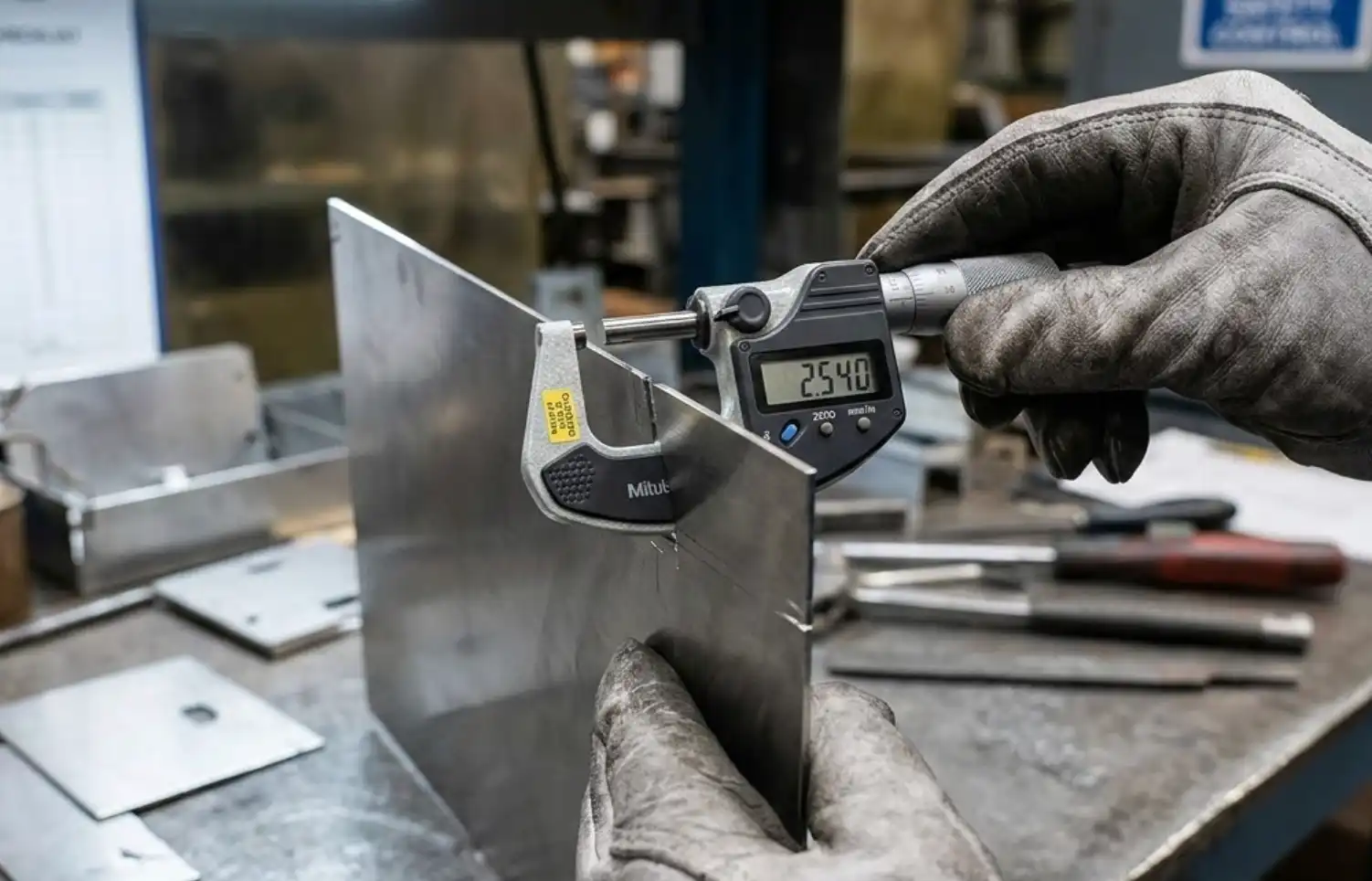
You cannot use a simple formula to change gauge to thickness. Instead, you use sheet metal gauge tables or charts. These charts are made by industry standards. For example, USS is for carbon steel, AWG is for aluminum, and BWG is for stainless steel. Lower gauge numbers mean thicker metal.
You can measure thickness in different ways:
| Method | Description |
|---|---|
| Gauge Tools | Fit into slots to measure thickness. Make sure the sheet edge is clean for best results. |
| Vernier Calipers | Clamp onto the sheet for accurate readings. Use a gauge chart to convert the measurement. |
| Micrometers | Give very precise thickness checks, best for small tolerances. |
| Ultrasonic Thickness Gauge | Measure thickness without needing the edge, good for coated or hard-to-reach areas. |
- Gauge tools are fast and simple.
- Vernier calipers give the most exact thickness.
- Micrometers are best for careful checks.
- Ultrasonic gauges work for coated or hidden sheets.
Always use a chart to match your measurement to the right gauge. This helps you avoid confusion and get the correct thickness for your project.
Common gauge charts
You will see many gauge charts in metalworking. Each chart shows the gauge number and matching thickness for different metals. Here is a quick look at how the same gauge number can mean different thicknesses:
| Material | Gauge Number | Thickness (inches) |
|---|---|---|
| Steel | 16 | 0.0598 |
| Aluminum | 16 | 0.0641 |
You can see that 16 gauge steel and 16 gauge aluminum are not the same thickness. Always check the chart for your material.
Here are some common gauge charts:
| Metal Type | Gauge Range | Application Description |
|---|---|---|
| Steel | 10-14 | Used for strong support and dent resistance. |
| Galvanized Steel | 10-14 | Good for heavy-duty jobs needing durability. |
| Aluminum | 20-26 | Best for lightweight and decorative panels. |
| Stainless Steel | 10-14 | Great for strong, rust-resistant structures. |
Always say the thickness in inches or millimeters when you order. For example, say “16 gauge steel (0.0598 in)” or “16 gauge aluminum (0.0641 in)” to get the right material. This helps you avoid mistakes and keeps your project safe. Sheet metal gauge charts and tables are your best tools for clear and correct choices.
Tip: Always check the chart and thickness before you buy or cut any metal.
Using sheet metal thickness for projects
Matching thickness to application
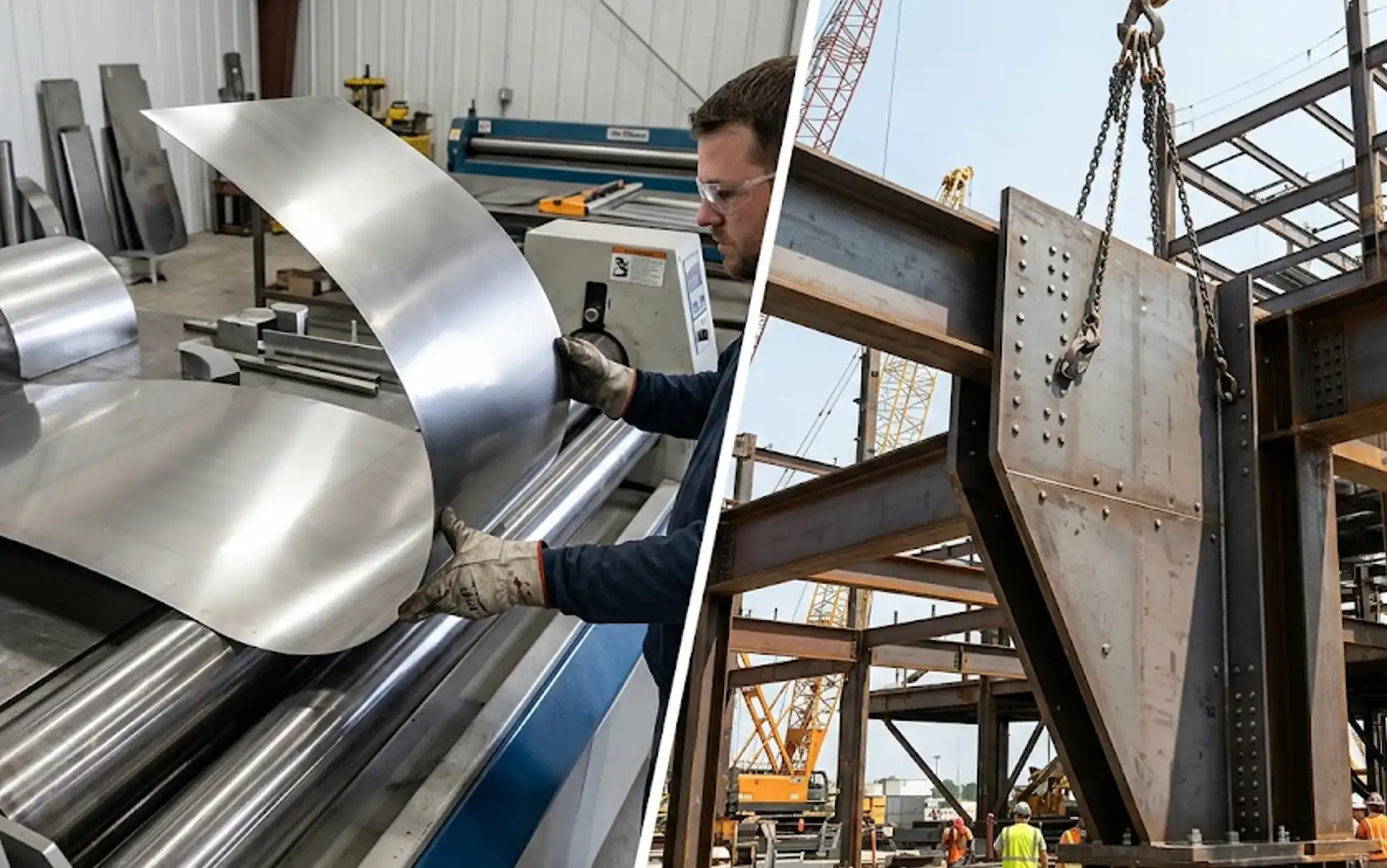
Choosing the right sheet metal gauge for your project is important. You want your work to last and stay safe. The thickness of metal sheets affects how strong and flexible your finished product will be. If you use a sheet that is too thin, it may bend or break. If you use a sheet that is too thick, it may be hard to cut or shape.
Strength and flexibility
You need to match the thickness to the job. Thicker sheets give you more strength. They hold up better under heavy loads and resist bending. For example, if you build a support frame, you want a thicker gauge. Thicker sheets also protect against rust and weather. This helps your project last longer.
Thinner sheets work well for parts that need to bend or curve. You can use a thinner gauge for covers or panels that do not carry much weight. Thinner metal is easier to cut and shape. However, it may not last as long in tough conditions.
The thickness of sheet metal is crucial for project durability and performance. Thicker sheets increase load-bearing capacity and resist corrosion. This keeps your structure strong over time. For example, steel roofing with a thin gauge may deform quickly in storms. Thicker sheets keep their shape and protect your building better.
Compatibility with materials
You must also think about the type of metal. The same gauge number does not mean the same thickness for every material. Always check the gauge chart for your metal. For example, 18 gauge steel is not the same as 18 gauge aluminum. Use a standard steel gauge chart for steel, and a different chart for aluminum or copper.
Some metals work better for certain jobs. Stainless steel resists rust. Aluminum is light and easy to bend. Copper conducts electricity well. Match the metal and thickness to your needs. Always check the sheet metal thickness table before you start.
Practical selection tips
You can use these tips to pick the right sheet metal gauge for your project:
- Review your project needs. Think about how much weight the metal must hold and what kind of weather or stress it will face.
- Check the gauge chart for your material. Do not guess. Use the right chart for steel, aluminum, or copper.
- Test with a prototype. Try different thicknesses to see which works best before you buy a lot of material.
- Ask an expert if you are not sure. Professionals can help you choose the right gauge and thickness.
- Plan for the future. Sometimes, a thicker sheet is better if you expect more stress or want to make changes later.
Tip: Always use the real thickness from the chart, not just the gauge number. This helps you avoid mistakes.
Here is a table with recommended thickness for common projects:
| Application | Recommended Thickness |
|---|---|
| HVAC ductwork & plenums | 18-gauge |
| Automotive & architectural trim | 18-gauge |
| Roofing (main panels) | 26–29 gauge |
| Roofing (flashing, gutters, trim) | 18-gauge |
You can see that different jobs need different gauges. Roofing panels use a thinner gauge, while trim and gutters use a thicker one. Always check the sheet metal gauge charts for your project.
If you skip the chart or use the wrong gauge, you may have problems. Thin roofing can leak or bend in storms. Thick metal may be too heavy or hard to cut. Using the sheet metal thickness table helps you avoid these mistakes.
Sheet metal fabrication works best when you match the gauge to your needs. The right thickness of metal sheets gives you strength, flexibility, and safety. Always use a gauge chart and check your measurements before you start.
Avoiding mistakes with sheet metal thickness table
Common errors in selection
It is easy to make mistakes when picking sheet metal gauge. Many people get confused by gauge standards. They may think the same gauge number means the same thickness for all metals. This is not correct. You need to use the right gauge chart for each type of metal. Some people use the wrong tool to measure. If you use a steel gauge chart for aluminum, you will get the wrong thickness. Material tolerances can make the thickness different from what the chart says. Coatings or plating add extra thickness. You must count these in your measurements. Sometimes, people do not update the gauge chart after making design changes. This can lead to using the wrong sheet metal thickness.
Here are the most common mistakes:
- Mixing up gauge standards for different metals.
- Using the wrong tool to measure thickness.
- Not thinking about material tolerances.
- Forgetting about coatings or plating.
- Miscommunication in paperwork.
- Not updating the gauge chart after changes.
Tip: Always check the gauge chart and thickness before you order or cut any metal.
How the table prevents mistakes
The sheet metal thickness table helps you avoid these mistakes. You can see the exact thickness for each metal and gauge number. The chart gives sizes in inches and millimeters. This makes it simple to compare and pick the right gauge. You can stop costly mistakes by using the correct chart for your metal. The table shows how thickness changes strength, fit, bending, and cost.
| Material Type | Thickness (inches) | Thickness (mm) |
|---|---|---|
| Stainless Steel | 0.025 | 0.635 |
| Aluminum | 0.020 | 0.508 |
| Copper | 0.032 | 0.813 |
You can use the chart to check if the thickness is right for your project. The sheet metal thickness table helps you use the right chart and get the correct thickness. You avoid mistakes with strength, fit, and cost.
- Makes sure you pick the right thickness.
- Stops mistakes from using the wrong chart.
- Gives sizes in both inches and millimeters.
- Changes how strong and well the metal fits.
- Affects how well the metal bends.
- Impacts cost and how long it takes to get.
Note: Always use the newest chart and update your gauge chart if your design changes.
When to seek expert advice
Sometimes you need help from an expert. If your project uses more than one metal, you must check their properties. You need advice for strength, safety, and weight rules. How you make the project can limit your chart choices. Weather and other conditions can change how long the metal lasts. Saving money matters for long-term projects. If you are not sure, ask an expert to look at your sheet metal thickness table and gauge chart.
- Metal type and how strong it is
- Strength needs and how much weight it holds
- Safety rules and laws
- Weight and how well it works
- Limits from how you make the project
- Weather and other conditions
- Saving money
Sample sheet metal thickness table
Quick reference chart
You can use a quick reference chart to find the right sheet metal gauge for your project. This chart shows the most common gauges for steel, aluminum, and copper. You see the gauge number, thickness in inches, and thickness in millimeters. The chart helps you compare sizes fast. You do not need to guess or search through long lists. You get the information you need in one place.
| Gauge | Steel (in) | Steel (mm) | Aluminum (in) | Aluminum (mm) | Copper (in) | Copper (mm) |
|---|---|---|---|---|---|---|
| 10 | 0.1345 | 3.42 | 0.1019 | 2.59 | 0.1285 | 3.26 |
| 12 | 0.1046 | 2.66 | 0.0808 | 2.05 | 0.1084 | 2.75 |
| 14 | 0.0747 | 1.90 | 0.0641 | 1.63 | 0.0870 | 2.21 |
| 16 | 0.0598 | 1.52 | 0.0508 | 1.29 | 0.0648 | 1.65 |
| 18 | 0.0478 | 1.21 | 0.0403 | 1.02 | 0.0480 | 1.22 |
| 20 | 0.0359 | 0.91 | 0.0320 | 0.81 | 0.0320 | 0.81 |
| 22 | 0.0299 | 0.76 | 0.0253 | 0.64 | 0.0250 | 0.64 |
| 24 | 0.0239 | 0.61 | 0.0201 | 0.51 | 0.0201 | 0.51 |
You can print this quick reference chart or save it on your phone. You will always have the gauge chart ready when you need it.
Tip: Use the quick reference chart before you order or cut any sheet metal. This helps you avoid mistakes and saves time.
How to use the sample table
You can use the sample sheet metal thickness table in many real-world situations. The chart helps you check the right gauge and thickness for your project. Here are steps you can follow:
- Look for the manufacturer’s code on the metal. The code tells you the size and thickness. You can match it to the gauge chart.
- Check for color coding on the ends of steel studs. For example, green means 16-gauge and yellow means 18-gauge. Use the chart to confirm the thickness.
- Use a micrometer to measure the sheet if you do not see a label. Compare your measurement to the gauge chart to find the correct gauge.
- Check the flange width if you see a stamped code. The flange width helps you estimate the gauge. Use the chart to verify the thickness.
You can use the quick reference chart for many projects. If you build HVAC ductwork, you check the chart for the recommended gauge. If you work on roofing, you use the chart to pick the right thickness for panels and trim. You can use the gauge chart for automotive parts, architectural trim, or electrical panels.
The chart helps you make fast decisions. You do not waste time guessing or searching for information. You get the right sheet metal gauge and thickness every time.
Note: Always use the gauge chart for your specific material. The same gauge number means different thickness for steel, aluminum, and copper.
You can make picking metal easier with a sheet metal thickness table. If you know about gauge and thickness, your projects will be strong and last longer. You get the right results and do not waste money.
- You choose the best gauge for each job to keep things safe and simple.
- You stop metal from bending or having problems when making things.
- You make sure your project works well and looks good.
If you want to find out more, there are lots of guides. They show how gauge and thickness change for different metals and why these facts are important for your work.
FAQ
What is a sheet metal gauge?
A sheet metal gauge is a number that shows how thick a piece of metal is. You use the gauge to compare thickness quickly. Lower numbers mean thicker metal.
Why do different metals have different thicknesses for the same gauge?
Each metal has its own gauge chart. For example, 16 gauge steel is not the same thickness as 16 gauge aluminum. Always check the chart for your metal.
How do you measure sheet metal thickness?
You can use a gauge tool, caliper, or micrometer. Measure the sheet, then match the number to the chart. This helps you find the correct gauge.
Can you use the same gauge chart for all metals?
No, you cannot. Each metal type has its own chart. Always use the correct chart for steel, aluminum, or copper to avoid mistakes.
What happens if you pick the wrong thickness?
If you pick metal that is too thin, it may bend or break. If it is too thick, it can be hard to cut or shape. Always use the table to choose right.
Where can you find a sheet metal thickness table?
You can find tables online, in metalworking books, or from suppliers. Many websites offer free charts. You can also print a quick reference chart for your workspace.
Why do you need to know both gauge and thickness in inches or millimeters?
Knowing both helps you avoid confusion. Some suppliers use gauge, others use thickness. If you know both, you always get the right metal for your project.