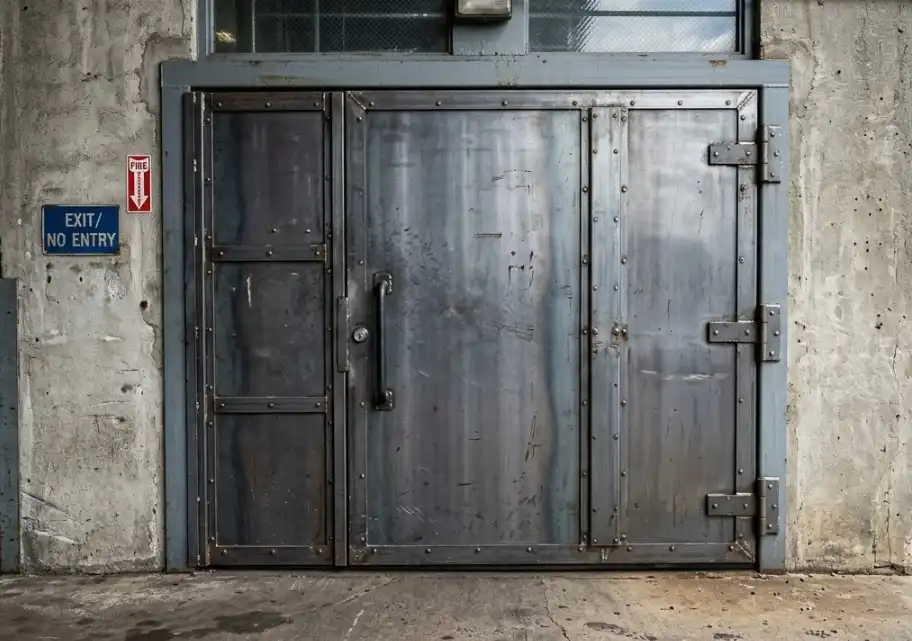
Consistent cleaning and protective coatings give you the power to prevent rust on your metal sheet doors. These steps do not just save time—they can double the lifespan of your doors. You keep your steel doors strong and looking new with regular care.
- Regular cleaning and coatings stop corrosion before it starts.
- Maintenance preserves both the structure and security of your doors.
With the right approach, you protect your investment and enjoy lasting results.
Key Takeaways
- Regular cleaning stops rust before it starts. Clean your metal sheet doors at least once a month.
- Use protective coatings like rust-inhibiting primers and paints. These create barriers against moisture and air.
- Inspect your doors often for early signs of rust. Look for small spots, peeling paint, and rough textures.
- Control humidity around your doors. Keep the air dry to prevent rust from forming quickly.
- Fix small rust spots immediately. Quick repairs save time and money by stopping rust from spreading.
- Pay attention to high-risk areas like hinges and door handles. These spots are more likely to rust.
- Use safe cleaning tools to avoid damaging your doors. Soft cloths and gentle cleaners work best.
- Create a maintenance plan. Regular checks and cleaning keep your doors strong and looking new.
Why Metal Sheet Doors Rust
Common Causes
It can be hard to stop rust on metal sheet doors. Moisture, oxygen, and dirt work together to cause rust. If you live where it is wet, your doors are at higher risk. Rain, humidity, and salty air make rust happen faster. This is a bigger problem for hollow metal doors and steel doors. The table below lists the main things in the environment that cause rust:
| Environmental Factor | Description |
|---|---|
| Moisture | Lots of water or humidity makes rust form faster. |
| Oxygen Exposure | Oxygen mixes with iron and causes rust to appear. |
| Contaminants | Salt and pollution from factories help rust grow. |
You should also watch out for sun, heat, and wind. These can break down coatings and let water touch the metal. If you live near the ocean, salty air can make your doors rust sooner. Snow and freezing weather make water freeze in cracks, which makes rust worse. Hot weather can make cracks bigger and let in more water.
Some people make mistakes that cause rust to start early. If you ignore small rust spots or do not sand and repaint, rust will spread under the paint. You need to fix these problems quickly to keep your hollow metal doors in good shape.
Impact on Door Life
Rust does more than just change how your doors look. It makes the door weaker and can cause holes or cracks. If you let rust spread, your home may not be as safe. Rust can start small but get much worse fast. White powder, peeling paint, and rust spots mean water is hurting your doors. If you do nothing, rust can eat through the metal and make repairs harder.
Hollow metal doors are easy for water to damage inside, so you might not see the problem right away. Galvanized steel is better at fighting rust, but it still needs care if you live where it is wet.
Importance of Rust Prevention
Stopping rust early protects your doors and saves money. If you act fast, you can stop small problems from getting big. Rust prevention keeps your doors strong and looking nice. If you wait too long, small rust spots can turn into big problems that hurt your doors. Cleaning, checking, and using coatings are the best ways to stop rust and help your metal sheet doors last longer.
Tip: Make a simple plan to take care of your doors. Check them often, especially after storms or when it is humid. Fixing problems early saves you time and money.
Rust prevention is not just about looks. It keeps your doors safe and working for a long time. You can avoid buying new doors if you take care of your hollow metal doors and steel doors now.
Identifying Rust Early
Visual Signs
You can spot rust early if you know what to look for. Rust often starts as small reddish-brown spots on the surface of your metal sheet door. These spots may look like tiny stains or dots. Sometimes, you will see orange-red streaks running down from the top or near the hardware. If you touch these spots, you might feel a rough or flaky texture. Paint that bubbles or peels can also signal rust hiding underneath. When you see these changes, you need to act fast to stop the rust from spreading.
Tip: Use a flashlight to check your door in bright light. Shadows can hide small rust spots, so move the light around to see every part of the door.
High-Risk Areas
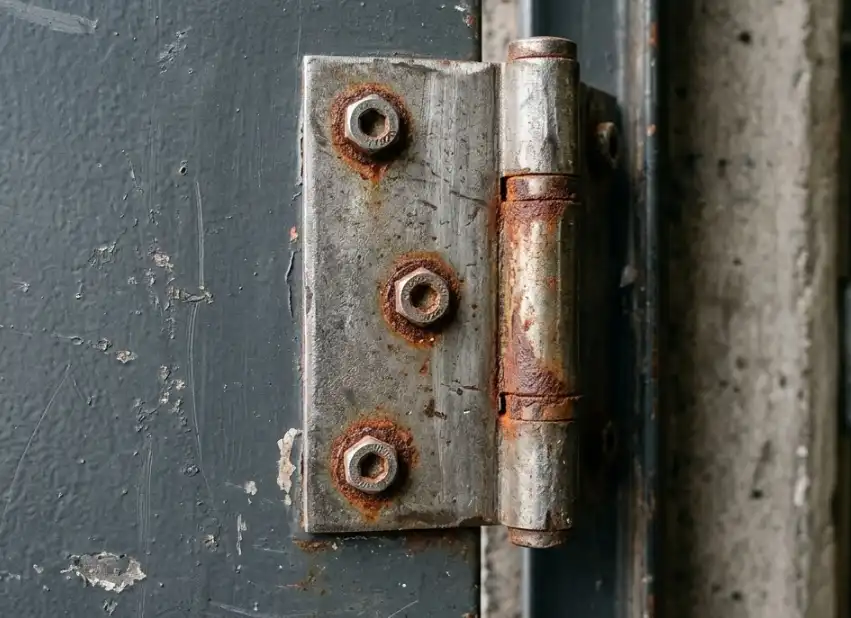
Some parts of your metal sheet door are more likely to rust first. You should pay close attention to these spots:
- Hinges: These parts move often and face friction. Moisture can collect here, making rust form quickly.
- Door knobs and handles: You touch these areas every day. Water and dirt from your hands can speed up rust.
- Bottom edge of the door: Rainwater and puddles can sit here, especially if the door does not close tightly.
- Corners and seams: Small gaps can trap water and let rust start.
- Around screws and fasteners: These spots often have tiny cracks where moisture can hide.
Rust forms most easily on iron or steel doors. You may notice crusty or flaky textures near hinges or knobs. Orange-red stains often run down from these areas. If you see these signs, you should clean and protect the area right away.
Spotting Minor Corrosion
You can find minor corrosion before it becomes a big problem. Sometimes, rust starts below the surface and is hard to see with your eyes. You can use digital imaging tools to check for early signs of corrosion. These tools take pictures of the metal and show changes that mean rust is starting. Some people use special tests like radiography or ultrasonic testing. These methods look inside the metal for weak spots. Eddy current testing checks the electrical properties of the door. If the metal changes, it can mean rust is forming.
Most homeowners do not have these tools, but you can still check your door often. Run your hand over the surface to feel for rough spots. Look for any changes in color or texture. If you find anything unusual, clean the area and add a protective coating. Early action keeps your door strong and rust-free.
Note: Regular checks help you catch rust before it spreads. Make it a habit to inspect your door every month, especially after rain or snow.
Cleaning for Rust Prevention
Routine Cleaning Steps
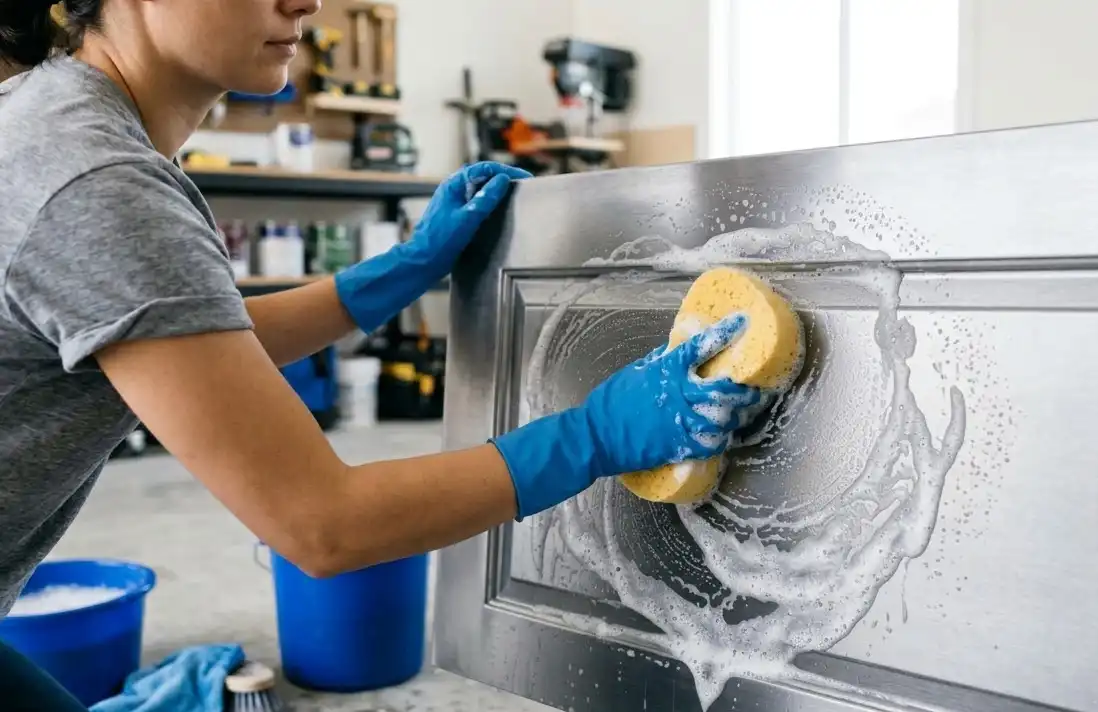
You protect your metal sheet door best when you follow a routine cleaning schedule. Dirt and moisture build up quickly, so you need to clean your door often. Start by removing loose dust with a dry microfiber cloth. Next, mix warm water with a few drops of mild dish soap. Dip a soft sponge into the solution and gently wipe the door. Pay special attention to corners and edges, where grime collects. For stubborn spots, use a soft-bristle brush. Rinse the door with clean water to remove any soap residue. Dry the surface with a towel to prevent water spots.
Tip: Clean your door once a month. If you live in a humid area or near the ocean, clean it more often. Routine cleaning stops rust before it starts.
Mild Soap Solutions
You need a gentle cleaning solution to avoid damaging the protective coating on your door. Harsh chemicals can strip away paint and make rust form faster. Choose a mild dish soap or a gentle detergent. Add a small amount to a bucket of warm water. Use a sponge or microfiber cloth to wipe down each panel. Scrub gently to remove chalk and oxidation. Spray the door as you clean to prevent soap spots. Always rinse with clean water to keep the surface free from residue.
Here are simple steps for making and using a mild soap solution:
- Mix warm water with a few drops of mild dish soap.
- Use a soft sponge or microfiber cloth to gently wipe the door.
- Focus on corners and edges where dirt builds up.
- Use a soft-bristle brush for tough spots.
- Rinse with clean water to remove soap.
Note: Never use bleach or abrasive cleaners. These products can scratch the metal and ruin the finish.
Safe Cleaning Tools
You need the right tools to clean your metal sheet door safely. Using rough materials can scratch the surface and damage protective coatings. Choose soft microfiber cloths for wiping and drying. Use a bucket for mixing your cleaning solution. Wear rubber gloves to protect your hands. A sponge works well for gentle scrubbing. For stubborn spots, pick a soft-bristled brush. Dry the door with a towel to prevent streaks. Safety goggles help shield your eyes from splashes.
Here is a list of safe cleaning tools:
- Soft microfiber cloths
- Bucket for mixing solutions
- Rubber gloves for hand protection
- Sponge for gentle scrubbing
- Soft-bristled brush for stubborn spots
- Towels for drying
- Safety goggles
Callout: Using safe tools keeps your door looking new and prevents scratches that lead to rust.
Applying Protective Coatings to Prevent Rust
You can protect your metal sheet doors from rust by using the right protective coatings. These coatings create a barrier that keeps out water, air, and dirt. When you use the best products and methods, you give your doors strong rust resistance and help them last for many years.
Rust-Inhibiting Primer
Start with a rust-inhibiting primer. This type of primer does more than just stick to the metal. It forms a chemical barrier that blocks moisture and oxygen. You get better protection because the primer etches into the surface, making the topcoat paint hold on tighter. The special resins and rust inhibitors in these primers keep your door safe from oxidation and damage.
- Rust-inhibiting primers stop rust before it starts.
- They help paint stick better, so your protective coatings last longer.
- These primers make your door stronger and more durable.
Tip: Always use a rust-inhibiting primer before painting. This step gives your door the best start for long-term rust resistance.
Paints and Powder Coatings
After priming, you need to choose the right top layer. Traditional paint works, but it needs touch-ups every few years. Paint can chip and fade, letting water reach the metal. When this happens, rust can form quickly.
Powder coatings give you much better protection. This type of coating lasts up to 20 years, even in direct sunlight. Powder coatings form a thick, dense layer that seals the metal. The coating sticks to the door with an electrostatic process, so it moves with the metal and does not crack or peel. You get a barrier that resists scratches and keeps out moisture. This means less rust and fewer repairs over time.
Note: Powder coatings cost more at first, but they save you money because you do not need to repaint as often. You also get stronger rust resistance and a better-looking door.
Wax and Oil Application
You can add extra protection by using wax or oil. These products work well as protective coatings, especially if you want to boost rust resistance between paint jobs. Wax and oil create a thin film that keeps out water and air.
Using Door Wax
Door wax is easy to use and gives your door a smooth, shiny finish. You should apply wax with a non-abrasive, lint-free cloth. Rub the wax in small circles until you cover the whole surface. Wax works best when the temperature stays below its melting point. In lab tests, wax-based coatings kept metal panels rust-free for up to 96 hours in salt spray, while unprotected panels rusted in just 30 minutes.
- Wax gives strong short-term protection.
- It works best in cool, dry weather.
- Reapply wax every few months for the best results.
Applying Boiled Linseed Oil
Boiled linseed oil is another good choice for protective coatings. You can use a lint-free cloth to spread a thin layer over your door. The oil soaks into the metal and forms a barrier. Some experts say oil-based products do not protect as well as solvent-based ones because they stay wet and do not form a hard film. Still, linseed oil can help if you use it in the right conditions and reapply it often.
- Use boiled linseed oil for extra rust resistance.
- Make sure the surface is clean and dry before you start.
- Wipe off any extra oil to avoid sticky spots.
Callout: Always use non-abrasive, lint-free cloths for applying wax or oil. This keeps your protective coatings smooth and prevents scratches that can lead to rust.
You can combine these methods for the best results. Start with a rust-inhibiting primer, add a strong paint or powder coating, and finish with wax or oil for extra protection. This layered approach gives your steel doors the highest level of rust resistance and keeps them looking new.
Prevent Corrosion with Environmental Control
You can help your metal sheet doors last longer by changing the air and water around them. Too much moisture and not enough fresh air make rust happen fast. If you keep the air dry, let air move, and stop water from sitting near your doors, you can stop rust and keep your doors strong.
Manage Humidity
Humidity is a big reason why rust forms. When the air is very wet, metal things like doors rust faster. Try to keep the humidity between 30% and 50%. This helps stop rust from starting. If you keep tools or bikes in a wet garage, they can get rusty. Rust makes metal weak and does not last as long. Cars parked in wet places can also get rusty parts, which makes them work worse.
- Use a dehumidifier in your garage or where you store things.
- Check the humidity with a simple tool.
- Keep doors and windows closed when it rains.
- Put metal things up off the floor so they stay dry.
Tip: Keeping the air dry helps your doors and other metal things stay free from rust.
Improve Ventilation
Good airflow keeps your metal sheet doors dry. Moving air takes away moisture and stops rust. You can put vents or louvers in your garage or storage room. Metal sheets with holes let more air move through. Fans or coolers can help control heat and wetness.
- Look at weatherstripping and change it every 3 to 5 years.
- Paint over any rusty spots right away.
- Check vented doors twice a year.
- Clean vents often so air can move.
- Put oil on hinges and locks to stop rust.
Callout: Clean vents and oil moving parts often. This easy job keeps your doors working well.
Prevent Water Accumulation
Water near the bottom of your metal sheet door makes rust form faster. When water sits on metal, it mixes with air and causes rust. Saltwater makes rust even faster because it carries electricity well. Keep the area dry to stop rust.
- Look for puddles after rain or snow.
- Put in drains to move water away from doors.
- Use mats or barriers to keep water from touching the bottom.
- Sweep away leaves and dirt that hold water.
Note: Dry doors last longer. Keeping water away from your doors stops rust and damage.
You can stop rust by keeping the air dry, letting air move, and making sure water does not sit near your doors. These steps help your metal sheet doors stay strong and free from rust for a long time.
Stop Rust with Quick Repairs
Quick repairs help you stop rust before it spreads and damages your metal sheet door. You can fix small problems fast if you know the right steps. This section shows you how to sand rust spots, use rust inhibitors, and recoat damaged areas for long-lasting protection.
Sanding Rust Spots
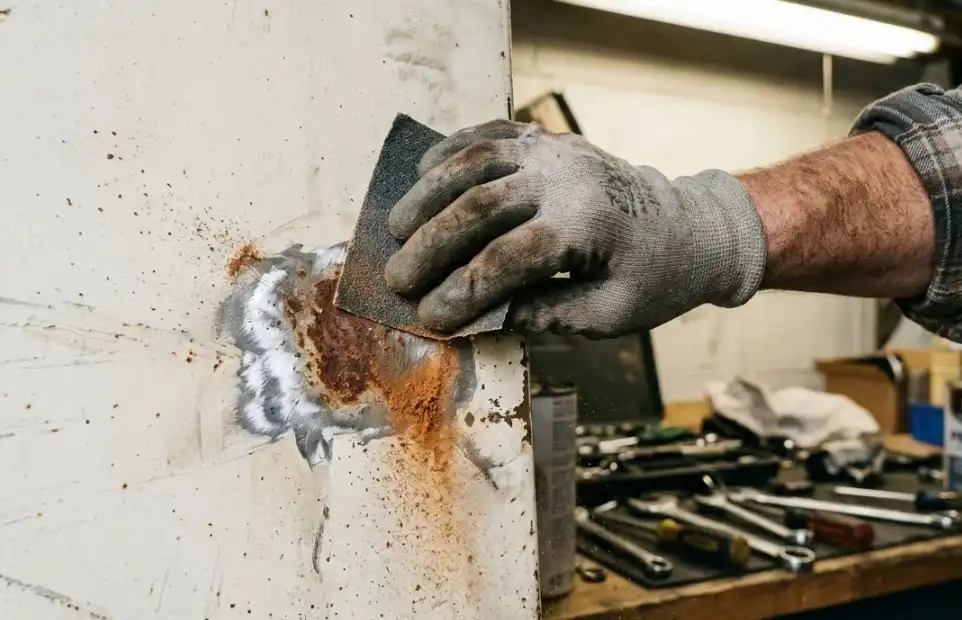
You need to remove all rust from your door to stop rust from coming back. Start by using sandpaper or a wire brush to scrub away the rusty spots. For bigger areas, you can use a small electric sander. Sand until you see only clean, solid metal. If you see shiny spots, keep sanding until the surface looks dull and smooth. Shiny areas mean the paint will not stick well. Do not sand too much or you might damage the metal. If you reach bare metal, stop and get ready to use rust inhibitors right away.
Tip: After sanding, wipe away all dust with a clean, dry cloth. This helps the next steps work better.
Applying Rust-Inhibitor Primer
Rust inhibitors are special products that block rust from forming again. After you finish sanding, you should use a rust-inhibitor primer on the clean metal. These primers make a strong barrier that keeps out water and air. You can find many good rust inhibitors at hardware stores. Here are some top choices:
| Product Name | Type |
|---|---|
| Rust-Oleum ‘Stop Rust’ Clean Metal primer | Rust-inhibitor primer |
| Kilz Original Interior/Exterior oil-based | Oil-based primer |
| Zinsser Cover Stain oil-based primer | Oil-based primer |
| Rusty metal primer | Rust-inhibitor primer |
Spray or brush the primer over the sanded area. Make sure you cover every spot where you removed rust. Let the primer dry completely before you paint. Rust inhibitors work best when you follow the directions on the label.
Note: Using rust inhibitors right after sanding helps you stop rust from coming back.
Recoating Damaged Areas
You need to finish the repair by recoating the damaged area. This step seals the metal and gives your door a smooth look. Follow these steps to get the best results:
- Clean the area with a degreasing cleaner.
- Remove all visible rust and sand for a smooth surface.
- Wipe away dust and let the area dry.
- Apply a rust converter if you see any leftover rust.
- Let the converter dry fully.
- Use a rust-inhibitor primer to cover the bare metal.
- Paint over the primer with two coats of rust-resistant paint.
You can also use powder coating for extra strength if you want your door to last even longer. Always check your work to make sure you covered every spot. These steps help you stop rust and keep your door looking new.
Callout: Quick repairs with rust inhibitors and fresh paint help you stop rust and protect your door for years.
Metal Sheet Door Maintenance Tips
Inspection Schedule
You keep your metal sheet doors strong when you check them often. Regular inspections help you find rust before it spreads. Maintenance experts recommend that you inspect your doors at least twice a year. You may need to check more often if you live near the ocean or in a humid place.
- Inspect your doors every six months.
- Check more often if you see a lot of rain, snow, or salty air.
- Look closely at hinges, seams, and the bottom edge.
- Use a flashlight to spot small rust spots or peeling paint.
Tip: Write down your inspection dates in a notebook or on your phone. This helps you remember your preventative maintenance routine.
Quick Fixes
You can fix small rust spots before they become big problems. Quick action saves you time and money. Use the right method based on how bad the rust looks. The table below shows the best ways to handle mild and moderate rust:
| Severity | Method |
|---|---|
| Mild | Clean with a wire brush, treat with rust inhibitors, and refinish to restore appearance. |
| Moderate | Grind down affected area, apply fillers, and recoating with specialized primers and paint. |
If you see only a few small spots, scrub them with a wire brush. Add a rust inhibitor and touch up the paint. For bigger patches, you may need to sand, fill, and repaint. Always finish by sealing the area to keep water out.
Note: Quick fixes stop rust from spreading and keep your metal sheet doors looking new.
Long-Term Rust Prevention
You can stop rust from coming back by following smart long-term strategies. These steps protect your doors for many years.
- Invest in a quality dehumidifier. Electric rod or desiccant dehumidifiers keep the air dry and help prevent rust.
- Practice smart storage habits. Store only clean and dry items near your doors. Do not bring in wet tools or equipment.
- Conduct regular inspections. Check for early signs of rust and moisture so you can fix problems right away.
Industry professionals also recommend using special products for long-term protection. The table below lists some top choices:
| Product Name | Description | Key Features |
|---|---|---|
| Rust Grip® | A rust encapsulation coating for direct application on rusted metal. | 15+ year lifespan, minimal preparation, no additional primers needed, suitable for harsh environments. |
| Moist Metal Grip | A two-part epoxy for wet surfaces to prevent corrosion. | Water-repelling, chemical resistant, self-leveling finish, can be tinted. |
| Enamo Grip | A high-performance polyurethane enamel for top coating. | Excellent gloss retention, UV resistant, fully submergible, customizable finish. |
| 3M™ Rust Preventer | A spray that helps stop rust before it starts. | Unique corrosion-resistant chemistry, specialized spray wand for tight areas. |
You get the best results when you combine these products with regular care. These coatings work well on both metal sheet and steel doors. You protect your investment and avoid costly repairs when you follow these steps.
Callout: A strong preventative maintenance routine keeps your doors safe from rust and looking great year after year.
You can keep your metal sheet doors strong and rust-free with a simple routine. Clean your doors often, add protective coatings, check for rust, and control moisture. When you maintain your doors, you save money and avoid big repairs.
- You can cut costs by up to 98%.
- You reduce downtime and defects.
- You improve safety and door performance.
Start your maintenance plan today. Protect your investment and enjoy doors that look new for years. 🛡️
FAQ
How often should you clean your metal sheet door?
You should clean your metal sheet door at least once a month. If you live in a humid or coastal area, clean it every two weeks. Regular cleaning helps stop rust before it starts.
What is the best way to remove small rust spots?
Use fine sandpaper or a wire brush to scrub away the rust. Wipe the area clean, then apply a rust-inhibiting primer and touch up with paint. Quick action keeps rust from spreading.
Can you use household cleaners on metal sheet doors?
Avoid harsh cleaners like bleach or ammonia.
Use mild dish soap mixed with warm water. This solution cleans without damaging the protective coating on your door.
How do you know if your door needs a new protective coating?
Look for peeling paint, dull spots, or small rust patches. These signs mean the coating no longer protects the metal. Reapply primer and paint to keep your door safe.
What should you do if water pools near your door?
Sweep away water right away. Place mats or install drains to keep the area dry. Water sitting near your door causes rust to form quickly.
Is it necessary to use both primer and paint?
Yes, you should use both. Primer blocks rust and helps paint stick better. Paint adds another layer of protection. Using both gives your door the best defense against rust.
Can you prevent rust without special products?
You can slow rust by keeping your door clean and dry. However, special products like rust-inhibiting primers and protective coatings give much better results and longer-lasting protection.