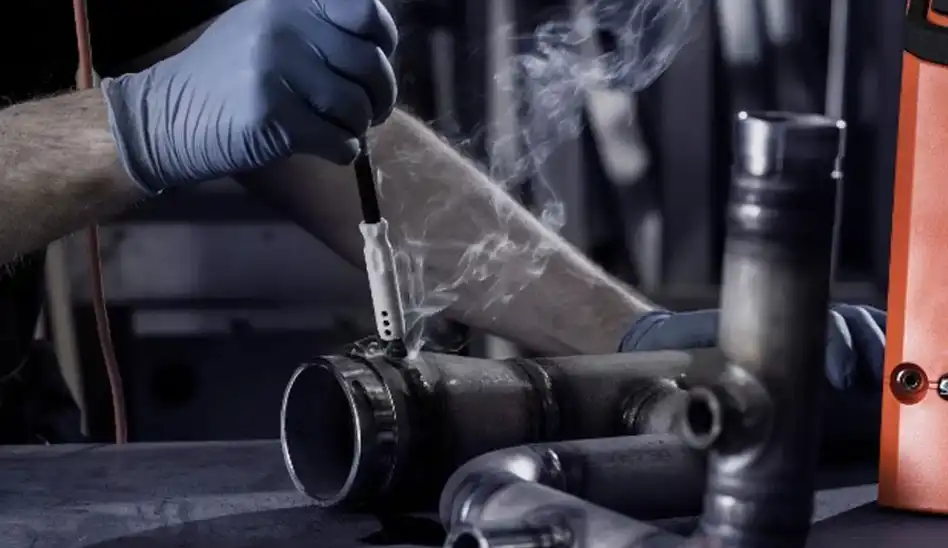
Roughly 70% of structural and industrial fabrication still relies on carbon steel — yet most weld cleaning equipment on the market is designed and marketed primarily for stainless steel. That gap matters. A weld cleaning machine for carbon steel must handle heavier oxide layers, higher susceptibility to flash rust, and different surface chemistry compared to its stainless counterpart, which means picking the wrong unit can leave you with inconsistent finishes, rapid re-oxidation, or wasted consumables. This guide breaks down every viable cleaning method, compares real performance data across carbon steel grades, and gives you a concrete framework for choosing the machine that actually fits your production needs and budget.
What a Weld Cleaning Machine for Carbon Steel Actually Does
Every carbon steel weld leaves behind evidence. Heat tint, oxidation scale, discoloration — these aren’t just cosmetic flaws. They signal compromised surface chemistry that can accelerate corrosion, weaken paint adhesion, and cause coating failures down the line. A weld cleaning machine for carbon steel strips away these byproducts without damaging the base metal, restoring the surface to a state that’s ready for finishing or service.
The core mechanism varies by technology, but the goal stays the same: remove the thin oxide layer (typically 0.5–5 µm thick) that forms when carbon steel hits temperatures above 300°C during welding. Electrochemical units use an electrolyte solution and electrical current to dissolve oxides at the molecular level. Laser systems vaporize contaminants with focused light pulses. Mechanical methods physically abrade the surface. Each approach carries trade-offs in speed, surface finish quality, and operating cost.
Why does choosing the right machine matter so much? Carbon steel behaves differently than stainless steel under cleaning processes. It’s more reactive, more prone to flash rust, and less forgiving of aggressive treatments. Pick the wrong method and you’ll either leave oxidation behind or gouge the weld profile. According to the American Welding Society, proper post-weld cleaning directly impacts the long-term structural integrity of carbon steel joints — not just their appearance.
The right weld cleaning machine for carbon steel balances removal effectiveness against surface preservation. That balance depends on your steel grade, production volume, and downstream finishing requirements. The sections ahead break down exactly how to find it.

Carbon steel weld before and after cleaning with a weld cleaning machine showing removal of heat tint and oxidation
Why Carbon Steel Welds Need Specialized Cleaning
Carbon steel behaves differently from stainless steel at the molecular level after welding. The heat-affected zone (HAZ) on carbon steel develops a thick, multi-layered oxide scale — primarily magnetite (Fe₃O₄) and hematite (Fe₂O₃) — that bonds aggressively to the base metal at temperatures above 570°C. This oxide layer isn’t just cosmetic. It creates an uneven surface chemistry that traps moisture and accelerates corrosion beneath coatings.
Then there’s flash rust. Expose a freshly ground carbon steel weld to ambient humidity above 60%, and visible orange oxidation can appear in under 30 minutes. Stainless steel’s chromium oxide layer self-heals; carbon steel has no such defense. This narrow window between cleaning and coating makes generic approaches — like simple wire brushing — a gamble, because they leave micro-scratches that actually increase the surface area vulnerable to oxidation.
Mill scale reformation adds another layer of difficulty. Even after initial removal, residual heat in thick-section carbon steel joints can regenerate a thin but tenacious scale during cooldown. According to research published by TWI (The Welding Institute), this reformed scale often has inconsistent thickness — ranging from 5 to 50 microns — which causes adhesion failures in paint and powder coat systems. A purpose-built weld cleaning machine for carbon steel addresses these challenges by combining controlled surface preparation with passivation chemistry or energy delivery tuned specifically to iron-oxide removal, rather than the chromium-oxide focus of stainless steel cleaning systems.

Carbon steel weld heat-affected zone with visible oxide scale and flash rust formation
Electrochemical vs Laser vs Mechanical Weld Cleaning for Carbon Steel
Three technologies dominate the market, and each handles carbon steel differently. Picking the wrong one wastes money. Picking the right one transforms your workflow. Here’s how they actually stack up.
| Factor | Electrochemical | Laser | Mechanical (Grinding/Abrasive) |
|---|---|---|---|
| Cleaning quality on carbon steel | Excellent — removes oxide and discoloration without disturbing base metal | Very good — precise ablation of surface contaminants | Variable — depends heavily on operator skill |
| Surface finish | Smooth, passivated appearance | Clean but may show slight surface texture changes at higher power | Scratched or scored; often requires secondary finishing |
| Heat input | Near zero | Low but measurable (localized thermal cycling) | Friction-generated heat; can reach 200–400°C at contact point |
| Risk of warping thin stock (<3 mm) | Minimal | Low | Moderate to high |
| Speed on heavy oxide scale | Moderate — may need multiple passes | Fast on thin layers, slower on thick mill scale | Fast removal but aggressive |
Electrochemical systems use a phosphoric or citric acid electrolyte paired with DC current to dissolve oxides chemically. They excel on carbon steel because the process simultaneously cleans and lightly passivates the surface, slowing re-oxidation. Laser systems, by contrast, vaporize contaminants through pulsed light energy — effective, but units capable of handling heavy carbon steel scale start around $50,000, roughly 3–5× the cost of a mid-range electrochemical weld cleaning machine for carbon steel. According to the TWI (The Welding Institute), electrochemical methods offer the best balance of surface quality and corrosion resistance for ferrous metals when post-weld aesthetics matter.
Mechanical methods — wire wheels, flap discs, belt grinders — still dominate many fabrication shops. They’re cheap upfront. But they embed abrasive particles into the carbon steel surface, creating micro-sites for corrosion initiation. That tradeoff matters when the finished part faces moisture, chemicals, or outdoor exposure.

Comparison of electrochemical laser and mechanical weld cleaning results on carbon steel samples
Electrochemical Weld Cleaning — How It Performs on Carbon Steel
Electrochemical weld cleaners push a low-voltage current through an electrolyte-soaked pad, dissolving oxides on contact. On stainless steel, this process simultaneously cleans and passivates — forming a protective chromium oxide layer. Carbon steel doesn’t contain enough chromium for that reaction. So the cleaning happens, but the passivation benefit essentially vanishes.
That’s the core limitation. An electrochemical weld cleaning machine for carbon steel will strip heat tint and light oxidation effectively, yet the bare surface left behind is immediately vulnerable to flash rust. In humid shop environments, you can see orange specks forming within 30 minutes. This means you’ll almost always need a secondary protective step — primer, oil coating, or a conversion treatment — right after cleaning.
Electrolyte chemistry matters here more than most manufacturers admit. Standard phosphoric acid-based solutions designed for stainless don’t perform well on carbon steel. You need formulations with higher acid concentrations or specialized carbon steel electrolytes, often containing citric or sulfamic acid blends. According to TWI Global, matching the electrolyte to the base metal is critical for consistent results.
Where does electrochemical cleaning actually shine on carbon steel? Thin-gauge work. Cosmetic welds on furniture, architectural panels, and light structural components where you need clean aesthetics without grinding marks. For heavy plate or structural fabrication above 12 mm thickness, the method struggles with deeper scale. It’s a precision tool, not a brute-force solution.

Electrochemical weld cleaning machine pad actively cleaning a carbon steel weld joint with visible electrolyte reaction
Laser Weld Cleaning — Precision and Limitations on Carbon Steel
Laser ablation works by directing short, intense pulses of light at the weld surface. The energy vaporizes oxide layers and heat tint without mechanical contact — the base metal stays untouched, at least in theory. On carbon steel, the process targets the thin iron oxide film (Fe₂O₃ and Fe₃O₄) that forms during welding, breaking molecular bonds and ejecting the material as plasma and fine particulate.
Power requirements vary significantly by application. Thin-gauge carbon steel (under 3 mm) typically needs a 50–100W pulsed fiber laser to remove discoloration safely. Heavier plate with thick oxide scale — say 10 mm or above — may demand 200W or more to achieve acceptable cleaning speeds. A Laser Institute of America guideline recommends matching pulse duration carefully to material thickness, and for good reason.
Here’s the catch. Low-carbon grades like AISI 1010 and 1018 have a narrow thermal window. Push the power density past roughly 5 J/cm², and you risk micro-melting the surface — tiny recast pockets that compromise paint adhesion and fatigue life. This makes a laser-based weld cleaning machine for carbon steel less forgiving than its stainless steel counterpart, where the chromium-rich passive layer absorbs energy more predictably.
Laser systems also struggle with geometry. Inside corners, tight root passes, and complex joint configurations limit beam access. For flat, visible welds on medium-carbon plate, laser cleaning delivers unmatched precision. But shops working with mixed thicknesses and low-carbon alloys should weigh that micro-melting risk seriously before committing to a $40,000+ unit.
Mechanical and Abrasive Methods — When Traditional Approaches Still Win
Wire brushing, grinding, and abrasive blasting haven’t disappeared from fabrication shops — and for good reason. A 4.5-inch angle grinder with a flap disc costs under $80. A bench-mounted wire wheel runs about $150. Compare that to a $3,000+ electrochemical unit or a $30,000 laser system, and the math gets hard to argue with for shops running low volumes or handling rough structural work where cosmetic finish doesn’t matter.
Grinding excels at removing heavy slag and spatter on thick carbon steel plate — 3/8″ and above — where aggressive stock removal is the actual goal. Abrasive blasting, particularly with aluminum oxide media at 80–100 psi, strips oxide scale uniformly across large surface areas faster than any weld cleaning machine for carbon steel can manage. For bridge fabrication, heavy equipment frames, or structural beams headed for paint, these methods remain the practical default.
The trade-offs are real, though. Mechanical methods generate airborne particulates that require respiratory protection and dust collection per OSHA metal fume guidelines. Wire brushing embeds iron particles into the surface, which accelerates corrosion if the part won’t be coated quickly. Grinding removes base metal — sometimes 0.5 mm or more — weakening thin-wall sections. And none of these approaches passivate the surface the way electrochemical cleaning does. So for precision work, food-grade fabrication, or anything requiring corrosion resistance without paint, mechanical methods fall short. But for high-volume structural carbon steel? They still win on speed and cost per linear foot.
Key Features to Look for in a Carbon Steel Weld Cleaning Machine
Power output matters more than most spec sheets suggest. For carbon steel, you need a unit delivering at least 30–50 amps on the electrochemical side, because the thicker oxide layers on mild and medium-carbon steel demand sustained current. Machines rated below 20 amps work fine on stainless but stall out on heavy carbon steel scale, leaving patchy results that require a second pass.
Duty cycle is the silent deal-breaker. A 60% duty cycle at maximum output means the machine runs for 6 minutes, then rests for 4. Production shops welding structural beams or pipe spools all day need 80% or higher. Check whether the manufacturer rates duty cycle at full power or at some reduced setting — that distinction changes everything.
Electrode and brush compatibility directly affects your ongoing costs. Some units lock you into proprietary carbon fiber brushes at $40–$80 each. Others accept universal pads and brushes, cutting consumable expenses by roughly half. When evaluating a weld cleaning machine for carbon steel, confirm that the brush heads come in flat, curved, and narrow profiles — carbon steel joints vary wildly in geometry, and a single brush shape won’t reach root passes inside V-grooves.
Portability splits into two camps. Bench-mounted units with 15+ kg weight suit fixed workstations. Field-ready machines under 8 kg with shoulder straps and IP-rated enclosures handle jobsite conditions — dust, rain, vibration. Safety certifications are non-negotiable: look for CE marking at minimum, and UL or CSA listing if you operate in North America. The OSHA electrical safety standards apply to any equipment pushing current through a wet electrolyte pad near an operator’s hands.
Real-World Cleaning Results on Different Carbon Steel Grades
Not all carbon steel responds the same way to post-weld cleaning. The carbon content, manganese levels, and presence of chromium or molybdenum all shift how oxide layers form — and how stubbornly they resist removal. Here’s what actually happens when you run a weld cleaning machine for carbon steel across the most common grades in fabrication shops.
A36 structural steel is the easiest to clean. Its low carbon content (around 0.25–0.29%) produces a relatively thin oxide layer after welding. Electrochemical cleaning removes heat tint in a single pass at moderate power settings, typically 2–4 seconds per linear inch. The surface finishes bright and accepts primer within minutes.
1018 mild steel behaves similarly to A36 but tends to leave a slightly smoother post-clean surface due to its tighter chemistry control. Corrosion resistance after electrochemical treatment holds well for 48–72 hours in indoor environments before flash rust appears — enough time for coating in most production workflows.
1045 medium-carbon steel is where things get trickier. The higher carbon content (0.42–0.50%) creates a denser, more adherent oxide scale. Cleaning speed drops roughly 30–40% compared to A36. You’ll need higher amperage or multiple passes. Laser cleaning handles 1045 more consistently, since ablation isn’t affected by oxide adhesion the same way electrolyte chemistry is.
4130 chromoly presents the biggest challenge. The chromium and molybdenum alloying elements form complex oxides that resist both electrochemical and mechanical methods. According to ASM International, chromium-bearing oxides require significantly higher energy input for removal. A weld cleaning machine for carbon steel needs to operate near its maximum rated output to achieve acceptable results on 4130, and post-cleaning passivation is critical to prevent rapid re-oxidation.
| Steel Grade | Carbon % | Cleaning Speed (Relative) | Post-Clean Corrosion Resistance |
|---|---|---|---|
| A36 | 0.25–0.29 | Fast (baseline) | Moderate — 48–72 hrs indoor |
| 1018 | 0.15–0.20 | Fast | Moderate — 48–72 hrs indoor |
| 1045 | 0.42–0.50 | 30–40% slower | Lower — flash rust within 24 hrs |
| 4130 | 0.28–0.33 | 50–60% slower | Varies — passivation recommended |
The takeaway is blunt: grade matters. Shops working primarily with A36 and 1018 can get away with mid-range equipment. But if your mix includes 1045 or 4130, budget for a machine with headroom — both in power and duty cycle.
Cost Comparison and ROI Analysis of Each Cleaning Method
Equipment price alone tells you almost nothing. A $3,000 electrochemical unit, a $50,000 laser system, and a $200 angle grinder occupy completely different cost universes — but the real gap shrinks or widens depending on consumables, labor hours, and throughput over 12 months.
| Cost Factor | Electrochemical | Laser (200W pulsed) | Mechanical (grinder/brush) |
|---|---|---|---|
| Upfront Equipment | $2,500–$6,000 | $40,000–$120,000 | $150–$500 |
| Annual Consumables | $800–$1,500 (pads, electrolyte) | Near zero | $1,200–$3,000 (discs, wheels, wire brushes) |
| Labor per Linear Meter | ~2 minutes | ~1.5 minutes | ~4–6 minutes |
| Maintenance/Year | $100–$300 | $500–$2,000 | $50–$150 |
For a shop running 30 meters of carbon steel weld seams per day, the labor math gets decisive fast. Mechanical cleaning at 5 minutes per meter eats roughly 2.5 hours daily — that’s over 600 hours annually at a loaded labor rate of $45/hour, totaling $27,000 in labor alone. An electrochemical weld cleaning machine for carbon steel cuts that to roughly 1 hour per day, saving around $16,000 in annual labor. According to data compiled by the American Welding Society, post-weld finishing often accounts for 25–40% of total fabrication labor cost — a figure most shop owners underestimate.
Laser systems pay back fastest in high-volume, repetitive environments where a single operator cleans hundreds of identical parts. At 100+ welds per shift, a $60,000 laser can break even within 14–18 months. Electrochemical units, with their low entry cost, often pay for themselves in under 3 months for shops doing moderate carbon steel work. Grinders cost almost nothing upfront but bleed money quietly through disc consumption and slow cycle times.
The hidden cost people miss? Rework. Aggressive mechanical cleaning that gouges the base metal or leaves embedded contaminants forces re-cleaning or rejection. Even a 5% rework rate on a $500,000 annual throughput adds $25,000 in waste. Choosing the right weld cleaning machine for carbon steel isn’t just about purchase price — it’s about what you stop losing.
Top Weld Cleaning Machines Suited for Carbon Steel Applications
Most electrochemical units on the market were originally designed for stainless steel passivation. Only a handful ship with carbon steel-specific modes, electrolyte formulations, or power profiles out of the box. That distinction matters when you’re shopping.
Cougartron ProPlus sits in the mid-range tier at roughly $4,500–$6,000 and includes a dedicated carbon steel setting that bumps voltage output higher than its stainless presets. It handles A36 and 1018 mild steel well, though operators report slower results on thicker scale from high-heat processes like FCAW. Walter Surfox 305 is another electrochemical option with adjustable waveform technology, priced around $5,000–$7,500 depending on accessories. Walter’s carbon steel electrolyte (sold separately) is formulated to prevent flash rust during cleaning — a real advantage in humid shop environments.
For shops ready to invest more, Laser Photonics CleanTech offers handheld fiber laser units starting near $30,000 that handle carbon steel without consumables. These machines excel on heavy structural work where electrochemical pads would wear out fast. On the budget end, the Clinox Pro 100 from Nitty-Gritty provides a capable weld cleaning machine for carbon steel at under $3,000, though its lower amperage limits it to lighter gauge material and TIG welds.
None of these are perfect for every scenario. Cross-reference each model’s power output, duty cycle, and consumable costs against your actual production volume before committing. American Welding Society member forums are a solid place to find unfiltered operator feedback on specific units.
Common Mistakes When Choosing a Weld Cleaning Machine for Carbon Steel
The most expensive mistake? Buying an electrochemical unit designed exclusively for stainless steel. Many popular models use electrolyte formulas optimized for passivating chromium oxide layers — chemistry that does almost nothing for carbon steel’s iron oxide scale. Buyers assume “weld cleaner” means universal. It doesn’t. Always confirm the manufacturer explicitly supports carbon steel applications with dedicated electrolyte solutions before spending a dime.
Consumable costs blindside people. A shop running 40 hours per week through an electrochemical system can burn through $150–$300 monthly in pads, electrolyte fluid, and neutralizer. That figure rarely appears in the sales pitch. When evaluating a weld cleaning machine for carbon steel, demand a realistic per-weld or per-hour consumable estimate — not just the upfront equipment price.
Duty cycle gets ignored constantly. A unit rated at 60% duty cycle shuts down after 6 minutes of every 10. In a production environment running continuous seam welds on structural steel, that downtime kills throughput. Shops doing batch work might tolerate it. High-volume fabricators cannot.
Perhaps the least obvious error: forgetting that carbon steel has zero self-protecting corrosion resistance. Unlike stainless steel, which re-passivates naturally, freshly cleaned carbon steel starts oxidizing within hours. Skipping a post-clean protective step — whether that’s a rust inhibitor spray, primer, or immediate coating — wastes the cleaning effort entirely. The SSPC (Society for Protective Coatings) emphasizes that surface preparation without timely protection is essentially incomplete surface preparation.
Frequently Asked Questions About Weld Cleaning Machines for Carbon Steel
Do electrochemical cleaners actually work on carbon steel?
Yes — but only if the unit outputs enough power and uses a carbon-steel-specific electrolyte. Standard stainless steel electrolytes lack the chemistry to break down iron oxide scale effectively. Units rated below 30V often struggle with heavy heat tint on A36 or 4130. When properly matched, electrochemical cleaning removes discoloration in a single pass without grinding.
Can laser cleaning damage the base metal?
At correct settings, no. Pulsed fiber lasers remove oxide layers at the micron level, leaving the parent steel dimensionally unchanged. Problems arise when operators crank power too high or slow the scan speed on thin-gauge material — that can cause micro-melting on sheets under 2 mm. The American Welding Society recommends parameter validation on scrap pieces before production runs.
What surface prep is needed before machine cleaning?
Remove heavy slag, spatter balls, and loose debris first. A weld cleaning machine for carbon steel handles oxidation and heat tint — not chunks of slag sitting proud of the surface. A quick pass with a chipping hammer or coarse wire brush is usually enough.
Does weld cleaning eliminate the need for coating or painting?
No. Cleaning prepares the surface; it doesn’t protect it. Carbon steel will flash-rust within hours in humid environments if left uncoated. What a proper weld cleaning machine for carbon steel does is create an ideal profile for primer adhesion — paint bonds dramatically better to a cleaned surface than to raw heat tint or grinding marks.
How to Choose the Right Machine for Your Shop — A Decision Framework
Start with volume. If your shop runs fewer than 50 carbon steel welds per day, an electrochemical unit with carbon steel–specific electrolyte and at least 45V output covers most needs under $5,000. Above 200 welds daily, laser cleaning pays for itself within 18–24 months despite the steep upfront cost.
Next, match the machine to your steel grades. Shops working primarily with low-carbon grades like A36 or 1018 have flexibility — most electrochemical systems handle these well. High-carbon or HSLA steels demand tighter parameter control, which points toward laser systems or premium electrochemical units with adjustable waveform settings.
Budget isn’t just purchase price. Factor in consumables, operator training hours, and rework rates. A cheap unit that forces you to re-clean 15% of welds costs more than a mid-range weld cleaning machine for carbon steel that gets it right the first pass. The American Welding Society publishes guidelines on acceptable post-weld surface conditions — use those as your quality benchmark when evaluating demo results.
Finally, define your finish standard. Cosmetic work for architectural steel? You need electrochemical or laser. Structural joints heading under paint? Mechanical methods still make sense. Request demos on your actual workpieces, not polished showroom samples. Ask vendors for per-weld cost breakdowns, not just equipment specs. That single step separates a smart purchase from an expensive shelf ornament — reach out for quotes from at least three manufacturers before committing.