The global collaborative robot market surpassed $1.9 billion in 2023 and is projected to exceed $11 billion by 2030, yet the cobot adoption rate by industry varies dramatically — automotive and electronics manufacturers deploy cobots at roughly 5–10× the rate of sectors like agriculture or construction. This guide breaks down the specific adoption statistics, growth trajectories, and driving factors for every major industry investing in cobots, giving you a clear picture of where collaborative robotics stands right now and where it’s accelerating fastest.
Cobot Adoption Rate by Industry at a Glance
Collaborative robots — cobots — aren’t spreading evenly across the economy. Some sectors have moved aggressively, while others are barely past the pilot stage. The table below captures the cobot adoption rate by industry based on 2023–2024 data from the International Federation of Robotics (IFR) and market analyses by MarketsandMarkets and Interact Analysis.
| Industry | Estimated Cobot Adoption Rate | Primary Applications |
|---|---|---|
| Automotive & Tier-1 Suppliers | ~29% | Assembly, machine tending, quality inspection |
| Electronics & Semiconductor | ~23% | PCB handling, precision soldering, testing |
| Metal & Machining | ~14% | CNC machine tending, welding, deburring |
| Food & Beverage | ~10% | Packaging, palletizing, pick-and-place |
| Pharmaceutical & Medical Devices | ~8% | Lab automation, dispensing, cleanroom tasks |
| Logistics & Warehousing | ~6% | Sortation, kitting, goods-to-person assist |
| Healthcare (Clinical) | ~3% | Rehabilitation, surgical assist, disinfection |
| Agriculture | <2% | Harvesting trials, nursery automation |
Automotive dominates because the business case is proven: high-volume, repetitive tasks with clear ROI timelines under 18 months. Electronics follows closely, driven by the miniaturization trend that demands sub-millimeter precision humans struggle to sustain over full shifts.
Why the gap between leaders and laggards matter? Because the cobot adoption rate by industry signals where labor shortages, safety regulations, and payback economics align most tightly. Industries below 10% adoption often face regulatory hurdles (healthcare) or unstructured environments (agriculture) that current cobot capabilities can’t fully address — yet.
Quick benchmark: the global cobot market reached approximately $1.9 billion in 2023, with automotive and electronics together accounting for over half of all deployments, according to the IFR’s 2024 World Robotics Report.

Cobot adoption rate by industry bar chart showing automotive, electronics, metal, food, pharma, logistics, healthcare, and agriculture sectors
Global Cobot Market Size and Overall Adoption Trends
The global collaborative robot market hit an estimated $1.9 billion in 2023, according to data from Interact Analysis and the International Federation of Robotics (IFR). Projections from multiple research firms — including MarketsandMarkets and BIS Research — place the market between $7 billion and $9 billion by 2030, reflecting a compound annual growth rate (CAGR) of roughly 20–25%. That pace dwarfs the 5–7% CAGR of traditional industrial robots over the same forecast period.
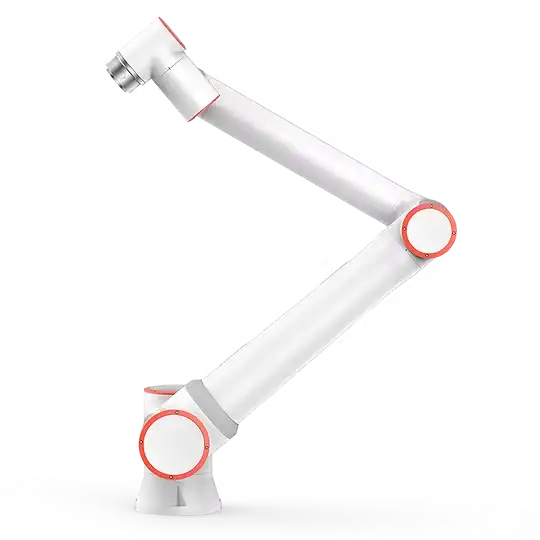
Why the gap? Traditional robots require safety cages, dedicated floor space, and specialized programming staff. Cobots eliminate most of those barriers. A Universal Robots UR10e or a FANUC CRX-10iA can be deployed in days, not months, and repositioned across tasks with minimal downtime. That flexibility translates directly into faster ROI — often under 12 months — which accelerates purchase decisions across budget-conscious operations.
Unit shipments tell the story even more clearly: the IFR reported approximately 55,000 cobot units shipped globally in 2022, up from just 11,000 in 2017. Cobots now represent roughly 10% of all industrial robot installations, a share expected to reach 25–30% by the end of the decade.
Several forces are compounding this growth simultaneously:
- Labor shortages — manufacturing vacancy rates in the U.S. exceeded 600,000 unfilled positions in 2023, per the Bureau of Labor Statistics.
- Falling price points — entry-level cobots now start below $25,000, making them accessible to SMEs.
- ISO/TS 15066 maturation — clearer safety standards have reduced regulatory friction for human-robot collaboration.
- AI-powered vision and force sensing — expanding the range of tasks cobots can handle autonomously.
Understanding the cobot adoption rate by industry requires this macro context. The overall market is surging, but the distribution of that growth is uneven — certain sectors absorb the majority of new deployments while others remain in early pilot stages. The sections ahead break down exactly where those units are landing and why.

Global cobot market size growth chart showing cobot adoption rate trends from 2017 to 2030
Manufacturing and Automotive — Industries Leading Cobot Adoption
Manufacturing accounts for roughly 55–60% of all cobot installations worldwide, and automotive alone represents nearly half of that share. These aren’t projections — they reflect actual deployment data tracked by the International Federation of Robotics (IFR) in its 2023 World Robotics Report. No other sector comes close.
Why did manufacturing move first? The answer isn’t just “big budgets.” High-mix, low-volume production environments — where product variants change frequently — expose the limits of traditional industrial robots. A fixed automation cell that takes weeks to reprogram for a new SKU is a liability when your customer demands 12 product variants on the same line. Cobots from Universal Robots, FANUC, and ABB can be redeployed to a different task in under an hour, often by operators with no programming background.
Automotive Use Cases Driving Deployment
- Screw driving and fastening: BMW’s Spartanburg plant uses UR10e cobots for door assembly, reducing ergonomic injuries by 70%
- Machine tending: Loading and unloading CNC machines — a task too repetitive for skilled workers, too variable for fixed automation
- Quality inspection: Vision-equipped cobots performing in-line dimensional checks at cycle times under 8 seconds
- Gluing and sealing: Ford and Volkswagen deploy cobots for precision adhesive application on body panels
ROI timelines seal the deal. Most manufacturers report payback periods of 12–18 months on cobot investments priced between $25,000 and $50,000 per unit — dramatically faster than the 3–5 year payback typical of traditional industrial robots. When you examine the cobot adoption rate by industry, this ROI gap explains why manufacturing and automotive remain the dominant segments.
A 2023 survey by the Association for Advancing Automation (A3) found that 72% of small and mid-sized manufacturers considering their first robot chose a cobot over a traditional industrial robot.
That statistic matters because it signals where future growth concentrates. Tier 1 automotive suppliers already have cobots. The next wave is Tier 2 and Tier 3 suppliers — shops with 20–100 employees — finally hitting the price point and usability threshold that makes adoption practical.
Electronics, Semiconductor, and Precision Assembly Adoption Rates
Electronics manufacturing is the second-largest adopter of collaborative robots globally, trailing only automotive. The International Federation of Robotics (IFR) reported that the electrical/electronics sector accounted for roughly 25% of all industrial robot installations in 2022 — and cobots are claiming a growing share of that figure. Why? Tolerances measured in microns, components smaller than a grain of rice, and relentless cycle-time pressure make human-only assembly lines increasingly impractical.
When you examine the cobot adoption rate by industry, electronics stands out for one critical reason: the work demands sub-millimeter repeatability without the heavy payloads that justify traditional six-axis robots. Cobots from Universal Robots, FANUC, and Techman Robot now handle tasks like:
- PCB soldering and inspection — cobots equipped with vision systems detect solder defects at speeds 40% faster than manual inspection
- Chip handling and wafer transfer — ISO Class 5 cleanroom-compatible models from vendors like Denso and Yaskawa operate in semiconductor fabs
- Connector insertion and screw driving — repetitive micro-assembly tasks where fatigue-related defects previously cost manufacturers 3–7% in rework
- End-of-line testing — cobots plug, press, and cycle-test consumer electronics units 24/7
Semiconductor fabrication presents a unique case. Cleanroom requirements once excluded most collaborative platforms, but newer cobot models rated for ISO 14644 environments have changed the equation. TSMC and Samsung have both disclosed pilot programs integrating cobots into back-end packaging lines, where human operators previously handled delicate die-bonding trays.
Foxconn — the world’s largest electronics contract manufacturer — reportedly deployed over 40,000 robots across its facilities by 2023, with cobots increasingly replacing traditional automation in mixed-model assembly cells. The cobot adoption rate by industry data confirms that electronics firms favor cobots specifically where product variants change weekly and hard-tooled automation can’t keep pace.
Precision assembly lines that switched to cobot-assisted workflows report 15–30% throughput gains and a 50–60% reduction in repetitive strain injuries, according to a 2023 white paper published by the Association for Advancing Automation (A3).
Food and Beverage, Pharmaceutical, and Consumer Goods Cobot Deployment
Hygiene kills speed. That single reality explains why the cobot adoption rate by industry looks so different once you move from automotive floors into food processing plants and pharmaceutical cleanrooms. Regulatory frameworks — FDA 21 CFR Part 11, EU GMP Annex 11, FSMA — add months of validation before a single cobot arm touches a production line.
Yet adoption is accelerating. The food and beverage sector now represents an estimated 8–10% of global cobot installations, up from roughly 5% in 2020, according to the International Federation of Robotics. Stainless-steel, IP67-rated cobots from Universal Robots (UR) and FANUC’s CRX series have been purpose-built for washdown environments, eliminating the contamination risks that previously made automation impractical near open food products.
Where Cobots Are Gaining Ground
- Food palletizing and case packing: Cobots handle 6–12 cycles per minute in end-of-line packaging — slower than industrial robots but deployable without safety caging, cutting floor space requirements by up to 50%.
- Pharmaceutical secondary packaging: Blister pack inspection, carton loading, and serialization labeling are high-mix tasks where cobots reduce changeover time from hours to minutes.
- Consumer goods kitting: Companies like Procter & Gamble have piloted cobots for variety-pack assembly, where SKU complexity makes fixed automation cost-prohibitive.
The cobot adoption rate by industry in regulated sectors will likely double by 2027 as hygienic cobot designs mature and validation templates become standardized across OEMs.
Healthcare, Logistics, and Emerging Sectors Embracing Cobots
Healthcare cobots are no longer a research curiosity. Surgical-assistance robots like Medtronic’s Hugo RAS and Intuitive Surgical’s da Vinci systems have paved the way, and now lighter collaborative arms from Universal Robots and KUKA are entering hospital laboratories and pharmacies. The International Federation of Robotics reported that professional service robot sales for medical applications grew by 25% in 2022 alone — a pace that signals rapid mainstreaming.
Laboratory automation is the quiet breakout use case. Cobots handle repetitive pipetting, sample sorting, and centrifuge loading with sub-millimeter precision, freeing lab technicians for higher-value diagnostic work. Major clinical lab networks like Quest Diagnostics and Labcorp have piloted cobot-assisted workflows, and adoption is accelerating post-pandemic as staffing shortages persist.
Logistics and Warehouse Fulfillment
Warehouse order fulfillment represents one of the fastest-growing segments when examining the cobot adoption rate by industry. Companies such as Amazon, DHL, and XPO Logistics have deployed collaborative picking arms alongside autonomous mobile robots (AMRs) to handle the surge in e-commerce demand. Interact Analysis estimates that logistics cobot shipments will grow at a CAGR exceeding 35% through 2028 — outpacing every traditional manufacturing vertical.
Agriculture and Other Frontier Sectors
- Agriculture: Cobots from companies like Harvest CROO and Dogtooth Technologies assist with fruit picking and crop inspection, though adoption remains below 2% of farms globally.
- Construction: Firms are testing cobots for bricklaying and rebar tying, with pilot deployments in Japan and Scandinavia.
- Hospitality: Cobot baristas and kitchen assistants have appeared in South Korea and Singapore, driven by labor costs rather than precision needs.
These emerging sectors collectively account for under 10% of global cobot installations today, yet they represent the next wave of significant growth in the cobot adoption rate by industry. The common thread? Chronic labor shortages paired with tasks that demand human-robot proximity rather than full automation.
Why Some Industries Adopt Cobots Faster Than Others
The cobot adoption rate by industry varies dramatically — and four accelerators consistently separate fast movers from laggards.
Drivers That Speed Up Adoption
- Acute labor shortages. Manufacturing and logistics face unfilled vacancy rates above 6% in the U.S. alone (Bureau of Labor Statistics, 2023). When you simply cannot hire, a $45,000 cobot with a 12-month payback becomes an obvious fix.
- Safety mandates. Industries handling sharp components, heavy payloads, or repetitive motions — automotive and electronics especially — adopt cobots partly to reduce OSHA-recordable injury rates, which cost employers an average of $42,000 per incident.
- Ease of programming. Drag-and-drop interfaces from Universal Robots and FANUC cut deployment time to hours instead of weeks. Sectors with high-mix, low-volume production benefit most because reprogramming is frequent.
- Payload flexibility. Cobots now range from 3 kg to 25 kg+ payloads, unlocking applications in food packaging and pharma that were impossible five years ago.
Barriers That Slow Things Down
Regulatory complexity is the single biggest drag. Pharmaceutical and medical-device manufacturers must validate every process change through FDA or EMA frameworks — a timeline measured in months, not days. That alone explains why their cobot adoption rate by industry lags behind automotive despite comparable budgets.
Capital constraints hit small and mid-size enterprises hardest. A 50-person food processor evaluating a $120,000 cell integration doesn’t have the engineering staff to manage deployment internally, and hiring a systems integrator doubles the cost. Workforce resistance compounds the problem: a 2023 survey by the International Federation of Robotics found that 34% of companies cited employee pushback as a significant barrier, particularly in sectors with strong union presence like aerospace.
Bottom line: adoption speed correlates more with regulatory burden and integration complexity than with a company’s desire to automate.
Regional Differences in Cobot Adoption Across Industries
Geography reshapes the cobot landscape more than most buyers realize. The cobot adoption rate by industry shifts dramatically depending on whether you’re looking at a factory in Shenzhen, Stuttgart, or Detroit — and the reasons go far beyond labor costs.
Asia-Pacific: Volume-Driven Electronics and Automotive
Asia-Pacific dominates global cobot installations, accounting for roughly 45–50% of new deployments in 2023, per IFR data. China alone installed over 50,000 cobots that year. Electronics assembly in South Korea, Japan, and China drives the bulk of demand, fueled by government subsidies — China’s “Made in China 2025” initiative continues to channel billions into smart manufacturing upgrades. Automotive suppliers in Thailand and India are accelerating adoption too, partly because rising wages are compressing the ROI payback period to under 12 months.
Europe: Precision Manufacturing and SME-Friendly Policy
Europe’s cobot story centers on small and mid-sized manufacturers. Denmark’s Universal Robots essentially created the category here, and countries like Germany, Denmark, and the Netherlands show the highest per-capita cobot density. EU funding programs such as Horizon Europe actively subsidize automation for SMEs. The result? Food processing, pharmaceutical packaging, and metalworking shops with fewer than 250 employees are adopting cobots at rates that rival large Asian factories.
North America: Logistics and Labor Shortage Response
North America trails Asia-Pacific in raw installation numbers but leads in logistics and warehousing cobot growth — a direct response to persistent labor shortages that the U.S. Bureau of Labor Statistics pegs at over 600,000 unfilled manufacturing jobs. Tax incentives like Section 179 accelerated depreciation make capital equipment purchases more attractive for American manufacturers. Canadian food processors and Mexican automotive tier-1 suppliers are emerging as fast-growth segments.
The cobot adoption rate by industry, then, isn’t just a sector question — it’s a regional one. Where labor policy, subsidies, and industrial mix intersect, adoption accelerates fastest.
Frequently Asked Questions About Cobot Adoption Rates
Which industry has the highest cobot adoption rate?
Automotive and general manufacturing dominate, accounting for roughly 55–60% of all cobot installations worldwide. Automotive alone represents about 30% of deployments, driven by high-volume assembly, machine tending, and quality inspection tasks where collaborative robots deliver measurable ROI within 12–18 months.
How do cobots differ from traditional industrial robots in adoption patterns?
Traditional robots spread top-down — large OEMs install them in purpose-built cells with dedicated safety caging. Cobots spread sideways. A single unit lands on one production line, proves itself, then multiplies across departments. This grassroots pattern means the cobot adoption rate by industry often accelerates faster once the first unit is deployed, because redeployment costs are minimal and programming is accessible to non-specialists.
What does projected growth look like for specific sectors?
The International Federation of Robotics projects the overall cobot market will exceed $6 billion by 2028. Food and beverage is expected to grow at 25–30% CAGR, logistics at roughly 28% CAGR, and healthcare at over 20% CAGR through 2030. Electronics remains a steady high-volume adopter with 18–22% annual growth.
How do SMEs compare to large corporations in cobot deployment?
Small and mid-sized enterprises now represent an estimated 40–45% of new cobot purchases — a share that was below 20% just five years ago. Lower price points (units from Universal Robots and FANUC start around $25,000–$50,000), plus lease-to-own financing, have closed the gap. Large corporations still deploy more units per site, but SMEs are adopting at a faster percentage rate year over year.
Understanding the cobot adoption rate by industry helps buyers benchmark their own automation maturity against sector peers and plan capital investments with realistic payback expectations.
Key Takeaways and What Rising Cobot Adoption Means for Your Industry
The cobot adoption rate by industry tells a clear story: manufacturing and automotive dominate with 55–60% of global installations, electronics claims roughly 20–25%, and sectors like food processing, pharma, healthcare, and logistics are accelerating from a smaller base but growing at 30%+ CAGR. The $1.9 billion market in 2023 is projected to surpass $6 billion by 2030. Those numbers aren’t abstract — they represent real competitive pressure on companies that delay.
If your competitors are deploying cobots and you’re still running manual processes, the cost gap widens every quarter — not just in labor savings, but in throughput consistency and quality yield.
Actionable Guidance for Decision-Makers
- High-adoption industries (automotive, electronics): Focus on scaling from pilot cells to full-line integration. The ROI debate is settled — optimize deployment speed and interoperability with existing MES/ERP systems.
- Mid-adoption industries (food & beverage, pharma, consumer goods): Target palletizing, packaging, and inspection first. These tasks deliver 12–18 month payback periods with minimal regulatory friction.
- Early-stage industries (healthcare, agriculture, construction): Run proof-of-concept projects now. Waiting for “mature” solutions means ceding first-mover advantages to competitors already piloting.
Where Adoption Trajectories Are Heading
Three forces will reshape the cobot adoption rate by industry over the next five years: AI-powered vision systems dropping below $5,000 per unit, wage inflation in logistics and food processing exceeding 5% annually, and tightening safety regulations that actually favor cobots over traditional industrial robots. Expect logistics and healthcare to show the steepest adoption curves through 2028, according to projections from the International Federation of Robotics.
The question isn’t whether cobots fit your industry. It’s whether you’ll deploy them before your margins force the decision for you.
See also
What you should know about CNC machine tools and laser cutting
How to combine laser cleaning machine with industrial robots
Cobot vs AMR — Which Is Easier to Integrate