[IMAGE: A modern industrial laser cleaning machine removing rust from a steel surface, with bright blue laser beam visible and clean metal appearing underneath, professional workshop setting | alt=”laser cleaning machine removing rust from industrial steel surface”]
A laser cleaning machine is a non-contact surface treatment tool that uses focused pulsed laser beams to vaporize rust, paint, oil, oxides, and contaminants without damaging the underlying substrate. At oceanplayer, we’ve deployed these systems across 28 countries over the past decade, and the question we hear most often from manufacturing buyers is simple: why replace sandblasting or chemical stripping with a machine that costs 5–15× more upfront? This guide answers that directly — with real numbers, honest disadvantages, and the scenarios where laser cleaning actually pays back.
What Is a Laser Cleaning Machine?
A laser cleaning machine is an industrial device that uses a concentrated beam of laser light — typically a fiber laser operating at 1064 nm wavelength — to strip unwanted layers from a surface through photothermal or photomechanical ablation. The contaminant absorbs the laser energy, heats instantly to its vaporization point, and lifts off as a fine mist or dust captured by a fume extractor. The base metal, which reflects most of that wavelength, stays largely untouched.
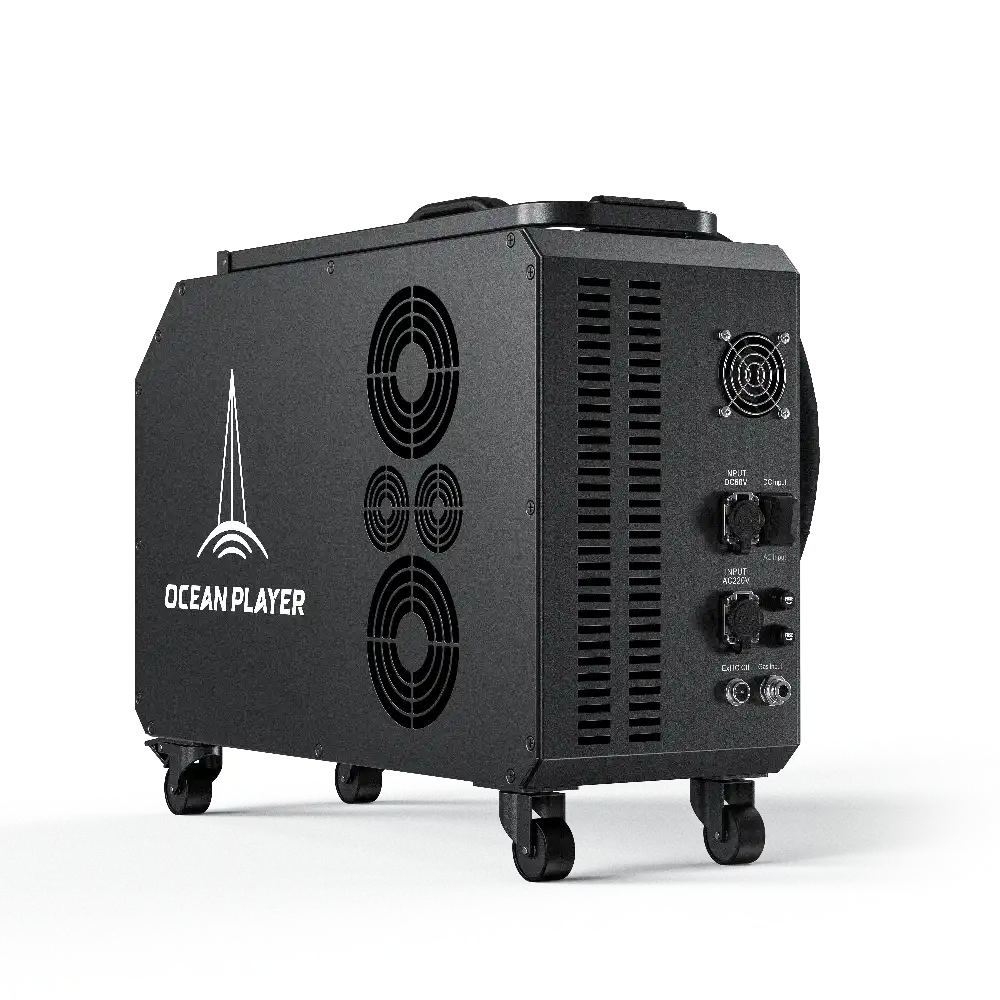
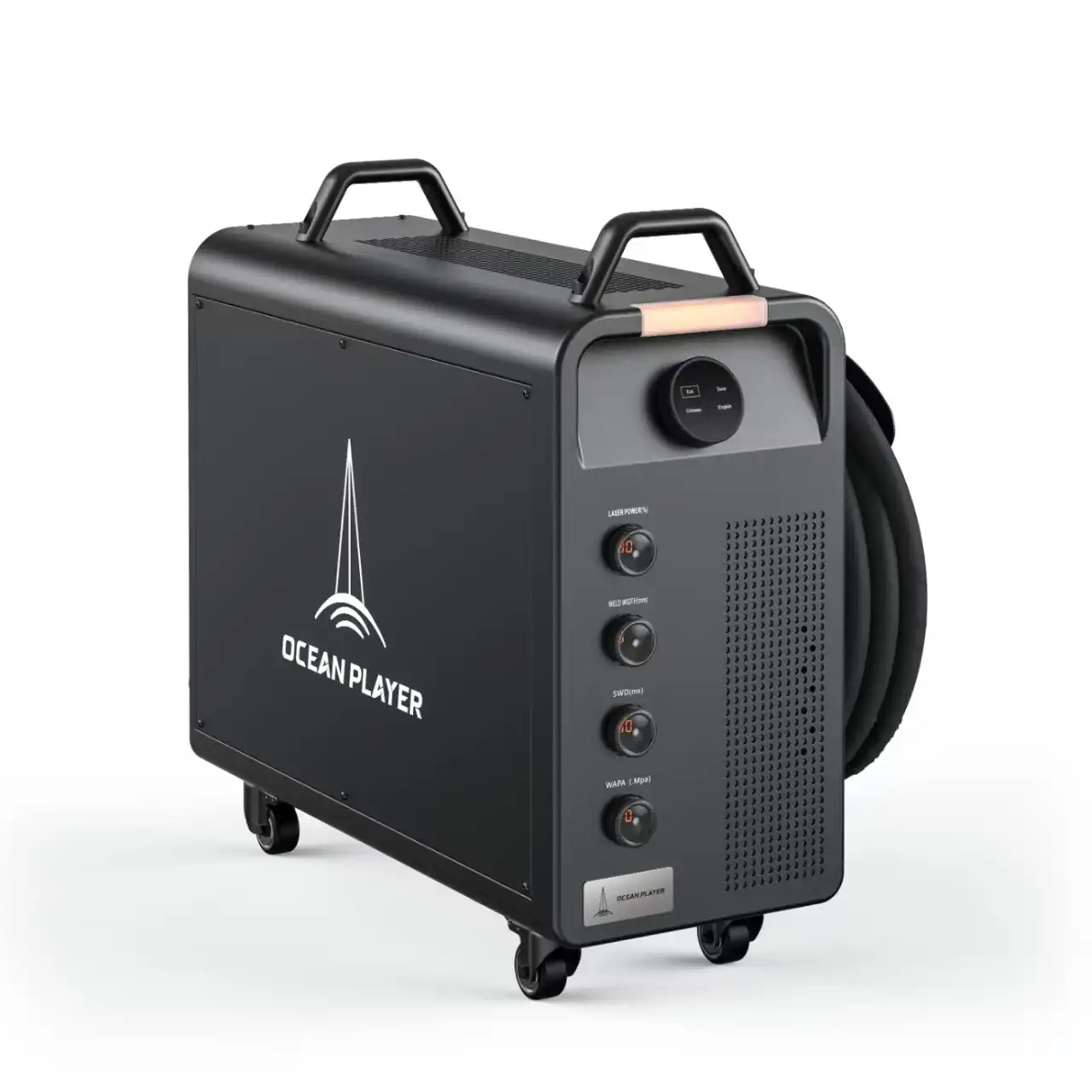
In practical terms, imagine a handheld device the size of a welding gun connected by fiber optic cable to a cabinet containing the laser source, chiller, and controls. The operator aims the beam across the surface like a paint scanner, and rust or coating disappears in real time. No grit, no chemicals, no masking tape.
The technology itself isn’t new — laser cleaning was pioneered in the 1990s for museum conservation and aerospace paint stripping. What changed is that fiber laser sources dropped from $80,000+ in 2015 to under $8,000 for a 100W module in 2025, making industrial adoption economically viable for everyday manufacturing. In my experience as Technical expert at oceanplayer, the tipping point for most metal fabrication shops came around 2021 when 1000W continuous-wave units cracked the $15,000 price barrier.
How Does Laser Cleaning Work?
Laser cleaning works through a physics principle called selective ablation: the laser wavelength is tuned so that contaminants absorb the energy and vaporize, while the underlying substrate reflects most of the beam and remains intact. When a 1064 nm pulse hits rust (iron oxide), roughly 70–80% of the energy is absorbed and converted to heat within nanoseconds — more than enough to exceed the 1,565 °C vaporization threshold of Fe₂O₃. Clean steel underneath reflects about 60% of the same wavelength, so it barely warms.
The process follows four stages:
- Absorption: The contaminant layer soaks up laser energy.
- Heating: Temperature rises to the vaporization or sublimation point in microseconds.
- Ejection: A micro-plasma forms, blowing the contaminant off the surface as vapor or fine particles.
- Extraction: A HEPA-filtered fume collector captures the debris — this is mandatory for any operation involving lead paint, zinc coatings, or chromium.
- Laser Ablation
- The process of removing material from a solid surface by irradiating it with a laser beam, causing rapid vaporization without mechanical contact.
- Pulse Duration
- The length of each laser burst, typically measured in nanoseconds (ns). Shorter pulses (≤100 ns) produce cleaner results with less heat transfer to the substrate.
- Fluence
- Energy delivered per unit area (J/cm²). The ablation threshold is the minimum fluence needed to vaporize a specific contaminant without damaging what’s beneath.
[IMAGE: Diagram showing laser cleaning process with laser beam hitting rusty metal surface and vaporized contaminant particles being extracted | alt=”how a laser cleaning machine works diagram showing ablation process”]
Types of Laser Cleaning Machines: Pulse vs Continuous Wave
There are two dominant categories of laser cleaning machines: pulsed fiber lasers and continuous-wave (CW) fiber lasers. The choice between them determines surface finish, processing speed, and which materials you can safely clean. Picking the wrong one is the single most expensive mistake buyers make — I’ve seen customers order a 2000W CW unit for precision mold cleaning and have to resell it at a 40% loss six months later.
Pulsed Laser Cleaning Machines
Pulse lasers fire short bursts (typically 100–500 ns) with very high peak power but low average power (50–300W). They’re gentler on the substrate because each pulse ends before significant heat conducts into the base metal. Use cases: aerospace component cleaning, mold maintenance, cultural heritage restoration, removing thin coatings under 50 microns, and any application where dimensional accuracy matters to ±5 microns.
Continuous Wave (CW) Laser Cleaning Machines
CW lasers emit a constant beam at 1000–3000W average power. They clean 3–5× faster than pulsed units on heavy rust and thick paint but transfer more heat to the substrate, which can discolor thin sheet metal or warp aluminum below 2mm. Use cases: shipyard rust removal, structural steel preparation, railcar refurbishment, and large-area pre-weld cleaning.
| Feature | Pulsed Laser | Continuous Wave (CW) |
|---|---|---|
| Average Power | 50–300W | 1000–3000W |
| Cleaning Speed (heavy rust) | 0.5–2 m²/hour | 3–8 m²/hour |
| Substrate Heat Impact | Minimal (<50°C rise) | Moderate (100–200°C rise) |
| Best For | Molds, precision parts, thin coatings | Large structures, heavy corrosion |
| Typical Price (2026) | $3,500–$15,000 | $8,000–$45,000 |
Why Use a Laser Cleaning Machine Over Traditional Methods?
You use a laser cleaning machine when the combined cost of consumables, labor, environmental compliance, and rework on traditional methods exceeds the laser’s amortized cost per hour — which, for most medium-duty industrial operations, crosses over somewhere between 400 and 800 hours of annual use. The five genuine advantages over sandblasting, chemical stripping, and dry ice cleaning are measurable, not marketing fluff.
1. Zero Consumables
Sandblasting a 10-ton steel structure consumes roughly 2–3 tons of abrasive media at $0.30–$0.80/kg, plus disposal fees for contaminated grit (often $200–$500/ton in the EU under EU Waste Framework Directive rules). Laser cleaning consumes only electricity — about 1.5–3 kWh for the same job.
2. Non-Contact, Non-Abrasive
The beam never touches the surface mechanically, so there’s no media embedment, no profile change, and no warping on thin materials. This matters enormously for aerospace titanium (where abrasive residue causes stress corrosion), electronic enclosures, and historical restoration.
3. Dramatic Labor Reduction
During a oceanplayer commissioning at a rail maintenance depot, we replaced a three-person sandblasting crew (two operators + one media handler) with a single laser operator. Throughput stayed roughly equal at 4 m²/hour on rust-grade B steel, but labor cost dropped from ~$95/hour to ~$32/hour.
4. Environmental and Safety Profile
No silica dust (OSHA’s respirable crystalline silica rule caps exposure at 50 μg/m³ per OSHA 29 CFR 1910.1053), no chemical waste streams, no VOC emissions. The only PPE required is laser safety glasses rated for 1064 nm and standard respiratory protection near the fume extraction point.
5. Precision and Selectivity
Laser parameters can be tuned to remove one coating layer while leaving another intact — for example, stripping primer off an aerospace composite without touching the gel coat. No other cleaning method offers this level of control.
Real Applications: Where Laser Cleaning Wins
Laser cleaning earns its premium in specific industrial scenarios where traditional methods create more problems than they solve. Based on oceanplayer’s deployment data across 280+ clients, these are the applications with the clearest ROI.
[IMAGE: Operator using handheld laser cleaning gun on automotive mold with sparks and vapor rising | alt=”laser cleaning machine being used on automotive manufacturing mold”]
Mold and Tooling Maintenance
Injection molds and tire molds accumulate residue that traditional ultrasonic baths take 4–8 hours to clean — during which production stops. A 200W pulsed laser cleans the same mold in 20–40 minutes, in-place, without disassembly. A tier-2 automotive supplier we worked with in Thailand recovered 180 production hours per month on a single mold line.
Pre-Weld Surface Preparation
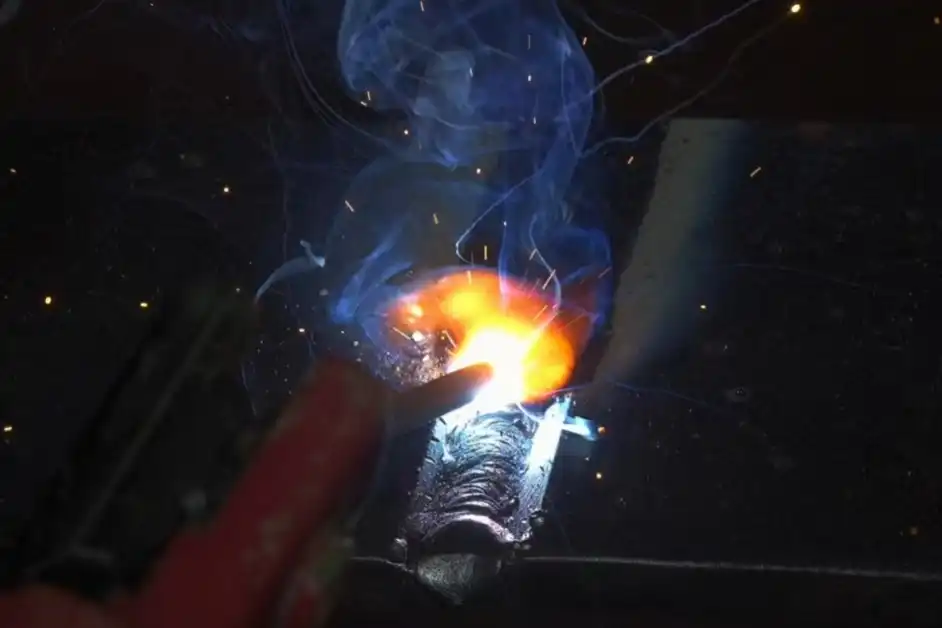
Welding over contaminated steel causes porosity, slag inclusions, and failed inspections. Laser cleaning the weld zone 5–10mm on either side removes mill scale, oil, and oxide in one pass at roughly 3x the speed of grinding, with no surface profile change that could affect the weld penetration.
Rust Removal on Structural Steel
Bridge refurbishment, shipyard maintenance, and tank farm repainting historically required grit blasting with full containment to meet EPA RCRA waste rules. Laser cleaning eliminates the containment requirement entirely because there’s no fugitive grit.
Nuclear and Pharmaceutical Decontamination
In radiologically contaminated environments, every kilogram of secondary waste (spent abrasive, chemical sludge) becomes low-level radioactive waste costing $10,000–$30,000/m³ to dispose of. Laser cleaning reduces secondary waste by 95%+ because the vaporized contaminant is captured in a replaceable filter cartridge.
Laser Cleaning on Wood and Stone (Restoration)
For heritage buildings and antique furniture, low-power pulsed lasers (20–50W) remove soot, lichen, and old varnish from wood and sandstone without the water damage of pressure washing or the chemical residue of solvents. The Getty Conservation Institute has documented laser cleaning as the preferred method for delicate stone monuments since the early 2000s.
Laser Cleaning Machine Price and Cost Per Hour
A new laser cleaning machine costs between $3,500 and $45,000 in 2026, depending on power and pulse type, while the operating cost runs $4–$12 per hour for electricity plus optics maintenance — dramatically cheaper than abrasive blasting’s $45–$80/hour fully loaded cost. Used machines exist on the secondary market starting around $2,000, but I strongly advise against buying sub-$3,000 units unless you’re doing hobby-scale work; the fiber source quality and cooling design typically can’t sustain 8-hour industrial shifts.
Price Ranges by Power (2026 Market)
| Power Class | Typical Price Range (USD) | Best Application | Expected Lifespan (source) |
|---|---|---|---|
| 50W pulsed | $3,500–$6,000 | Light rust, small parts, precision | 100,000 hrs |
| 100W pulsed | $5,500–$9,000 | Molds, automotive parts | 100,000 hrs |
| 200W pulsed | $8,000–$15,000 | Industrial maintenance | 80,000 hrs |
| 1000W CW | $10,000–$18,000 | Structural steel, shipyards | 80,000 hrs |
| 2000W CW | $18,000–$30,000 | Heavy rust, large surfaces | 60,000–80,000 hrs |
| 3000W CW | $28,000–$45,000 | Shipbuilding, infrastructure | 60,000 hrs |
Cost Per Hour Calculation
For a typical 1500W CW machine running an 8-hour shift:
- Electricity: ~4.5 kWh × $0.12/kWh = $0.54/hour
- Optics replacement (protective lens every ~400 hours at $80): $0.20/hour
- Fume filter cartridge (every ~200 hours at $180): $0.90/hour
- Chiller coolant and preventive service (amortized): ~$0.50/hour
- Machine amortization (5-year, 1,500 hours/year, $15,000 unit): $2.00/hour
- Total: ~$4.14/hour operating, rising to ~$12/hour when adding one operator at minimum wage
Compare that to abrasive blasting: $8–$15/hour in media, $5–$10/hour in disposal, plus two-person crew labor. The breakeven in most markets is around 400–800 operating hours per year.
Honest Disadvantages of Laser Cleaning
Laser cleaning isn’t a universal replacement for traditional methods, and anyone selling it that way is misleading you. The four genuine disadvantages of lasers — especially in industrial cleaning applications — shape where you should and shouldn’t deploy them.
1. High Upfront Capital Cost
A 1500W industrial laser cleaner runs $12,000–$20,000 versus $2,000–$4,000 for a professional sandblasting rig. For shops cleaning fewer than 300 hours per year, the payback window stretches past five years, which is longer than most ROI hurdles allow.
2. Limited Effectiveness on Certain Contaminants
Very thick coatings (>200 microns of epoxy, for example) require multiple passes and become slower than chemical stripping. Transparent contaminants (silicone oils, some solvent residues) don’t absorb 1064 nm wavelength efficiently and may need a different laser type like UV or green lasers, which cost 2–3× more.
3. Safety and Training Requirements
A Class 4 laser can cause permanent eye damage from a diffuse reflection at several meters. Every operator needs documented training under ANSI Z136.1 standards, a designated Laser Safety Officer for the facility, and proper signage. This isn’t optional — it’s regulatory in most OECD countries.
4. Fume and Particulate Hazards
Vaporizing lead-based paint, zinc galvanizing, or chromate primers releases toxic nanoparticles. The fume extraction and HEPA filtration needed for compliance adds $1,500–$4,000 to a system and creates ongoing consumable cost for filter media. Without proper extraction, laser cleaning is actually less safe than wet chemical stripping in hazardous-coating scenarios.
How to Choose the Right Laser Cleaning Machine
The right laser cleaning machine depends on your contaminant type, substrate sensitivity, throughput target, and operating environment — not on wattage alone. Buyers fixated on “more watts = better” routinely overspend by 30–50% or damage delicate substrates. Use this decision framework instead:
Step 1: Characterize Your Contaminant
- Light rust, mill scale, thin paint (<50 μm) → 50–200W pulsed
- Heavy rust, thick paint, shipyard work → 1000–2000W CW
- Precision molds, aerospace components → 100–200W pulsed with shorter pulse width
- Wood, stone, heritage materials → 20–50W pulsed (low fluence)
Step 2: Match Pulse Type to Substrate Sensitivity
If the substrate is thinner than 2mm, aluminum, titanium, or heat-treated steel where hardness matters, pick pulsed. If it’s structural carbon steel thicker than 5mm and speed dominates, CW wins.
Step 3: Calculate Required Throughput
Measure the surface area you need to clean per shift, then match to the cleaning rates in the comparison table above. Buying a 100W unit for a 20 m²/day application guarantees operator frustration and missed deadlines.
Step 4: Evaluate After-Sales Support
Fiber laser sources rarely fail, but when they do, replacement costs $3,000–$8,000 and downtime kills production. Ask every vendor for local service response time, spare parts inventory location, and remote diagnostic capabilities. At oceanplayer, our standard commissioning includes 48-hour on-site response in all 28 countries we serve — confirm what your supplier actually guarantees in writing.
Step 5: Starting a Laser Cleaning Business?
If you’re launching a mobile laser cleaning service, buy a 1000–1500W CW handheld unit with a backpack-style design or cart-mounted cabinet for versatility. Target niches with recurring demand: graffiti removal for municipalities, historic building restoration, industrial mold maintenance contracts, or automotive restoration shops. Expected billable rate in North America/EU markets: $150–$350/hour.