Tip: Always look around you before you use any laser device.
You may think laser injuries do not happen often, but even a small laser pointer can hurt someone. In 2014, people reported 29 injuries from handheld lasers all over the world. In 2023, there were more than 13,000 reports of laser strikes on airplanes. This shows that using lasers the wrong way is risky. Laser safety protection is not hard to understand. If you follow a few easy habits, you can keep yourself and others safe.
Key Takeaways
- Always wear certified laser safety eyewear. Regular sunglasses will not protect your eyes from laser light.
- Never point lasers at people or shiny surfaces. This can cause bad eye injuries.
- Follow all safety rules and read warning signs before using a laser. If you ignore these, accidents can happen.
- Keep laser devices away from children. Teach kids that lasers are not toys so they do not get hurt.
- Act fast if you are exposed to a laser. Turn off the device and get medical help if your vision changes.
What is laser safety protection?
Simple definition
Lasers are found in lots of places. Many people do not know what laser safety protection means. It is a way to keep you and others safe near lasers. Safety groups explain it like this:
- Make sure lasers are made, used, and handled safely. This lowers the chance of accidents, especially ones that hurt your eyes.
Laser safety protection helps you stay safe. You follow easy steps and use the right gear. You do not have to be an expert. You just need to pay attention and make good choices.
Why it matters for everyone
Some people think only scientists or doctors need laser safety. That is not true. Lasers are in schools, offices, stores, and homes. Anyone can get hurt if they do not use lasers safely. Many people believe wrong things about laser safety. Here is a table with myths and facts:
| Myth | Explanation |
|---|---|
| Lasers are harmless if not directly pointed at someone | Reflected or scattered laser light can still cause injuries. |
| Low-powered lasers are safe and do not require precautions | Even low-powered lasers can cause harm if not handled properly. |
| Laser safety is only important for those directly working with lasers | Safety is crucial for anyone near laser operations. |
| All laser safety glasses are the same | Different glasses provide varying levels of protection based on specific laser wavelengths. |
| Over-the-Counter Sunglasses Are Just as Effective | Sunglasses may block some light but are not designed for laser safety and can increase the risk of eye injury. |
Laser safety protection is important for everyone. It is not just for people who use lasers at work. You protect your eyes and skin when you know the facts. You keep your family, friends, and coworkers safe too.
Common laser hazards
Everyday uses
Lasers are all around us. They are not only in science labs. You see lasers in many devices every day. Here are some examples:
- Medicine: Doctors use lasers for surgery and dental work. Lasers help with medical pictures too.
- Manufacturing: Workers use lasers to cut and engrave things. Lasers help build items with 3D printers.
- Communication: Lasers send data through fiber optic cables. They also scan barcodes.
- Consumer electronics: Laser printers and laser mice use lasers for speed. Lasers help these devices work better.
- Retail: Stores use lasers to scan barcodes at checkout. Lasers help with keeping track of items.
- Gadgets and toys: Laser pointers and barcode readers are common at home. Some toys and kits use lasers too.
Note: Small blue laser pointers or hobby lasers can still hurt you if you do not use them safely.
Main risks
Lasers can be dangerous if you are not careful. The biggest risks are to your eyes and skin. You might get headaches or watery eyes after seeing a laser. Sometimes you see new floaters in your vision. Here is a table with the main injuries:
| Type of Injury | Description |
|---|---|
| Eye Injury | Strong lasers can burn your eyes fast. Weaker lasers can cause cataracts over time. Powerful lasers can hurt the front of your eyes. |
| Skin Injury | Strong lasers can burn your skin or cause other problems. |
| Retinal Injury | Some lasers reach the back of your eye and cause sudden harm. |
| Corneal Injury | Most lasers do not reach this part, but some can still hurt it. |
You should always protect your eyes and skin near lasers. Even a quick flash can cause problems that last. Be careful and follow safety tips to keep everyone safe.
Simple steps for laser safety protection
Laser safety protection begins with easy habits. You do not need special lessons to be safe. Just pay attention and follow these steps each time you use a laser device.
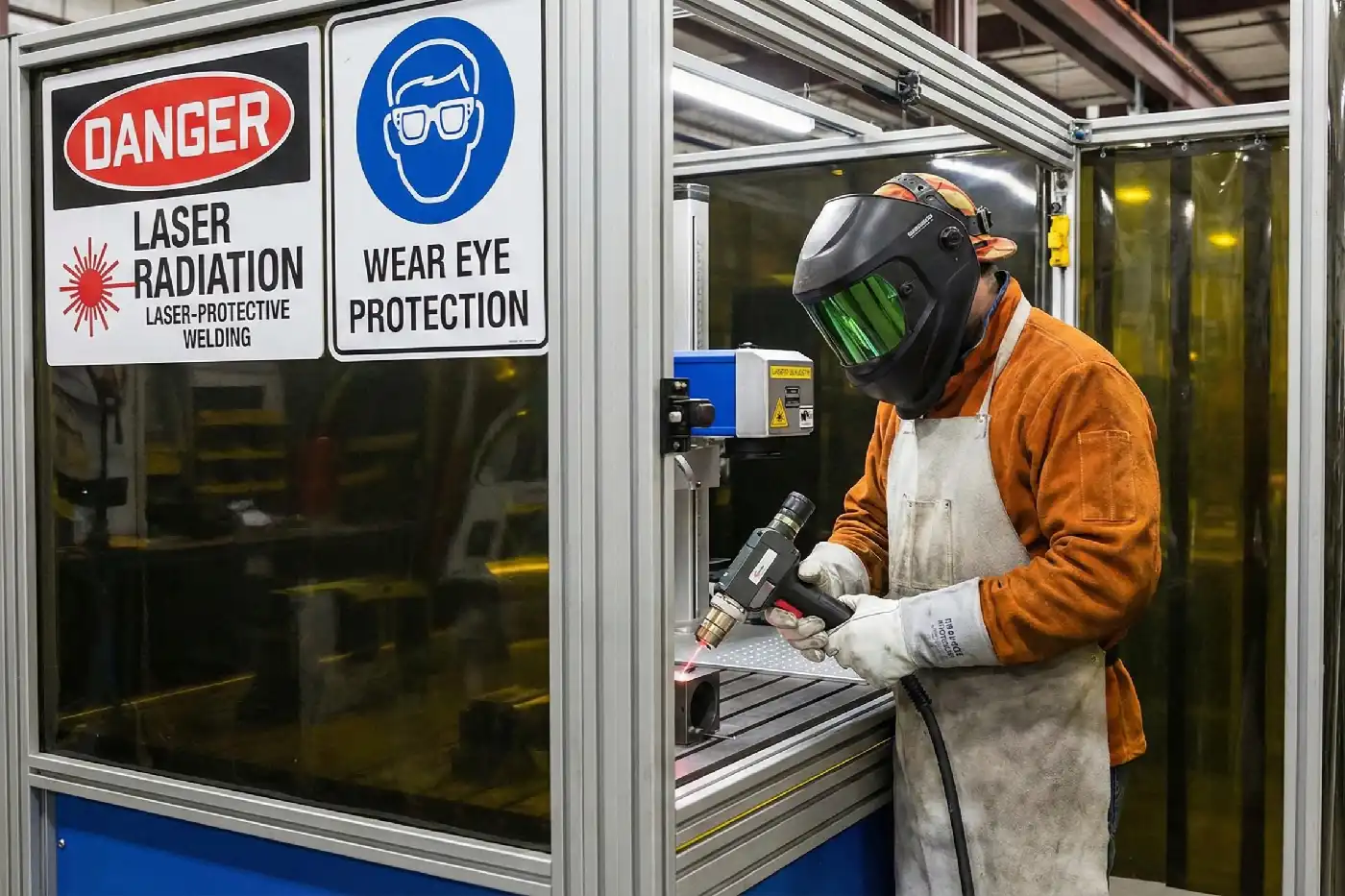
Recognize warning signs
You will find warning signs near lasers in many places. These signs tell you how risky the laser is. Each laser class uses a different signal word and message. Always read these signs before you use or go near a laser. Here is a table to help you know what each sign means:
| Laser Class | Signal Word | Hazard Phrase | Required Signage |
|---|---|---|---|
| Class 1, 1M, 1C | N/A | N/A | No special area warning signs required, except under specific conditions |
| Class 2, 2M | Caution | Do not stare into beam | Caution signage required where exposure is possible |
| Class 3R | Caution/Warning | Hazardous for direct intrabeam viewing | Caution or Warning signs depending on local policy |
| Class 3B | Warning | Immediate eye hazard | Warning signs at all entry points |
| Class 4 | Danger | Avoid eye or skin exposure to direct or scattered radiation | Danger signs and robust access control required at all entry points |
Never ignore these warnings. If you see a “Danger” or “Warning” sign, be careful. These lasers can hurt you very fast.
Wear certified eyewear
Your eyes are very sensitive to laser light. Regular sunglasses do not keep you safe from lasers. You need certified laser safety eyewear with an ANSI or CE mark. Certified glasses or goggles block dangerous laser light and protect your eyes. Here is a table that shows how certified and non-certified eyewear are different:
| Feature | Certified Laser Safety Eyewear | Non-Certified Eyewear (Sunglasses) |
|---|---|---|
| Protection against laser wavelengths | Yes | No |
| Optical filters | Yes | No |
| Certification | Yes | No |
| Risk of eye injury | Low | High |
Certified eyewear must pass tough tests. For example, EN 207 glasses protect you from a direct laser hit for at least 5 seconds. They are also tested for UV safety and how much they cover your eyes. Always look for an ANSI or CE mark before using any laser safety glasses. This is a very important part of laser safety protection.
Avoid pointing at people or mirrors
Never point a laser at anyone. Even a small laser pointer can hurt someone’s eyes. Do not shine lasers at mirrors or shiny things. The beam can bounce and hit you or another person. Many accidents happen because people forget about reflections. Always check around you before you turn on a laser.
Tip: If you see a mirror or glass close by, move it away or change where you stand before using a laser.
Follow safety rules
Always follow the safety rules for your laser device. Read the instructions before you start. Many people get hurt because they skip steps or do not listen to warnings. Here are some mistakes you should not make:
- Not wearing goggles or checking for good air flow.
- Skipping test runs before using a laser cutter or engraver.
- Not cleaning or taking care of your laser device.
- Using the wrong power or speed settings.
- Forgetting to check for loose parts or mirrors that are not lined up.
You can find more rules in the Laser Safety Manual. This guide tells you how to keep yourself and others safe. Places with safety training have fewer injuries. You can stop accidents by learning and following these rules every time.
Keep away from children
Children can get hurt by lasers very easily. Most injuries happen to kids under 20 years old. Boys get hurt more than girls. Some kids lose part of their vision forever. Always keep laser devices where children cannot reach them. Put them in a locked drawer or cabinet. Teach kids that lasers are not toys. You can do simple science activities to show how light works, but always watch them.
- In one study, 80% of laser injuries were in people under 20.
- Over one-third of hurt children lost some vision.
- Most injuries happened at home with laser pointers.
Laser safety protection means thinking ahead. You keep your family safe by storing lasers the right way and teaching children about the dangers.
Remember: Laser safety protection is easy if you follow these steps. You keep yourself and others safe every day.
Choosing laser safety gear
Types of protective eyewear
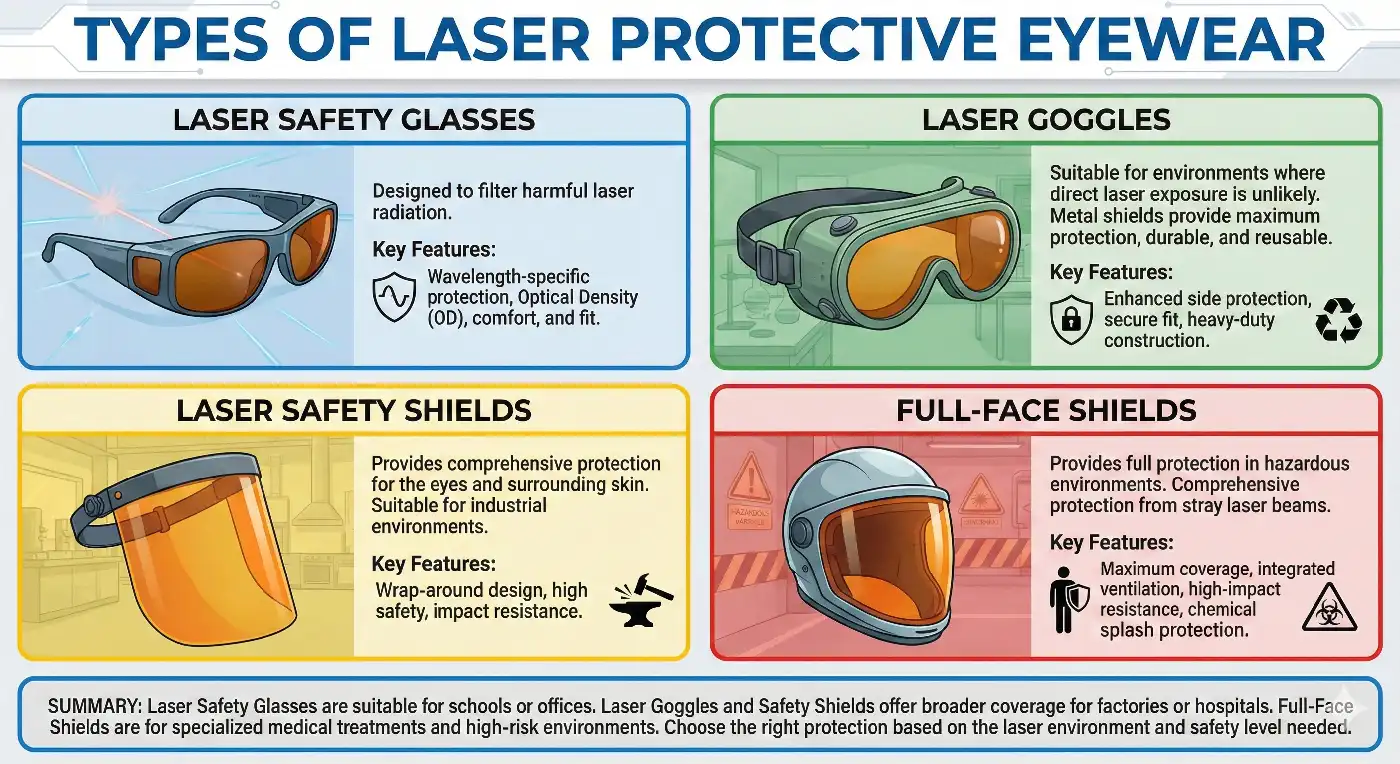
You can pick from different types of eyewear to protect your eyes from lasers. Each kind gives you a certain amount of safety and comfort. The best one for you depends on where you use lasers and how much safety you need. Here is a table that shows the main types:
| Type of Eyewear | Description | Key Features |
|---|---|---|
| Laser Safety Glasses | Designed to filter harmful laser radiation. | Wavelength-specific protection, Optical Density (OD), Comfort and Fit. |
| Laser Eye Shields | Used in environments where lasers may not be directed straight at the eyes. | Metal shields for maximum protection, Durable and reusable. |
| Laser Protective Goggles | Provide comprehensive coverage for eyes and surrounding skin. | Ideal for industrial settings, wrap-around design for maximum safety. |
| Full Face Shields | Offer full protection in hazardous environments. | Comprehensive protection from stray laser beams. |
Laser safety glasses are good for schools or offices. Goggles and face shields cover more and are better for factories or hospitals. Eye shields are used for special jobs, like some medical treatments.
How to pick the right gear
You must match your eyewear to the laser you use. Not all glasses work for every laser. Follow these steps to find the best gear:
- Find out the color or wavelength of your laser. You can check the label on your device.
- Look at the Optical Density (OD) number on the eyewear. A higher OD means more safety.
- Make sure your eyewear has an ANSI or CE mark. These marks show the gear is safe to use.
- Pick eyewear that fits well. It should cover your eyes and feel comfortable.
- Always choose glasses that block your laser’s exact wavelength.
- The weakest part of your eyewear decides how safe you are.
- Some new face shields and shutters give extra safety in hospitals or factories.
Tip: If you do not know what to use, ask a Laser Safety Officer or a trained supervisor. They can help you pick the right gear for your needs.
Laser safety protection starts with the right gear. When you use certified eyewear that matches your laser, you keep your eyes and skin safe.
What to do after laser exposure
Immediate actions
If you or someone near you gets exposed to a laser beam, you need to act quickly. Fast action can help prevent serious injury. Here are the steps you should follow:
- Turn off the laser device right away. Find the power switch and shut it down to stop further exposure.
- Move away from the laser area. Make sure everyone is safe and out of danger.
- Check for injuries. Look for signs like pain, redness, or trouble seeing.
- Give first aid if needed. Help the person stay calm. Cover the eyes with a clean cloth if there is pain or redness.
- Contact medical services. If you are at work or school, call your health office or supervisor. If you are at home, go to the nearest emergency room or urgent care center.
Tip: Always report the incident to a responsible adult or supervisor. Quick reporting helps others stay safe and prevents future accidents.
When to get medical help
Some symptoms after laser exposure mean you need to see a doctor right away. Watch for these warning signs:
- Sharp pain in your eyes
- Sudden blurred vision
- Seeing spots, flashes, or floaters
- Trouble seeing colors
- Increased sensitivity to light
- Loss of vision or permanent blindness
If you notice any of these problems, do not wait. Seek medical help as soon as possible. You should also get help if you had direct eye contact with a laser, see after images that do not go away, or notice your vision getting worse.
| Symptom | What to Do |
|---|---|
| Sharp eye pain | Seek emergency care |
| Blurred vision | Visit an eye doctor |
| Visual disturbances | Get checked immediately |
| Loss of vision | Go to the ER right away |
Note: Fast action and medical care can protect your eyesight and health. Never ignore changes in your vision after laser exposure.
Quick safety checklist
Key reminders
You can keep people safe by using a simple checklist. Use this list each time you are near lasers. It helps you remember important steps. This can stop accidents from happening.
| Checklist Item | What You Should Do |
|---|---|
| User training | Make sure you know how to use the laser safely before turning it on. |
| Laser signage | Post clear signs to warn others that a laser is in use. |
| Protective eyewear | Always wear certified laser safety glasses or goggles. |
| Beam path enclosure | Keep the laser beam enclosed or blocked when possible. |
| Remove reflective surfaces | Take away mirrors or shiny objects near the laser. |
| Secure mounting | Fasten the laser and optics so they cannot move by accident. |
| Beam stops | Place a beam stop at the end of the laser path to catch stray beams. |
| Key switch | Use a key switch to prevent anyone from using the laser without permission. |
| Emergency contacts | Keep emergency phone numbers easy to find in the laser area. |
| Standard procedures | Follow written steps for using and shutting down the laser. |
| Eye level | Set the laser beam above or below eye level to protect your eyes. |
| Protective housing | Use covers or shields to block the laser beam when not in use. |
| Skin protection | Wear gloves or long sleeves if there is a risk to your skin. |
| Store eyewear properly | Keep your safety glasses in a safe place when not in use. |
| Prevent unattended use | Never leave a laser running without someone watching it. |
Tip: Look for microscopes, binoculars, or telescopes in the area. These can make laser light even more risky.
You should also check for other dangers. These include high voltage, chemicals, or fiber optic cables. Store all chemicals in a safe spot. Make sure you catch any fumes or dust from the laser.
Go over this checklist before you use a laser. This helps you avoid mistakes. You protect your eyes, your skin, and others. Stay careful, follow these tips, and laser safety will be easy.
You can make laser safety protection part of your day. Doing easy things like wearing protective eyewear helps you stay safe. Reading warning signs also helps you avoid getting hurt. The table below shows how these habits protect your eyes and keep you safe for a long time.
| Long-Term Benefit | Why It Matters |
|---|---|
| Preserves eyesight | Stops eye injuries that cannot be fixed |
| Reduces accidents | Keeps people safe at home, school, and work |
| Meets safety standards | Helps you avoid trouble with rules and fines |
Pay attention, use these tips, and you will help keep everyone safe near lasers.
FAQ
What should you do if a laser accidentally shines in your eyes?
Move away from the laser right away. Blink a few times. If you feel pain or see spots, tell an adult or supervisor. Visit a doctor if your vision changes or you feel pain.
Can you use sunglasses for laser protection?
No, sunglasses do not protect your eyes from lasers. Only certified laser safety glasses or goggles block harmful laser light. Always check for an ANSI or CE mark.
Are all lasers dangerous?
Not all lasers have the same risk. Class 1 lasers are usually safe. Higher classes, like Class 3B or 4, can cause serious injuries. Always check the warning label before using any laser.
How do you know which laser safety glasses to choose?
Always match your glasses to the laser’s color or wavelength. Look for the Optical Density (OD) rating and make sure the glasses have an ANSI or CE mark. If you are unsure, ask a safety expert.
Shielding Gas: Nitrogen vs. Argon in Laser Welding
How Much Should You Pay for Laser Welding Services
Three in one laser machine really worth your money
How Does Laser Wire Feeding Technology Improve Welding Precision