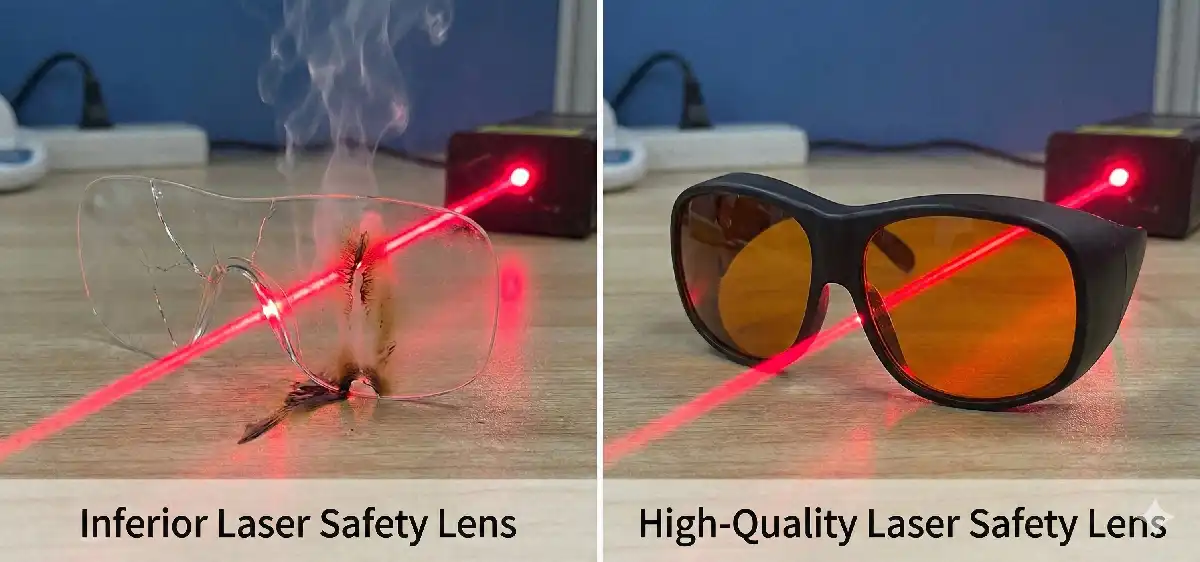
You are in real danger if you use bad protective lenses with lasers. The harm of inferior lenses goes beyond just feeling uncomfortable. Factory workers have lost their vision forever because cheap glasses did not provide adequate protection. In cosmetic clinics, both doctors and patients have suffered eye injuries due to the use of substandard lenses. These injuries have led to significant disputes. Scientists in labs have also lost their sight from poor protection, highlighting the serious risks involved. These dangers illustrate why you should always prioritize the quality of your laser safety lenses.
Key Takeaways
- Always pick certified laser safety lenses. They help protect your eyes from dangerous laser energy.
- Check your lenses often for scratches or damage. Even tiny flaws can cause bad eye injuries.
- Know that cheap lenses might make you feel safe when you are not. This can make accidents and injuries more likely.
- Use safe laser habits. Get the right training and take care of your protective eyewear.
- Choose quality instead of saving money. Good lenses keep your eyes and equipment safe from harm.
Harm of Inferior Lenses
Eye Injuries and Vision Loss
Using poor-quality laser safety lenses puts your eyes in danger. The harm of inferior lenses can happen very fast. Looking at a strong laser for just a moment can hurt your vision forever. Many people have lost their sight because their glasses did not block enough laser energy. You might think cheap lenses are okay, but they often let harmful light reach your eyes.
- Permanent vision damage can happen after only a short time.
- Lasers can hurt your retina, cause cataracts, or make you lose your sight.
- Without good eye protection, you could go blind and never recover.
- Being around fiber lasers for a long time can cause cataracts and blindness.
Never ignore the harm of inferior lenses. Your eyes cannot fix this kind of damage.
Laser Burns and Retinal Damage
Low-quality lenses do not protect you from laser burns. The harm of inferior lenses means laser energy can get to your eyes. This energy can burn your retina, which helps you see. The crystalline lens in your eye can focus laser light and make the injury worse.
- Inferior lenses do not block laser energy, so it reaches your retina.
- Laser light between 400 and 1400 nm can badly hurt your macula.
- Poor protection can cause burns and heat injuries inside your eye.
- Scatter and heat from lasers can harm colorful parts of your eye, like the retina.
Many people get eye injuries during cosmetic laser treatments. In 62% of cases, they did not wear the right eyewear. Cheap glasses often have low optical density and let laser energy through. This can cause burns and vision loss, especially with strong lasers.
False Security and Increased Risk
You might feel safe wearing any protective lens, but the harm of inferior lenses is that they make you think you are protected when you are not. You may take more risks because you trust your lenses. Poor-quality lenses can stop working without warning.
Note: Many accidents happen because people trust bad lenses. In cosmetic clinics, most injuries happen when workers or patients do not use proper eyewear or take it off during procedures.
Here is a table that shows how inferior lenses can make accidents more likely:
| Adverse Effect | Description |
|---|---|
| Thermal Lens Effect | Poor lenses can bend from heat, making the laser lose focus and cut badly. |
| Protective Lens Burn Point | Bad lenses can burn through, causing serious damage and accidents. |
| Focus Lens Burn Point | Burned lenses can make soot and more damage, which costs a lot to fix. |
| Laser Output Head Burnout | A burned lens can hurt the laser’s inside parts and cause big problems. |
Always remember, the harm of inferior lenses is not just about weak protection. It also makes you take more risks, which can lead to bad accidents.
Causes of Lens Failure
Poor Materials and Build Quality
You put yourself at risk when you use lenses made from poor materials. Cheap lenses often have surface defects like scratches or small pits. These flaws can make the lens break or fail when hit by a strong laser. Impurities inside the lens, such as tiny pieces of metal, can absorb laser energy and cause the lens to crack or even explode. If you do not clean or handle your lenses carefully, you can add more defects that lower their ability to protect you.
- Scratches and digs on the lens surface weaken the lens.
- Impurities inside the lens can heat up and cause sudden damage.
- Poor cleaning and handling can make the lens fail faster.
You should always check your lenses for any marks or dirt before using them. Even a small scratch can lead to big problems.
Lack of Certification
You cannot trust a lens that does not have proper certification. Certified lenses go through strict tests to make sure they block the right amount of laser energy. Lenses without certification may not protect you at all. Some cheap lenses claim to be safe but do not meet any safety standards. If you use uncertified lenses, you risk serious injury because you do not know how much protection you really have.
Tip: Always look for safety marks and certificates from trusted organizations. This helps you avoid fake or unsafe products.
Heat and Laser Perforation
High-power lasers can create a lot of heat. Inferior lenses often cannot handle this heat. When the lens gets too hot, it can melt, burn, or even catch fire. Some plastic shields have caught fire during laser use. Holes can form in the lens, letting dangerous laser light pass through. This can cause burns, eye injuries, and damage to your equipment.
If you see any signs of burning or melting on your lens, stop using it right away. Your safety depends on using lenses that can stand up to the heat and power of your laser.
Impact on Equipment and Safety
Damage to Laser Machines
You risk serious damage to your laser machine when you use inferior protective lenses. Poor sealing of the cutting head, wrong installation, or using cheap parts can all cause problems. If you clean your lenses the wrong way, you might scratch them or leave dirt behind. High temperatures can make a bad lens burst, especially if there is moisture. Some manufacturers use low-quality lenses to save money, but this can lead to machine failure.
- Poor sealing lets dust and debris inside.
- Incorrect installation can cause the lens to break.
- High energy and heat can make a weak lens burst.
- Moisture trapped in the lens can cause sudden damage.
Tip: Always check your lens for cracks or dirt before you start your machine.
Compromised Cutting Quality
Bad lenses do not just put your eyes at risk—they also hurt your work. Inferior lenses absorb more laser energy, which causes them to heat up and change shape. This leads to focus drift and inconsistent cutting. You may see more dross or slag, especially when cutting stainless steel or carbon steel. The thermal lens effect can make the laser lose focus, so your cuts will not be clean.
- Increased absorption causes thermal deformation.
- Focus drift leads to uneven cuts.
- More dross and slag appear on the edges.
- Cutting quality drops, and you may need to redo your work.
Here is a table showing how lens orientation affects cutting:
| Lens Orientation | Penetration Depth (mm) | Time (ms) |
|---|---|---|
| Wrong Way | 4 | 8 |
| Correct Way | – | 18 |
Internal Component Risks
When a protective lens fails, it can send debris into the machine. This debris can damage important parts like the focusing lens and the inside of the cutting head. A dirty or broken lens can ruin the laser’s output window. You may face expensive repairs and long downtime if these parts get damaged.
- Debris from lens failure harms internal components.
- Dirty lenses lower cut quality and damage the cutting head.
- Repairs and replacements increase your costs and stop your work.
Note: Keeping your lenses clean and using high-quality parts helps protect your machine and keeps it running smoothly.
How to Avoid the Harm
Choosing Certified Lenses
You can keep your eyes safe by picking certified protective lenses. Always check if the lenses match your laser’s wavelength and power. Look for glasses that fit well and feel good on your face. If you wear prescription glasses, make sure your safety glasses work with them. Good lenses use strong materials like polycarbonate or glass. Clean your lenses often and store them in a safe place.
Here is a table to help you choose the right lenses:
| Criteria | Description |
|---|---|
| Wavelength Range | Pick glasses that block your laser’s wavelengths. |
| Visible Light Transmission (VLT) | Choose lenses with high VLT for clear vision, but make sure they block the right wavelengths. |
| Fit | Glasses should fit tightly and not fall off. |
| Comfort | Light and comfy glasses are easier to wear longer. |
| Prescription Options | Get prescription choices if you need them. |
| Composition | Polycarbonate or glass lenses protect your eyes well. |
| Specificity | Lenses must meet ANSI Z136.1 for your laser’s environment. |
| Maintenance | Clean and store lenses to keep them working well. |
Recognizing Quality Standards
Always look for lenses that meet world safety standards. Trusted marks are ANSI Z136, EN207, EN208, and CE. These standards test things like optical density and power resistance. You can also check for marks like CSA Z94.3, ANSI Z87.1, or EN 166.
Here are some important tests for good lenses:
| Test Method | Description |
|---|---|
| Spectral transmittance test | Checks how well lenses block different wavelengths. |
| Laser damage threshold test | Measures how much energy the lens can take before breaking. |
| Mechanical Strength Test | Tests if the lens can handle hits or drops. |
| Visual performance test | Makes sure you can see clearly and work safely. |
| Protection Level Classification | Shows what lasers the lens can protect against. |
Tip: Always check for certification marks and test results before you buy.
Safe Laser Practices
You can lower the risk of the harm of inferior lenses by following safe laser rules. Always wear the right glasses for your laser. Clean and check your lenses often. Replace them if you see any damage. Store your lenses in a safe case. Disinfect reusable lenses with proper cleaning solutions. Training helps you and your team know why safety glasses matter. Make sure everyone learns how to use and care for their lenses.
- Wear glasses with the correct optical density.
- Make sure glasses fit well and feel comfortable.
- Clean and store lenses after every use.
- Train everyone on laser safety rules.
By following these steps, you keep your eyes and equipment safe from harm.
You can get hurt if you use bad protective lenses with lasers. These dangers include hurting your eyes, getting burns, and losing your sight forever. Here are the main risks you should know:
| Danger Type | Description |
|---|---|
| Insufficient Protection | Cheap glasses might not block lasers, so eyes get hurt. |
| Poor Material Quality | Weak materials break fast and do not protect you. |
| Design Defects | Bad designs let laser light come in from the sides. |
| Lack of Certification | Glasses without safety marks do not meet safety rules. |
Good, certified lenses protect your eyes and keep your tools safe. Always look for safety marks and wear the right laser glasses. Keep your eyes safe and make smart choices—never pick cheap over safe. 🛡️
FAQ
What happens if you use non-certified laser safety glasses?
You can hurt your eyes or break your machine. Non-certified glasses might not block the right light. Always look for safety marks before you use them.
How often should you replace your laser protective lenses?
Check your lenses every time before you use them. Change them if you see any scratches, burns, or cracks. Most experts say you should get new ones each year to stay safe.
Can regular sunglasses protect you from lasers?
No. Regular sunglasses cannot block laser light. Only certified laser safety glasses keep your eyes safe from laser energy.
How do you know if your lenses are still safe?
Look for these things:
- No scratches or burns
- You can see clearly through the lens
- You can find certification marks
If you see any damage, get new lenses right away.
The necessity of using pure water in laser welding water coolers
The consequences of dust entering the laser head of the welding machine
Scrap standard for protective lenses in laser welding machines
Why Laser Welding Aluminum & Copper is Expensive for Lens Protection?