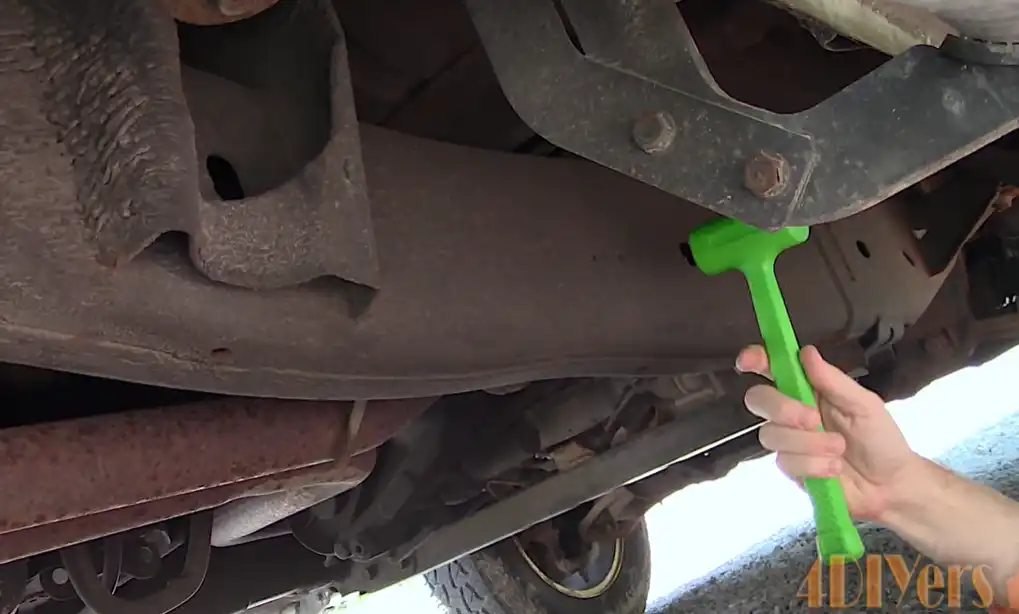
If rust on your car chassis makes it weak or unsafe, you must fix it soon. You should look for rust often, even in hidden spots. Finding rust early can save you money and keep your car safe.
- Regular checks can find small rust spots that are cheaper to fix.
- Fixing rust early stops bigger and costly problems.
- If you ignore rust, it can cause bad damage and repairs may cost too much.
You can fix small rust yourself or get help from a professional for bad rust.
Key Takeaways
- Check your car often for rust. This helps you find problems early. Finding rust early saves money. It also keeps your car safe.
- Know the difference between surface rust and structural rust. Surface rust is easy to fix. Structural rust can make your car unsafe.
- Look for signs of bad rust, like soft spots or strange sounds. If you see these, get your car checked right away. Waiting can make repairs cost more.
- You can fix small rust spots yourself. For big rust problems, ask a professional for help. Professionals have the right tools and skills. They make sure your car is safe.
- Stop rust by washing your car often. Fix paint chips when you see them. Use rust inhibitors to protect your car. Preventing rust helps keep your car’s value.
Assessing Car Chassis Rust
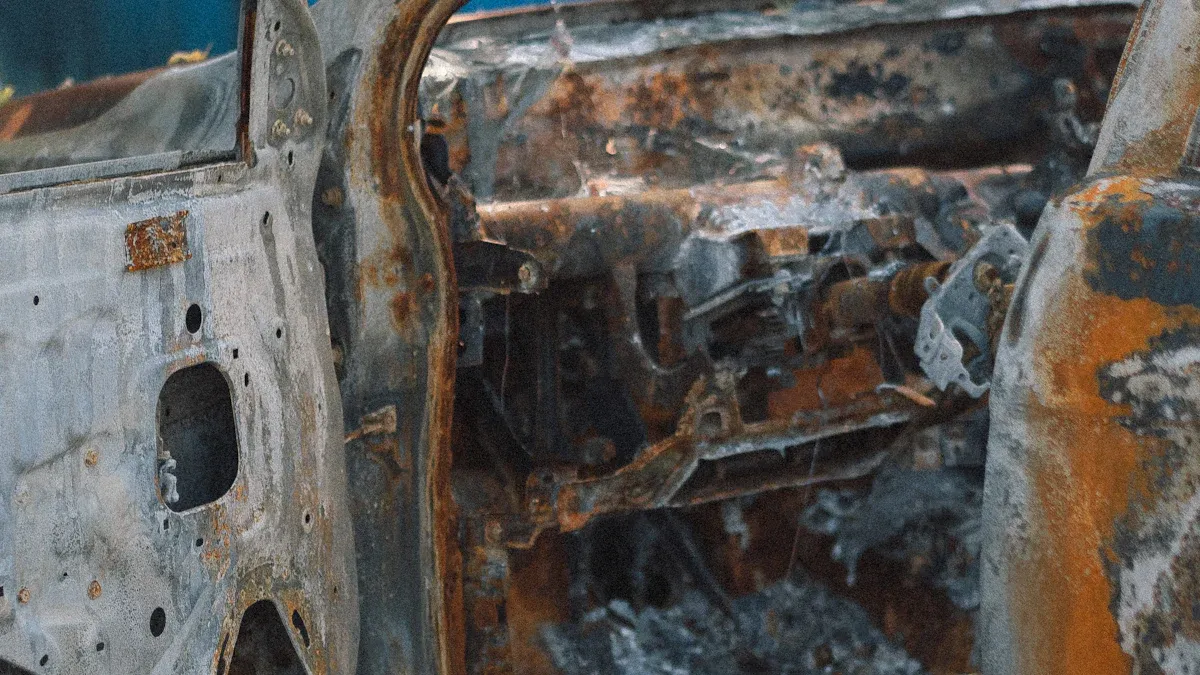
Surface vs. Structural Rust
You can spot two main types of rust on your car chassis. Surface rust looks like orange or brown spots on the metal. It usually stays on the top layer and does not weaken the structure. You can often fix surface rust with simple tools and supplies.
Structural rust is much more serious. This type eats deep into the metal and can cause holes or soft spots. When rust reaches this stage, it can weaken the car chassis and make driving unsafe. You may notice parts of the frame that bend easily or do not feel solid. Older vehicles are more likely to develop structural rust because their protective coatings wear down over time. If you see rust that goes through the metal or makes it feel soft, you need to act quickly.
Tip: Surface rust is mostly a cosmetic issue. Structural rust can threaten your safety and the life of your car.
Signs of Serious Rust
You can look for several signs that rust has moved from surface damage to a structural problem:
- Soft spots in the metal, which show advanced rust damage.
- Unusual rattling sounds when you drive, suggesting weakened parts.
- Visible holes in areas that should be solid.
- Uneven gaps between body panels or misaligned bumpers.
- Small dents or rust near the frame, which may point to hidden issues.
A rust survey found that cars in the Northeast and Great Lakes area are much more likely to rust than those in the Southwest. Moisture, humidity, and road salt speed up rust. Paint chips and scratches also let rust start. If you live near the coast or in a place with salty air, your car chassis faces a higher risk.
| Common Causes of Rust | Description |
|---|---|
| Oxygen and water | Start the rust process |
| Salt and humidity | Speed up corrosion |
| Chipped paint | Exposes metal to air |
| Poor drainage | Traps water under panels |
| Coastal climates | Salty air increases rust |
Inspection Tips
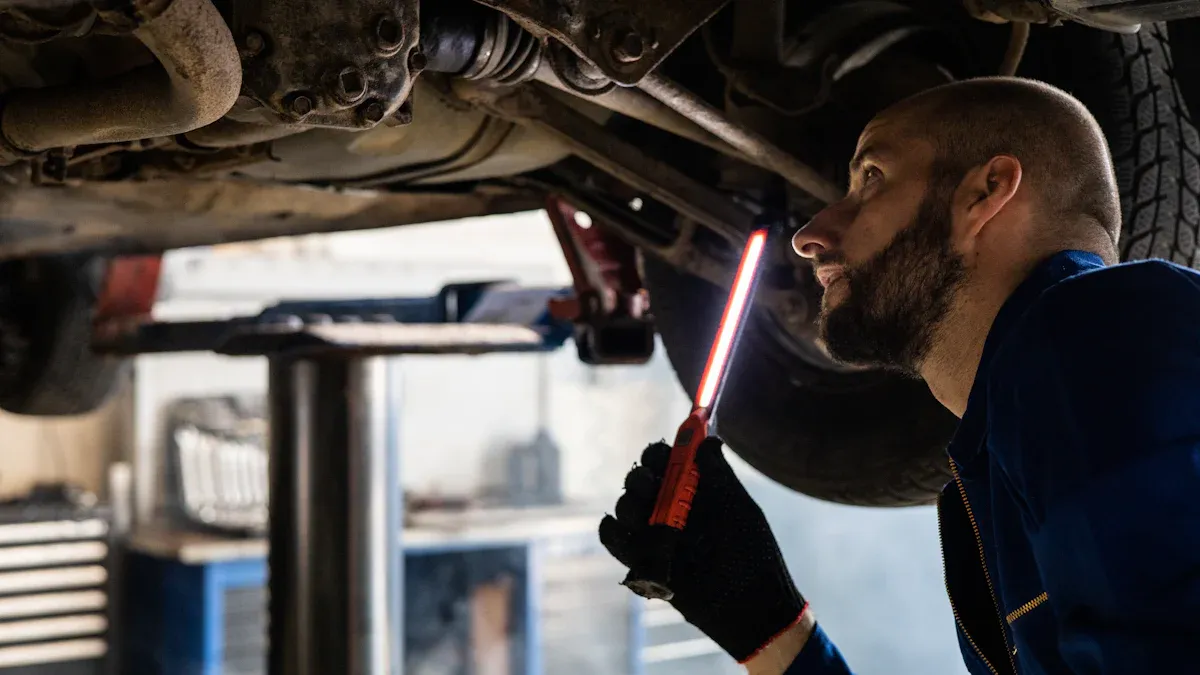
You should inspect your car chassis often, especially if you live in a wet or salty area. Look for rust in places you cannot see easily. Use these tips to find hidden or internal rust:
- Check for uneven gaps between body panels and misaligned bumpers.
- Look for small dents or rust near the frame.
- Examine the frame for wrinkles or misalignments.
- Inspect critical parts for wear, corrosion, or leaks.
- Ask a professional to use advanced tools for a full inspection.
Note: Older cars need more frequent checks because their coatings break down over time. If you find any signs of serious rust, get help from a mechanic right away.
You can prevent big problems by catching rust early. Regular inspections help you spot trouble before it gets worse. If you see any warning signs, do not wait to take action.
Safety Risks and Urgency
Structural Integrity Concerns
Rust does more than make your car look old. It can weaken the frame and put you at risk. When rust eats away at the metal, the car chassis may not protect you in a crash. You need a strong frame to absorb impact and keep you safe. If rust spreads, the frame can bend or break more easily.
- A weakened frame reduces crash protection. It may not absorb impact energy as it should, even in low-speed accidents.
- Rust and corrosion can make the structure weak. This puts everyone in the car at risk during a collision.
- A compromised frame can affect how safety features work. Airbags and advanced driver systems need a solid, straight frame to function correctly.
Note: Safety features like airbags may not work right if the frame is out of shape. Rust can also cause parts to shift, which makes these systems less reliable.
When Driving Becomes Unsafe
You should never ignore signs that rust has made your car unsafe. Many states have strict rules for rust damage. If inspectors see major rust, your car will not pass inspection. They look for things like:
- Substantial rust on the frame or body.
- Rust that lets exhaust gases enter the car.
- Loose or broken bumpers.
- Sharp metal or loose parts that could hurt someone.
- Any frame that is not solid.
If you notice any of these problems, you should stop driving and get your car checked. Inspectors use visual checks and may look closer if they see bad rust. Sellers must also tell buyers about any repairs or damage to the frame.
Official inspection standards (U.S. examples) make this clear:
- Pennsylvania: Vehicles fail if the frame is not solid or the floor pan is rusted through, per Pennsylvania Code Title 67, Chapter 175 – Vehicle Equipment and Inspection Regulations (current online version, 2024).
- New York: Inspectors must check the chassis/frame for breaks, cracks, or severe rust at suspension attachment points under NY DMV’s Vehicle Safety/Emissions Inspection Program (2024).
- New Hampshire: The state’s inspection rules reject vehicles with unsafe body, chassis, or frame corrosion under NH Administrative Rules Saf‑C 3200 (includes Saf‑C 3217 Body/Chassis/Frame) (current rules, 2023).
These examples show why severe rust on structural members (frame rails, subframes, suspension mounts) can mean an automatic fail and a do‑not‑drive condition until repaired.
Tip: If you feel the car flex or hear strange noises from underneath, you may have a serious rust problem. Do not wait—get a professional opinion right away.
Repair Options for Car Chassis
DIY Repairs for Surface Rust
You can fix small rust spots at home if the damage is not deep. You do not need special skills or expensive tools for surface rust repairs. First, check if the rust is only on the top layer of metal. If you see holes or soft spots, do not try to fix it yourself.
Here is a table to help you decide if you should do a DIY repair:
| Criteria | Description |
|---|---|
| Extent of Damage | Look at how deep and wide the rust is on your car chassis. |
| Availability of Tools and Materials | Make sure you have sandpaper, rust converter, primer, paint, and safety gear. |
| Welding Techniques | Only try welding if you know how and have the right equipment. |
| Frame Damage | If the frame has big holes or weak spots, DIY may not be safe or possible. |
If you want to fix surface rust yourself, follow these steps:
- Clean and Dry the Area: Wipe the rusty spot with rubbing alcohol or adhesive remover.
- Sand Down the Rust: Use 80-grit sandpaper to remove all rust. Sand about an inch past the damaged area.
- Apply Rust Converter: Brush on rust converter to stop any leftover rust from spreading.
- Fill Damaged Areas: Use fiberglass body filler for small holes to make the surface smooth.
- Prime the Repaired Surface: Spray three light coats of high-build primer. Sand between each coat.
- Paint and Clear Coat the Area: Match your car’s paint and use thin layers of paint and clear coat.
Tip: Always wear gloves and a mask when you work with chemicals or sand rust.
Safety essentials (PPE & SDS): Wear ANSI Z87.1 safety goggles or a face shield, chemical‑resistant gloves (nitrile or neoprene), and a NIOSH‑approved half‑face respirator with organic‑vapor + P100 filters when using rust converters, solvents, or spray primers. Add long‑sleeve coveralls, hearing protection for grinding, and sturdy work boots; work in good ventilation and keep an eye/skin wash nearby. Check manufacturer Safety Data Sheets before use (example SDS: Rust‑Oleum Rust Reformer SDS, Permatex rust converter SDS, Sigma‑Aldrich oxalic acid SDS, Eastwood prep solvent SDS) and follow listed precautions.
Professional Repairs for Severe Rust
If rust has gone through the metal or made the car chassis weak, you need a professional. Severe rust can make your car unsafe and change how it drives. Professionals have the training and tools to fix deep rust and make your car strong again.
Look for a shop with certified technicians. Here are some common qualifications:
| Qualification/Certification | Description |
|---|---|
| Automotive Collision Repair and Refinishing Associate of Applied Science | Two-year program that teaches welding and repair skills. |
| Advanced Technical Certificate | Two-year program with advanced repair training. |
| Intermediate Technical Certificate | 1.5-year program for basic collision repair skills. |
| I-CAR Certification | Industry standard for auto collision repair. |
A professional repair usually follows these steps:
- Identifying the Rust Problem: The technician checks the car chassis for rust, even in hidden places.
- Gathering the Necessary Tools: The shop uses safety gear, sanders, wire brushes, and rust treatments.
- Preparing the Surface for Repair: They remove loose rust, clean the area, and protect nearby parts.
- Applying Rust Treatment Solutions: Rust converters stop the rust from spreading.
- Finishing Touches and Preventive Measures: The shop paints the area, adds a clear coat, and may use undercoating for extra protection.
Field case (anonymized) — 2010 midsize SUV, 145,000 mi; coastal/salted-roads exposure. Technician found heavy corrosion at the left front subframe: ultrasonic thickness gauge showed 2.0 mm at the corroded flange versus 3.8 mm on an adjacent sound area. Repair: cut-out of the perforated section and welded-in stamped patch panel, seam‑sealed and coated. Post‑weld thickness at the repair zone measured 3.6–3.9 mm; visual and ultrasonic recheck at 3 months remained dry with no further wall loss. (Photos: placeholder — before/after.)
Note: Professional repairs often come with a warranty. Surface corrosion coverage protects against future rust from scratches or salt. Rust perforation coverage only helps if rust has gone all the way through the metal.
Frame Section Replacement
Sometimes, rust damages a big part of the car chassis. In these cases, a shop may replace a whole section of the frame. This process uses frame sections that match your car’s original design. The type of steel in your car changes how repairs are done:
| Steel Type | Tensile Strength Range (MPa) | Repairability Considerations |
|---|---|---|
| Mild Steel | Up to 210 | Easier to repair and straighten. |
| High-Strength Steel | 210 – 600 | Can sometimes be straightened, but with care. |
| Ultra-High-Strength Steel | Above 600 | Very sensitive to heat. Only replace, never heat or weld unless the car maker says it is safe. |
Shops must follow the car maker’s rules when replacing frame sections. This keeps the car chassis strong and safe. Using the wrong repair method can change how your car drives or how safety features work.
Alert: Always ask the shop if they use OEM parts and follow factory repair instructions. This helps keep your car safe after a big repair.
Replacing a frame section is not a DIY job. It needs special tools and knowledge. If you have severe rust, trust a certified shop to do the work.
Costs and Prevention
Typical Repair Costs
You need to know how much it costs to fix rust on your car chassis. Minor repairs cost less and often take less time. Major repairs cost much more and may need special tools or skills.
- Minor rust repairs usually cost between $300 and $800. Descaling services start at $300 and help remove heavy rust before it gets worse.
- You pay more for major repairs. These can include replacing metal or fixing deep damage.
Here is a table that shows the average cost for bigger repairs:
| Type of Repair | Average Cost Range |
|---|---|
| Basic Rust Repair | $3,500 – $5,500 |
| Metal Finished Rust Repair | $6,500 and up |
Sources and scope note: Cost ranges above are compiled from recent U.S. shop‑and‑guide estimates (New England Rust and Restoration Sector) and independent shop writeups collected Dec 2025–Jul 2025; they reflect professional repair quotes rather than a centralized insurance dataset. Regional labor rates, vehicle type, steel grade, and the corroded area can change quoted prices widely—always get multiple local estimates before deciding. New England Rust (2025 guide) and Restoration Sector (Dec 2025 summary).
Regional caution: Actual costs may be 20–50% higher in high‑labor areas or for specialty vehicles; use the ranges above only as a starting point and ask shops to itemize labor, materials, welding, and repainting costs.
If you wait too long, rust can spread and make repairs more expensive. You save money by fixing rust early.
Tip: Always ask for a written estimate before you agree to any repair. This helps you avoid surprises.
Preventing Future Rust
You can keep your car chassis safe from rust by following simple steps. Prevention saves you money and keeps your car strong.
| Preventive Measure | Description |
|---|---|
| Regular Washing | Wash your car often to remove salt and moisture. |
| Waxing | Wax your car to protect the paint and metal. |
| Undercoating | Add undercoating to shield the underside from water and salt. |
| Keeping the Car Dry | Park in covered areas or use a car cover to keep moisture away. |
| Addressing Paint Chips and Scratches | Fix chips and scratches quickly to stop rust from starting. |
| Using Rust Inhibitors | Use rust inhibitors to block moisture and slow down rust. |
| Ventilating and Drying the Interior | Keep the inside dry to prevent rust on metal parts. |
| Consulting Professionals | Ask experts for advice and get regular checks. |
You should inspect your car for rust at least every six months. Check before and after winter because salt on the roads can cause rust. If you live in a wet or salty area, inspect your car more often.
Different rustproofing products offer various levels of protection. Undercoating lasts two to five years if you inspect it regularly. Oil sprays work well for hidden spots but need yearly reapplication. Grease-based rustproofing lasts five to six years but needs touch-ups.
Note: Scrapping cars the right way helps the environment. Old cars can leak fluids and pollute the soil and water. Recycling reduces waste and lowers carbon emissions.
Taking care of rust now helps you avoid bigger problems later. You protect your car and the planet by acting early.
You keep your car safe when you find rust early. Fixing rust quickly helps you and your car. Checking for rust often gives you many good things:
- Your car lasts longer.
- Your car uses less gas and stays cleaner.
- Your car stays safe and is worth more money.
Safety is the most important thing. If you are not sure, ask an expert for help. Sometimes, fixing the car is best for safety or if the car is special. Other times, it costs too much, so replacing or scrapping is better. You can get your car checked or fix small rust spots yourself.
FAQ
How do you know if rust on your car chassis is dangerous?
You should press on rusty spots with a screwdriver. If the metal feels soft or breaks, the rust is serious. Holes, cracks, or bending also show danger. Ask a mechanic if you are unsure.
Can you drive with a rusted chassis?
You should not drive if rust weakens the frame. Unsafe rust can cause parts to break while you drive. Many states will not pass your car during inspection if the chassis has severe rust.
What tools do you need for DIY rust repair?
You need sandpaper, rust converter, primer, paint, and safety gear. For small holes, use fiberglass filler. You should not try welding unless you have training and the right equipment.
How often should you check your car chassis for rust?
You should inspect your car every six months. Check before and after winter. If you live near the ocean or in a place with road salt, check more often.
Is it worth repairing a rusted chassis or should you scrap the car?
You should repair if the rust is minor and the car is valuable. If repairs cost more than the car’s value, scrapping may be better. Ask a professional for advice.