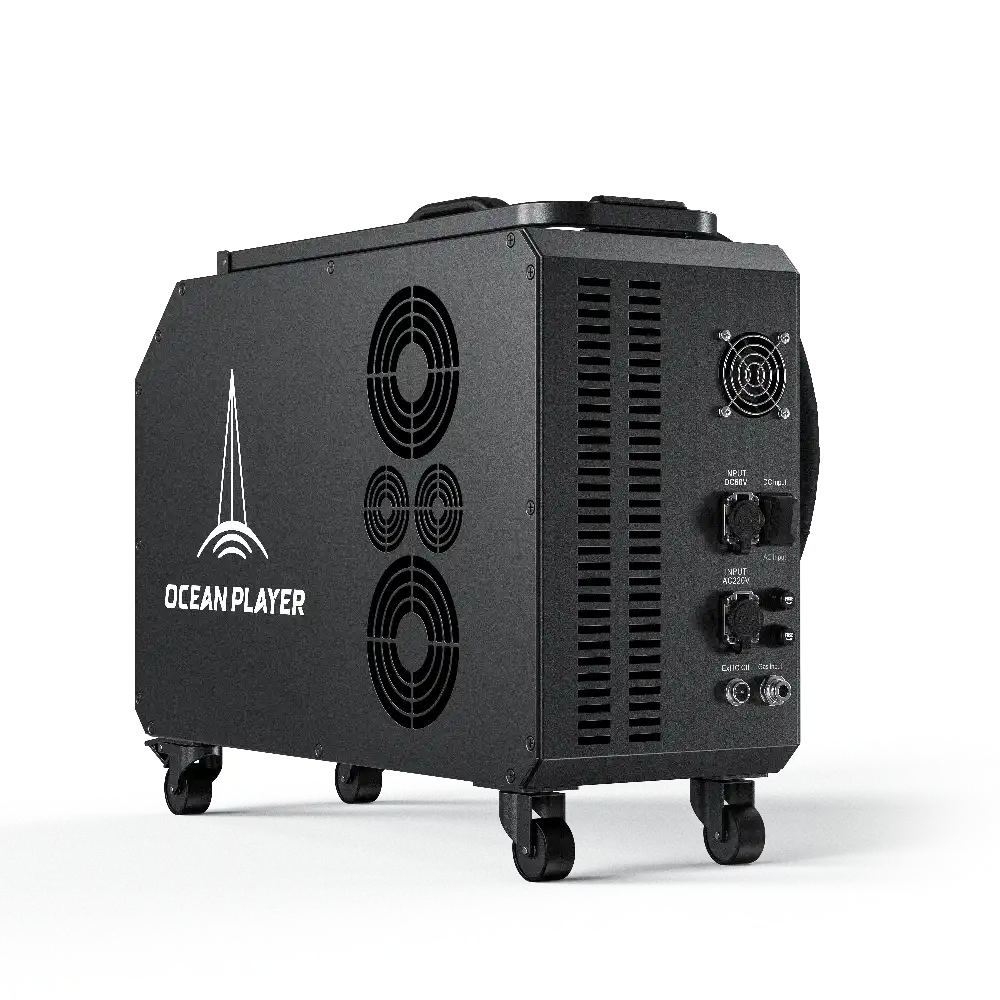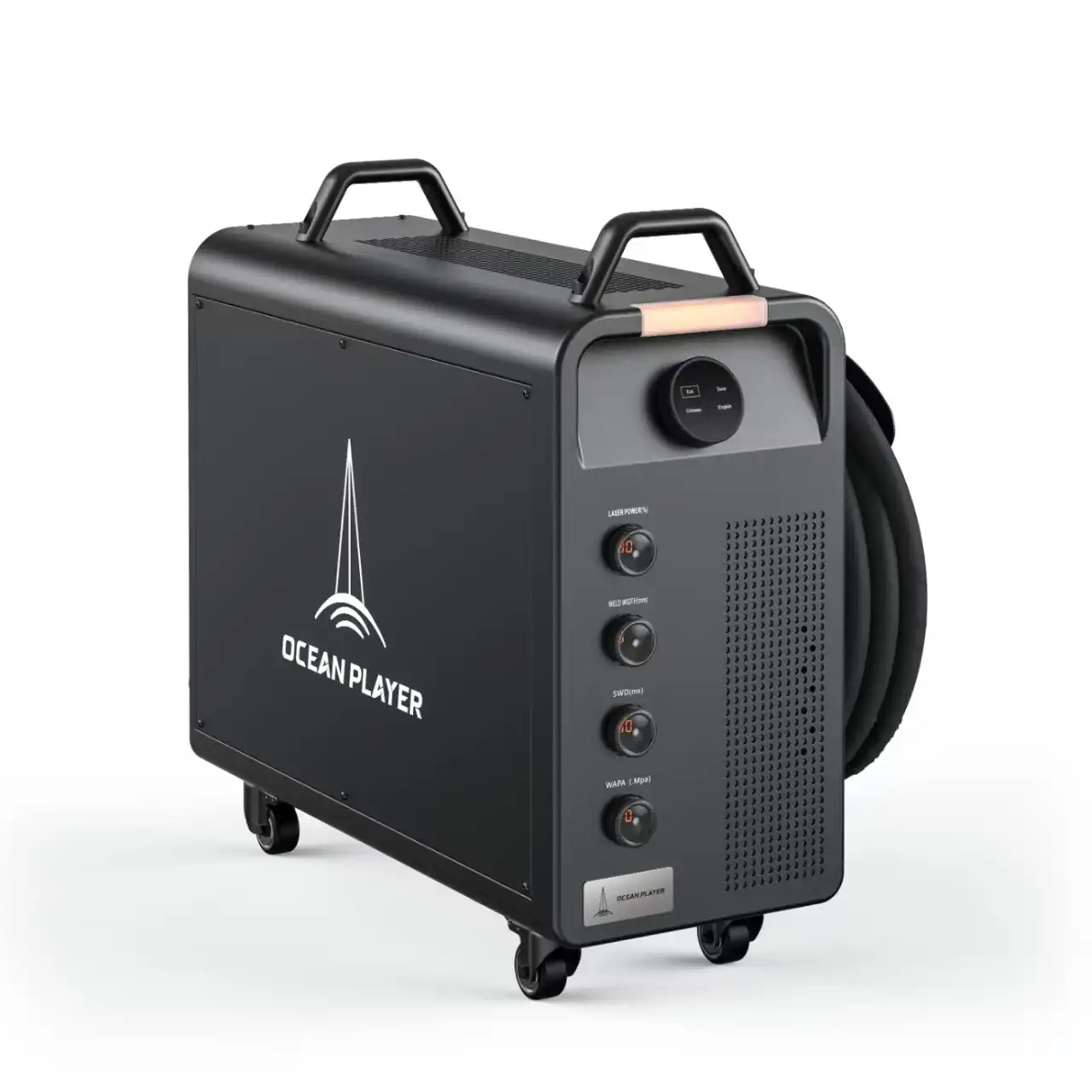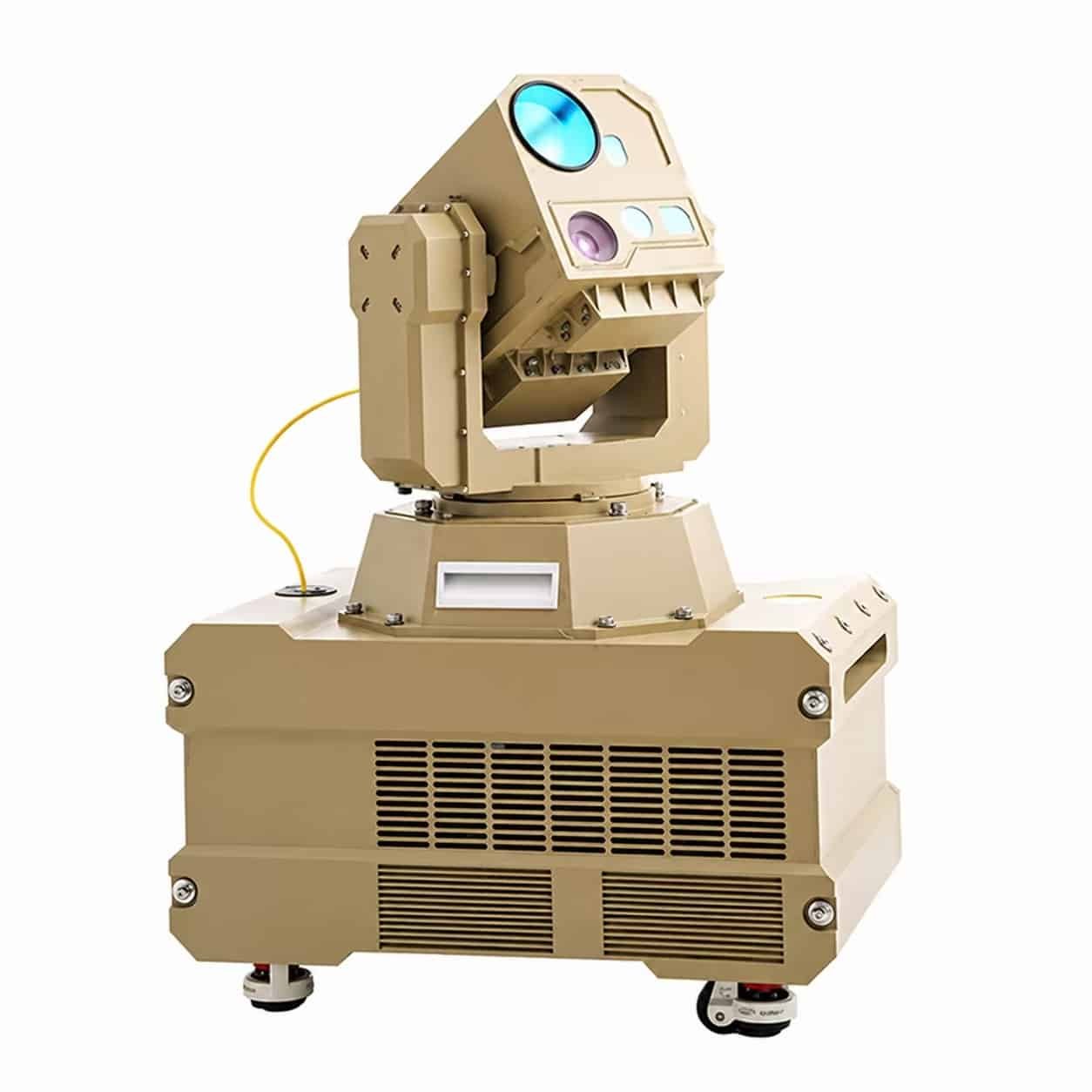
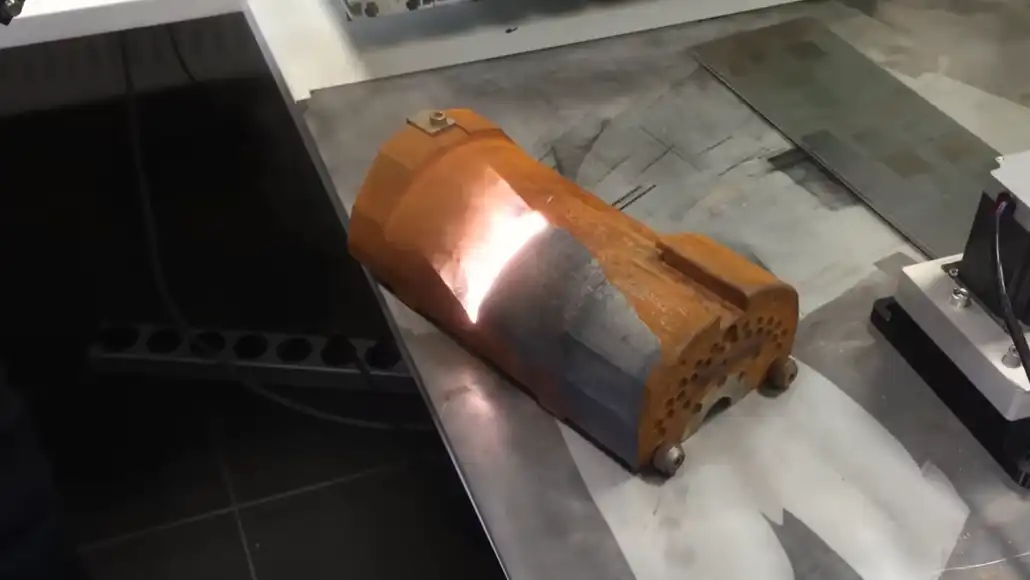
Imagine you see rust on metal and want it gone without damaging the surface. A laser cleaning machine for rust removal uses high-energy light pulses to blast away rust. You do not need to touch the metal. The laser targets only the rust and leaves the clean metal safe. Fiber lasers make this process fast and efficient. You get a clean surface, and the metal stays strong.
Key Takeaways
- Laser cleaning machines take off rust fast and safely. They do not hurt the metal under the rust.
- This way does not touch the metal. It stops scratches and dents. It works well for surfaces that need care.
- Fiber laser technology is quick and works well. It saves money over time. It is better than old ways.
- Laser cleaning is good for the environment. It makes very little waste. It does not use bad chemicals.
- Big industries like aerospace and automotive use laser cleaning. They get better results faster.
How a Laser Cleaning Machine for Rust Removal Works
Laser Ablation Process
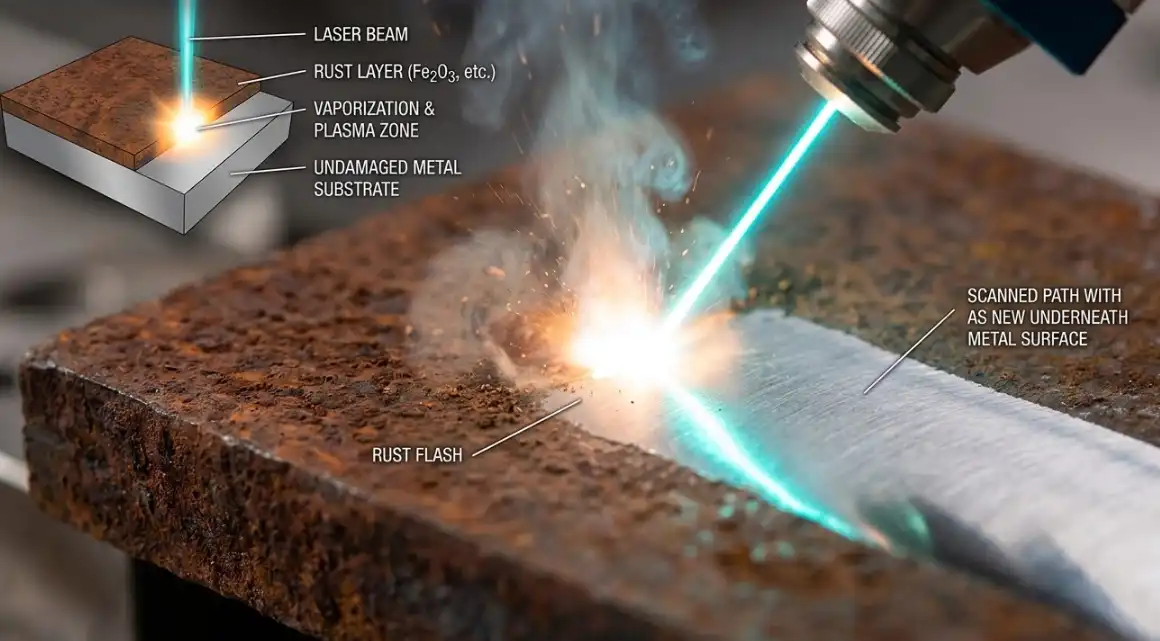
When you use a laser cleaning machine for rust removal, you see science at work. The machine points a strong laser beam at the rust or any layer you do not want. The laser heats the rust very fast. The rust turns into vapor or tiny bits. The metal under the rust does not get hurt. This happens because the metal does not take in as much laser energy as the rust.
- The laser aims only at the rust or dirt.
- Rust takes in the laser energy and turns into vapor.
- The metal below bounces most of the laser away, so it stays safe.
- This works because rust and metal take in laser energy differently.
- The laser only removes stuff when it reaches a certain energy level, called the ablation threshold.
You do not need to worry about the metal getting thin or weak. The laser cleaning machine for rust removal works very carefully. You get a clean surface and keep all the good metal.
Note on limits and safe practice: Laser cleaning is not universally nondestructive—results depend on substrate, thickness, coating type and process settings. Thin or soft metals (typical under ~0.5–1.0 mm), high‑reflectivity metals (Al/Cu), heavily built-up coatings (>100–200 µm) or combustible residues may require reduced fluence, faster scans, inert‑gas assist or are best validated by a small trial. Always run parameter trials on representative scrap, monitor substrate temperature, and use enclosed, interlocked extraction with HEPA+carbon filtration and an appointed LSO.
Non-Contact Cleaning Benefits
You may wonder why non-contact cleaning is important. With a laser cleaning machine for rust removal, the laser beam never touches the metal. It only hits the rust or dirt on top. This means you do not get scratches or dents like you might with sandpaper or blasting.
You can change the laser’s power and speed. This lets you remove just the rust and keep the metal looking new. You do not have to worry about the metal’s strength or shape changing. The non-contact way keeps the metal strong. Old ways like sandblasting can wear down the metal, but laser cleaning keeps it ready for new paint or coatings.
Tip: Laser cleaning also makes the surface a little rough. This helps new coatings stick better. You get a cleaner, safer, and stronger result.
Fiber Laser Technology
Fiber lasers have made rust removal much better. They use a special fiber optic cable to send the laser beam. This makes them fast, reliable, and saves money. Fiber lasers work quickly and do not break down often. You can use them for a long time without problems.
Here’s a simple look at how fiber lasers compare to other types:
| Laser Type | Wavelength | Characteristics | Applications |
|---|---|---|---|
| Fiber Lasers | 1064nm | Fast, reliable, saves money | Used a lot in factories |
| CO2 Lasers | Longer | Good for thick metals, used in airplanes | Aerospace work |
| YAG Lasers | 1064nm | Needs more fixing, not as fast | Not used much for cleaning |
Fiber lasers give you great accuracy and speed. They also help you save money because they last longer and need less fixing. When you use a laser cleaning machine for rust removal with fiber laser technology, you get a strong and easy tool. Many companies now pick fiber lasers because they clean better and faster than old ways.
Advantages of Laser Rust Removal
Speed and Efficiency
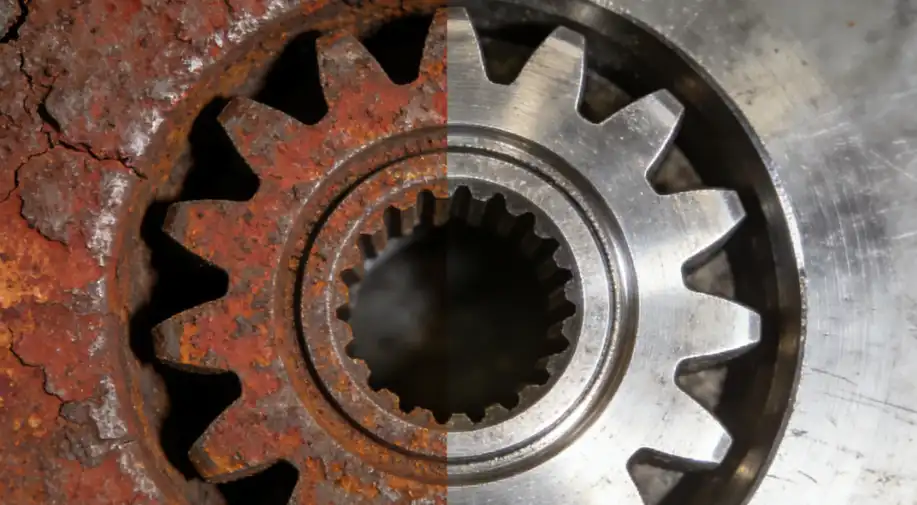
You want rust gone fast. A laser cleaning machine for rust removal can clean each part in under 30 seconds. This is much quicker than sandblasting or using chemicals. Those old ways take a lot more time. Many companies say lasers help them finish cleaning up to 75% faster. You also save time on setup and cleanup, sometimes by half. You can clean many metal parts in just one hour. You do not have to worry about making a big mess.
- Clean medium-sized surfaces in less than 2 minutes.
- No long prep or messy cleanup needed.
- Finish more work in less time.
Precision and Surface Protection
You want your metal to stay strong and smooth. Laser cleaning targets only the rust and leaves the good metal safe. The laser’s special wavelength and pulse control help it remove just what you want. This means you can clean even small or detailed parts without worry.
- Multi-mode fiber lasers cover more area quickly.
- The laser energy turns rust into vapor but does not hurt the base metal.
- You get great precision, perfect for old cars or fine tools.
Here’s how laser cleaning compares to abrasive methods:
| Method | Surface Damage | Material Loss | Waste Generation |
|---|---|---|---|
| Laser Cleaning | Minimal | Low | Minimal dust |
| Abrasive Methods | Significant | High | Significant dust |
Safety and Environmental Impact
You care about safety and the planet. Laser cleaning machines follow strict safety rules. You wear safety goggles and special clothes. You work in safe zones. The machines have covers and filters to keep the air clean and stop bad fumes.
Laser cleaning is also better for the environment:
- No harsh chemicals or toxic fumes.
- No water needed, so no wastewater.
- No abrasive waste, just a little dust.
- Energy-efficient, so you lower your carbon footprint.
You get a cleaner, safer workspace and help protect the environment at the same time.
Comparing Laser Cleaning to Traditional Methods
Sandblasting vs. Laser Cleaning
Sandblasting uses fast grit to take off rust. It works quickly on big steel pieces. But it can hurt the metal under the rust. Soft metals or small parts can get scratched or made thinner. Sandblasting makes lots of dust and loud noise. You need heavy gear to stay safe. A laser cleaning machine for rust removal lets you control what you clean. You can take off just the rust and keep the metal safe. This is great for fixing old cars, tools, or special metal items. The workspace stays quieter and cleaner. You have less mess to clean up.
Note: Sandblasting tools cost less at first. But you pay more later for grit, work, and cleaning. Laser cleaning costs more at the start. You save money later because you do not need much fixing or supplies.
Chemical Methods vs. Laser Cleaning
Chemical rust removers break down rust. But they can be risky for people and nature. You must use strong acids or solvents. After cleaning, you have dangerous waste to get rid of. Chemical cleaning can leave stuff behind that needs more rinsing. Laser cleaning does not use chemicals. You do not make toxic waste or fumes. You just take off the rust and the metal is ready for the next job.
- Laser cleaning makes almost no extra waste.
- Chemical methods need special ways to throw out waste and more cleaning.
- Laser cleaning helps keep you safe and helps the earth.
Comparison Table
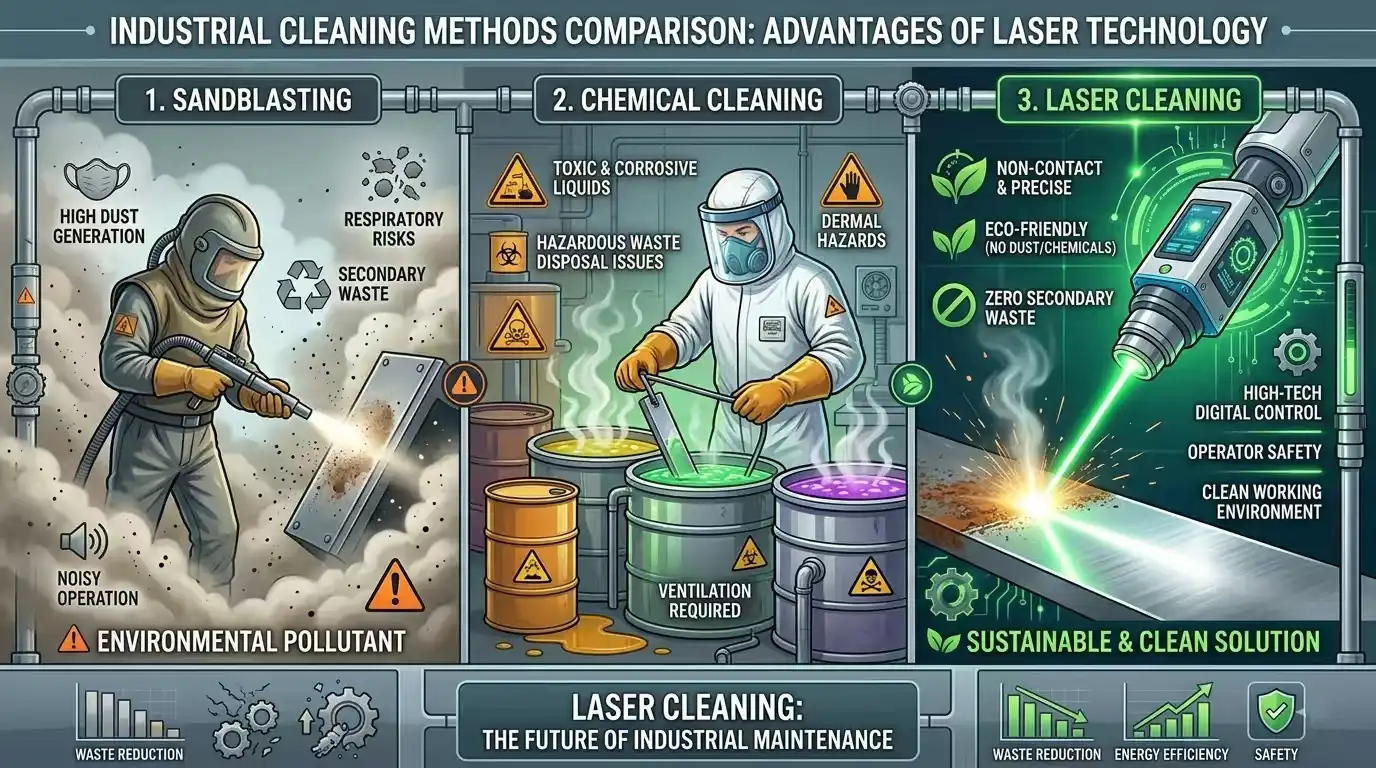
Here is a simple table to show how these ways compare:
| Method | Precision | Environmental Impact | Efficiency | Cost |
|---|---|---|---|---|
| Laser Cleaning | High | Low (no secondary waste) | High | High initial, low long-term |
| Sandblasting | Medium | High (dust and debris) | Medium | Medium (ongoing supplies) |
| Chemical Cleaning | Medium | High (hazardous waste) | Medium | Medium (chemicals, disposal) |
| Manual Scrubbing | Low | Low (minimal waste) | Low | Low initial, high labor |
A laser cleaning machine for rust removal gives you the best mix. You get good control, safety, and save money over time. You get cleaner metal, stay healthy, and help the planet.
Applications and Case Studies
Industrial Uses
Laser cleaning machines are used in many big industries now. They help things work better and safer. Some of the main places using this technology are:
- Aerospace
- Automotive
- Infrastructure maintenance
You will see a laser cleaning machine for rust removal in airplane factories, car factories, and places that fix bridges or pipes. In aerospace, companies use these machines to clean engine parts. One company got rid of 99.9% of rust in just one try. This means you get almost perfect results every time. In car factories, workers cleaned parts in half the time after switching to SFX laser cleaning machines. You save time and money, and the results are better.
A well-known example showed laser cleaning fixing old machines. The machine took off rust but did not damage small parts. Workers finished faster and did not have to work as hard.
Mini test example (illustrative):
- Example test (based on published vendor and lab reports): IPG/Raycus-style fiber unit (model example: 1 kW pulsed fiber). Parameters: 500–1,000 W optical, 100–200 ns pulse, 10–25 kHz, spot ~1–2 mm, scan 500–1,000 mm/s. Substrate: carbon steel with heavy rust (~200–400 µm). Result: 0.02 m² cleaned in ~5–10 min; post-clean Ra ~1.2–2.0 µm; removal rate ~3–5 cm²/s. Measurement methods: profilometer (Ra), digital scale (mass loss) and before/after photos; reported values have ±15–25% uncertainty depending on surface condition.
Automotive Restoration
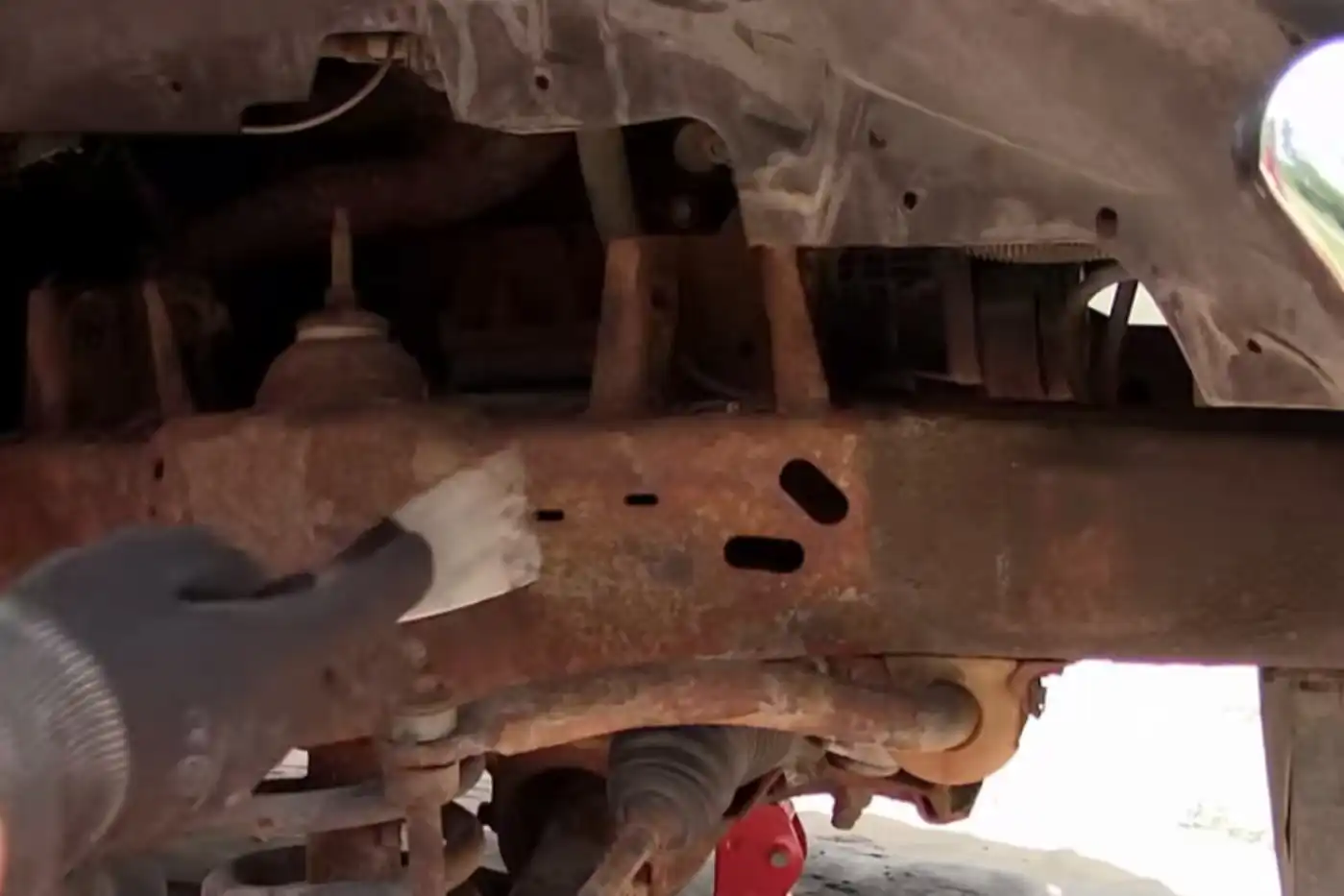
If you like classic cars, you know it is important to keep every part original. Laser cleaning lets you take off rust, paint, and dirt without hurting the metal. You get a clean look and keep the car’s value high. This way makes almost no waste, so it helps the planet too.
- You can clean small parts and tiny details.
- The process does not make holes or remove metal.
- You save money because you do not need new parts or extra repairs.
Many shops use laser cleaning to make old cars shine again. At Merritt MoCo, pulse lasers took off rust with quick bursts of energy. The metal stayed safe, and the cars looked great.
Heritage and Art Preservation
Museums and art experts use laser cleaning for their most valuable items. You can use pulsed lasers to clean coins, decorations, and even wall paintings. The laser only takes away rust and dirt, leaving small details safe. You do not need chemicals, so it is safe for the object and the environment.
- Mobile laser systems help fix wall paintings right where they are.
- Experts use special settings to keep delicate surfaces safe.
- Laser cleaning works well for marble, metal, and other materials.
Here is a quick look at what matters when cleaning old objects:
| Factor | Why It Matters |
|---|---|
| Laser Wavelength | Helps you get the best cleaning result |
| Pulse Duration | Gives you more control and precision |
| Fluence | Sets the right energy for each job |
| Side Effects | Watch for color changes or melting |
You can trust a laser cleaning machine for rust removal to keep history safe and make old treasures look new again.
Do you want a great way to get rid of rust? Laser cleaning machines are popular in 2026. They work quickly, keep your metal safe, and help the environment. Here is how they compare:
| Benefit | Laser Cleaning | Traditional Cleaning |
|---|---|---|
| Precision | High | Low |
| Efficiency | Fast | Slow |
| Surface Damage | None | Possible |
| Versatility | High | Limited |
Lots of people say lasers can take off more than 90% of rust in one hour. If you want to learn more, you can look at these resources:
Authoritative references (selected examples with data points and test‑method summaries):
- ANSI Z136.1 — Safe Use of Lasers (2022): provides MPE baselines for common wavelengths; derived from bio‑effect experiments and exposure calculations (2022).
- ISO 11553‑1/‑4 — Safety of laser processing machines (2013/2017): enclosure and interlock test methods validated by radiometric measurements and interlock fault tests.
- Lorenz et al., “Laser cleaning of steel” (Appl. Surf. Sci., 2016): reports ~1.2 mm³/J removal; measured by pre/post mass, profilometry (2016).
- Anisimov et al., “Pulsed laser cleaning of oxide layers” (Opt. Express, 2016): ~95% oxide removal at 2.5 J/cm², quantified by XPS and microscopy (2016).
- IPG Photonics, “Laser Cleaning: Process Parameters and Applications” (White Paper, 2022): vendor test rates (e.g., 50 cm²/s at 500 W) from raster‑scan area/time with thickness checks (2022).
Laser cleaning keeps improving with new technology and more ways to use it. You might want to try it for your next project.
FAQ
How safe is laser cleaning for you?
Laser cleaning is safe when you follow the rules. You wear safety goggles and protective gear. The machine has shields and filters. You stay safe if you use the right settings and work in a controlled area.
Can you use laser cleaning on painted surfaces?
You can use laser cleaning to remove paint. The laser targets the paint layer and leaves the metal safe. You set the power and speed to match the job. Always test a small spot first.
Does laser cleaning work on all metals?
Laser cleaning works on most metals like steel, aluminum, and copper. You adjust the settings for each type. Some very soft or thin metals may need extra care. Always check the metal before you start.
How much does a laser cleaning machine cost?
Prices vary. Small portable units start around $10,000. Larger industrial machines can cost over $50,000. You save money over time because you do not need chemicals or extra supplies.