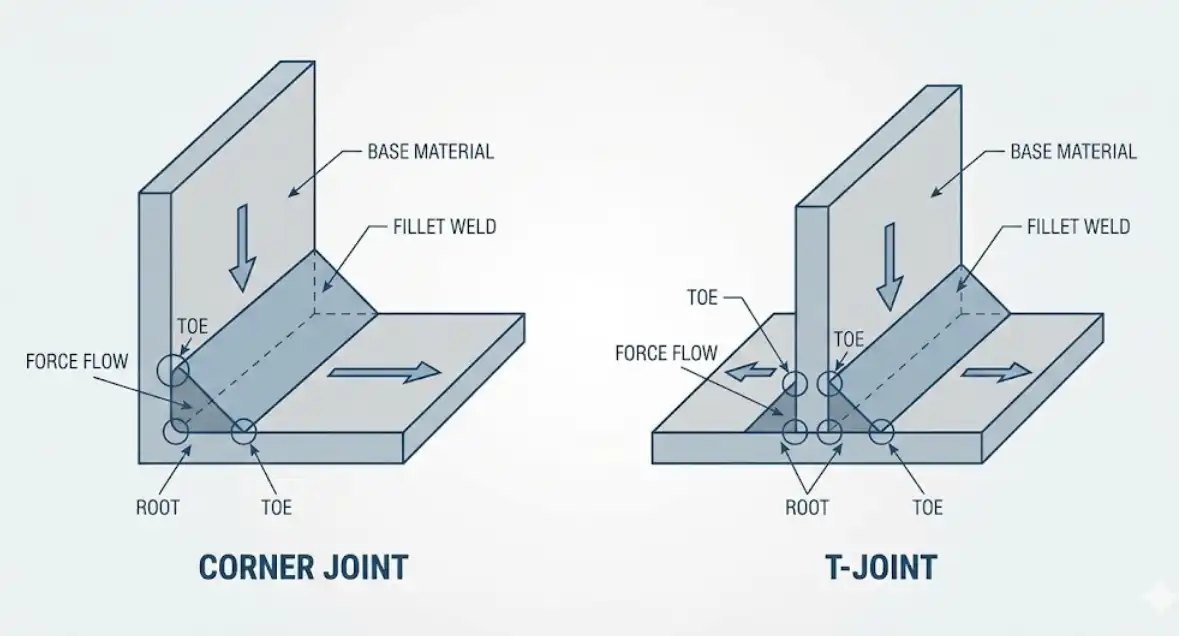
You need to know the main difference between a corner joint and a T-joint. A corner joint connects two pieces at a right angle, forming an L shape. A T-joint joins one piece to the middle of another, creating a T shape. Understanding these joints helps you build strong and durable welded structures.
- T-joints offer good mechanical strength, especially with welds on both sides.
- Corner joints are simple to make but need careful fit-up to avoid distortion.
Choosing the right joint type improves your project’s success.
Key Takeaways
- Understand the difference between corner joints and T-joints. Corner joints form an L shape, while T-joints create a T shape.
- Choose the right joint type for your project. Corner joints are great for frames, while T-joints are ideal for adding supports.
- Use appropriate welding methods for each joint. Fillet and groove welds work well for T-joints, while corner joints benefit from spot and edge welds.
- Always prepare your metal before welding. Clean the surfaces and check the fit to avoid weak spots in your joints.
- Consider the load and stress on your joints. This helps you select the best joint type and welding technique for durability.
Applicable standards & scope — read before applying
For design and acceptance criteria, refer to the relevant codes (for example, AWS D1.1 / D1.3 for structural and sheet‑steel work), drawing conventions (ISO 2553), weld quality levels (ISO 5817), and joint‑specific guidance such as ISO 14373 / IIW recommendations.
Typical applicability covers thin‑to‑medium gauge sheetwork (roughly 1–8 mm) and standard lap/butt joints; thicker sections or safety‑critical loads may need different rules. Always verify final criteria against local codes and a qualified engineer.
Key Differences
Joint Structure Comparison
You can see the main differences between a corner joint and a T-joint by looking at their shapes and how they handle force. The table below shows what makes each joint unique:
| Joint Type | Geometry Description | Load Distribution Description |
|---|---|---|
| Corner Joint | Formed by connecting two metal sheets at a right angle, either edge-to-edge or overlapping. | Used in boxes and frames, load spreads along the edges of the joint. |
| T-Joint | Formed by connecting the edge of one sheet to the surface of another at a right angle. | Used for internal stiffeners, load focuses at the junction, so it needs strong support. |
A corner joint creates an L-shape. You use it when you want to make frames or boxes. The load spreads out along the edges, which helps the structure stay strong. A T-joint forms a T-shape. You use it when you need to join a horizontal piece to a vertical one. The load gathers at the center, so you must make sure the weld is strong.
Tip: Always check the alignment before welding. Good alignment helps the joint carry weight better.
- Safety first: wear welding PPE — a standards-rated welding helmet or face shield, flame-resistant gloves and coveralls, steel‑toe boots, and hearing protection as needed.
- Ventilate and control fumes: ensure local or general exhaust; use NIOSH‑approved respirators if ventilation is inadequate or when welding hazardous metals.
- Fire prevention: clear combustibles, use noncombustible screens, keep an appropriate fire extinguisher nearby, and check for hidden flammables in cavities.
- Follow local codes and a written WPS: inspect equipment, confirm grounding, and ensure personnel are trained before starting.
Welding Styles
You can use different welding styles for each joint. The table below lists the most common welding styles for corner joints and T-joints:
| Joint Type | Welding Styles Used |
|---|---|
| Corner Joint | Spot, edge, fillet weld, V, J, U-groove weld, bevel-groove weld, corner-flange weld, flare-V-groove weld, square-groove or butt weld |
| T-Joint | Fillet, slot, plug weld, J-groove weld, flare bevel-groove weld, melt-through weld, bevel-groove weld |
For a corner joint, you often use spot welds or fillet welds. You can also use groove welds like V, J, or U-groove. These styles help you join the edges or corners tightly. For a T-joint, you usually use fillet welds, slot welds, or plug welds. These styles make the joint strong where the two pieces meet.
You can use different welding processes, such as TIG, MIG, or stick welding. TIG welding works well for corner joints because it gives you control and makes clean welds. MIG welding is good for both joint types and works fast. Stick welding is also an option, but it may not look as smooth as TIG.
Note: When you weld a T-joint, pay attention to fusion and porosity. For a corner joint, control the heat to avoid distortion and prepare the edges well.
You should also prepare the metal before welding. For a T-joint, bevel the vertical piece if it is thick. For a corner joint, bevel open corners and fit closed corners tightly. Use clamps to keep the pieces in place and make sure there are no gaps.
By understanding these differences, you can choose the right joint and welding style for your project.
Corner Joint and T-Joint Definitions
What Is a Corner Joint?
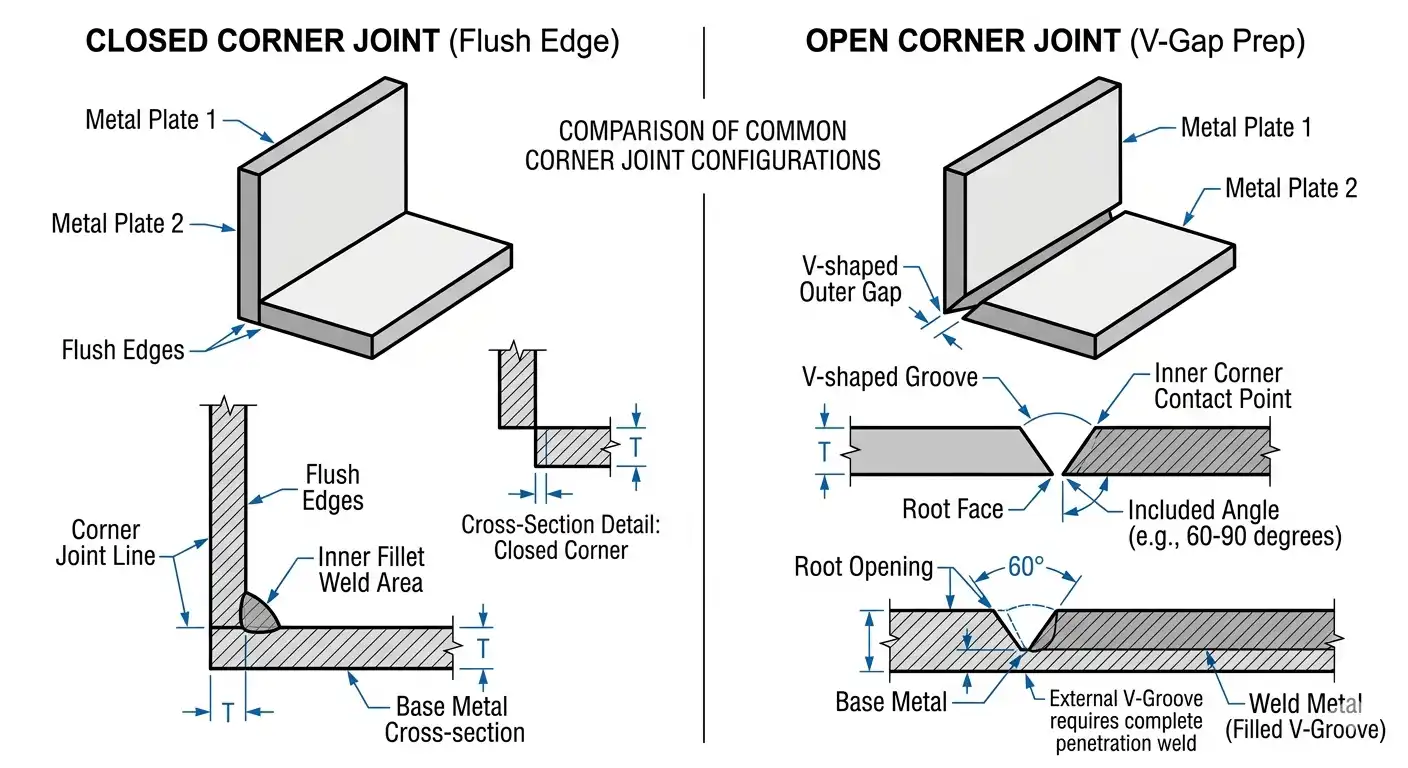
You create a corner joint when you connect two pieces of metal at a right angle. This forms an L shape. You often use this joint when building boxes, frames, or enclosures. There are two main types of corner joints. In a butt square corner joint, the ends of the metal pieces line up next to each other. In a V groove corner joint, only the tips touch, leaving a V-shaped gap between them. You can use different welding methods, such as fillet welds or groove welds, to make the joint strong.
A corner joint stands out because it forms an angle where two parts meet. You usually see this joint in projects that need square frames. The inside of the corner often gets a flat fillet weld for extra strength. The choice between an open or closed corner joint depends on how thick the material is and how much strength you need. In a closed corner joint, one edge sits flush with the other. In an open corner joint, the edges meet at the corner with a visible gap.
Tip: Always check the fit and alignment before welding a corner joint. Good preparation helps you avoid weak spots.
| Characteristic | Description |
|---|---|
| Shape | L shape at a right angle |
| Common Uses | Boxes, frames, enclosures |
| Types | Butt square, V groove, open, closed |
| Welding Methods | Fillet weld, groove weld |
What Is a T-Joint?
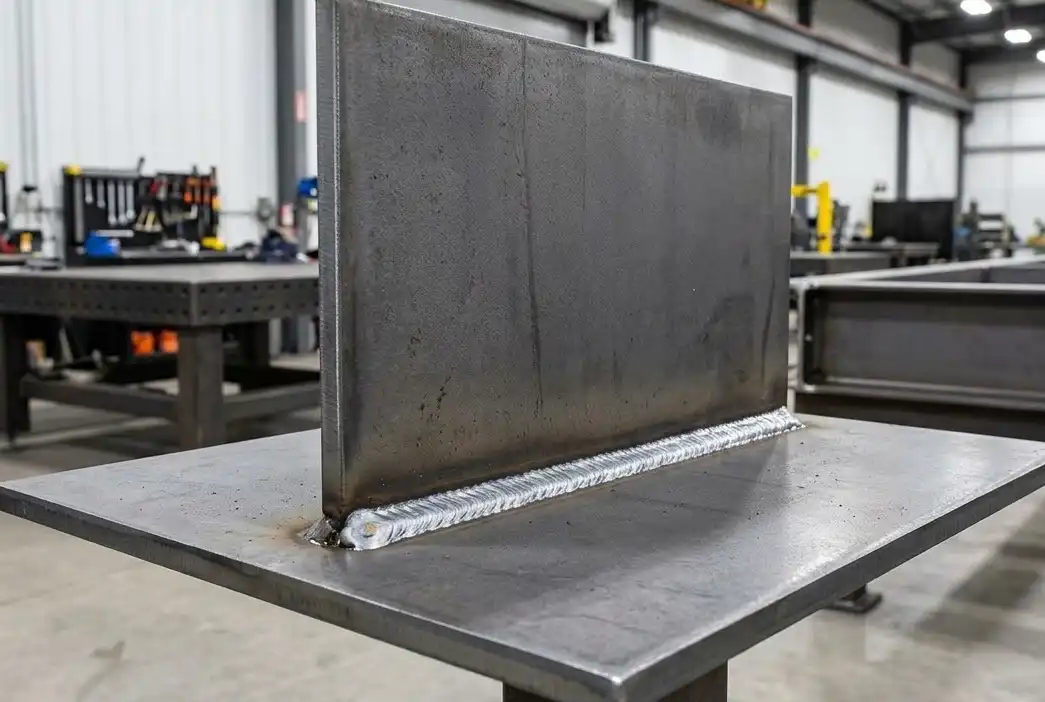
A T-joint, also called a tee joint, forms when you join the edge of one piece of metal to the surface of another at a 90-degree angle. This creates a T shape. You often use T-joints in construction and manufacturing. They help you connect different sizes and shapes of metal to build strong structures.
You can use several welding methods for T-joints. Fillet welds and groove welds are the most common. These welds can be partial or complete, depending on how much strength you need. T-joints work well for making frames, attaching stiffeners, or joining supports to flat surfaces.
- T-joint forms a T shape at a right angle.
- You use it to join one piece to the middle of another.
- Common welding methods include fillet and groove welds.
Note: Always make sure the weld penetrates both pieces fully. This gives your T-joint the strength it needs.
Applications & Use Cases
Corner Joint Uses
A corner joint is used to build boxes and frames. It helps connect two metal pieces at a right angle. This makes strong corners for many projects. You see this joint in cabinets and metal furniture. It is also used in electrical boxes. When you need a square or rectangle, this joint works well.
There are different ways to weld a corner joint. The table below shows some common methods and how they work:
| Welding Technique | Description |
|---|---|
| MIG Welding | Uses .035-inch wire. Open corners need groove welds. Closed corners need edge sealing. |
| Stick Welding | E6013 is good for thin metal. E7018 works better for thick metal. |
| TIG Welding | Makes clean welds in closed corners. Welds are almost invisible. |
Before welding, clean the metal and check the fit. For open corners, you may need to bevel the edges. For closed corners, make sure the edges touch tightly. Good preparation helps avoid weak spots. It also makes the joint stronger.
Tip: Use clamps to hold the pieces together. This keeps the joint straight and helps you make a neat weld.
T-Joint Uses
A T-joint joins one piece of metal to the middle of another. It connects them at a right angle. This joint is used in construction and machinery. You also see it in aircraft. T-joints are found in frameworks and heavy equipment. They help add stiffeners or supports to flat surfaces.
The table below shows where T-joints are used:
| Application | Description |
|---|---|
| Structural frameworks | Used in building and construction |
| Heavy equipment manufacturing | Needed for machinery assembly |
| Aerospace components | Important for aircraft structures |
You can weld T-joints in different ways. Fillet welds are strong and easy to use. Plug and slot welds help spread stress and add stability. Groove welds work well for thick metal. Surface welds add extra strength.
Here is a quick look at welding methods for T-joints:
| Welding Technique | Description | Applications |
|---|---|---|
| Fillet welds | Strong and easy to use | Construction, equipment |
| Plug welds | Spreads stress evenly | Strong connections |
| Groove welds | Deep penetration | Critical projects |
| Spot welding | Fast, for thin metal | Automotive, sheet metal |
Always clean the metal before welding. Check the alignment of the pieces. For thick metal, bevel the edges for better welds.
Note: T-joints often need more filler material. Careful welding is important. This can make projects cost more, especially when strength matters.
Strengths & Selection
Corner Joint Advantages
A corner joint makes frames, boxes, and enclosures strong and steady. You can pick from different ways to put it together, like V-groove or square butt joints. This joint is good because it stays stable and keeps its shape. People use it in buildings where looks and strength are both important. The table below shows how each assembly method changes the strength and what materials you can use:
| Weld type | Typical “a” (leg) or size | Groove / bevel form & key dims | Material thickness range | Heat input / deformation risk |
|---|---|---|---|---|
| Fillet (corner) | a ≈ 3–6 mm (min per AWS; scale with thickness) | No bevel; fillet throat = 0.7×a | ≤6 mm up to 12 mm | Low-to-moderate heat; high distortion risk on thin sheet; use stitch welds or clamps |
| Single V / bevel groove | Root gap 1–4 mm; bevel ≈25–30° per side | V or single-bevel; land 0–2 mm | 10–20 mm | Higher heat input; use balanced passes and preheat to reduce lack-of-fusion |
| Double V / J / U groove | Root gap 1–4 mm; J/U radius 6–8 mm | Double-sided V, J or U to reduce filler | >20 mm | High heat required; multi-pass with interpass temp control to limit distortion |
Notes: choose fillet leg (a) by design loads and AWS minimums; test welds on scrap to verify heat input and distortion control. For thin materials, minimize dwell and use clamping/peening to control warpage.
Corner joints do well when you put pressure on them. They help you make things that need to be strong and look nice.
Tip: Clamp your pieces and tack weld them first. This stops gaps and heat from bending your joint.
T-Joint Advantages
T-joints move loads like bending, shear, and compression. You can use them in boats, buildings, and machines. T-joints are simple to design and do not need much edge work. This makes your job faster and easier. The table below lists the main good points:
| Advantage | Description |
|---|---|
| Strength | Transfers flexural, shear, and compression loads for reliable structures |
| Ease of Fabrication | Simple design and minimal edge prep for quick assembly |
| Mechanical Performance | Shear strength of welds supports durability under heavy loads |
- T-joints work well when stress comes from two directions.
- You can make them even better by picking the right weld.
Choosing the Right Joint
You should think about a few things before you pick a corner joint or a T-joint. Think about what kind of stress your weld will face, like pulling, pushing, or sliding. Think about how the joint will look if you want to paint or coat it. Check if you can reach the joint easily for welding. The thickness of your metal matters too. Thicker metal might need stronger welding. The table below shows how thick your material is and how easy it is to reach the joint:
| Material Thickness | Welding Technique Needed |
|---|---|
| Thicker Materials | More powerful processes like arc welding |
| Thinner Sheets | Laser welding or lighter techniques |
| Joint Accessibility | Impact on Joint Type Selection |
|---|---|
| Limited Access | Simpler joints like T-joints |
| Direct Access | Allows for more complex joints |
Note: Always look at industry rules and codes. These help you pick the right joint for safety, strength, and lasting power.
You now know the key differences between corner joints and T-joints. The table below helps you compare them:
| Feature | Corner Joints | T-Joints |
|---|---|---|
| Shape | L shape | T shape |
| Welding Angle | 90-degree angle | 90-degree angle |
| Typical Applications | Frames, thin or medium sheet metal | Structural tasks needing strength |
| Configuration Types | Closed, half-open, fully open | Not specified |
Choosing the right joint matters. You keep your welds strong and your projects safe. You also make your work look professional and finish faster.
Checklist for Joint Selection:
- Check your material type and thickness.
- Match the joint to your project needs.
- Pick a welding pattern that fits the joint.
- Prepare edges and align parts well.
- Make sure you have the right tools and skills.
Tip: Always test your setup before final welding. This helps you avoid mistakes and get the best results.
FAQ
What is the main difference between a corner joint and a T-joint?
You create a corner joint by joining two pieces at a right angle to form an L shape. You make a T-joint by attaching one piece to the center of another, forming a T shape.
What welding methods work best for corner joints?
You can use fillet welds, groove welds, or spot welds for corner joints. TIG welding gives you clean results. MIG welding works fast and suits most projects.
What projects use T-joints most often?
You find T-joints in construction, machinery, and metal frameworks. You use them to add stiffeners, supports, or connect flat surfaces in strong structures.
What should you check before welding a joint?
Always clean the metal. Check the fit and alignment. Use clamps to hold pieces steady. Good preparation helps you avoid weak spots and makes your weld strong.
What makes a joint strong and durable?
| Factor | Why It Matters |
|---|---|
| Good fit-up | Prevents gaps |
| Proper welding | Ensures full fusion |
| Clean metal | Reduces defects |
You get strong joints by preparing well and using the right welding technique.
References and standards
For verifiable guidance and procedure references, consult the following authoritative sources: AWS D1.1/D1.1M — Structural Welding Code — Steel (American Welding Society) [1]; AWS D1.3/D1.3M — Structural Welding Code — Sheet Steel [2]; ISO 2553 — Welding symbols on drawings and ISO 9692 — Welding joint preparation (ISO catalogue entries) [3]; and manufacturer WPS/application notes (e.g., Lincoln Electric or Miller Welding procedure examples) for practical WPS templates [4].
- [1] https://pubs.aws.org/p/2264/d11d11m2025-structural-welding-code-steel
- [2] https://pubs.aws.org/p/1763/d13d13m2018-structural-welding-code-sheet-steel
- [3] https://www.iso.org/ (search ISO 2553, ISO 9692)
- [4] https://www.lincolnelectric.com/ or https://www.millerwelds.com/ (manufacturer WPS/app notes)