

7 Steps to Buy a Laser Cleaning Machine From China
Buying directly from China can widen your choice and reduce acquisition cost, but the safe route is not “find the lowest price.” It is a controlled process: define the job, verify the company, prove the result, freeze the build, protect the payment, inspect the machine and plan the import.
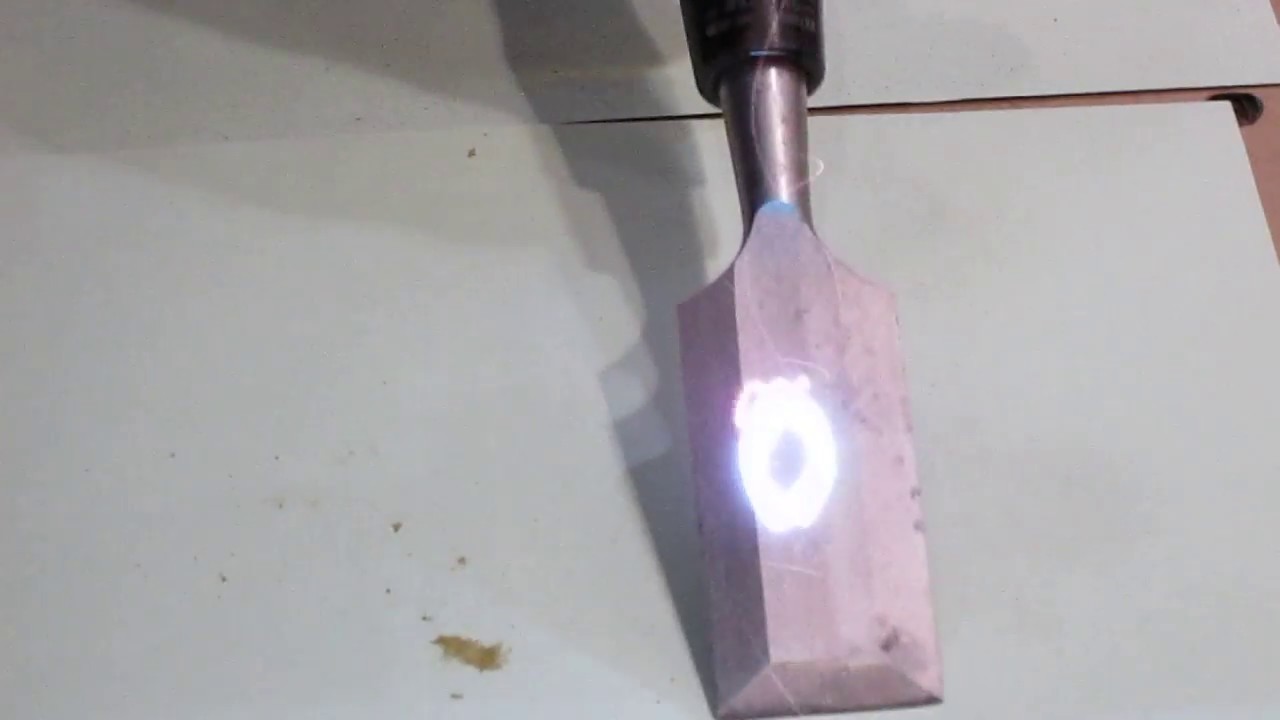
Demonstration frame: Laser Photonics, CC BY 3.0 via Wikimedia Commons.
Can you safely buy a laser cleaning machine from China?
Yes—if the purchase is evidence-led. China has a broad ecosystem of laser-source makers, integrators, motion suppliers and export manufacturers. That gives buyers more configurations to compare, but the outside cabinet does not prove the machine inside. A safe purchase is built around a written application specification, a sample test on the real workpiece, a contract BOM, destination-market compliance evidence, pre-shipment acceptance and a service plan that identifies who pays for parts and freight.
Do not let a platform badge, a polished video or a low quote replace legal-entity checks, technical evidence and a machine-specific inspection.
Machine power is a response to the application—not the first decision.
The company on the license, contract, invoice and payment account should align.
Model numbers, serial evidence and test results belong in the PO or contract.
Requirements vary by destination and can affect clearance, use and insurance.
What this guide covers
Define the cleaning job and the acceptance standard
The fastest way to buy the wrong laser cleaner is to ask only for “a 1500 W machine.” Suppliers cannot select a stable process until they know what must be removed, what must remain undamaged and how success will be measured.
Write an application brief before requesting quotes
Describe the base material, contamination, part geometry, cleaning area, current method, required surface condition and production target. Include photographs with a scale, representative samples and any downstream process such as painting, adhesive bonding or welding. State whether the surface may show heat tint, texture change or profile alteration.
For production planning, separate laser-on cleaning speed from delivered output. Handling, repositioning, extraction, inspection, edge work and rework can dominate a shift even when the demonstration video looks fast.
“Clean” is not a test method. Better criteria include residual coating percentage, substrate roughness limit, color change, salt or contamination test, adhesion result, cleaned area per hour and maximum rework.
Material grade, thickness, size, mass, geometry and heat sensitivity.
Rust, paint, oxide, oil, release agent, thickness and variability.
Visual finish, residue limit, substrate protection and downstream process.
Area or parts per shift, takt time, duty cycle and changeovers.
Voltage, phase, frequency, outlet, generator, air and cooling conditions.
Enclosure, access control, reflection risk, extraction and operator training.
Choose pulsed or CW, then define the complete machine
Laser output power is only one line in the specification. The buying decision also includes pulse behavior, beam delivery, scanning head, cooling, software, extraction, electrical supply, guarding and how long the machine must operate continuously.
Prioritize process control and substrate protection
Pulsed systems are commonly considered for precision cleaning, molds, thin parts, selective oxide removal and jobs where thermal input must be controlled. Compare average power together with pulse energy, frequency range, pulse width, scan pattern and the verified result on your part.
- Ask for the laser-source model and its official datasheet.
- Confirm whether pulse width is fixed or adjustable.
- Record frequency, scan width, speed and number of passes in the sample report.
- Evaluate surface change, not only removal speed.
Prioritize throughput, thermal management and duty cycle
Continuous-wave systems are often evaluated for larger steel areas, heavy corrosion and coating removal where production rate matters. A high-power result still depends on travel technique, overlap, extraction, cooling capacity and whether the substrate can tolerate the heat input.
- Confirm continuous-duty conditions and chiller rating.
- Match the mains supply, connector and protection to the installation site.
- Test distortion, heat tint and surface profile on representative thickness.
- Measure delivered area per hour including handling and inspection.
Two machines with the same nominal watts can produce different results because the source, beam quality, pulse format, optics, scan field, focus, software limits and cooling architecture differ.
Confirm who the supplier is—and what it can actually manufacture
A marketplace storefront is not the legal entity that receives your money. Verify the company name, registration, business scope, address, bank beneficiary and factory capability before discussing a deposit.

Use four independent checks
1. Official registration. Search the Chinese legal name or Unified Social Credit Code in the National Enterprise Credit Information Publicity System. The official system can show registration, annual reports, administrative licenses, penalties and abnormal-operation records. Treat it as one check—not a guarantee of product quality.
2. Directed live video. Ask to see the entrance sign, production floor, test area, current orders, nameplates and the exact model family. Direct the camera in real time. A supplier can be a capable trading company, but it should state that role honestly and identify who builds and services the machine.
3. Bank-account match. The beneficiary should match the contracting entity or have a documented relationship. Never send a commercial deposit to a personal account. Independently verify any last-minute bank change using a known phone number.
4. Independent audit or inspection. For a higher-value or repeat purchase, appoint an auditor or inspection company whose scope you control. Ask it to verify the business identity, production capability, quality records and the specific machine—not merely produce a generic supplier report.
Age, capital and manufacturing scope are useful context, but none proves the machine meets your application. Combine official records with live evidence, sample results, contractual controls and an inspection.
Run a controlled sample test and freeze the BOM
A spectacular demonstration on easy rust is not evidence for your project. Send representative parts, use written acceptance criteria and require a report that connects the result to the exact machine configuration being quoted.
Make every shortlisted supplier run the same test
Give each supplier the same sample, cleaned area, result criteria and reporting format. Ask for continuous video from the identification of the sample through cleaning and final inspection. The report should record machine model, source model, average power, frequency or pulse settings, scan width, travel technique, passes and measured time.
Evaluate the substrate under suitable lighting and, where the application requires it, with roughness, adhesion, residue, microscopy or other agreed tests. Keep one untreated control area. If the result will be used before welding, painting or bonding, validate the downstream process rather than assuming a visually bright surface is acceptable.
The purchase specification should identify the source, cleaning head, controller, cooling, cable length, extraction, safety equipment, software and accessories used to produce the accepted sample.
Example process video: Laser Photonics; archived on Wikimedia Commons under CC BY 3.0. A purchase decision still requires testing on the buyer's real part.
Bill of materials lines that should not stay vague
| Subsystem | Write into the quotation or contract | Evidence before shipment |
|---|---|---|
| Laser source | Manufacturer, exact model, rated output, pulse format where relevant, new condition and warranty | Nameplate and serial photograph; datasheet; measured output or agreed functional test |
| Cleaning head | Model, scan width, pattern capability, focus arrangement, protective window and cable length | Head label; operation video; spare protective optics list |
| Cooling | Air- or water-cooled architecture, chiller model, coolant specification and ambient limits | Chiller nameplate; temperature stability during FAT; maintenance instructions |
| Controller / software | Controller model, interface language, parameter access, software version and update policy | Screen recording; backup parameters; license or activation requirements |
| Electrical | Voltage, phase, frequency, plug or connector, rated input, breaker and earthing requirements | Electrical nameplate; wiring diagram; protective-device test |
| Safety | Key control, emergency stop, interlocks, warning, enclosure or controlled-area provisions | Functional safety test; labels; manuals; applicable declarations and reports |
| Included scope | Extraction, eyewear, spare lenses, tools, training, packaging, documentation and freight boundary | Packing list matched to the machine and commercial invoice |
Is this supplier ready for a purchase order?
Score evidence—not promises. Choose the closest status for each area. The result is a planning aid for prioritizing due diligence; it does not replace a legal, technical, financial or regulatory review.
Calculating…
Your result will update as you change the evidence level.
Calculate landed cost and verify destination-market compliance
An FOB machine price is not the purchase cost. Normalize every quote to the same included equipment, Incoterm, freight boundary, import charges, local delivery, electrical work, extraction, safety controls, commissioning and production acceptance.
| Cost layer | What to request | Common omission |
|---|---|---|
| Machine scope | Exact BOM, accessories, extraction, spares, documentation and training | Quotes that use the same model name but include different heads, chillers or safety equipment |
| Export logistics | Crating, inland China transport, export clearance, terminal and document charges | “FOB price” without a named port or without clarity on export-side charges |
| International freight | Mode, route, cargo dimensions, insurance, transit window and free-time assumptions | Destination terminal handling, demurrage, detention or insurance limitations |
| Import | HS classification review, duty, trade remedies, taxes, broker, bond and agency requirements | Using another buyer's tariff rate or assuming DDP transfers importer responsibility |
| Site readiness | Voltage, phase, breaker, transformer, extraction, guarding, interlock and controlled area | Comparing the machine price while ignoring the safe installed system |
| Ramp-up | Commissioning, travel, training, trial production, consumables and initial spares | Production delay while waiting for a lens, pump, cable or translated parameter support |
Classification and trade measures depend on the exact machine, origin, destination and current rules. U.S. importers remain responsible for accurate entry information even when they use a broker; FDA may also review imported laser products. EU importers should check tariff, VAT, product and customs requirements through Access2Markets and competent national authorities.
Incoterms clarify delivery responsibilities—not product compliance
Can give the buyer greater control of main carriage. FOB is for maritime transport; for containerized cargo, discuss whether FCA better matches the physical handover. Always name the exact place or port.
The seller arranges carriage and insurance to the named destination under different insurance requirements. They do not mean that import duty, local delivery or installation is automatically included.
Can look simple, but the buyer must still identify the importer of record, declared value, product compliance and the party responsible for customs problems. Do not accept under-declaration.

Ask the broker before the crate leaves China
Send the technical description, commercial invoice draft, packing dimensions, origin and compliance documents to a qualified customs broker or import specialist before shipment. For the United States, laser products can fall within FDA radiation-emitting product controls in addition to CBP entry requirements. For the EU, imported machinery must meet the same applicable product requirements as EU-produced machinery.
The safest plan identifies the importer of record, tariff classification, required declarations, product identifiers, manufacturer information and port documents while the supplier can still correct them. A low-cost machine held for missing or mismatched records is not a low-cost machine.
Control the contract, payment milestones and factory acceptance test
The contract should make the accepted sample, final machine and payment release part of one chain. A pro forma invoice is rarely enough for a machine with application-specific performance and destination compliance requirements.
Connect money to completed evidence
- Pay only the named legal entity under the signed agreement.
- Use staged payments appropriate to the transaction and risk.
- Make the final production payment conditional on an agreed FAT or inspection result.
- State the named Incoterm place, delivery date, packaging, document set and remedies.
- Use qualified legal and trade advice for governing law, arbitration, language and enforceability.
Define pass, fail and correction
- Attach the technical specification, BOM and sample-test acceptance record.
- Control substitutions in writing; “equivalent” is not a model number.
- List FAT tests, instruments, tolerances, witnesses and report format.
- Define whether a failed item is repaired, replaced, retested or rejected.
- Require serial and packing evidence before the crate is sealed.
A 30/70 structure is common in machinery discussions, but it is not automatically safe. The important control is what evidence unlocks each milestone, who verifies it and what happens if the machine fails.
Plan shipping, commissioning, training, spares and warranty support
A remote supplier can support an industrial machine effectively only when responsibilities, communication paths, spare strategy and diagnostic evidence are defined before shipment.
Utilities, installation, parameter loading, safety checks, trial part and production handover.
Start-up, shutdown, parameter limits, optics care, alarms, water quality and safe work controls.
Protective optics, seals, filters, nozzle or window parts, approved coolant items and critical local-stock components.
Coverage, exclusions, diagnostics, labor, freight, customs, response time and replacement process.
Know whether the post-sale contact is sales, an application engineer or a service technician. Test the escalation path before final acceptance.
Require wiring diagrams, alarm list, controller backups, software version, parameter record and safe remote-access rules.
A description such as “protective lens” is insufficient. Record dimensions, coating, specification, quantity and reorder channel.
A free warranty part can still create downtime and customs charges. State who pays shipment, duty, labor and return freight.
Red flags when sourcing a laser cleaner from China
One issue may be correctable. Several together indicate that the supplier is asking you to carry risks it will not document or control.
Quote is far below comparable scope
First normalize source, head, cooling, safety, extraction, warranty, freight boundary and taxes. A low number may simply exclude the expensive lines.
Company identity keeps changing
The storefront, contract, invoice and bank beneficiary use different names without a documented legal relationship.
Only a generic cleaning video
The supplier will not test your part, reveal parameters or agree to a measurable acceptance condition.
“CE / FDA approved” without model evidence
A logo or isolated certificate is not a technical file, declaration, product report or proof that the quoted model meets destination requirements.
Substitutions are unrestricted
The supplier can replace the source, head, controller or chiller with an “equivalent” after the sample is accepted.
Balance due before any inspection
The buyer has no meaningful commercial leverage if the FAT fails or serial evidence does not match the contract.
Documentation arrives after shipment
Import, safety, electrical and operating documents should be reviewed while corrections are still possible.
Warranty says only “lifetime support”
No covered parts, exclusions, freight responsibility, response time, labor or escalation process is defined.
Unsafe demonstration behavior
No controlled area, reflected-beam planning, extraction or credible protective controls suggests weak laser-safety discipline.
Laser cleaner FAT and pre-shipment checklist
Write the test method and acceptance limits into the contract. A third-party inspector can witness the work, but the buyer or technical adviser should define the laser-specific scope.
| Inspection line | Minimum evidence | Buyer decision |
|---|---|---|
| Identity and configuration | Machine nameplate; laser source, head, chiller and controller models; serial photographs; BOM match | No uncontrolled substitutions |
| Output and function | Agreed output or performance check, stable operation and alarm review using identified instruments | Meets contract method and tolerance |
| Accepted sample | Repeat the agreed cleaning condition on the buyer's sample or controlled equivalent | Result and rate meet written acceptance |
| Duty and cooling | Run for the agreed period and load while logging temperatures, alarms and leakage | No abnormal trips or drift |
| Safety functions | Emergency stop, key control, interlocks, warnings and emission termination tested to the specified design | Functions correctly and documentation matches |
| Electrical | Rated input, voltage/phase/frequency, wiring, earthing, connector and protective requirements verified | Compatible with installation plan |
| Documents | Manuals, diagrams, declarations, reports, packing list, software backup and maintenance schedule | Correct model and required language |
| Packing | Moisture protection, blocking, accessory inventory, crate marks, mass, dimensions and condition photos | Suitable for agreed transport route |
Exact tests and tolerances must match the machine architecture and contract. IEC 60825-1 addresses laser-product classification and requirements; ISO 11553-1 addresses laser-processing-machine safety requirements in addition to IEC 60825.
Send suppliers the same RFQ
A normalized request makes omissions visible and prevents each supplier from quoting a different machine.
LASER CLEANING MACHINE RFQ

1. Buyer / destination
- Final destination country and installation address:
- Required delivery date:
- Preferred Incoterm and named place:

2. Application
- Base material, grade and thickness:
- Contaminant / coating and approximate thickness:
- Part dimensions and geometry:
- Required surface result and prohibited substrate change:
- Required area or parts per shift:
- Downstream process and acceptance method:

3. Machine and site
- Supplier-recommended pulsed or CW route with technical reason:
- Required voltage / phase / frequency:
- Ambient and duty conditions:
- Cleaning head, scan width, cable length and extraction:
- Safety architecture and applicable destination-market documents:

4. Evidence required with quotation
- Exact source, head, controller and cooling models:
- Complete included / excluded scope:
- Sample-test plan and report format:
- Lead time, warranty, spares, training and response times:
- Packing dimensions and gross weight:

5. Contract acceptance
- Agreed sample result:
- FAT test list, instruments and tolerances:
- Serial / BOM evidence:
- Inspection trigger for payment milestone:
- Required manuals, diagrams, declarations and import documents:
Move from research to a verified requirement
Use these tools in order: confirm that laser cleaning fits the job, compare process routes, estimate capacity and then validate the result on the real part.
Laser Cleaning Feasibility Checker
Assess substrate, contaminant, surface sensitivity and likely process direction before comparing machine quotes.
Check application fit →Pulsed vs CW Comparison
Compare precision, thermal input, area, contamination and throughput priorities.
Compare the two routes →Cleaning Efficiency Calculator
Translate scan width, speed, overlap and passes into an early area-rate estimate.
Estimate cleaning output →Shift Output Planner
Deduct handling, changeover, inspection, maintenance and rework from theoretical capacity.
Plan shift capacity →Laser vs Sandblasting Savings
Compare labor, equipment, power, abrasive, containment, cleanup and disposal assumptions.
Compare operating cost →Sample Testing
Provide the part, contamination and target result so a process route can be validated before purchase.
Plan a sample test →Let Oceanplayer review the application before you compare quotes
Send the material, contamination, photos, cleaning area, production target and site power. We can help identify a realistic pulsed or CW direction, sample-test plan and machine scope for supplier comparison.
- Base material and thickness
- Rust, paint, oxide or contamination
- Part size, photos and difficult areas
- Required finish and substrate limits
- Area or parts per shift
- Country, voltage and installation environment
Buying a laser cleaning machine from China: FAQ
Is it safe to buy a laser cleaning machine from China?
It can be safe when the buyer verifies the legal entity, tests the real application, freezes the component list, confirms destination-market requirements, ties payment to inspection evidence and plans commissioning and support. Country of origin alone does not determine quality; evidence and contract control do.
Should I buy from a manufacturer or a trading company?
A capable manufacturer may offer deeper engineering access, while a competent trading or export company may provide stronger language, logistics or multi-brand support. The key is transparency. Know who builds the machine, who owns the warranty, who receives payment and who can solve a technical problem.
How do I verify a Chinese laser-cleaner supplier?
Check the Chinese legal name or Unified Social Credit Code in the National Enterprise Credit Information Publicity System, compare the registered entity with the contract and bank beneficiary, conduct a directed live walkthrough and use an independent audit or inspection where the transaction risk justifies it.
What is the best wattage for a laser cleaning machine?
There is no universal best wattage. Material, contaminant, coating thickness, heat sensitivity, geometry, required finish, area and duty cycle determine the route. Compare pulsed and CW behavior first, then validate power and parameters with a sample test.
What documents should I request before importing a laser cleaner?
Request model-specific manuals, wiring diagrams, nameplates, packing list, commercial invoice, origin and transport documents, safety information, applicable declarations, test reports, manufacturer identifiers and any destination-specific radiation-product records. Confirm the exact list with your broker and competent authorities.
Does a CE certificate prove a laser cleaner can enter the EU?
No single certificate or sticker proves complete compliance. CE marking is the manufacturer's declaration that the product meets applicable EU requirements. The relevant conformity procedure, technical documentation, declaration of conformity, instructions and importer obligations depend on the product and legislation. Review model-matched documents with qualified EU compliance support.
Do industrial laser cleaners need FDA review in the United States?
Laser products are radiation-emitting electronic products. FDA states that import review can verify the manufacturer, model designation, report accession number and other applicable requirements; products subject to a federal performance standard may require Form FDA 2877 at entry. Confirm the exact product code and documentation before shipment.
Which Incoterm is best for buying from China?
No term is best for every buyer. The correct choice depends on transport mode, forwarder capability, insurance, customs control and risk. Use the ICC Incoterms 2020 rule plus a precise named place. Remember that Incoterms allocate delivery responsibilities; they do not determine product quality, payment security or regulatory compliance.
How should I structure payment?
Use milestones proportionate to the risk and tie later payments to specific evidence such as completed build, accepted FAT, independent inspection, serial/BOM verification and shipping documents. Never send commercial payment to an unexplained personal or unrelated account. For high-value deals, obtain banking and legal advice on safer instruments.
What spare parts should be ordered with the machine?
Start with model-specific protective optics, seals, filters, approved coolant or water-treatment items and any small component that can stop production. Ask for exact part numbers, replacement instructions, storage conditions, local availability and a critical-spare recommendation based on lead time.
Sources used for this guide
- State Administration for Market Regulation — National Enterprise Credit Information Publicity System, enterprise registration and credit-information search.
- National Enterprise Credit Information Publicity System — official use guide, system scope and query method.
- IEC 60825-1:2014 — Safety of laser products, equipment classification and requirements.
- ISO 11553-1:2020 — Safety of machinery, laser processing machines, confirmed current in 2025.
- U.S. FDA — Importing Radiation-Emitting Electronic Products, entry review, reporting and Form FDA 2877 information.
- U.S. Customs and Border Protection — using a customs broker, including importer responsibility.
- U.S. Customs and Border Protection — Harmonized Tariff Schedule general information.
- International Chamber of Commerce — Incoterms 2020, cost, risk and obligation allocation.
- European Union — CE marking requirements and declaration of conformity.
- EUR-Lex — Machinery Directive 2006/42/EC, applicable until the Machinery Regulation transition.
- European Commission Access2Markets — guide for import of goods, duties, VAT, product requirements and customs documents.
- Laser Photonics — handheld rust-cleaning video, CC BY 3.0 via Wikimedia Commons.
Regulations, tariffs and trade measures change. References were reviewed July 22, 2026. Confirm current requirements for the exact model and destination before ordering or shipping.