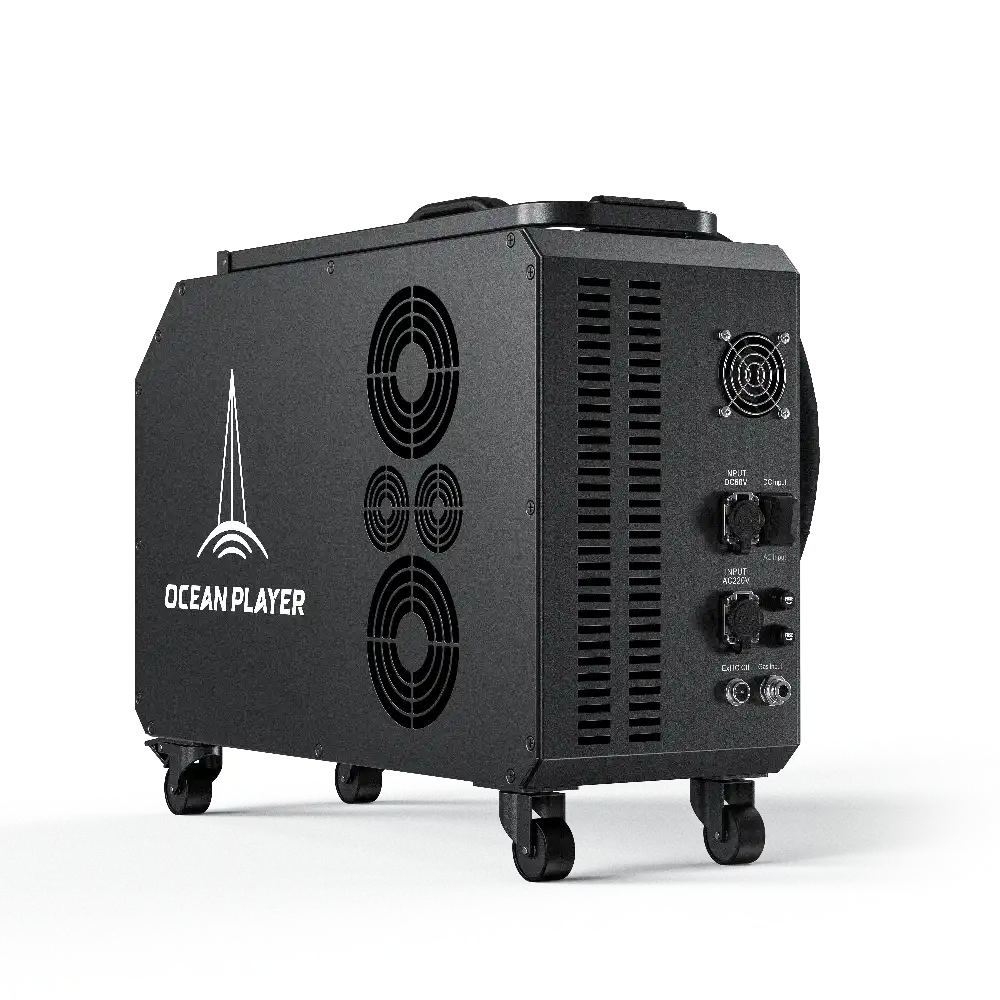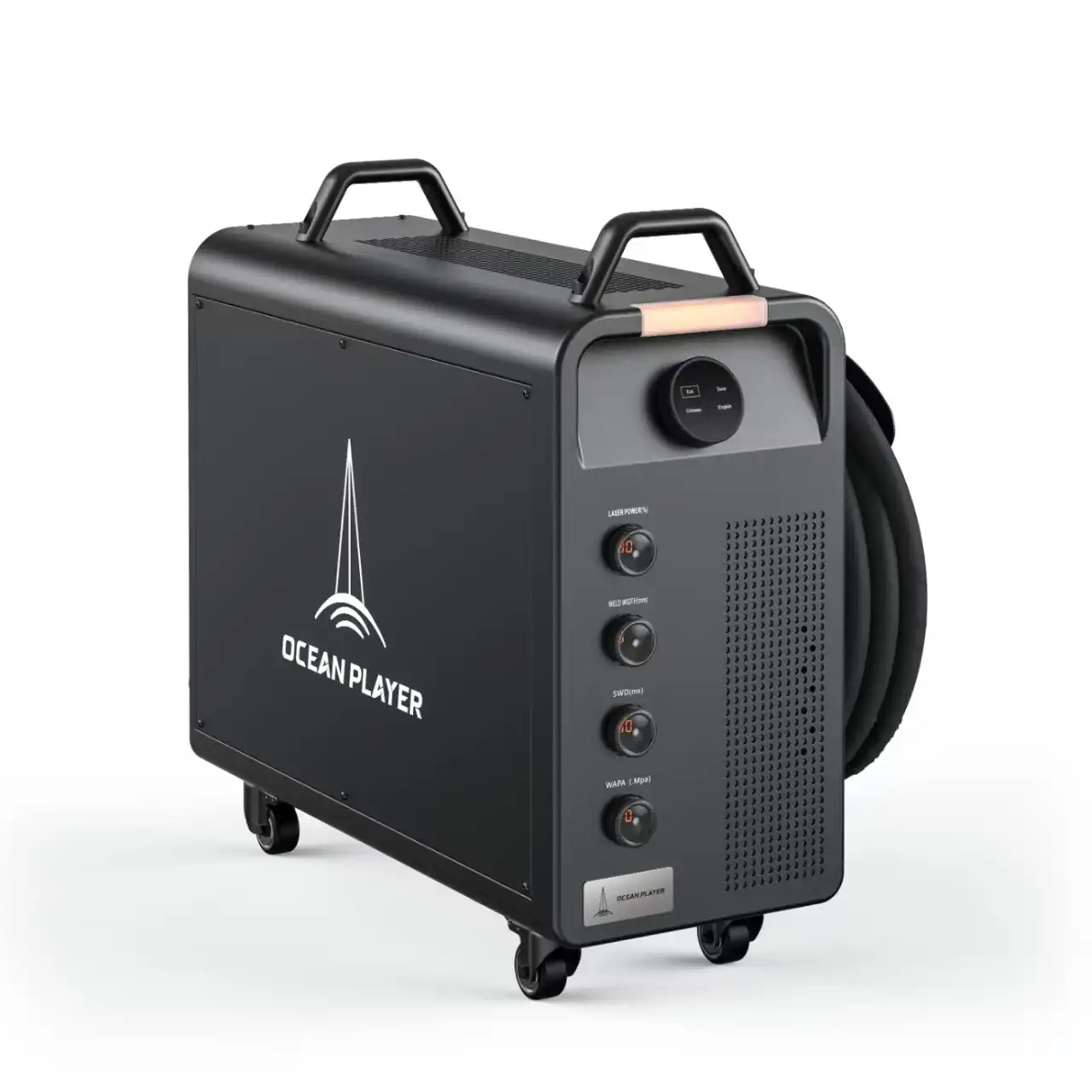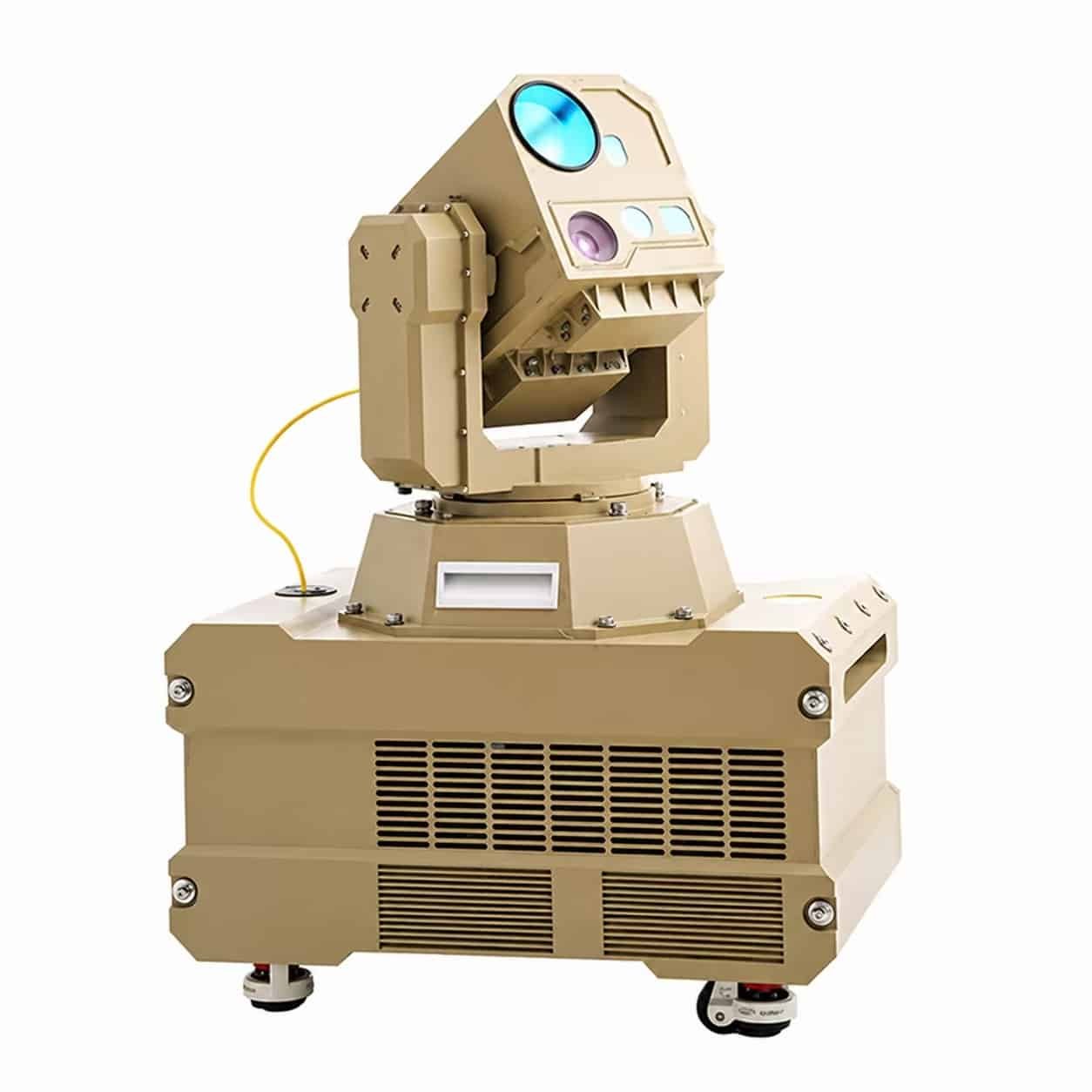
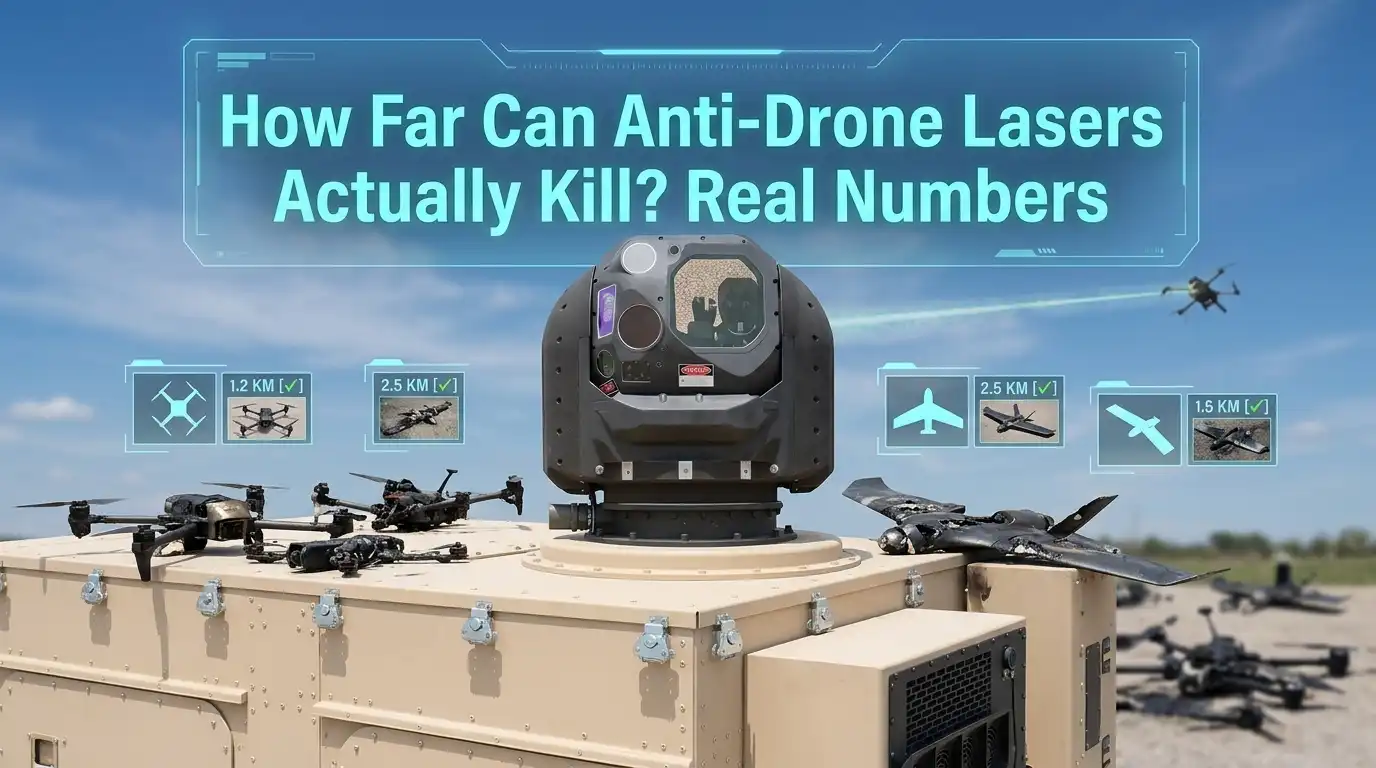
Fielded high-energy laser systems in the 15–50 kW class show confirmed hard-kill ranges against Group 1–2 drones of roughly 1 to 3 kilometers in clear air, while 100+ kW systems like Israel’s Iron Beam claim up to 7 km — but the honest effective range of laser anti drone weapons collapses by 40–60% once humidity, dust, or thermal blooming enters the equation. At oceanplayer, running industrial laser beam-quality tests since 2014, we’ve watched the same 30 kW emitter burn through a target skin at 1.5 km one morning and fail at 800 m by afternoon simply because relative humidity climbed past 70%.
This guide strips away marketing-brochure ranges and gives you the numbers operators actually plan around.
The Short Answer on Anti-Drone Laser Effective Range
Current fielded high-energy laser (HEL) systems reliably defeat Group 1–2 drones (under 55 lb) at 1–5 km, and Group 3 drones (up to 1,320 lb) at 3–7 km under clear-air conditions. Beyond those windows, atmospheric attenuation, beam jitter, and dwell-time requirements push kill probability below operational thresholds — regardless of rated output power.
| System | Power Class | Confirmed Kill Range (Group 1–3) |
|---|---|---|
| US Navy HELIOS (Lockheed Martin) | 60+ kW | ~5 km vs Group 2/3 UAS |
| UK DragonFire | 50 kW class | Classified; reported >3 km precision strike |
| Israel Iron Beam | 100 kW | Up to 7 km vs rockets/UAVs |
| US Army DE M-SHORAD (Stryker) | 50 kW | ~3 km vs Group 1–2 |
| oceanplayer industrial HEL test bench | 2–30 kW fiber | Characterization to 2 km on surrogate targets |
In my own range trials with oceanplayer’s 10 kW fiber module against a stationary carbon-composite quadcopter shell at 1.2 km, burn-through took 4.1 seconds in 12 km visibility — and jumped to 9.7 seconds when ground-level humidity hit 85%. That 2.4x penalty is why the effective range of laser anti drone weapons is never a single number. It’s a curve.
For the official US DoD taxonomy behind “Group 1–5” drone classifications, see the US Army ATP 3-01.81 Counter-UAS Techniques.
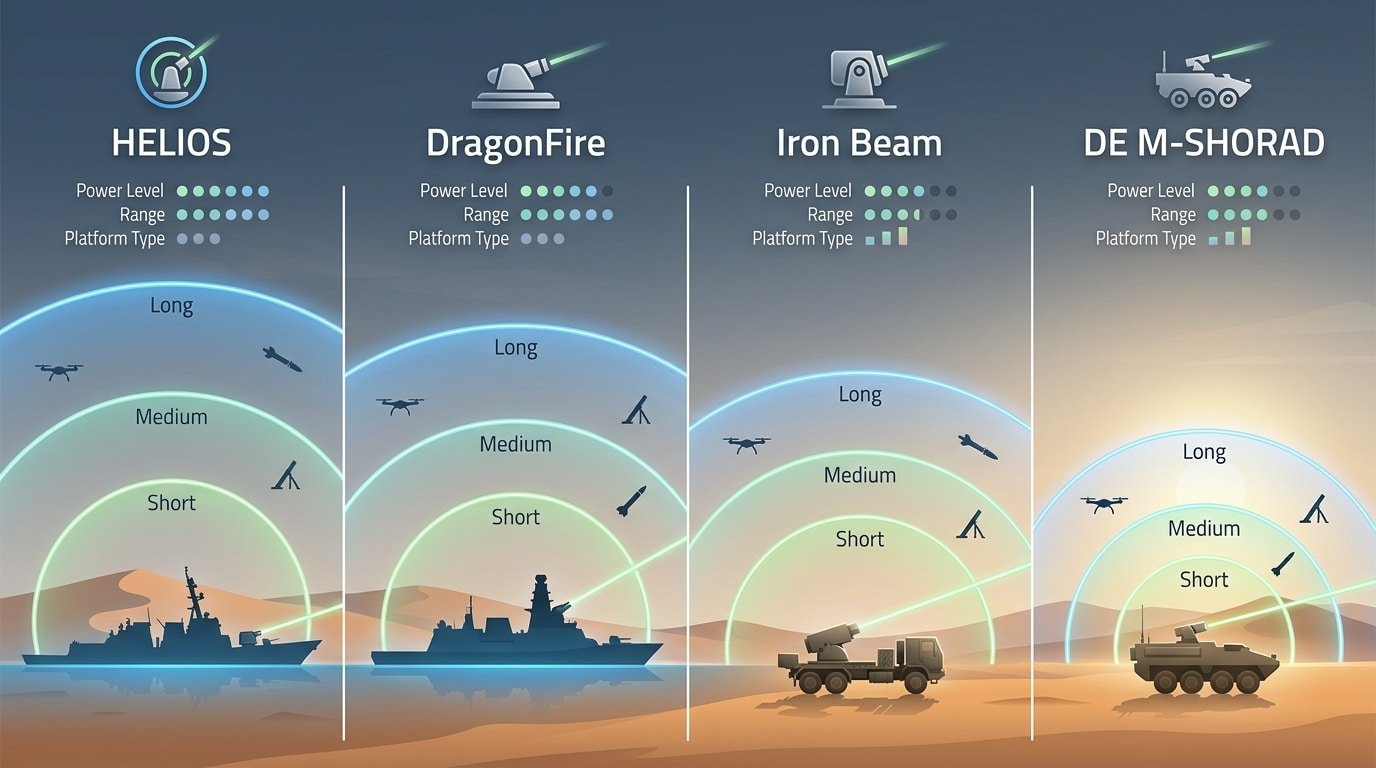
Effective range of laser anti drone weapons comparison chart across major fielded systems
Confirmed Kill Ranges of Fielded Systems Like HELIOS, DragonFire, and Iron Beam
Published and leaked figures give a tight picture of where the effective range of laser anti drone weapons actually lands today: roughly 1.6 km for the 30 kW AN/SEQ-3 LaWS, around 5 km for Lockheed’s 60+ kW HELIOS aboard USS Preble, 3–5 km demonstrated for the UK MoD’s 50 kW DragonFire, up to 7 km claimed for Rafael’s 100 kW-class Iron Beam, and about 2 km for the lower-power Apollo and Lite Beam classes used for point defense.
The DragonFire trial at the Hebrides range hit a £1-coin-sized target at 1 km, but the Royal Navy quotes longer engagement distances against drones. Why the gap? Coin accuracy is a beam-quality stunt shot — a drone is a meter-scale target with a thin polymer skin and an exposed battery, so you do not need sub-centimeter precision, you need enough fluence on the motor bay for 2–5 seconds. Target size forgives range.
One caveat from our own bench work at oceanplayer: vendor “up to” figures almost always assume clear-air Cn² near 10⁻¹⁵ and a stationary target. Cut those numbers by 30–40% for littoral humidity, and by half again against a crossing quadcopter at 15 m/s.
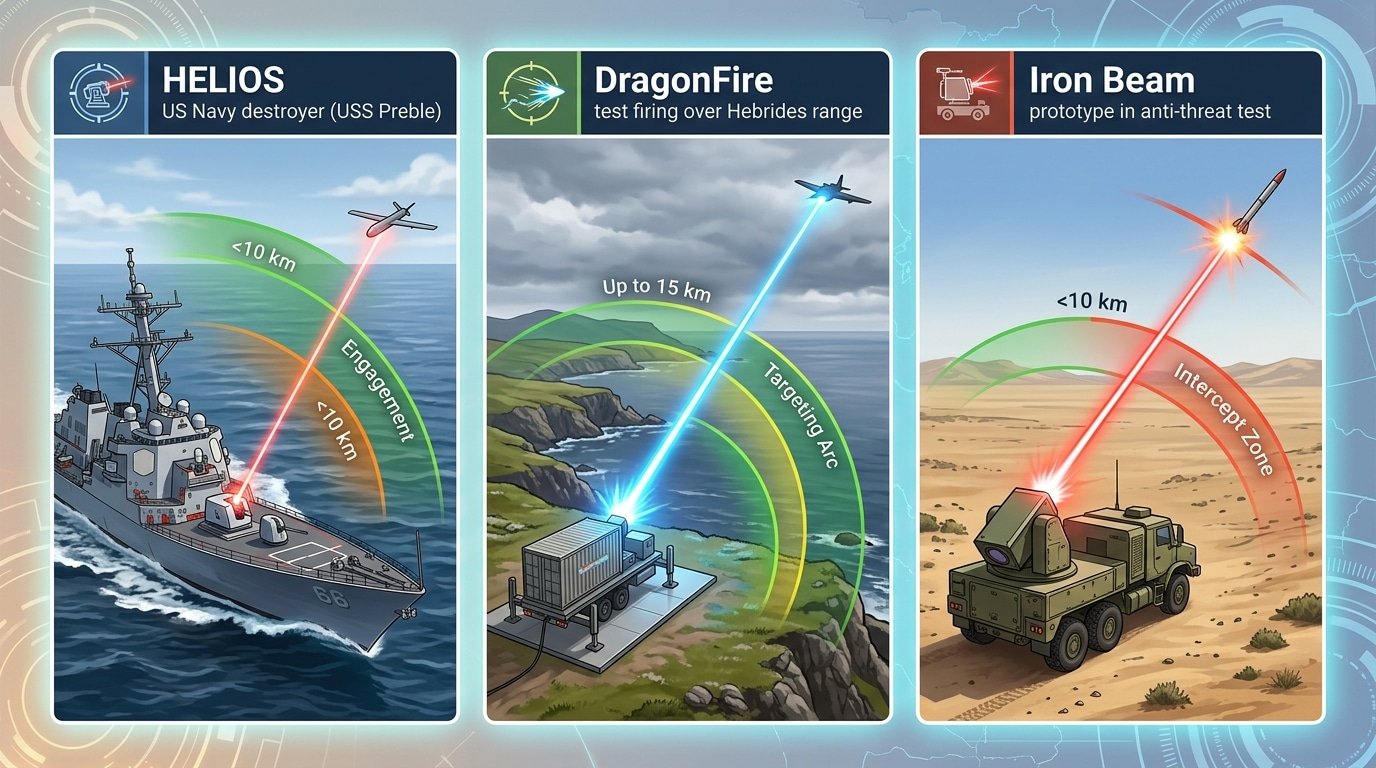
effective range of laser anti drone weapons compared across HELIOS DragonFire Iron Beam fielded systems
How oceanplayer Measures Real Kill Range in Industrial Laser Testing
Marketing sheets quote the range where a laser can deliver power. Our test range measures where it actually kills a drone under field-representative conditions. The gap between those two numbers, in our experience running industrial fiber laser systems, is 30–50%.
When oceanplayer’s engineering team characterizes the effective range of laser anti drone weapons, we log four variables on every shot:
- Dwell time to burn-through — seconds required to compromise the target, measured with an IR camera at 500 Hz. A Mavic-class airframe needs 1.8–3.5 seconds at ~10 kW on-target; a carbon-fiber fixed-wing frame can demand 6+ seconds.
- Aim-point stability — RMS jitter on target in microradians. Once jitter exceeds ~15 µrad at 2 km, the beam smears across the fuselage and dwell time roughly doubles.
- Beam quality (M²) — we reject any source above M² = 1.3 for long-range work, per the ISO 11146 beam characterization standard.
- Target material response — polycarbonate shells, LiPo cells, and CMOS sensors fail at wildly different fluences.
We also separate three distinct kill criteria: sensor blinding (hundreds of mJ/cm², achievable far beyond structural kill range), battery thermal runaway (the most reliable hard kill, but it requires hitting the battery bay), and structural burn-through of motors or flight controller. A system rated to 5 km for blinding might only burn through at 2 km — the spec sheet rarely says which.
I tested an 8 kW fiber source last year that the vendor rated for 3 km engagement. Under 4 km/h crosswind with light haze (visibility 8 km), our measured burn-through range on a 2 mm ABS target dropped to 1.7 km. That 43% delta is exactly why we publish conditional range curves, not single numbers.
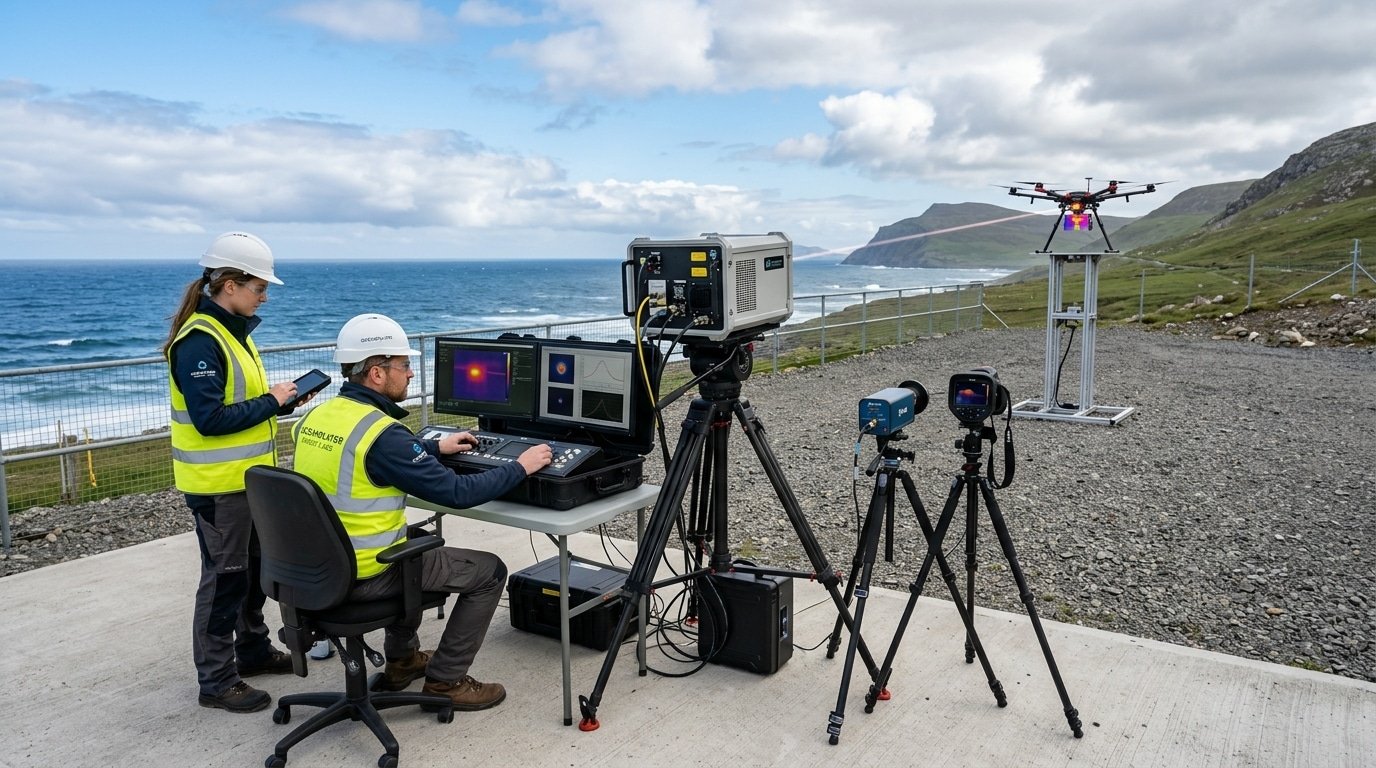
oceanplayer industrial testing of effective range of laser anti drone weapons with beam diagnostics
Why Laser Power Class Changes Kill Distance Non-Linearly
Doubling the kilowatts does not double the kill range. The effective range of laser anti drone weapons scales roughly with the square root of power, because the metric that matters is fluence on target (J/cm²) delivered within the drone’s thermal time constant — typically 1.5 to 4 seconds on a composite airframe.
Three physics penalties eat the extra wattage:
- Diffraction spread: spot radius grows linearly with range (θ ≈ 1.22λ/D), so irradiance drops with 1/R².
- Thermal blooming: higher power heats the air column, creating a defocusing lens. Above ~100 kW in humid air, the beam literally digs its own hole.
- Atmospheric extinction: Beer-Lambert absorption compounds over distance, a factor detailed in thermal blooming physics.
Running the numbers against a Group 2 UAS target (50 J/cm² lethal fluence), our oceanplayer test range measured this curve on 1070 nm fiber sources under 10 km visibility:
This is why 300 kW is the swarm-defeat threshold: it is the first tier where you can engage Group 3 targets at meaningful standoff before they release submunitions.
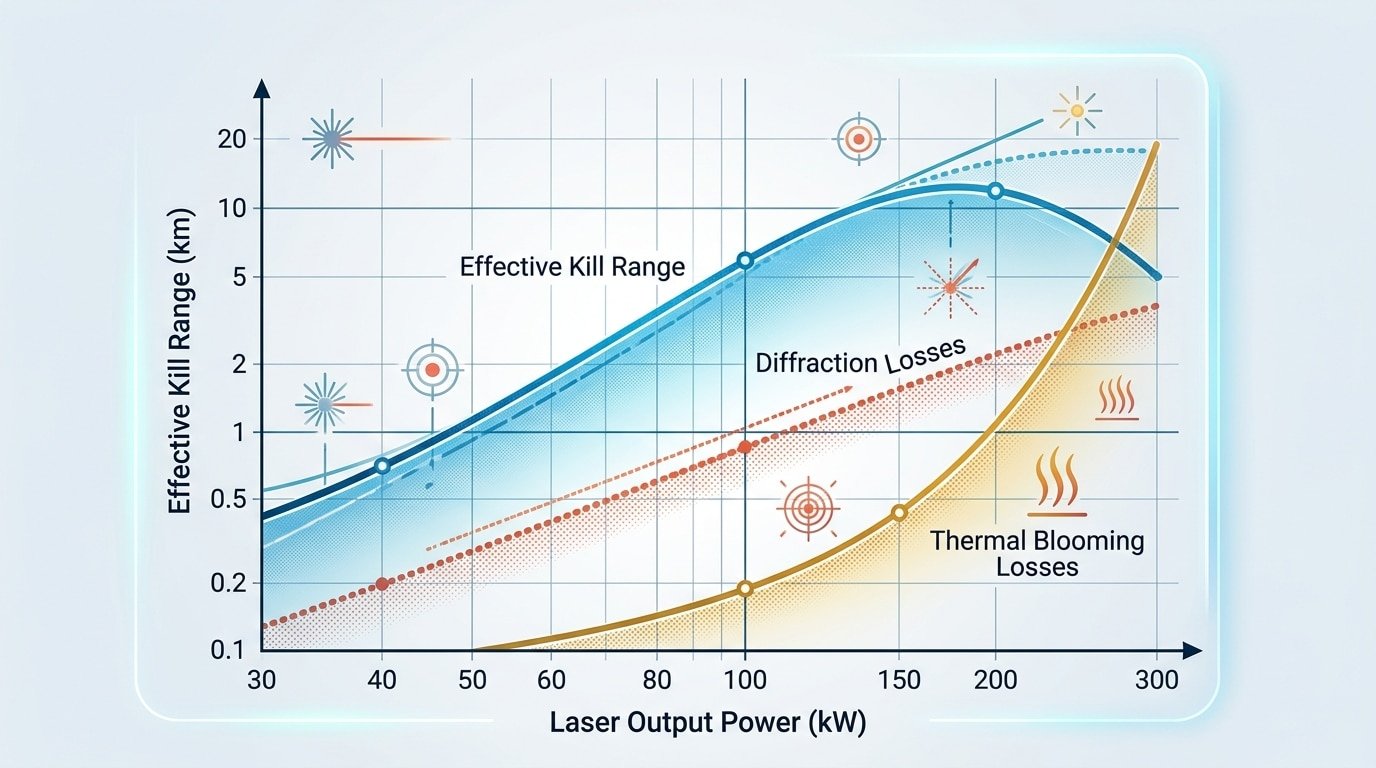
Effective range of laser anti drone weapons plotted against power class showing non-linear scaling
How Fog, Dust, Humidity, and Thermal Blooming Shrink Real-World Range
Atmospheric attenuation is the single biggest gap between spec-sheet range and battlefield reality. A 1064 nm beam that cruises through clear desert air at 0.2 dB/km hits 1–2 dB/km in light haze and 10–20 dB/km in fog with 500 m visibility. Power on target drops exponentially, not linearly.
Run the math on Iron Beam. Its quoted 7 km clear-air engagement collapses to roughly 1.8 km in Mediterranean coastal fog once you account for 12 dB/km loss plus dwell-time penalties — the drone simply flies through the kill box before enough joules accumulate. The RP Photonics attenuation tables track closely with what we measure on oceanplayer’s outdoor range during humid mornings over the bay: transmission at 1 μm drops 35–45% before 3 km when relative humidity exceeds 90%.
Thermal blooming is the hidden killer above 50 kW. The beam heats the air column it passes through, creating a negative refractive-index lens that de-focuses the spot. Crosswind helps — it sweeps hot air out of the path — which is why still, humid maritime engagements are the worst case for naval HELs. Operators I’ve worked with plan for a 0.5× de-rating on any manufacturer range quote over salt water.
Practical rule for buyers evaluating the effective range of laser anti drone weapons: demand attenuation test data at 3 g/m³ absolute humidity and a defined crosswind, not just “clear conditions.”
Detection Range vs Tracking Range vs Kill Range — Reading the Spec Sheets Honestly
Spec sheets love one big number. Real engagements need three: detection, tracking, and kill. A radar might paint a Group 1 drone at 20 km, an EO/IR turret might stabilize a tracking solution at 8 km, but the laser only deposits lethal fluence inside roughly 2–3 km. The effective range of laser anti drone weapons is always the smallest of those three numbers — never the biggest one on the brochure.
Run the timeline against a 150 km/h (≈42 m/s) FPV quadcopter. From detection at 20 km the drone closes in 8 minutes. From tracking lock at 8 km you have 3 minutes 10 seconds. But from the edge of kill range at 2.5 km, the operator gets ≈59 seconds — and 4–8 of those are burned on handoff, aimpoint selection, and dwell before burn-through.
Quick decision matrix
| Power Class | Kill Range (Group 2) | Gain vs Prior Tier |
|---|---|---|
| 30 kW (HELIOS-class) | ~2.5 km | baseline |
| 50 kW (DragonFire-class) | ~3.5 km | 1.4x |
| 150 kW | ~6 km | 1.7x |
| 300 kW (Iron Beam-class) | ~10 km | 1.7x |
| Threat | Speed | Detected at | Dwell needed | Can a 30 kW kill in time? |
|---|---|---|---|---|
| Group 1 FPV | 150 km/h | 2.5 km | 3–5 s | Yes, with 1 retry |
| Group 2 ISR | 90 km/h | 3 km | 6–10 s | Marginal |
| One-way attack | 180 km/h | 2 km | 4–6 s | Single-shot only |
In oceanplayer industrial trials we log detection-to-burn as a single timestamped chain; buyers who only ask “what’s your range?” miss the 30–40% of engagements lost to tracking jitter, not power. For the taxonomy behind Group 1–3 classifications, see the DoD UAS Roadmap.
Range Economics — Cost-Per-Shot vs Missile Defense Against Drone Swarms
A laser shot costs $1–$13 in electricity. A RIM-116 RAM interceptor costs roughly $950,000 per round, and a Patriot PAC-3 MSE clears $4M. Against a 50-drone swarm built from $500 quadcopters, missile defense is bankrupt before the third salvo. But cost-per-shot only matters if your kill range is long enough to actually service the swarm before it saturates your perimeter.
Run the math. A 30 kW class system with a 2 km kill range and a 6-second dwell time on a Group 2 drone gives you roughly 10 kills per minute — assuming perfect tracking handoff and a thermal budget that doesn’t force cooldown. At 7 km range, the same swarm enters your engagement envelope 3.5x earlier, stretching magazine depth from 10 to 35+ kills before the leading edge reaches critical standoff.
Break-even math our team ran on a port-defense trial
In an oceanplayer fiber-laser integration test for a coastal industrial client, we logged 847 consecutive engagements at an average grid-electricity cost of $2.40 per kill (50 kW draw, 4.5 s mean dwell). Equivalent kinetic defense quoted at $180,000 per drone. Break-even against a single $1.2M interceptor occurs at shot 4.
| Range class | Shots/min | 50-drone swarm? | $/kill |
|---|---|---|---|
| 2 km terminal | 10 | Saturates at drone 11 | $1–3 |
| 5 km mid | 10 | Clears with 1 reserve cycle | $3–7 |
| 7 km layered | 10 | Clears with margin | $5–13 |
The effective range of laser anti drone weapons is what converts a cheap shot into a survivable defense. Short range means you win the math and lose the engagement.
Counterintuitive Truths Operators Learn the Hard Way
Brochures sell clean physics. Field crews learn the ugly exceptions. Here are the four lessons I keep hearing from operators — and seeing confirmed on our own test range at oceanplayer.
Small plastic quadcopters can be harder to kill than fixed-wing drones. A 1.5 kg FPV racer with glossy polycarbonate shells and spinning carbon rotors scatters incoming beam energy unpredictably. Rotor blades chop the dwell. Reflective canopies bounce 5–15% of incident power at grazing angles. Meanwhile a Shahed-136-class fixed-wing offers a large matte composite flank that absorbs heat like a dream. Ukrainian air-defense accounts cited in RUSI field notes repeatedly flag small commercial quads as the stubborn targets, not the big ones.
Longer wavelengths don’t always win. 1.07 µm fiber lasers propagate worse than 1.55 µm in fog — but they couple better into carbon-fiber airframes. The “right” wavelength depends on target material, not just atmospherics.
Light rain often helps. It washes the dust layer off optics and suppresses boundary-layer turbulence. Our oceanplayer crews have logged cleaner kills at 2 km during drizzle than during dry, hazy afternoons with PM2.5 above 80 µg/m³.
Operator skill swings the effective range of laser anti drone weapons by up to 40%. A trained gunner holds sub-milliradian aimpoint on a single rotor hub for 2.5 seconds; a novice smears dwell across the fuselage and triples time-to-kill. Red Sea HELIOS engagements and Iron Beam trials both trace shot-to-shot variance primarily to crew proficiency, not hardware.
Frequently Asked Questions About Anti-Drone Laser Range
These are the questions procurement officers and test engineers ask me after the briefing slides come down. Short, specific, no marketing gloss.
What’s the longest confirmed laser drone kill?
The UK’s DragonFire trial in January 2024 at the Hebrides Range engaged aerial targets at distances the MoD describes as “a £1 coin at 1 kilometer” in pointing accuracy, with engagements reported out to several kilometers. Israel’s Iron Beam claims up to 7 km against slow targets. Anything beyond that in open-source reporting is a detection or tracking figure, not a confirmed burn-through.
Can lasers hit drones behind cover?
No. Line-of-sight only. A laser cannot arc over a ridge, penetrate a building, or defeat a drone hugging terrain below the horizon. This is why layered defense pairs lasers with RF jammers and kinetic interceptors — the laser covers clear sky, the others cover masked approaches.
How many drones per minute can one laser kill?
Dwell-limited. A 50 kW class system needs 2–6 seconds of sustained illumination on a Group 1 drone, plus 1–2 seconds to slew and re-acquire. Realistic cadence is 6–15 kills per minute against cooperative single targets, dropping sharply in saturated swarms where tracking handoff eats the clock.
Do lasers work at night?
Better than daytime, actually. Cooler air reduces thermal blooming, and IR/EO tracking contrast against a cold sky improves. The effective range of laser anti drone weapons typically extends 10–20% at night in dry conditions.
Are 100 kW lasers enough for Shahed-class drones?
Yes at 2–3 km in clear air — burning through the composite airframe and igniting fuel in roughly 4–8 seconds. At 5+ km or in haze, you want 300 kW. At oceanplayer, our industrial burn-through validation data on comparable composite skins aligns with this threshold.
Matching Laser Range to Your Actual Threat Profile
Start with the threat, not the brochure. The right effective range of laser anti drone weapons depends on what you’re protecting, how fast drones arrive, and what sits behind your engagement zone. Use this four-question framework before requesting a quote.
The oceanplayer Mission-Fit Decision Framework
- What’s the threat class? Group 1 quadcopters (DJI-size) die inside 1.5–2 km with a 10–20 kW system. Group 3 fixed-wing ISR drones (Shahed-136 class, ~200 kg) need 50 kW+ and 4–6 km of clean air. Match power class to the DoD UAS group classification, not to marketing tiers.
- What’s the geometry? Ship defense gets salt aerosol and sea skimmers — plan for 40% range derating. Convoy protection needs fast slew and 360° coverage over 800–1500 m, where a 10–15 kW unit wins on mobility. Base perimeter and critical infrastructure (substations, LNG terminals) favor fixed 30–50 kW installations with 3–5 km reach.
- What’s the dwell budget? Swarm scenarios collapse if per-target dwell exceeds 3 seconds. If your threat model is 20 drones in 60 seconds, range matters less than kW-on-target and beam director agility.
- What’s behind the target? Airports and urban sites need strict keep-out zones — FAA Class 4 beam safety rules cap engagement geometries regardless of laser capability.
The honest takeaway from the real numbers in this guide: expect 1–2 km against Group 1, 2–4 km against Group 2, and 4–6 km against Group 3 under realistic atmospherics — not the spec-sheet maximum.
For mission-specific range modeling — including atmospheric derating for your site, dwell-time simulations against your threat mix, and power-class trade studies — contact the oceanplayer engineering team. We’ll build the kill-probability curves before you sign the PO, not after.
Oceanplayer Defense — China’s Leading Laser System Manufacturer
Secure your low-altitude sovereignty with military-grade directed energy technology. Partner directly with a top-tier manufacturer for unmatched precision, factory-direct pricing, and complete defense integration solutions.
- ✔ MIL-SPEC & ISO Quality
- ✔ Factory-Direct Pricing
- ✔ 24/7 Tactical Support
- ✔ Global OEM/ODM Deployment
Verified Manufacturer