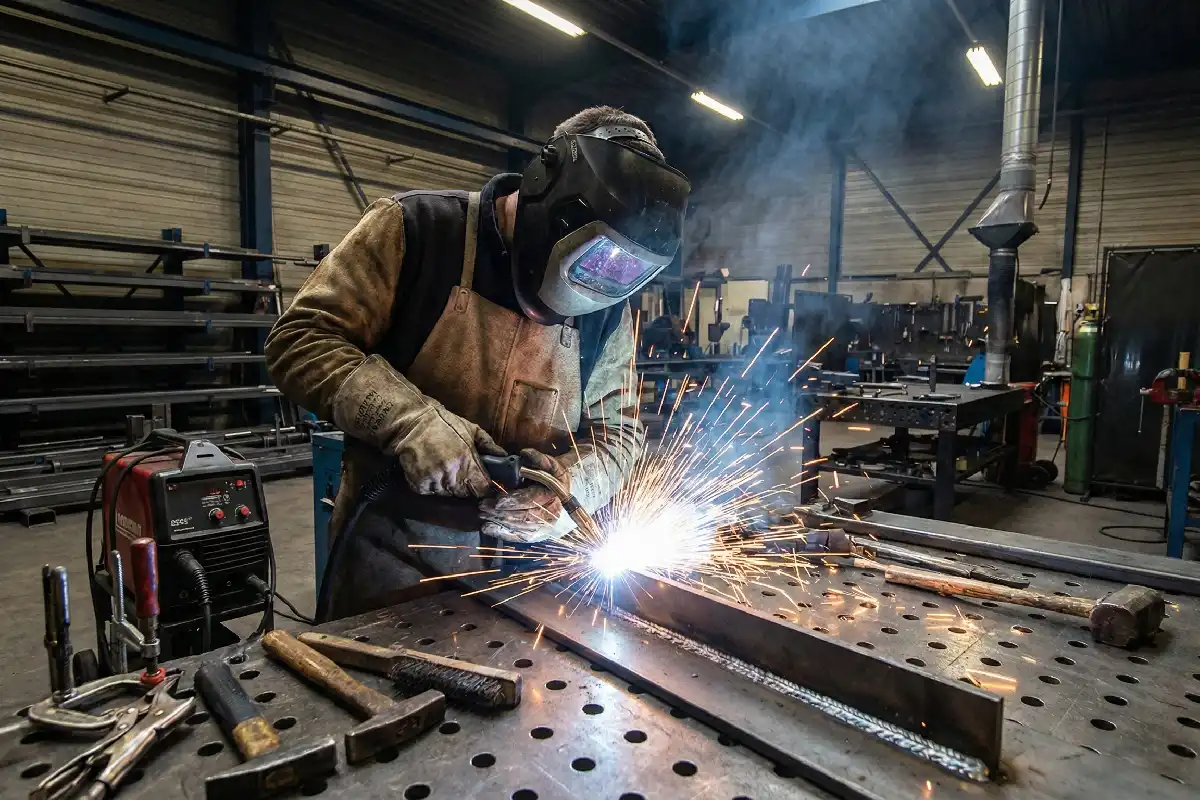
Many welders feel unsure when they see fillet welds not full. You often wonder if the weld is strong enough or if it will last. The term “full” means the weld meets the required size and bonds well with both pieces of metal. Two common misconceptions can cause confusion:
| Misconception | Description |
|---|---|
| Incomplete Joint Penetration | The weld does not extend through the joint, which may lead to weak spots and rust. |
| Incomplete Fusion | The weld metal does not bond with the base material, which can make the weld weaker and prone to corrosion. |
You need to know how to spot these issues and fix them.
Key Takeaways
- Check the weld size to ensure it meets minimum requirements. A throat size that is too small can weaken the joint.
- Use proper welding techniques. Maintain the right heat, clean surfaces, and control your speed to avoid incomplete welds.
- Set your welding machine correctly. Adjust voltage and amperage to match the metal thickness for strong welds.
- Clean the metal before welding. Remove any dirt, oil, or rust to ensure good fusion and prevent weak spots.
- Inspect your welds regularly. Use tools like gauges and mirrors to catch issues early and maintain weld quality.
Fillet welds not full: main causes
When you see fillet welds not full, you might wonder what went wrong. Several main causes can lead to incomplete welds. You need to understand these reasons to fix problems and make strong welds. Not every weld that looks incomplete is defective. Sometimes, the weld size or penetration does not match the requirements, but the weld still works for its purpose. The difference between full penetration and proper fillet weld size matters. Full penetration welds go through the entire joint, making them very strong. Fillet welds sit on the surface and do not fill the joint gap, so they do not have full penetration. You should focus on the correct weld size and fusion for good performance.
Insufficient weld size
You must check the weld size to make sure it meets the minimum requirements. The throat of the weld, not just the leg size, decides if the weld is strong enough. If the weld is too small, it may look like fillet welds not full. A tolerance of 1/16 inch low is allowed for up to 10% of the weld length. If the weld is smaller than this, it can weaken the joint and make it look incomplete.
- The throat is the most important part for strength.
- Undersized welds can cause structural problems.
- Always measure the weld to check if it meets the size rules.
Poor welding technique
Your welding technique affects the quality of the weld. If you use low heat, move too fast, or pick the wrong electrode size, you can get fillet welds not full. Incomplete fusion happens when the weld metal does not bond with the base metal. Incomplete penetration means the weld does not go deep enough into the joint.
- Common technique mistakes:
- Low heat input.
- Dirty metal surfaces.
- Wrong electrode diameter.
- Fast travel speed.
- Large weld pool ahead of the arc.
- How to prevent these mistakes:
- Use enough heat.
- Clean the metal before welding.
- Pick the right electrode size.
- Move at a steady speed.
- Keep the weld pool under control.
Incorrect machine settings
You need to set your welding machine correctly. Wrong voltage or amperage can cause fillet welds not full. If the voltage is too low, the weld bead may look flat or have poor fusion. Amperage controls how deep the weld goes and how fast the electrode melts.
- Set the voltage to avoid flat or undercut welds.
- Use enough amperage for good penetration.
- Check your settings before you start welding.
Material contamination
Dirty metal can stop the weld from bonding well. Oil, rust, paint, or other dirt on the surface can cause fillet welds not full. You should clean the metal before welding. Testing methods like ultrasonic testing (UT) and radiographic testing (RT) help find problems like incomplete fusion or penetration.
| Weld Defect | Definition | Causes | NDT Methods | Best Method |
|---|---|---|---|---|
| Incomplete Fillet Weld | Weld metal fails to fuse properly with base metal. | Contaminated surfaces, low heat input, improper joint preparation. | UT, RT | Ultrasonic Testing (UT) |
- Clean the metal before welding.
- Use UT or RT to check for hidden problems.
Joint fit-up issues
If the metal pieces do not fit together well, you can get fillet welds not full. Gaps or misalignment make it hard for the weld to fuse and penetrate. Research shows that misalignment can reduce the load-bearing strength by about 30%. You need to make sure the joint is lined up and tight before welding.
- Problems caused by poor fit-up:
- Misalignment leads to weak welds.
- Gaps prevent proper fusion.
- The structure may lose strength.
- Tips for good fit-up:
- Align the pieces carefully.
- Remove gaps before welding.
- Check the joint before starting.
Tip: Always inspect the joint and clean the metal before welding. Good preparation helps you avoid fillet welds not full and makes your welds stronger.
Table: Common Causes of Incomplete Fillet Welds
| Cause of Incomplete Fillet Welds | Description |
|---|---|
| Lack of Penetration | Not enough depth in the weld, which can weaken the joint. |
| Lack of Fusion | Weld metal does not bond with base metal, causing weak spots. |
| Inclusions | Foreign material in the weld, which can lower weld quality. |
You can see that fillet welds not full happen for many reasons. You must check weld size, technique, machine settings, material cleanliness, and joint fit-up. If you focus on these areas, you can prevent incomplete welds and make your projects safer and stronger.
Identifying incomplete welds
Visual inspection
You can spot problems with fillet welds by looking closely at the welds. Start by checking the surface for cracks, holes, or uneven shapes. Use a flashlight to see dark areas and a magnifying glass to find small flaws. Inspection mirrors help you view hard-to-reach spots. Always wear protective lenses to keep your eyes safe.
Here is a table showing common tools and indicators for visual inspection:
| Tool or Indicator | What It Does |
|---|---|
| Fillet weld gauges | Confirms leg length and throat thickness |
| Magnifying glass | Finds small flaws in tight areas |
| Inspection mirror | Lets you see hidden angles |
| Straight edge and calipers | Checks weld size and shape |
| Surface discontinuities | Shows cracks, porosity, undercut, overlap, underfill |
| Uniformity and consistency | Reveals steady travel marks and even ripple patterns |
Follow these steps for a good inspection:
- Look at the materials before welding.
- Watch the weld as you work.
- Inspect the finished weld.
- Mark any problems you see.
- Repair the weld if needed.
Tip: Practice your inspection routine to catch issues early and keep your welds strong.
Measuring weld size
You need to measure weld size to make sure it meets the rules. Use a fillet weld gauge to check the leg length and throat depth. A digital caliper setup with a fillet weld gauge helps you measure the throat accurately. Optical comparators can also help you see the weld dimensions clearly.
- Use a weld gauge for leg length and throat.
- Try a digital caliper for throat depth.
- Use an optical comparator for detailed checks.
If you want more details on measuring welds, you can find helpful articles in welding magazines.
Signs of incomplete fusion
You should look for signs that show the weld did not bond well with the base metal. Common signs include cracks, holes, and rough surfaces. If you see undercut, overlap, or underfill, the weld may not be strong enough. Uneven bead shapes and poor ripple patterns also show problems.
Here are signs that fillet welds not full may be present:
- Cracks along the weld.
- Porosity or small holes.
- Undercut at the edge of the weld.
- Overlap where the weld spills over.
- Underfill where the weld is too shallow.
- Uneven or rough bead shape.
If you find these signs, you need to fix the weld to make sure it is safe and strong.
Fixing and preventing incomplete fillet welds
You can stop and fix fillet welds not full by using some easy steps. Each step helps you make better welds and avoid mistakes. You should focus on your welding technique, machine settings, cleaning your materials, weld size, and checking your work.
Adjusting technique
How you weld affects how strong your fillet welds are. If you use the wrong angle or move too fast, you might get cracks or holes. Too much current can also cause problems. You can avoid these issues by practicing good habits and learning from skilled welders.
Here is a table that shows common defects, why they happen, and how to stop them:
| Defect Type | Cause | Prevention | Example |
|---|---|---|---|
| Crack | High stress, cooling too fast, bad technique, dirty metal. | Preheat thick metal, design joints well, use the right filler, cool slowly. | Cracks on pipes or tanks after welding. |
| Porosity | Gas trapped by wet, rusty, oily metal, or wrong gas. | Clean metal, use dry electrodes, set gas flow right. | Tiny holes on car body welds. |
| Undercut | Too much current, moving too fast, wrong electrode angle. | Lower current, slow down, use the right angle. | Grooves along weld edge in steel beams. |
Keep your electrode at the right angle and move at a steady speed. If you see fillet welds not full, slow down and change your torch position. Training and practice help you learn these skills and make fewer mistakes.
Tip: Try welding on scrap metal first. This helps you find the best settings and technique for each job.
Setting machine parameters
You need to set your welding machine right to get strong fillet welds. The voltage and amperage should match your metal thickness and joint type. If you use too little heat, the weld may not stick well to the base metal.
Here is a table that shows what happens with different heat inputs:
| Heat Input Condition | Consequences |
|---|---|
| Proper Heat Input | Makes a strong joint by melting weld and base metal together. |
| Insufficient Heat | Causes weak welds with poor penetration and fusion. |
Check your machine settings before you start. Use more current for thick metal and make sure your shielding gas flows well. If you see problems, change your settings and test again.
- Use enough amperage for deep welds.
- Set voltage to stop flat or cut welds.
- Keep the groove clean to avoid defects.
Preparing materials and joints
Good prep helps you avoid fillet welds not full. You should clean your metal, design your joint well, and remove rust or mill scale. If you skip these steps, your weld may be weak.
Here is a table with important prep steps:
| Step | Description | Impact on Weld Quality |
|---|---|---|
| Cleanliness | Take off all dirt from base and filler metals. | Stops poor fusion and defects. |
| Joint Design | Make the joint to lower stress. | Spreads load better and lowers defects. |
| Machining and Grinding | Grind surfaces to remove thick scale and dirt. | Saves tools and makes welds stronger. |
Always check your joint fit before welding. Line up the pieces and close any gaps. Good prep makes your welds stronger and lowers the chance of problems.
Note: Clean your metal with a wire brush or grinder before welding. This easy step can stop many issues.
Ensuring correct weld size
You need to match your weld size to your metal thickness. If your weld is too small, it will be weak. If it is too big, you waste time and material. Welding codes like AWS D1.1 give rules for minimum weld sizes.
Here is a table with weld size tips:
| Rule of Thumb | Description |
|---|---|
| Fillet weld size | Should be ¾ the thickness of the metal. |
| Assumes full strength | Weld size should give max strength without extra material. |
| Double-sided fillet | Joint has fillet welds on both sides. |
| Identical legs | Both weld legs must be the same size. |
| Full length | Weld must go the whole joint length. |
| Thinner member | Use the thinner piece for size if metals are different. |
- Use a weld gauge to check leg length and throat.
- Follow the rule of thumb for weld size.
- Use the thinner piece for size if metals are not the same.
Minimum weld sizes help stop cracks and make sure you use enough heat. If you follow these tips, you can avoid fillet welds not full and make strong joints.
Quality control steps
Quality control helps you find problems before they get worse. You should check your joints, look at your fit-up, and follow your Welding Procedure Specification (WPS). Good quality control saves money and keeps welds the same.
Here are important quality control steps:
- Line up joints right: Check root gap, edge, and angle.
- Stop weld defects: Look at fit-up to avoid holes and cracks.
- Follow welding steps: Set up joints by your WPS.
- Keep welds the same: Good fit-up makes even welds.
- Lower repair costs: Find bad fit-up before welding to save time.
- Help with size control: Make sure finished parts meet size rules.
If you find fillet welds not full after checking, you can fix them by grinding out the bad part and welding again. Use the right heat and technique when you repair. Training helps you learn how to measure welds and use inspection tools.
Alert: Always follow your WPS and check your welds after each pass. This helps you find problems early and keep your welds safe.
You can stop fillet welds not full by changing your technique, setting your machine right, cleaning your materials, matching weld size to metal thickness, and following quality control steps. These actions help you make strong welds every time.
You now know that a “full” fillet weld has the right size. It also joins both metal pieces well. You can make your welds better by doing these steps:
- Find what is wrong with your welds.
- Measure your welds and write down the results.
- Look for main causes using simple diagrams.
- Change your technique and use better materials.
- Track your work with charts and new rules.
Pay attention to weld size and how you weld.
- Good fusion and the right size make your weld strong.
- Using the right filler and good fusion matter more than how deep the weld goes.
Keep learning with easy resources:
| Resource Title | Description |
|---|---|
| How to Use the Fillet Gage | Shows how to measure weld size the right way. |
| Improving Your Welding Technique | Gives tips for making your welding better. |
The Welder Handbook has guides for checking welds, measuring them, and finding problems. You can make stronger welds by following these steps and using the best tools.
FAQ
Why do fillet welds sometimes look incomplete?
You may see incomplete fillet welds because of low heat, poor technique, or dirty metal. Always check your machine settings and clean your materials before welding.
How can you measure if a fillet weld is full?
You can use a fillet weld gauge to check leg length and throat size. Make sure both legs match the required size for your project.
What happens if you ignore an incomplete fillet weld?
Ignoring an incomplete weld can cause weak joints. Your project may fail or break under stress. Always repair or redo any weld that does not meet standards.
Can you fix a fillet weld that is not full?
You can fix it by grinding out the bad weld and welding again. Use the right heat and technique. Clean the metal before you start.
What tools help you inspect fillet welds?
| Tool | Use |
|---|---|
| Weld gauge | Measures weld size |
| Magnifying glass | Finds small flaws |
| Inspection mirror | Views hidden areas |
How to Diagnose Button Response Issues in Laser Welding Machines
The light emission characteristics of laser welding machines
Why choose a laser welder manufacturer direct from China
What are fiber laser frequency settings and why do they matter