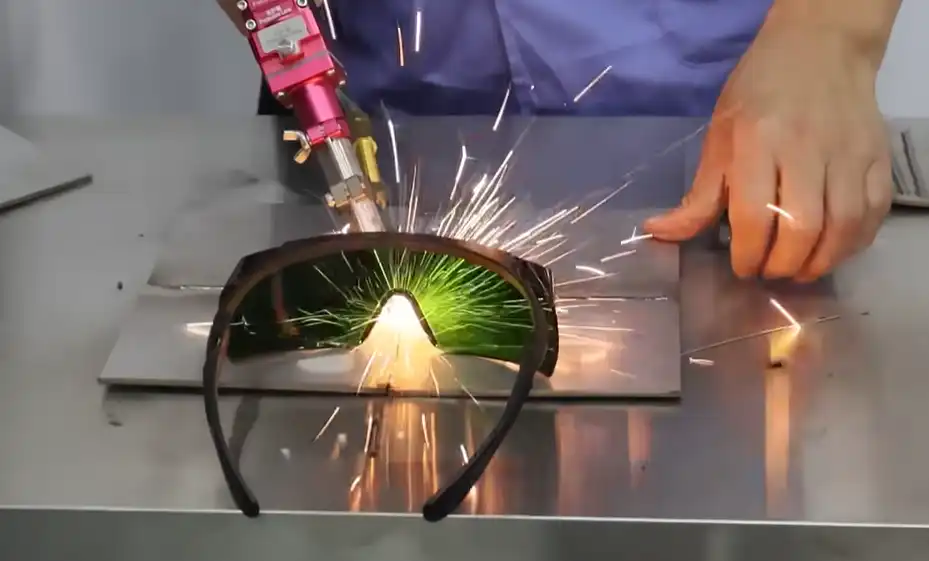
Laser welding glasses keep your eyes safe from strong laser beams used in welding. Laser light can hurt your eyes very fast, even if you do not look at it directly. Regular safety glasses cannot stop invisible infrared light or bright arc glare.
Many people think regular helmets or wide-band glasses are enough to protect them. The table below lists common myths and the real dangers:
| Myth | Explanation | Consequence |
|---|---|---|
| Conventional welding helmets can protect against lasers | Standard filters do not block 1070nm infrared laser. | Invisible laser can go through and burn your eyes forever. |
| Laser safety glasses can replace welding helmets | Laser glasses do not cover your whole face and do not block all visible light. | Bright arc light can cause glare and hurt your eyes. |
| Wide-band laser glasses can replace welding protection | There is a “protection gap” in the 540–850nm visible light range, and shading is not enough. | Too much yellow or red light can still damage your eyes. |
You need special glasses made for laser welding to keep your eyes safe.
Key Takeaways
- Always use laser welding glasses to keep your eyes safe from harmful laser beams and bright lights. – Pick glasses that match your laser’s wavelength for the best safety. – Find glasses with a high optical density rating, like OD 6 or more, to block dangerous rays well. – Make sure your glasses fit well and feel comfortable so you will wear them every time you weld. – Clean and check your glasses often, and get new ones if they are damaged or worn out.
What are laser welding glasses
Definition and function
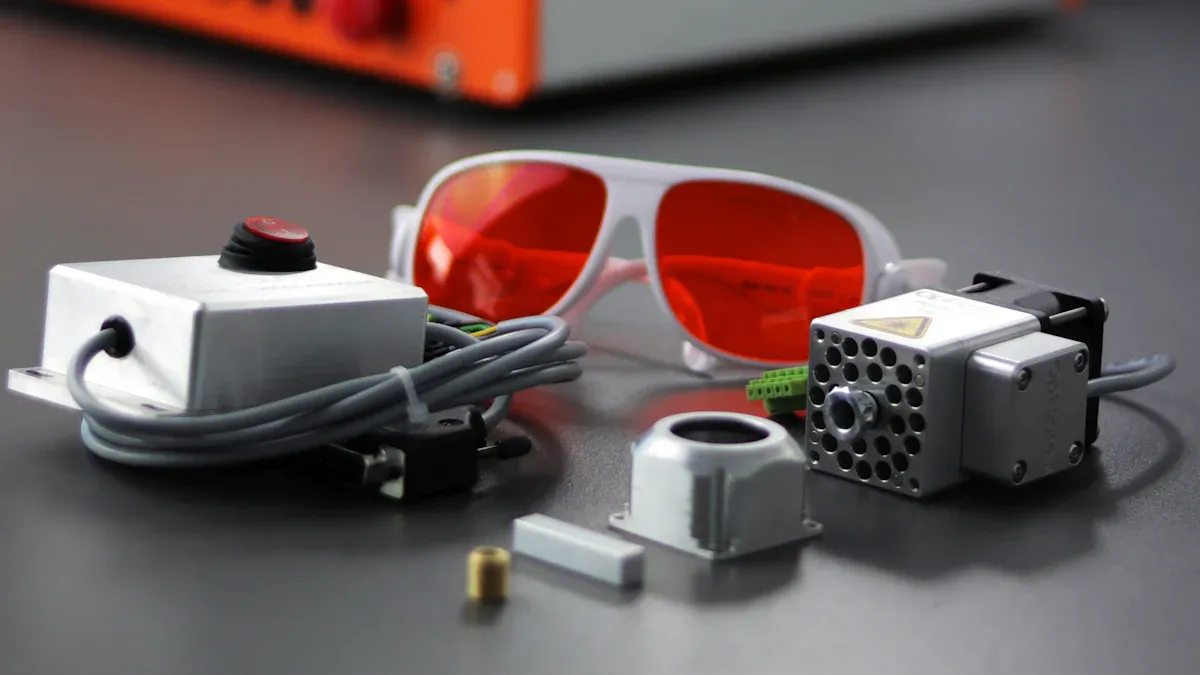
Laser welding glasses keep your eyes safe from laser beams. You need them because laser welding uses strong light. This light can hurt your eyes very fast. The lenses in these glasses block certain kinds of light. This keeps you safe from direct and scattered laser rays. You can use lasers without worrying about invisible light hurting your eyes.
Laser welding glasses have special coatings and filters. These help stop harmful infrared and ultraviolet light. Some glasses also make the welding arc less bright. You can see clearly and stay safe. If you wear the right glasses, you lower your chance of eye injuries.
Tip: Always read the label on your glasses. Make sure they work with your type of laser.
Laser welding glasses vs. standard safety glasses
Standard safety glasses protect your eyes from things that fly or spark. They do not stop laser rays. If you wear regular safety glasses while laser welding, your eyes are still in danger. Invisible and strong laser beams can hurt your eyes forever.
Laser welding glasses give much better protection. They block certain laser rays and make the welding arc less bright. You get safety from both visible and invisible dangers. Standard safety glasses cannot do this.
Here is a quick comparison:
| Feature | Laser welding glasses | Standard safety glasses |
|---|---|---|
| Blocks laser radiation | ✅ | ❌ |
| Reduces arc glare | ✅ | ❌ |
| Protects from debris | ✅ | ✅ |
You should always pick laser welding glasses for laser work. This keeps your eyes safe and healthy.
Why laser welding glasses are essential
Risks of laser welding
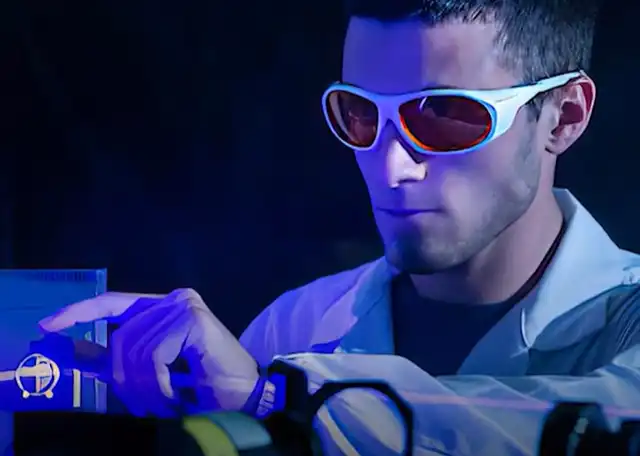
Laser welding uses strong beams to join metal parts. These beams can make your work area dangerous. You face more than just bright light. There are also invisible rays, hot metal, and toxic fumes. If you do not use protection, you can get hurt fast.
Here is a table that lists the main risks you face during laser welding:
| Risk Type | Description |
|---|---|
| Radiation | Infrared and ultraviolet radiation can hurt your skin and eyes if you do not have protection. |
| Skin Burns | The laser gets very hot and can burn your skin if you touch it. |
| Eye Damage | Laser beams can cause you to lose your vision for a short or long time. |
| Compressed Gas Risks | If you do not handle gases right, they can explode or make it hard to breathe. |
| Electrical Hazards | High-voltage parts can shock you if you do not take care. |
| Fire Hazards | The heat from the laser can start fires if things catch on fire. |
| Toxic Fumes | Breathing in fumes from welding can hurt your lungs over time. |
| Mechanical Hazards | Machines can crush or trap you if you do not follow safety rules. |
You need to protect your eyes from radiation and bright light. You also need to be careful about burns and fumes. Laser welding glasses help block harmful rays and lower glare. They keep your eyes safe while you work.
Note: Always wear the right safety gear. This helps protect you from many dangers when laser welding.
Eye injuries from laser exposure
Your eyes are very sensitive to light. Laser welding can send out strong beams you cannot always see. These beams can hurt your eyes in just a few seconds. If you do not wear the right protection, you could get badly hurt.
Here are some common eye injuries from laser exposure:
- Flash blindness: You cannot see for a short time after a bright flash.
- Retinal burns: The laser can burn the back of your eye and cause you to lose vision forever.
- Cataracts: If you look at laser light for a long time, your eye lens can get cloudy.
- Photokeratitis: This is like a sunburn on your eye. It can make your eyes hurt and swell.
Laser welding glasses protect you from these injuries. They block dangerous rays and help you see better. You can work without worrying as much about hurting your eyes.
Tip: Never look straight at a laser beam, even with safety glasses. Always follow the safety rules at work.
How laser welding glasses protect

Blocking laser radiation
Optical density (OD) is defined as OD = log10(Incident / Transmitted) (equivalently OD = -log10(transmittance)). For example, OD7 means 10^7 attenuation — transmitted power ≈1×10^-7 (0.0000001%) or ~99.99999% blocked. OD values are wavelength‑specific and must be selected to keep transmitted irradiance below the applicable MPE; incidence angle, pulse vs. continuous operation, and working distance all affect required OD, so verify calculations per ANSI Z136/EN 207 and manufacturer data.
Note: Always check the optical density rating before you use any safety glasses for laser welding.
Reducing glare and reflections
Bright light and reflections can make it hard to see your work. Laser welding glasses help by reducing glare from the welding arc and scattered light. The lenses use coatings that cut down on reflections. You see your work area more clearly and avoid eye strain. Less glare also means you can focus better and make fewer mistakes. Some glasses use darker lenses to help with very bright arcs. You get both comfort and safety when you wear the right glasses.
- You avoid squinting and headaches.
- You see details in your welding area.
- You lower your risk of accidents caused by poor vision.
Laser welding glasses give you strong protection and help you work with confidence.
Key features of laser welding glasses
Wavelength protection and optical density
You need to make sure your eyes stay safe from the exact type of laser you use. Laser welding glasses block dangerous light at certain wavelengths. Each laser gives off light at a different wavelength, so you must match your glasses to your machine. The optical density, or OD, shows how much light the glasses can block. You will see ratings like OD4, OD6, or OD8. A higher OD means better protection. For example, OD6 blocks almost all laser light, while OD4 blocks less. Always check the label to see which wavelengths and OD ratings your glasses cover. This helps you avoid eye injuries from both visible and invisible rays.
Tip: Choose darker lenses if you want to reduce glare from the welding arc. This makes it easier to see your work and keeps your eyes comfortable.
Comfort and fit
You will wear your glasses for long periods, so comfort matters. Look for lightweight frames that do not press on your nose or ears. Adjustable arms help you get a snug fit. Soft padding adds extra comfort. Glasses that fit well stay in place and give you full protection. If your glasses feel good, you will keep them on and stay safe. Some designs also fit over regular eyeglasses, so you do not have to choose between clear vision and safety.
Safety standards and compliance
You must pick glasses that meet strict safety rules. These rules make sure your glasses protect you from both laser and impact hazards. The table below lists important safety standards from around the world:
| Standard | Region | Description |
|---|---|---|
| ANSI Z136.1 | USA | American Standard for Safe Use of Lasers |
| ANSI Z136.9 | USA | Safe Use of Lasers in Manufacturing Environment |
| EN 207 | Europe | Eye protection requirements for laser use |
| IEC 60825-1 | Europe | International standard for laser safety requirements |
For clarity, treat these standards as complementary: IEC 60825‑1 classifies laser products and sets MPE/labeling requirements (IEC webstore); ANSI Z136.1 / Z136.9 govern safe use, program management and non‑beam hazards in the U.S. (Laser Institute of America summary); ANSI/ISEA Z87.1 covers impact/marking for eye PPE; EN 207 / EN 208 specify laser‑protective eyewear performance and test methods (EN standards overview); and ISO 19818‑2 addresses protective equipment selection for laser exposure. This separation avoids misapplying product vs. use vs. PPE standards.
Employers must follow these rules to keep you safe:
ANSI/ISEA Z87.1-2025 (see ISEA release) specifies impact resistance, permanent marking, and selection/fit criteria for eye/face PPE; laser spectral protection should be chosen per EN 207/EN 208.
Laser welding glasses with the right features keep your eyes safe, comfortable, and ready for work.
Choosing the right laser welding glasses
Matching glasses to laser type
You must always check the type of laser you use before picking your glasses. Each laser has a special wavelength. You can find this number on your laser machine. Look for glasses that show the same wavelength on their label. If you use the wrong glasses, your eyes will not get enough protection. For example, a laser that works at 1070 nm needs glasses that block light at 1070 nm. You should also check the optical density, or OD, on the glasses. Safety experts say you need at least OD 6 at your laser’s wavelength. This rating means the glasses block almost all harmful rays.
Considering work environment
Your work area can change what kind of glasses you need. If you work in a bright shop, you may want darker lenses to cut down glare. If you move between inside and outside, you may need glasses that fit over your regular eyeglasses. Some jobs need glasses that protect from both laser light and flying debris. You should also think about comfort. Glasses that feel good help you keep them on all day. Adjustable arms and soft padding make a big difference.
| Work Environment | Feature to Consider |
|---|---|
| Bright indoor shop | Darker lenses for glare |
| Outdoor welding | UV protection |
| Dusty area | Wrap-around design |
| Wearing eyeglasses | Over-the-glass fit |
Practical selection tips
You can follow these tips to choose the best laser welding glasses:
- Match the wavelength on your glasses with your laser’s wavelength.
- Make sure your glasses have at least OD 6 at the laser’s wavelength.
- Try on different pairs to find the most comfortable fit.
- Check for labels that show safety standards.
- Pick glasses that protect from both laser light and flying objects.
Tip: Always store your glasses in a clean, dry case when you finish work. This keeps them safe and ready for next time.
Use and maintenance
Proper usage
You must use laser welding glasses the right way to keep your eyes safe. Always choose glasses that block the exact wavelength of your laser. For handheld laser welding, pick glasses with an Optical Density (OD) of 7 or higher. This level of protection blocks almost all harmful rays, including those at 1070 nm. Never look directly at the bright light from laser welding, even if you wear safety glasses. For the best protection, wear both a laser-safe welding helmet and your laser welding glasses together. This double layer keeps your eyes safe from both visible and invisible dangers.
Tip: Check the label on your glasses before each use. Make sure they match your laser’s wavelength.
Cleaning and storage
Clean your laser welding glasses often to keep them clear and effective. Follow these steps for best results:
- Inspect your glasses for cracks or deep scratches. Replace them if you find any damage.
- Use a soft brush or compressed air to remove loose dirt.
- Apply a lens cleaning solution or mild soapy water. Do not use harsh chemicals.
- Wipe the lenses gently with a microfiber cloth in a circular motion.
- Dry the lenses with a clean part of the cloth to avoid streaks.
- Check again to make sure the lenses are clean.
Store your glasses in a protective case when you finish work. Keep them away from extreme heat and harsh chemicals. This helps prevent scratches and keeps the lenses from warping.
Note: Handle your glasses with care. Clean them regularly to stop dirt from building up.
When to replace
When to replace: Do not rely on a fixed hourly interval. Replace eyewear based on observable and verifiable criteria: visible cracks, deep scratches, coating flaking, persistent contamination that cannot be cleaned, or illegible wavelength/OD markings. Immediately remove from service after any impact, chemical exposure, or heat event and follow manufacturer guidance for laboratory OD verification. Implement routine documented inspections by the LSO or safety officer (e.g., pre‑shift checks and periodic records); consult ANSI Z136.7 testing guidance, ANSI/ISEA Z87.1 care and use principles, and EN 207/208 manufacturer instructions for selection, testing, and retirement.
Reminder: Follow the manufacturer’s guidelines for replacement. Safe glasses mean safe eyes.
You need laser welding glasses to keep your eyes safe. Picking the right pair protects you from harmful rays and bright light. Remember these key points:
- Choose glasses that match your laser’s wavelength and optical density.
- Make sure your glasses fit well and feel comfortable.
- Check that you can see clearly without color distortion.
Review your current safety gear. Upgrade your glasses if they do not meet these standards. Safe eyes help you work with confidence every day.
FAQ
What happens if you use the wrong laser welding glasses?
You could hurt your eyes badly. Glasses that do not match your laser’s wavelength will not block the dangerous rays. Glasses with low optical density also cannot keep your eyes safe. Always look at the label before you use them.
Can you wear laser welding glasses over prescription glasses?
Yes, you can wear them together. Many laser welding glasses are made to fit over your regular glasses. This way, you do not have to take off your prescription glasses to stay safe.
How do you know when to replace your laser welding glasses?
Change your glasses if you see any scratches, cracks, or if the label is hard to read. Broken lenses will not keep your eyes safe. Always follow the maker’s rules for when to get new ones.
Do laser welding glasses protect against all types of lasers?
No, they do not protect from every laser. Each pair works for certain wavelengths only. You need to match your glasses to your laser type. Always check the product details before you use them.