Most fabrication shops spend between $0.08 and $0.65 to electrochemically clean a single weld seam — yet fewer than 1 in 10 shop owners have ever calculated that number. Understanding your actual weld cleaning machine cost per weld is the difference between a smart capital investment and a money pit hiding in plain sight. This guide breaks down every cost component — electrolyte, brush wear, power draw, labor — into hard per-weld figures, then shows you exactly how to cut them.
What Does It Actually Cost to Clean One Weld Seam
Short answer: between $0.15 and $2.50 per weld, depending on the machine you run, the electrolyte you buy, and how fast your operator works. That range is wide on purpose — a quick TIG tack on 1 mm stainless sheet eats far fewer resources than a heavy MIG seam on 6 mm plate.
The weld cleaning machine cost per weld breaks down into four buckets: electrolyte fluid, brush or electrode wear, electricity plus equipment depreciation, and labor time. Electrolyte alone typically accounts for $0.03–$0.12 per seam, while carbon fiber brush degradation adds another $0.05–$0.30 depending on weld length and amperage. Equipment depreciation is the sneaky one — a $5,000 unit amortized over 80,000 welds costs roughly $0.06 per clean, but a $12,000 system doing the same volume jumps to $0.15.
Labor is where the real money hides. An experienced operator finishing a 150 mm seam in 20 seconds keeps costs near the low end. A less practiced hand taking 90 seconds on the same joint can triple the per-weld figure before any consumable even touches the metal. According to the American Welding Society, post-weld finishing often represents 25–40% of total fabrication labor — so shaving seconds here compounds fast.
The chapters ahead dissect each cost component with exact numbers, brand comparisons, and a plug-and-play formula you can run on your own shop data.

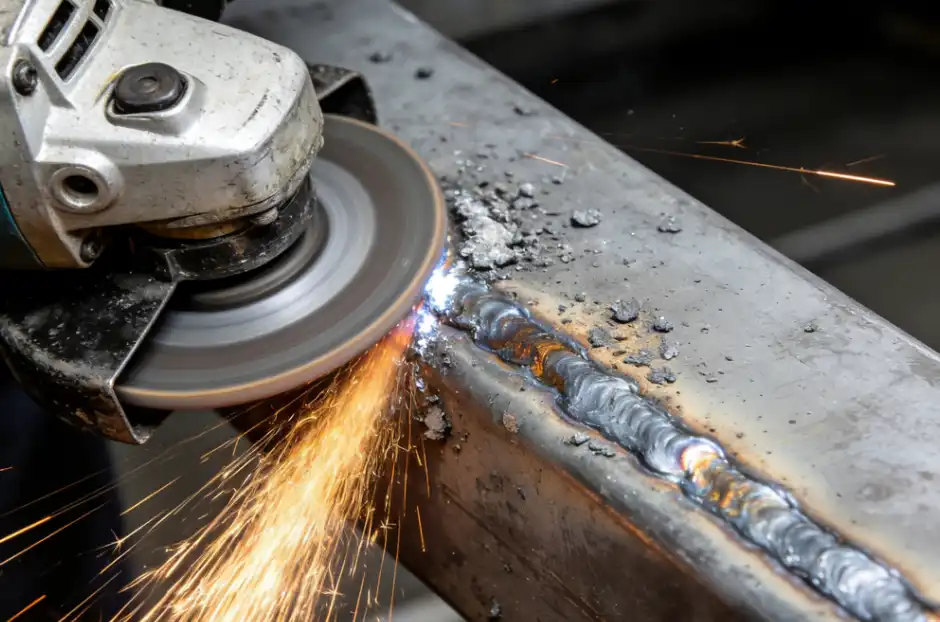
Electrochemical weld cleaning machine in use on a stainless steel weld seam showing electrolyte and carbon fiber brush
The Four Key Cost Components Behind Every Single Weld Clean
Every time you press a brush to a weld seam, four distinct costs tick upward simultaneously. Understanding each one is the difference between guessing at margins and actually controlling them. Here’s the breakdown.
Electrolyte fluid consumption typically runs $0.02–$0.08 per weld. The liquid gets absorbed into the brush pad, reacts with the heat-tinted surface, and evaporates or gets wiped away. A 1-liter bottle priced at $25–$45 covers roughly 400–800 small TIG welds, though longer MIG seams burn through fluid faster.
Carbon fiber brush and electrode wear is the sneakiest cost. A quality brush head costs $15–$60 and lasts anywhere from 200 to 1,500 cleans depending on pressure, amperage, and weld geometry. That puts per-weld brush cost between $0.01 and $0.30. Operators who push too hard accelerate wear dramatically — sometimes cutting brush life in half.
Electricity usage is almost negligible. Most electrochemical units draw 100–400 watts. At U.S. commercial electricity rates (EIA data), you’re looking at fractions of a cent per weld — roughly $0.001–$0.003. Equipment depreciation matters more; a $3,000 machine spread across 50,000 welds adds about $0.06 each.
Labor time dominates. A skilled operator cleaning a standard 6-inch TIG weld spends 15–45 seconds. At a loaded shop rate of $45/hour, that’s $0.19–$0.56 per weld just in labor. This single line item often accounts for 40–60% of the total weld cleaning machine cost per weld, which is why operator training pays for itself fast.

Four key cost components of weld cleaning machine cost per weld shown as pie chart segments
Electrolyte Fluid Consumption Per Weld
Electrolyte fluid is the single most consumed material in electrochemical weld cleaning — and the one most shops underestimate. A typical TIG weld on 1.5 mm stainless steel uses roughly 0.3–0.5 mL of solution per linear inch when applied with a saturated brush pad. That sounds tiny. But scale it across 200 welds a day and you’re burning through 60–100 mL per shift, or about 1.5–2.5 liters per month in a moderately busy fabrication shop.
Most commercial electrolyte fluids retail between $35 and $80 per liter, depending on concentration and brand. Dilutable concentrates sit at the lower end; ready-to-use phosphoric acid blends skew higher. At $50/liter and 0.4 mL per inch, you’re spending roughly $0.02 per linear inch on fluid alone. For a 6-inch weld seam, that’s about $0.12 in electrolyte — a small but compounding slice of your total weld cleaning machine cost per weld.
Weld geometry changes everything. Flat butt joints consume the least fluid because the pad maintains consistent contact. Fillet welds in tight corners? Expect 30–50% higher consumption — the pad loses saturation faster against uneven surfaces, and operators instinctively re-wet more often. Outside corner joints and pipe saddle welds push consumption even higher because fluid runs off curved surfaces before it can do its electrochemical work.
One practical tip: thicker heat tint from higher amperage welding demands longer dwell time, which means more fluid evaporates at the contact point. According to technical documentation from Cougartron’s engineering resources, matching your electrolyte concentration to the severity of oxidation can reduce waste by up to 20%. Choosing a higher-concentration fluid for heavy discoloration — rather than making extra passes with a weaker solution — is one of the simplest ways to keep fluid costs predictable.

Electrolyte fluid being applied to a weld cleaning brush pad on stainless steel weld seam
Carbon Fiber Brush and Electrode Wear Rates
Brushes and electrodes are the second-largest recurring expense after electrolyte fluid, yet most shops never track their actual lifespan. A standard carbon fiber brush head lasts between 800 and 1,500 weld cleans before the fibers degrade enough to slow cleaning speed and leave uneven finishes. That range is wide for a reason — pressure, dwell time, and weld bead geometry all accelerate or extend brush life dramatically.
Replacement brush heads typically cost $25 to $60 each, depending on the manufacturer and diameter. Run the math on a mid-range brush at $40 lasting 1,000 welds, and you land at $0.04 per weld. Sounds trivial. But pair that with electrode pad replacements every 300–500 welds at $15–$30 per pad, and consumable costs start compounding. According to testing data shared by Cougartron’s electrode guide, operators who apply excessive downward force can cut electrode life nearly in half.
Here’s what matters for your weld cleaning machine cost per weld: brush and electrode wear isn’t linear. The first 70% of a brush’s life delivers consistent results. The final 30% is where quality drops and cleaning time per seam creeps up — which quietly inflates your labor cost too. Swap consumables on schedule, not when they fall apart.
Flat fillet welds are gentler on brushes than tight inside corners or pipe joints, where fibers bend at sharp angles and fray faster. Tracking wear by weld type — not just total count — gives a far more accurate picture of true consumable spend.

Worn vs new carbon fiber brush head comparison showing fiber degradation after extended weld cleaning use
Electricity and Equipment Depreciation
Energy draw on most electrochemical weld cleaning machines is surprisingly modest. A typical unit pulls between 300 W and 1,200 W during active cleaning — roughly the same as a household microwave. At an average U.S. industrial electricity rate of $0.08 per kWh (per EIA data), running a 600 W machine for two minutes per weld costs about $0.0016. Essentially nothing. Even a high-power 1,200 W unit operating six hours a day adds less than $0.60 to your daily overhead.
Equipment depreciation is the bigger number, but it’s still manageable once you spread it properly. Take a mid-range machine purchased at $6,000. Assume a conservative five-year productive lifespan and 40 welds per shift, five days a week, 50 weeks a year. That’s 10,000 welds per year — 50,000 over the machine’s life. Your depreciation cost lands at $0.12 per weld. A shop running 80 welds a day on the same unit cuts that figure to $0.06.
This is where volume changes the math dramatically. Low-volume operations cleaning 10 welds a day face a depreciation burden of $0.48 per weld — four times higher. When calculating your true weld cleaning machine cost per weld, equipment amortization is the one variable that rewards throughput more than anything else. Buy more machine than you need, and depreciation quietly eats your margin.
One practical tip: track actual operating hours, not calendar age. A machine rated for 5,000 duty-cycle hours might last seven years in a light-use shop but only three in a production-heavy environment. Basing depreciation on hours gives a far more accurate per-weld figure than simply dividing by years.
Labor Time and Operator Efficiency
Labor is the elephant in the room. Consumables, electricity, depreciation — they all matter, but operator time typically accounts for 50–70% of the total weld cleaning machine cost per weld. A skilled technician cleaning a straight butt weld on a flat workbench might finish in 15–20 seconds. Hand that same brush to someone untrained, or move the joint to an awkward overhead position, and the clock stretches to 60 seconds or more. At a loaded labor rate of $45/hour, that’s the difference between $0.19 and $0.75 for the labor portion alone.
Skill level isn’t just about speed. An experienced operator applies consistent pressure, keeps the brush moving, and avoids over-wetting the surface — all of which reduce electrolyte waste and brush wear simultaneously. Beginners tend to dwell too long on one spot, scorching the brush tip and consuming 20–30% more fluid per pass. Training pays for itself fast.
Weld accessibility is the variable most shops underestimate. Interior corners, pipe internals, and tight flange gaps force operators to switch to smaller brush heads, reposition the workpiece, or contort their wrist angle — each adding 10–40 seconds per weld. According to the American Welding Society, ergonomic factors in post-weld finishing are a leading driver of rework and fatigue-related slowdowns. Tracking actual cycle times by joint type, rather than using a single shop-wide average, gives you a far more accurate picture of your real weld cleaning machine cost per weld.
Real-World Cost-Per-Weld Comparison Across Different Machine Brands and Power Levels
Putting brands head-to-head reveals just how much the weld cleaning machine cost per weld can swing based on wattage and design. Lower-powered units (under 500W) like the Cougartron ProPlus and Ensitech TIG Brush TBE-440 keep purchase prices accessible but tend to burn through brush shrouds faster on thicker welds. Higher-tier machines — the Cougartron InoxPower, Walter Surfox 305, and TIG Brush TBE-700 — push more current, clean faster, and spread depreciation across more welds per hour.
| Brand / Model | Wattage Tier | Approx. Unit Price | Est. Cost Per Weld (150 mm TIG on 304 SS) |
|---|---|---|---|
| Ensitech TIG Brush TBE-440 | ~400W | $2,500–$3,200 | $0.85–$1.20 |
| Cougartron ProPlus | ~450W | $2,800–$3,500 | $0.75–$1.10 |
| Cougartron InoxPower | ~1,000W | $5,500–$6,500 | $0.35–$0.55 |
| Walter Surfox 305 | ~800W | $5,000–$6,000 | $0.40–$0.65 |
| TIG Brush TBE-700 | ~700W | $4,200–$5,000 | $0.45–$0.70 |
The pattern is clear. Cheaper machines aren’t cheaper to operate. A $2,800 unit running at $1.00 per weld overtakes the total ownership cost of a $6,000 machine at roughly the 5,000-weld mark. For shops cleaning 40+ welds daily, that crossover arrives in about four months. Cougartron’s own comparison data supports this trajectory, though real-world results shift with operator speed and weld complexity.
One caveat: these estimates assume standard consumable pricing from each manufacturer. Third-party brushes and generic electrolytes can shave 10–20% off per-weld costs on some platforms, but compatibility varies. Always test before committing to off-brand supplies.
Weld Cleaning Machine vs Pickling Paste vs Mechanical Grinding — Full Lifecycle Cost Analysis
Pickling paste looks cheap at first glance — roughly $30–$50 per kilogram. But factor in PPE, neutralizing agents, hazardous waste disposal fees, and the labor time to apply, wait 20–60 minutes, then rinse and inspect, and the true cost lands between $3.80 and $7.00 per weld on a 6-inch TIG seam. OSHA chemical hazard regulations add another layer: fume extraction, spill containment kits, and annual compliance training that many shops quietly absorb without tracking.
Mechanical grinding is faster than paste but brutal on finish quality. Flap discs cost $3–$8 each, last maybe 15–40 welds depending on alloy, and leave visible scratch patterns that often trigger rework on architectural or food-grade jobs. Rework rates of 8–12% are common. That rework time alone can push the effective cost past $4.00 per weld once you account for a second operator pass.
Electrochemical cleaning sits in a different bracket entirely. The weld cleaning machine cost per weld — typically $0.15 to $2.50 as covered earlier — already includes consumables, depreciation, and labor. No hazardous waste stream. No rework from surface scratching. Over 10,000 welds, a mid-range electrochemical unit saves $15,000–$40,000 compared to pickling paste and $8,000–$20,000 compared to grinding, depending on shop labor rates and rejection tolerances.
| Factor | Electrochemical | Pickling Paste | Mechanical Grinding |
|---|---|---|---|
| Cost per weld (6″ TIG seam) | $0.50–$2.50 | $3.80–$7.00 | $2.00–$4.50 |
| Cycle time | 30–90 sec | 20–60 min | 2–5 min |
| Rework rate | <1% | 2–4% | 8–12% |
| Hazardous waste | None | Yes | Dust/particulate |
| Surface finish quality | Mirror-capable | Good | Scratched |
The gap widens with volume. Shops running 50+ welds per day hit the breakeven point on an electrochemical machine within 3–6 months, while paste and grinding costs scale linearly with zero efficiency gains.
How to Calculate Your Exact Cost Per Weld Using a Simple Formula
Here’s the formula. Pin it above your workbench:
(Electrolyte Cost + Brush/Electrode Cost + Energy Cost + Labor Cost + Machine Depreciation) ÷ Total Welds = Cost Per Weld
Simple enough on paper. The trick is plugging in honest numbers. Let’s walk through a realistic worked example for a mid-size fabrication shop running a 1,500 W electrochemical unit.
| Cost Component | Monthly Spend | How It’s Derived |
|---|---|---|
| Electrolyte fluid | $96 | 4 liters × $24/liter |
| Carbon fiber brushes | $70 | 2 brush replacements × $35 each |
| Electricity | $11 | 1.5 kW × 5 hrs/day × 22 days × $0.067/kWh |
| Operator labor | $1,650 | 110 hrs × $15/hr (allocated cleaning time only) |
| Machine depreciation | $83 | $5,000 unit ÷ 60-month useful life |
| Total monthly cost | $1,910 |
If that shop cleans 2,200 welds per month — roughly 100 per working day — the weld cleaning machine cost per weld lands at $0.87. Swap in your own numbers and the answer changes fast. A shop doing 4,000 welds on the same setup drops to about $0.48; a low-volume operation cleaning 800 welds per month jumps to $2.39.
Notice how labor dominates. It accounts for over 86% of the total in this example, which matches findings from the American Welding Society showing labor as the largest variable in post-weld processing. If you want to move the needle on your cost per weld, that’s the line item to attack first — not the $11 electricity bill.
One caveat: this formula gives you a blended average. Complex joints that take 90 seconds each will cost more than quick fillet welds finished in 20 seconds. For tighter accuracy, run the formula separately for each weld type your shop handles.
Five Proven Strategies to Reduce Your Per-Weld Cleaning Cost
You already know the formula. Now let’s shrink the numbers inside it. These five tactics target the specific cost drivers covered in earlier chapters — electrolyte, brush wear, labor, and setup overhead — and compress them in ways that compound fast across a production run.
Dial In Your Electrolyte Dilution
Most manufacturers ship concentrate with a recommended ratio around 1:4 or 1:5. Many operators pour heavier “just to be safe,” which wastes 15–20% of fluid per shift. Run test strips on scrap coupons at the manufacturer’s minimum ratio first; if the oxide layer clears within 3–5 seconds on 304 stainless, you’re already at the sweet spot. Tighter dilution alone can drop your weld cleaning machine cost per weld by $0.03–$0.08 on electrolyte consumption.
Match Brush Geometry to Joint Profile
A flat brush dragged across a fillet weld contacts maybe 40% of the surface per pass. Switch to a contoured or narrow-tip brush and you cut pass count — which directly extends brush life and trims cycle time. Keep two or three brush profiles on the bench and train operators to swap without hesitation.
Batch Your Welds
Setup eats time. Grouping similar joints — same alloy, same thickness — eliminates repeated voltage and flow-rate adjustments. Shops that batch-process report 10–15% faster throughput per shift according to data shared by The Fabricator.
Maintain the Machine Weekly
Corroded connectors increase resistance, forcing higher power settings that chew through brushes. A 10-minute weekly check — terminals, hose fittings, pump filter — prevents the slow creep of hidden waste.
Train for Rhythm, Not Just Speed
Consistent stroke pressure matters more than raw pace. Operators who maintain even contact finish each weld in fewer passes, which lowers the overall cost per weld without sacrificing surface quality. A 30-minute coached session with timed drills pays for itself within a single production day.
Hidden Costs Most Shops Overlook When Evaluating Weld Cleaning Expenses
Your spreadsheet might look airtight — consumables, labor, depreciation all accounted for. But several expenses never make it onto the spreadsheet in the first place, and they quietly inflate your true weld cleaning machine cost per weld by 15–30%.
Rework is the big one. Inconsistent cleaning — missed heat tint, streaky passivation — triggers rejection at QC inspection. Each reworked weld doubles your consumable and labor cost for that joint. Shops running older or underpowered machines report rework rates around 5–8%, which adds roughly $0.10–$0.20 per weld across the entire batch when you amortize it.
Unplanned downtime hits next. A failed brush mid-shift doesn’t just cost $12–$25 for the replacement; it stalls the operator for 10–15 minutes while they swap parts, re-soak, and restart. Multiply that across a few failures per week and you’re bleeding hours. Then there’s the opportunity cost: every minute spent on slow or repeated cleaning is a minute not spent welding the next joint.
If you’re comparing electrochemical cleaning against pickling paste, don’t forget hazardous waste compliance. EPA hazardous waste regulations require proper manifesting, licensed haulers, and periodic audits — costs that can run $2,000–$5,000 annually for a mid-size shop. Electrochemical methods sidestep most of that burden entirely. Factor these hidden line items in, and the cost picture shifts dramatically.
Frequently Asked Questions About Weld Cleaning Machine Cost Per Weld
How many welds can one carbon fiber brush handle?
Most carbon fiber brushes last between 80 and 200 weld cleans before the fibers degrade enough to affect coverage. Thicker TIG beads wear brushes faster than thin, flat seams. Replacing the brush sleeve rather than the entire assembly cuts replacement cost by roughly 40%.
Is a more expensive machine actually cheaper per weld long-term?
Usually, yes. Premium units from brands like Cougartron or Walter draw electrolyte more efficiently and maintain consistent power output, which extends brush life and reduces fluid waste. A $4,500 machine running 300+ welds per week can drop below $0.20 per weld within the first year — half the cost of a budget unit doing the same volume. The weld cleaning machine cost per weld almost always favors higher-quality equipment once you pass roughly 5,000 total cleans.
Does weld type — TIG vs MIG — change the cleaning cost?
It does. MIG welds produce heavier spatter and wider heat-affected zones, demanding 30–50% more electrolyte and longer brush contact time per seam. TIG welds are cleaner by nature, so electrochemical cleaning finishes faster and consumes less fluid. Expect MIG cleaning costs to sit around $0.30–$0.60 per weld versus $0.15–$0.35 for TIG on the same machine.
What’s the break-even point versus outsourcing?
If you’re sending parts to an outside finishing shop at $5–$12 per weld, a mid-range electrochemical system pays for itself in 500–1,000 welds. For a shop cleaning 50 welds a day, that’s 10–20 working days. The American Welding Society notes that in-house post-weld processing consistently reduces per-unit finishing costs once volume justifies the capital outlay.
Can electrolyte be reused?
No. Once electrolyte reacts with the oxide layer, its chemistry is spent. Attempting to reuse it leads to streaking, incomplete passivation, and wasted labor on rework. Buy in bulk to lower the per-milliliter price, but never recycle used fluid.
Making the Right Investment — Matching Machine Choice to Your Production Volume
Low-volume custom fabrication shops cleaning fewer than 50 welds a day can often justify an entry-level unit in the $2,000–$4,000 range. The per-weld cost will sit higher — around $1.50–$2.50 — but total monthly spend stays under $300, and payback arrives within 8–12 months compared to outsourcing or paste. That math changes fast once you cross 150 welds per day. At that volume, a mid-tier or industrial-grade machine ($5,000–$12,000) slashes your weld cleaning machine cost per weld below $0.50, and the higher upfront price pays for itself in under six months through consumable efficiency and faster cycle times alone.
High-volume production lines pushing 500+ welds daily need the top tier. Units with integrated flow systems, wider brush heads, and higher amperage output drive per-weld costs toward the $0.15–$0.25 floor discussed earlier. Skimping on machine capability at this scale is expensive — slower cleaning, more brush replacements, and overtime labor quietly eat the “savings” from a cheaper purchase.
Here’s the practical step: plug your actual daily weld count into the formula from Section 9. Compare three machine tiers using your real electrolyte prices and labor rate. The American Welding Society recommends total-cost-of-ownership analysis over sticker-price comparison for exactly this reason — the cheapest machine rarely delivers the cheapest weld. Request quotes from at least two manufacturers, ask for consumable pricing locked into the purchase agreement, and benchmark the numbers yourself. Your spreadsheet won’t lie.
See also