
Laser Cleaning Material Guide
What Materials Can Laser Cleaning Treat? 9 Metal Groups and 5 Non-Metal Groups
Laser cleaning can treat rust, oxides, paint and residues on many metals and selected non-metal surfaces. Suitability is never decided by the material name alone. It depends on the layer to remove, the surface that must remain, the laser settings and the finish or function the part must meet after cleaning.
Updated September 2, 2026 · Scope: material screening, sample qualification and purchasing decisions · Reviewed by the Oceanplayer Laser Technical Team

Prove the surface.
Which materials are the best starting points for laser cleaning?
Rusty carbon steel, stainless steel and cast iron are common starting points. Aluminum, copper, coated metals, glass, ceramics, stone, CFRP and elastomers require tighter trials because reflection, heat sensitivity, coating value or surface function can narrow the safe window.
Carbon steel, stainless steel and cast iron often respond well when removing rust, oxides, oil, paint or production residue.
Aluminum, copper, brass, bronze and galvanized steel can be cleaned, but the surface, coating and wavelength must be validated.
Check roughness, dimensions, chemistry, adhesion or electrical performance—whatever the cleaned part must do next.
Use this four-part gate first
How do you know whether laser cleaning is safe for a material?
Freeze the decision before choosing a wattage. A useful trial states the condition, the first action, the evidence required and the point where the test must stop. There are no universal damage limits for every alloy, coating and geometry.
Record the exact alloy or substrate, the layer to remove, its thickness in µm where available, part geometry and the useful coating or finish that must remain.
Use representative worst-case parts. Change one planned setting at a time and include the real extraction, work distance and scan path.
Use the governing method: Ra/Rz in µm, remaining coating thickness in µm, adhesion or weld result, contact resistance, dimensions and accepted cycle time.
Pause for unknown chemistry, useful coating loss, cracks, melt, unacceptable color or texture, failed downstream tests, or uncontrolled beam and plume hazards.
The useful mental model
How does laser cleaning remove a layer without damaging the base?
The laser does not decide that “steel is safe” or “plastic is unsafe.” It delivers energy. The target layer and the base material respond differently according to wavelength, power density, pulse duration, dwell time, focus, scan pattern and surface condition.
If any one of these three conditions fails, the fact that the surface looks cleaner is not enough.
Fraunhofer ILT describes laser cleaning as a local interaction controlled by wavelength, intensity, interaction time and the properties of both the layer and material. That is why the same alloy can be an easy cleaning job in one condition and a difficult one in another. See the Fraunhofer ILT cleaning overview.
Rust, oxide, paint, oil, grease, carbon, release agent, plating, resin or another contaminant. Identify its thickness, uniformity and chemistry.
Alloy, coating, temper, finish, roughness, thickness, heat sensitivity and geometry. These set the damage boundary.
Visual cleanliness, adhesion, weldability, electrical contact, roughness, dimensions or heritage appearance. Define it before testing.
The 9 metals
Which metals can laser cleaning treat?
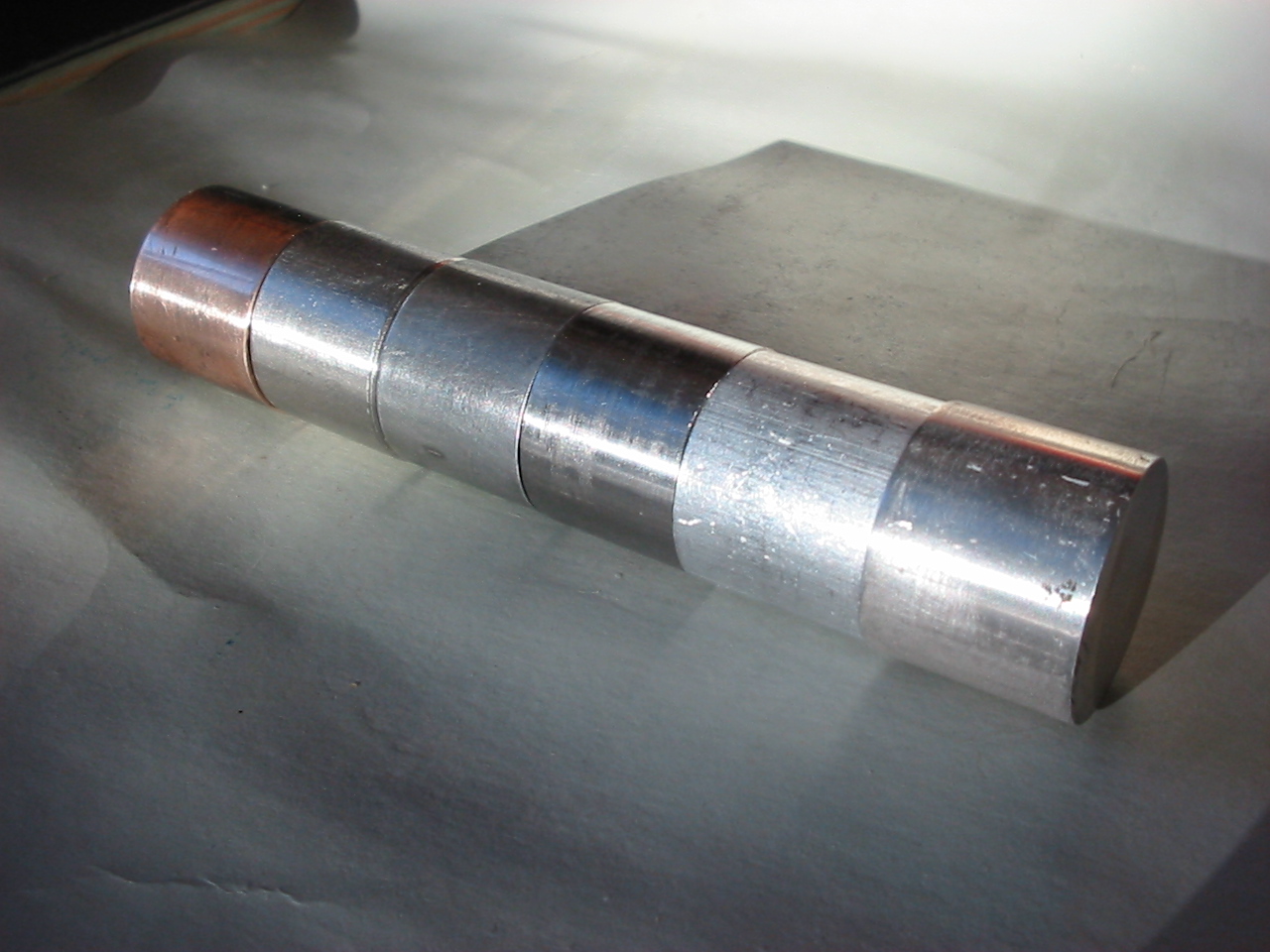
These are nine metal groups with documented or practical industrial uses. The labels are screening views, not universal approvals. “Common use” means the application is a reasonable first trial; “specialist trial” means the evidence burden is higher.
Carbon and mild steel
A common laser-cleaning application because rust, mill oxide, paint and oily residues often absorb differently from the steel beneath.
Stainless steel
Laser cleaning can remove heat tint, oxide, oil and light coatings, especially before joining or finishing. Grade and required corrosion condition still matter.
Cast iron
Useful for molds, engine parts and maintenance work where oil, carbon or oxidation must be removed without blasting media.
Aluminum and its alloys
Aluminum can be cleaned for bonding, welding and repainting, but its reflectivity, oxide layer, temper and low melting point narrow the safe window.
Copper
Copper oxides and contamination can be removed, but clean copper reflects near-infrared fiber-laser light strongly and conducts heat away rapidly.
Brass and bronze
Laser cleaning can remove corrosion products and deposits from copper alloys, but alloy composition, patina value and zinc-bearing emissions change the decision.
Titanium and its alloys
Titanium surfaces may be cleaned before joining, coating or inspection, yet their oxide condition and strict aerospace or medical requirements demand controlled evidence.
Nickel alloys
Nickel-based parts can be cleaned before repair or joining, but the application may be high-value and surface-critical, so qualification should match the real service duty.
Galvanized or zinc-coated steel
The key question is whether zinc is contamination to remove or a protective coating to preserve. The answer changes the entire recipe.
The 5 non-metals
Which non-metals can laser cleaning treat?
Selected coatings or deposits can be removed from these five non-metal groups, but they often have a narrow gap between “the layer releases” and “the substrate changes.” Use low-energy trials and inspection that can detect cracks, gloss loss, resin damage or hidden thermal effects.

Decision matrix
How should you compare material suitability before a trial?
Use this table to plan a sample trial. It is not a universal parameter chart; the accepted result still depends on the exact alloy, surface, part geometry and downstream process.
| Material | Typical targets | Starting view | Main risk | Evidence before release |
|---|---|---|---|---|
| Carbon / mild steel | Rust, paint, scale, oil | Common fit | Pitting remains; texture or heat color can change | Visual plus roughness, residue and downstream weld/coating test |
| Stainless steel | Heat tint, oxide, oil, coatings | Common fit | Surface chemistry or corrosion condition changes | Roughness, chemistry/passivation and service-specific check |
| Cast iron | Carbon, oil, rust, mold residue | Common fit | Contamination remains in pores | Residue check, texture and repeated-cycle mold performance |
| Aluminum | Paint, oxide, oil, adhesive | Validate tightly | Melting, roughness, coating removal | Surface chemistry, adhesion/weld test and dimensions |
| Copper | Oxide, tarnish, oil | Validate tightly | Reflection and changing absorption | Electrical resistance, roughness and dimensional check |
| Brass / bronze | Tarnish, corrosion, paint | Validate tightly | Patina loss, color shift, zinc fume | Appearance policy, chemistry and exposure controls |
| Titanium | Oil, oxide, selected coatings | Specification-led | Oxide chemistry and fatigue-critical surface change | Customer/process specification, roughness and chemistry |
| Nickel alloys | Oxide, soot, repair residue | Specification-led | Recast or damage to high-value surfaces | Surface integrity and repair qualification |
| Galvanized steel | Oil, paint or intentional zinc removal | Layer decision | Loss of zinc protection and zinc fume | Remaining coating thickness and extraction verification |
| Glass | Coatings, pigments, deposits | Specialist trial | Cracking, haze, optical change | Magnified inspection and optical/function test |
| Ceramics | Deposits, selected coatings | Specialist trial | Thermal shock, glaze or microcrack damage | Microscopy or a material-appropriate NDT method |
| Stone / masonry | Crusts, biological matter, coatings | Site-specific | Mineral loss, color change, salt/moisture effects | Conservator-approved reference patch and monitoring |
| CFRP | Paint, resin, adhesive residue | Tight process window | Matrix charring, fiber exposure, interface damage | Microscopy, bond/mechanical test and thermal-damage check |
| Rubber / silicone | Selected residue on a specified formulation | Specialist direct trial | Hardening, softening, cracks, wettability or sealing change | Repeated-cycle visual, mass, hardness and functional test |
On a phone, swipe sideways to compare all five columns.

Why some surfaces are harder
Why are reflective, coated and thin parts harder to clean?
At the start of a pass, dark oxide or paint may absorb strongly. As that layer disappears, bright metal is exposed and absorption can fall. The process that removed the first 90% safely may behave differently on the last 10%.
Reflective metals
Copper and aluminum can reflect much of a near-infrared beam while also carrying heat away quickly. Their oxide or coating may absorb more than the clean metal. Use stable focus, scan overlap and an endpoint that avoids repeated dwell on the exposed surface. Read our fiber-laser reflectivity guide.
Useful coatings
Anodizing, galvanizing, conversion coatings, plating and intentional patina are not automatically contamination. Map what must stay and what must leave. If the coating is functional, specify remaining thickness or performance.
Thin or precision parts
Local melting, edge rounding, distortion or a few micrometers of dimensional change may be unacceptable even when the part looks good. Include the thinnest section and sharpest feature in the trial.
Mixed or unknown surfaces
Repair parts may include filler metal, plating, previous coatings, corrosion products and unknown residues. Portable identification, coating records and a small low-energy test area reduce surprises.
Source selection
Should you use pulsed or CW laser cleaning?
Neither source type owns a material. Pulsed-first and CW-first are screening heuristics, not material laws. Compare accepted removal rate, surface change, extraction load, energy use, rework and cost under the same endpoint.
Pulsed laser cleaning
Often selected when surface control matters more than maximum area rate. Short pulses can concentrate energy into the target while limiting the time available for heat to spread.
- Precision parts and higher-value surfaces
- Thin oxides, coatings and selective preparation
- Aluminum, copper and non-metal trials where thermal margin is limited
- Applications that need controlled roughness or repeatable finish
CW laser cleaning
Often selected for faster removal across larger, robust metal surfaces where more heat input and surface change are acceptable.
- Heavy rust, thick paint and large steel structures
- Maintenance tasks where production area rate is the main driver
- Robust castings, frames and fabricated carbon-steel parts
- Projects with strong extraction and well-controlled travel
What controls the result
Which settings control cleaning and material damage?
A transferable recipe records more than wattage. Common controls include wavelength, focus, spot size, scan path, speed, overlap, passes and extraction. Pulsed systems also require pulse energy or fluence, duration and repetition rate; CW systems rely more on irradiance and dwell.
The target and substrate may absorb one wavelength differently. Their contrast can widen—or erase—the useful window.
Focus drift, tilted parts and changing stand-off alter irradiance even when displayed power stays unchanged.
Travel speed, line spacing, pattern and overlap control dwell, uniformity and how often one point is heated.
Extra passes can help uneven layers but may over-process areas that became clean first.
Useful and damage thresholds change with pulse count, overlap, wavelength, layer thickness and surface condition.
At fixed average power, a higher repetition rate usually lowers energy per pulse. Heat accumulation still depends on overlap and timing.
Power density, spot size and the time the beam remains over one area set the continuous thermal load.
Under some conditions, plume can shield the beam or redeposit material. Verify source capture in the real work position.
For a deeper selection path, use the wavelength and spot-size guide and our cleaning efficiency vs surface roughness guide.
When to pause
When is laser cleaning the wrong first choice?
A good engineering decision sometimes means keeping another process. These conditions deserve a technical and commercial review before equipment selection.
You cannot set safe extraction, waste handling or a surface endpoint until the layer is identified.
Line-of-sight energy may clean the visible face while oil, salts or residue remain below or around the corner.
If finish control is not valuable, blasting, chemical or mechanical methods may deliver a lower accepted-part cost.
The layer you remove may be part of the product’s appearance, history, optical function or corrosion protection.
A narrow thermal margin can turn small parameter variation into matrix damage, color change or lost function.
If the facility cannot control the open beam, reflections, fume, fire and access, throughput cannot justify the process.
Qualification workflow
How do you validate laser cleaning before production?
A representative coupon matrix is faster and safer than guessing. Include the normal variation your production team actually sees—not only the cleanest showpiece.
State what “clean” means: visual grade, oxide limit, roughness, bond strength, contact resistance or weld acceptance.
Record alloy, coating, layer thickness, contamination, finish, geometry and the worst normal condition.
Vary only planned settings. Include low, nominal and high energy plus travel and overlap boundaries.
Use visual and magnified checks, then measure chemistry, roughness, dimensions or function as required.
Run the real weld, adhesive, paint, electrical contact or mold cycle. Surface preparation is only successful if the next step improves.
Record cleaning rate, repositioning, extraction, lens life, rework, operator variation and accepted area per shift.
Assess radiation, reflections, plume composition, filters, fire risk, access controls and waste disposal.
Lock settings, allowable part variation, inspection frequency, stop rules and the person authorized to approve changes.
No single limit fits every material. The drawing, customer requirement or governing process specification must supply the pass/fail value; the trial supplies repeatable evidence.
XRF, XPS, wipe test or another specified chemistry method; report the method and result.
Profilometer result in Ra or Rz, µm, with sampling direction and cutoff recorded.
Remaining thickness in µm or part dimensions in mm using approved metrology.
Adhesion, weld, leak, electrical resistance in mΩ or another governing acceptance test.
Record s/part or m²/h, passes, rework and first-pass yield—not scanner speed alone.
Three illustrative qualification scenarios
How should you test three common applications?
These are planning examples, not reported Oceanplayer Laser customer results. The best sample test copies the real part, contamination, fixture, cleaning path and acceptance method.
Remove rust and oil without hiding pits.
Include the normal rust grade and oil load. Measure time per joint and then weld the cleaned coupons. Inspect porosity, fusion and any effect of residue. Do not treat a bright surface as proof of weld readiness.
Acceptance: weld performance + residue control + cycle timeCreate a stable bond surface, not merely a bright one.
Test the exact alloy, temper and starting oxide or coating. Compare surface chemistry, roughness and bond strength after aging. A more aggressive texture may improve one adhesive and damage another.
Acceptance: bond strength and durability across process limitsStop before the polymer matrix loses function.
Use a low-energy matrix and inspect fiber exposure, resin recession, charring and heat-affected depth. Follow with the actual bond or coating test. If the safe window is too narrow, keep a different removal method.
Acceptance: controlled exposure + retained mechanical functionSafety and environmental gate
What safety and waste controls are required?
Classification belongs to the complete product and configuration. Open-beam handheld industrial cleaners commonly expose Class 4 radiation, while a validated enclosure may allow a lower accessible classification during normal use. Direct and reflected Class 4 radiation can injure eyes and skin and can create fire hazards. See the current FDA laser classification, OSHA guidance and the applicable product standard.
Zinc, chromium-bearing material, lead paint, oil, resin and unknown coatings require a material-specific exposure and waste plan. Source capture must be verified in the real operating position; filters, wipes, dust and residue still need a jurisdiction-specific waste determination.
What to send for a useful recommendation
What should you send for a laser cleaning recommendation?
These inputs let an application team design a representative trial and avoid recommending a machine from a single photograph.
Grade, coating or plating, temper/heat treatment, finish, thickness and any critical dimensions.
Rust, paint, oil, oxide, resin or another layer; include chemistry, thickness and variation if known.
Base metal, patina, zinc, anodizing, roughness, dimensions, conductivity, color or texture.
Photos, drawings, cavities, edges, curved areas, work position and square meters per part or shift.
Welding, coating, bonding, inspection, electrical contact, mold release or direct service.
Visual standard, roughness, bond test, weld test, residue, contact resistance, cycle time or specification.
Continue the decision
Use the next guide that matches your layer and production goal.Frequently asked questions
Frequently asked questions about laser cleaning materials
What metals can a laser cleaning machine clean?
Common candidates include carbon steel, stainless steel, cast iron, aluminum, copper, brass, bronze, titanium, nickel alloys and zinc-coated steel. The safe recipe depends on the exact alloy, target layer, coating, surface finish and accepted outcome. Iron-based metals are often easier starting points; reflective or coated metals usually need tighter testing.
Can laser cleaning damage metal?
Yes. Excess fluence, slow travel, excessive overlap, repeated passes or poor focus can melt, roughen, discolor or dimensionally change metal. Damage risk is lower only when the removal threshold of the contamination stays below the damage threshold of the substrate. Verify that window with representative samples.
Can laser cleaning be used on aluminum?
Yes, including selected paint, oil, oxide and adhesive-removal tasks. Aluminum is reflective, conducts heat rapidly and has a relatively low melting point, so the process must be validated for the exact alloy, temper and coating. If bonding or welding follows, test the downstream result rather than judging brightness alone.
Can a laser clean copper, brass and bronze?
Yes, but these are conditional applications. Copper reflects common fiber-laser wavelengths strongly once the dark surface layer clears. Brass can generate zinc-containing fume, and bronze may have intentional patina that should be preserved. Control the endpoint and measure appearance, roughness, chemistry or electrical performance as required.
Can laser cleaning remove paint without damaging the base material?
It can when the paint absorbs energy more readily than the substrate and the process stops before repeated heating changes the base surface. Paint chemistry, thickness, pigments and adhesion vary, so test the thickest and thinnest normal areas. Also identify hazardous pigments before setting extraction and waste controls.
What non-metals can laser cleaning treat?
Selected coating or deposit removal is possible on glass, ceramics, stone, masonry and CFRP. Direct cleaning of rubber or silicone is formulation-specific and should be treated as a specialist trial. These groups often have narrower process windows than robust steel because thermal shock, cracking, resin damage, gloss change or lost function can occur before damage is obvious.
Technical sources
Evidence behind the material and safety guidanceApplication settings still require testing on the actual material and contamination. These sources support the process principles and risk boundaries used in this guide.
Interaction factors, layer removal and industrial pretreatment uses.
Process examples and industrial cleaning context.
Mechanisms, parameters and surface-response considerations.
Composite-specific mechanisms and damage concerns.
Assessment and monitoring for sensitive, variable surfaces.
Metal, corrosion-product and patina limits in conservation applications.
Class 4 eye, skin and fire hazard description.
Laser-controlled areas, hazard evaluation and protective measures.
Current general laser-safety requirements for laser processing machinery.
Current hazard analysis, risk assessment and protective-measure scope for hand-held or hand-operated systems.
Current research context for fine particles, gases, source capture and exposure assessment.
Turn your surface into a test plan
Send the material, layer and required finish—not just a machine power.Oceanplayer Laser can use your part photos, material details, contamination, cleaning area and acceptance target to plan a representative sample test and recommend a pulsed or CW starting point.