
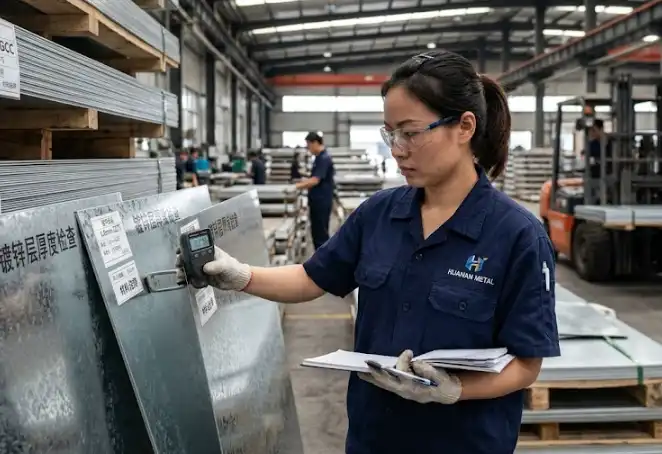
The global galvanized steel market hit $131.2 billion in 2023, and roughly 60% of all zinc produced worldwide ends up as protective coating on steel — a stat that tells you exactly how central this material is to modern construction and manufacturing. Choosing the right galvanized sheet metal comes down to matching three variables: zinc coating weight, base steel gauge, and galvanization method to your specific application, budget, and environmental exposure. This guide breaks down each factor so you can make a confident purchasing decision without overspending or under-specifying.
What Makes Galvanized Sheet Metal the Right Choice for Your Project
Steel rusts. That’s the fundamental problem. Left unprotected, a bare carbon steel sheet exposed to moisture can lose 25% of its structural thickness within just a few years. Galvanized sheet metal solves this by bonding a protective zinc layer directly to the steel substrate, creating a barrier that resists corrosion for decades — not months.
The zinc coating works through two mechanisms simultaneously. First, it physically shields the steel from water and oxygen. Second, it provides cathodic protection, meaning the zinc sacrifices itself electrochemically before the underlying steel ever begins to corrode. This dual defense is why galvanized steel consistently outperforms painted or powder-coated alternatives in harsh outdoor environments, according to the American Galvanizers Association.
Cost matters too. A galvanized sheet typically costs 15–30% more than untreated steel upfront, but the lifecycle math flips quickly. No repainting every 3–5 years. No premature replacement. For HVAC ductwork, agricultural buildings, roofing panels, and automotive components, the total cost of ownership drops significantly over a 20-year span.
But here’s where buyers trip up: not all galvanized sheet metal is interchangeable. Coating weight, steel gauge, galvanization method, and applicable ASTM specification all vary — and choosing the wrong combination leads to premature failure, wasted budget, or fabrication headaches. A sheet destined for exterior cladding in a coastal climate needs a very different zinc coating than one used for interior electrical enclosures. Getting the selection right from the start saves real money and real time downstream.

Cross-section of galvanized sheet metal showing zinc coating layer on steel
How the Galvanization Process Protects Steel from Rust
Zinc does something remarkable when bonded to steel: it corrodes instead of the base metal. This sacrificial protection means that even if the coating gets scratched down to bare steel, the surrounding zinc continues to shield the exposed area through electrochemical action. The zinc slowly oxidizes, forming a stable patina of zinc carbonate that further slows degradation. That’s the core science behind every piece of galvanized sheet metal on the market.
Hot-Dip Galvanizing
Steel coils pass through a molten zinc bath held at roughly 460 °C (860 °F). The result is a thick, tightly bonded coating — typically 0.5 to 2.0 oz/ft² — with a distinctive spangled surface. Hot-dip coatings excel in harsh outdoor environments because the zinc layer is substantial enough to endure decades of weathering. Weldability is decent but requires adjusted parameters; the thick zinc generates more spatter and fume.
Electrogalvanizing
Here, zinc is deposited onto the steel surface through an electroplating process at room temperature. Coatings are thinner — usually under 0.3 oz/ft² — and extremely uniform. The finish is smooth, bright, and ideal for painted automotive panels or appliance housings where appearance matters. Trade-off? Less corrosion resistance in aggressive conditions compared to hot-dip products.
Galvannealing
Think of this as hot-dip galvanizing with an extra step. Immediately after the zinc bath, the sheet enters an annealing furnace at around 500–565 °C, which alloys the zinc with the iron in the steel substrate. The resulting zinc-iron coating is matte gray, paints beautifully, and spot-welds with far less difficulty than standard hot-dip material. According to the American Galvanizers Association, this alloyed layer typically contains 8–12% iron, which is why it accepts primers so readily.
Matching the right process to your project isn’t optional — it’s the difference between a coating that lasts 5 years and one that lasts 50.

Cross-section comparison of hot-dip galvanized, electrogalvanized, and galvannealed steel coating layers
Understanding Zinc Coating Weights and ASTM Standards
Coating weight designations look cryptic at first glance. G90, G60, G40—what do those numbers actually tell you? The digit after the “G” represents the total weight of zinc applied to both sides of the steel, measured in ounces per square foot. So G90 means 0.90 oz/ft² total, which works out to roughly 0.45 oz/ft² per side. That translates to about 0.65 mils (0.0065 inches) of zinc thickness on each face.
G60 delivers 0.60 oz/ft² total—adequate for most indoor environments and mild exterior exposure. G40, at 0.40 oz/ft², suits interior ductwork and dry storage applications where corrosion risk stays minimal. For harsh outdoor or coastal settings, G90 is the baseline, and some specifiers jump to G115 or even G185 when salt spray is a constant threat.
The Standards That Govern Specification
When ordering galvanized sheet metal, two ASTM standards matter most. ASTM A653 covers steel sheet that’s hot-dip coated with zinc or zinc-iron alloy, defining mechanical properties, coating weights, and testing methods. ASTM A924 sits underneath as the umbrella standard for general requirements—packaging, marking, chemical composition limits, and quality tolerances that apply across multiple coating types.
Here’s a practical rule: match the coating weight to the environment, not the budget. Choosing G40 for an outdoor HVAC unit to save a few cents per pound almost always backfires within 3–5 years. Conversely, specifying G90 for a decorative interior panel wastes material. Get the designation right upfront, and the galvanized sheet metal performs exactly as long as you need it to.
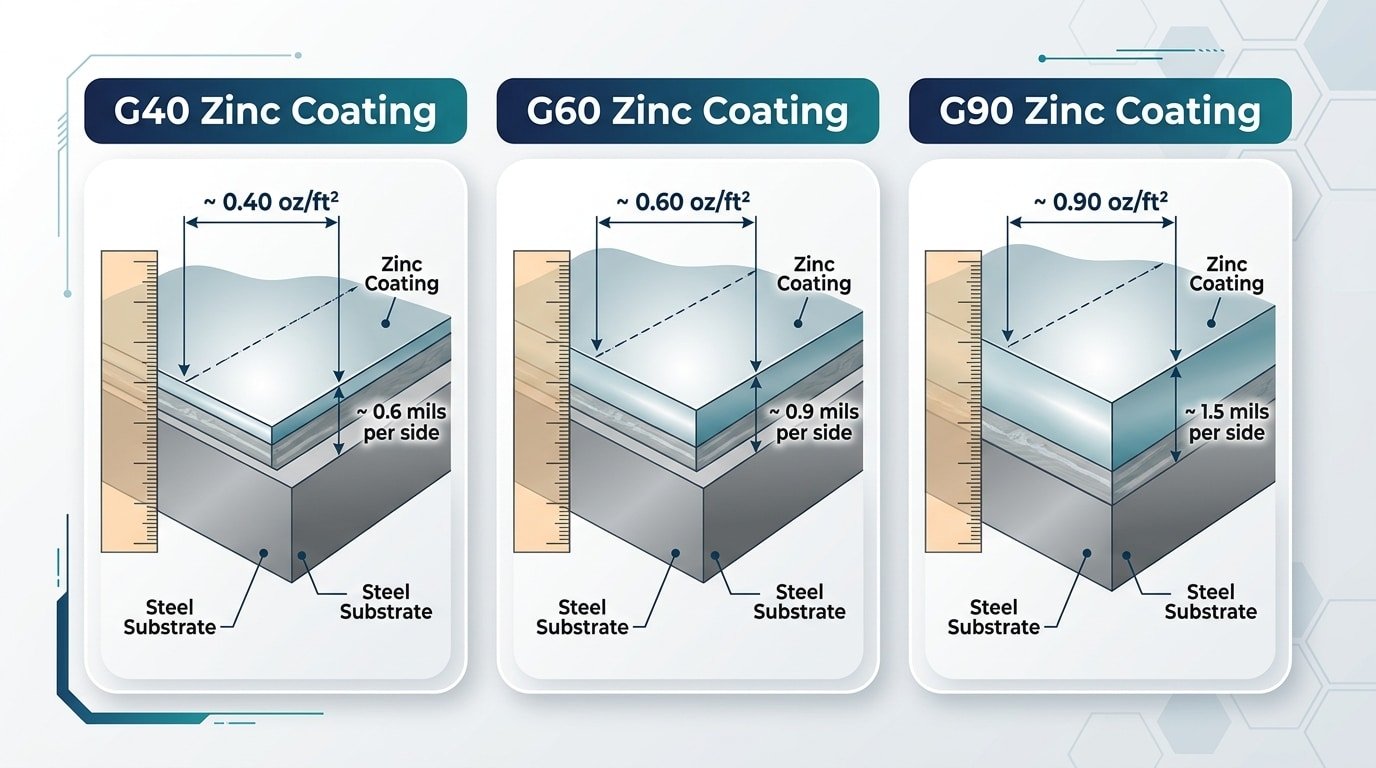
Zinc coating weight comparison chart showing G40 G60 and G90 designations with thickness measurements on galvanized sheet metal
Common Gauges and Thicknesses for Fabrication and Construction Projects
Gauge numbers are counterintuitive. A higher number means thinner material. This trips up even experienced buyers, so here’s a quick breakdown of the most commonly specified options for galvanized sheet metal in fabrication and construction.
| Gauge | Thickness (inches) | Typical Applications |
|---|---|---|
| 26 ga | 0.0187″ | HVAC ductwork, light flashings, decorative trim |
| 24 ga | 0.0239″ | Residential roofing panels, wall cladding, gutter systems |
| 22 ga | 0.0299″ | Commercial roofing, heavier ductwork, equipment enclosures |
| 20 ga | 0.0359″ | Electrical panels, appliance housings, medium-duty brackets |
| 18 ga | 0.0478″ | Structural framing components, trailer bodies, heavy shelving |
| 16 ga | 0.0598″ | Floor pans, industrial guards, load-bearing supports |
| 14 ga | 0.0747″ | Structural decking, heavy equipment platforms |
| 10 ga | 0.1345″ | Bridge decking, industrial floor plates, high-load structural members |
For HVAC contractors, 26 ga and 24 ga handle the vast majority of rectangular duct runs. Drop to 22 ga when duct dimensions exceed 24 inches on the longest side—wider spans need the extra rigidity to resist oil-canning and vibration noise. The SMACNA guidelines specify minimum gauges based on duct pressure class and dimension, and ignoring those specs invites callback headaches.
Budget matters here. Jumping from 24 ga to 22 ga adds roughly 25% more steel by weight, which directly impacts material cost and shipping. But going too thin creates problems during forming—thin stock wrinkles at tight bend radii and dents easily during installation. The sweet spot depends on your forming equipment, span requirements, and how much abuse the finished piece will take in service.
Structural decking projects typically land in the 14 ga to 10 ga range. At these thicknesses, you’re dealing with material stiff enough to require press brakes rated above 50 tons, so shop capability becomes a real constraint. Plan accordingly.
Comparing Galvanized Sheet Metal Types — Hot-Dip vs. Electrogalvanized vs. Galvannealed
Three products, three very different performance profiles. Picking the wrong type means either overpaying or dealing with premature coating failure. Here’s how they actually stack up.
| Property | Hot-Dip (HDGI) | Electrogalvanized (EG) | Galvannealed (GA) |
|---|---|---|---|
| Surface Finish | Visible spangle, slightly rough | Smooth, matte-bright | Matte gray, powdery texture |
| Paint Adhesion | Moderate — needs primer or pretreatment | Good — smooth surface accepts paint well | Excellent — iron-zinc alloy layer bonds tightly with paint |
| Formability | Good for moderate bends | Best — thin, ductile coating resists flaking | Fair — alloy layer can powder during deep draws |
| Weld Quality | Acceptable with adjusted parameters | Clean, consistent spot welds | Superior resistance welding due to higher surface resistivity |
| Relative Cost | Lowest | Highest (20–30% premium) | Mid-range |
Hot-dip galvanized sheet metal dominates construction, HVAC, and general fabrication because it delivers the thickest zinc layer at the lowest price point. Coating weights typically range from G40 to G210, giving specifiers enormous flexibility. The tradeoff? That characteristic spangle and rougher surface make it a poor candidate for Class A automotive panels.
Electrogalvanized steel earns its premium in applications demanding cosmetic perfection. Automakers use it for exposed body panels where paint finish quality is non-negotiable. The coating is thinner—usually under 0.5 oz/ft²—so corrosion protection relies heavily on subsequent paint systems rather than zinc thickness alone.
Galvannealed sits in a sweet spot. After hot-dipping, the sheet passes through an annealing furnace around 500–565°C, which diffuses iron into the zinc layer to form a roughly 90% zinc / 10% iron alloy. This alloy surface is a dream for painting and welding but can be brittle under aggressive forming. According to the GalvInfo Center, the iron content in galvannealed coatings typically falls between 8% and 12%, and controlling that range is critical to avoiding powdering defects.
Short version: build outdoor ductwork—go hot-dip. Paint a car door—go electrogalvanized. Weld and paint structural auto parts—galvannealed wins.
Key Applications and How They Influence Your Selection
The application dictates everything. Coating type, gauge, and finish aren’t interchangeable across industries — each use case has specific demands that narrow your options fast.
Roofing and Siding
Exterior building envelopes face UV exposure, wind-driven rain, and thermal cycling year-round. Hot-dip galvanized sheet metal in 26-gauge or 24-gauge with a G90 coating weight handles residential roofing well, while commercial standing-seam systems often step up to 22-gauge for longer spans between supports. A regular spangle finish works fine here since it’ll be painted or coated with a factory-applied finish like Kynar 500.
HVAC Ductwork
Duct fabrication is the single largest consumer of galvanized sheet in construction. Most rectangular duct runs use 26-gauge G60 — lighter coating because indoor environments don’t demand heavy corrosion protection. The SMACNA standards specify minimum gauges based on duct dimensions: anything wider than 24 inches typically requires 22-gauge to prevent oil-canning and maintain structural rigidity under negative pressure.
Automotive Panels
Car body panels need a flawless painted surface. Electrogalvanized or galvannealed steel wins here — both offer the smooth, uniform finish that robotic painting lines require. Typical thickness sits around 0.7 mm to 0.8 mm (roughly 22-gauge). Hot-dip with its thicker, uneven spangle would create visible texture under automotive paint.
Agricultural Equipment and General Fabrication
Grain bins, livestock panels, feed troughs. These see moisture, animal waste, and chemical exposure daily. Heavy G185 or G210 coatings on 18-gauge or 16-gauge material provide the durability these harsh environments demand. For general shop fabrication — brackets, enclosures, custom parts — G60 in 20-gauge offers a practical middle ground between formability and strength.
Essential Safety Tips for Cutting and Welding Galvanized Steel
Zinc burns off at roughly 1,665°F. Welding and plasma cutting easily exceed that threshold, which means the zinc coating vaporizes into a white, oxide-rich fume. Inhaling those fumes causes metal fume fever—a flu-like illness with chills, nausea, headache, and muscle pain that typically hits 4 to 12 hours after exposure. It’s rarely fatal, but repeated bouts can lead to chronic respiratory issues.
Before fabricating galvanized sheet metal in-house, get your ventilation right. OSHA sets the permissible exposure limit (PEL) for zinc oxide fumes at 5 mg/m³ over an 8-hour time-weighted average. A local exhaust system positioned 4–6 inches from the weld point is the most effective control. When local exhaust isn’t feasible—say, on a rooftop installation—a supplied-air respirator or at minimum a P100-rated half-face respirator becomes mandatory, not optional.
Required PPE and Practical Precautions
- Respiratory protection: P100 particulate filters for short-duration tasks; supplied-air systems for extended welding sessions in confined spaces.
- Eye and face: Auto-darkening welding helmet with side shields. Zinc fume particles irritate eyes fast.
- Skin coverage: Leather welding gloves and flame-resistant sleeves. Zinc oxide dust settles on exposed skin and clothing.
- Post-work hygiene: Wash hands and face before eating or drinking. This sounds basic, but ingestion is an overlooked exposure route.
One practical workaround: grind the zinc coating back 1–2 inches from the weld joint before striking an arc. This dramatically reduces fume generation and also improves weld penetration and bead quality. The OSHA zinc hazard page provides additional guidance on monitoring and compliance thresholds. If you’re buying galvanized sheet metal with plans to weld it extensively, factor in the time and cost of coating removal—it’s a real line item, not an afterthought.
Where to Buy Quality Galvanized Sheet Metal for Your Specific Needs
Three main sourcing channels exist: steel service centers, online metal suppliers, and local distributors. Each serves a different buyer profile. Service centers like Ryerson or Metals Depot stock broad inventories and offer cut-to-size processing, shearing, and slitting — ideal if you need non-standard dimensions or volumes between 500 and 10,000 pounds. Online suppliers such as Online Metals cater to smaller orders, sometimes with no minimum quantity, though per-unit pricing runs 15–30% higher than service center rates. Local distributors split the difference: competitive pricing with the advantage of same-day pickup.
Before placing an order, verify a few things. Ask for mill test reports (MTRs) that confirm the galvanized sheet metal meets the ASTM A653 standard discussed earlier. A reputable supplier provides these without hesitation. Check whether they offer blanking or custom shearing — paying $0.08–$0.15 per cut beats buying a $2,000 shear for a one-off project. Also confirm their minimum order quantity. Some service centers require a 500-pound minimum; others set it at a single sheet.
Shipping is where costs sneak up on you. A 4×8 sheet of 18-gauge material weighs roughly 40 pounds, but freight carriers classify sheet metal as oversized, and LTL rates for a skid of 20 sheets can hit $250–$400 depending on distance. Request freight quotes before committing. If you’re within driving range of a warehouse, will-call pickup eliminates that cost entirely. The cheapest per-sheet price means nothing if freight doubles your landed cost.
Frequently Asked Questions About Choosing Galvanized Sheet Metal
How long does it last outdoors?
That depends almost entirely on coating weight and environment. A G90 hot-dip coating in a rural or suburban setting typically lasts 40 to 70 years before the zinc layer fully depletes. Move that same sheet to a coastal area with salt spray, and you’re looking at 15 to 25 years. Industrial zones with sulfur dioxide exposure fall somewhere in between. The American Galvanizers Association publishes corrosion rate maps that help estimate service life by region.
Can you paint galvanized steel?
Yes—but surface prep matters enormously. Fresh zinc is chemically passive and rejects most paints. You need to either let the surface weather for six months or treat it with a vinegar-based wash or proprietary etch primer. Skipping this step causes peeling within a single season. A direct-to-metal (DTM) acrylic primer designed for zinc surfaces gives the most reliable adhesion.
Galvanized vs. stainless steel—what’s the real difference?
Cost. A 20-gauge galvanized sheet runs roughly $2–$4 per square foot. The same thickness in 304 stainless costs $8–$15. Stainless resists corrosion through chromium alloyed into the steel itself, while galvanized sheet metal relies on a sacrificial zinc barrier. For structural framing, ductwork, or agricultural panels, galvanized wins on value. For food-contact surfaces or highly acidic environments, stainless is the better call.
What does the spangle pattern tell you?
Large, visible spangles indicate a slower cooling process and often a lead-containing zinc bath—common in older production methods. Minimized-spangle or zero-spangle finishes use antimony-free baths and rapid cooling, producing a smoother surface that accepts paint more evenly. Spangle size doesn’t directly indicate coating thickness, but a uniform pattern across the sheet signals consistent bath chemistry and quality control.
Pre-galvanized or post-galvanized for welded assemblies?
Post-galvanized. Welding destroys the zinc layer at every joint, leaving bare steel exposed. If you galvanize after fabrication, the entire assembly—including weld seams, bolt holes, and cut edges—gets full coating coverage. Pre-galvanized sheet works fine for mechanical fastening or light spot welds where you can touch up with zinc-rich paint afterward.
Making Your Final Decision — A Practical Buying Checklist
Before you request a quote, run through every line below. Skipping even one step can mean ordering the wrong product—and rework costs add up fast.
- Define your environment: Indoor climate-controlled? Coastal exterior? Industrial with chemical exposure? This single factor narrows your coating weight and galvanization method immediately.
- Lock in the gauge: Match thickness to structural load and forming requirements. Remember, 22-gauge handles light ductwork; 16-gauge suits structural framing; anything below 14-gauge likely needs plate instead of sheet.
- Select coating weight by exposure: G60 for mild indoor use, G90 for general outdoor, G185 or higher for marine or high-humidity environments. Confirm the ASTM designation—don’t rely on a supplier’s verbal description alone.
- Choose the right galvanization type: Hot-dip for maximum corrosion resistance, electrogalvanized for smooth paintable surfaces, galvannealed for automotive-grade weldability and paint adhesion.
- Vet your supplier: Ask for mill test reports. Confirm they stock to ASTM A653/A653M standards. Check lead times on non-standard sizes before committing to a design that depends on them.
- Factor in fabrication needs: Will you weld, brake-form, or punch this galvanized sheet metal? Each process interacts differently with zinc coatings, and that affects which product you should order.
- Budget honestly: Price per pound matters less than total installed cost. A cheaper coating that fails in 5 years costs more than a premium one lasting 25.
Print this list. Bring it to your supplier conversation. It eliminates the back-and-forth that delays projects by weeks.
Ready to move forward? Reach out to a metals specialist or your preferred service center and request quotes for your specific gauge, coating weight, and sheet dimensions. A 10-minute consultation can save thousands in mismatched material. Get the right galvanized sheet metal the first time.
See also
Passive vs Auto-darkening welding helmet: Is it worth it?
What problems will arise from laser welding of galvanized sheet?
Comparison of Laser Welding, Spot Welding, and TIG Welding Technologies