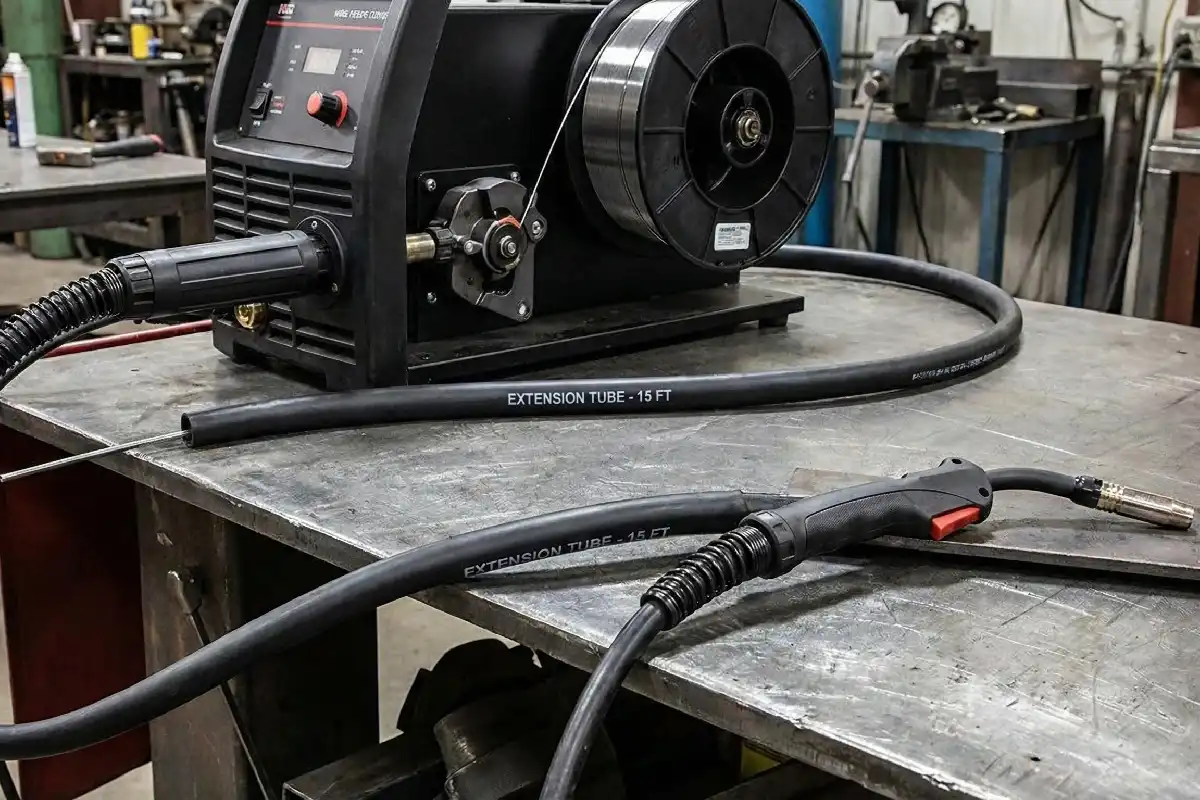
Lengthening the welding wire feeding tube can cause big problems. You will see more friction and resistance. This can make the welding wire jam or misfeed. Common problems are bad wire alignment and wire tension issues. The contact tip can wear out faster. If the gun is too long, cables can get tangled. This makes welding wire sticking or kinking more likely. You should know these risks to keep welding easy and reliable.
Key Takeaways
- Make the welding wire feeding tube short to lower friction and stop jams.
- Pick the right liner size and type so the wire moves smoothly and does not get stuck.
- Check and take care of your equipment often to find problems early and help it last longer.
- Listen to the feeder motor for strange sounds, because this can mean it is working too hard from a long feeding tube.
- Use good ways to store and handle wire to keep it good and stop feeding issues.
Welding Wire Feed Issues
Increased Friction and Resistance
When you make the wire feeding tube longer, you increase the distance the welding wire must travel. This extra length means the wire rubs against the inside of the tube for a longer time. More rubbing creates more friction. The wire feeder motor must work harder to push the wire through. You may notice the wire slows down or stops moving smoothly. This can cause uneven feeding and make it hard to keep a steady arc.
If you use a small diameter welding wire, the problem gets worse. Thin wires bend more easily. They can buckle or wander inside the tube when resistance increases. You may see the wire twist or loop instead of moving straight. This makes feeding problems more likely.
Tip: Always check the tube length before you start welding. Shorter tubes help the wire move with less effort.
Wire Jams, Kinking, and Tangling
A longer feeding tube also raises the risk of wire jams. The wire can get stuck or kink inside the tube. When this happens, the wire feeder keeps pushing, but the wire cannot move forward. This can lead to a tangled mess called “birdnesting.” Birdnesting means the wire coils up and jams near the drive rolls or inside the liner.
Here are some common causes of wire jams and tangling:
- The liner size does not match the welding wire.
- The wire is too thin for the tube length.
- The tube has sharp bends or is not straight.
- The liner is worn out or dirty.
You may also see the wire tangle if you use the wrong liner size. A liner that is too big or too small does not guide the wire well. The wire can wander, buckle, or twist. This makes misfeeds and jams more common.
If you want to avoid these problems, use the right liner for your welding wire. Keep the tube as short and straight as possible. Check for worn or dirty liners and replace them when needed.
Welding Wire Quality Problems
Erratic Arc and Burnbacks
When you use a longer wire feeding tube, you often notice the arc becomes unstable. The arc may sputter, flare up, or even go out for a moment. This happens because the welding wire does not feed smoothly. You see changes in arc length and electrical flow. These problems make it hard to get a clean weld.
- Erratic arc behavior is a main sign of wire feed trouble.
- The arc can sputter, flare, or stop without warning.
- Uneven wire feeding causes changes in arc length and electrical flow, which lowers weld quality.
Burnbacks can also happen more often. Burnback means the welding wire melts back into the contact tip. You may hear a popping sound or see the wire stick to the tip. This can damage your equipment and slow down your work.
Note: If you notice the arc acting strange or the wire burning back into the tip, check the tube length and wire feed setup.
Spatter, Porosity, and Preheating Effects
A longer feeding tube can cause more spatter. Spatter means small bits of melted metal jump off the weld and stick to nearby surfaces. You spend more time cleaning up after welding. Porosity is another problem. Porosity means tiny holes form in the weld. These holes weaken the weld and make it look bad.
Preheating effects also matter. As the welding wire travels through a long tube, it can warm up before it reaches the arc. This extra heat changes how the wire melts. You may see more spatter or uneven welds. The weld may not hold as well.
To avoid these problems, keep the feeding tube as short as possible. Make sure the wire moves smoothly. Clean and check your equipment often.
Equipment Strain and Maintenance
Feeder Motor Load and Wear
When you use a longer feeding tube, your feeder motor works much harder. The extra length adds more friction. The motor must push the welding wire farther, which puts more strain on the system. Over time, this extra load can wear out the motor faster. You might notice the motor getting hot or making more noise than usual. Sometimes, the drive rolls slip or lose grip because of the extra resistance. This can lead to uneven wire feeding and poor welds.
If you ignore these signs, you risk damaging your equipment. Replacing a feeder motor costs time and money. You should watch for changes in how your motor sounds or feels during use. Regular checks help you catch problems early.
Tip: Listen for unusual sounds from your feeder motor. A loud or grinding noise often means the motor is under too much strain.
Maintenance Frequency and Liner Issues
Longer wire feeding tubes mean you need to check and maintain your system more often. Many factors affect how often you should perform maintenance:
- Your application type and how much you weld each day
- The number of shifts and operational days in your shop
- How clean you keep your facility
- How well your team follows routine maintenance steps
You should set a maintenance schedule that fits your needs. If you weld a lot or work in a dusty area, check your equipment more often.
Liner issues become more common with longer tubes. You may see these problems:
- Liner length, size, and style must match your welding wire for smooth feeding
- Debris can build up inside the liner and block the wire
- Worn or dirty liners cause feeding problems and can stop your work
Always use the right liner for your setup. Clean or replace liners when you see signs of trouble. This keeps your welding wire moving smoothly and protects your equipment.
Solutions and Best Practices
Optimal Tube Length for Welding Wire
You should pick the shortest tube that fits your setup. A short tube lets the welding wire move easier. This also cuts down on friction. If you must use a longer tube, keep it as straight as you can. Do not let the tube bend sharply or make loops. Put the tube in a good spot and check it often. This helps stop feeding problems. When you check the tube’s position, you lower the chance of jams or misfeeds. Many experts say to use a liner gauge to cut liners to the right length.
Tip: Make sure the tube does not touch other things. This keeps the wire path open and safe.
Upgrading Liners and Drive Rolls
Better liners and drive rolls help your welding wire feed well. You get steady wire movement and less time fixing things. The right liner stops birdnesting and odd feeding. Drive rolls help push the wire smoothly. This makes your welds better and saves you time.
Here is a table to help you pick the best liners and drive rolls:
| Type | Description |
|---|---|
| Drive Roll | V-knurled, U-knurled, V-groove, U-groove; pick one based on wire type. |
| Liner Length | The right length stops wire feeding problems; use a liner gauge to trim. |
| Liner Size | A little bigger liner helps stop feeding issues; keeps wire from breaking or bird-nesting. |
| Liner Style | Plated (smooth finish) is best for cored wires; less force is needed to feed the wire. |
Inspection and Maintenance Tips
Checking and caring for your system keeps the welding wire feeding right. Make a plan to clean and change liners. Keep gun cables straight to lower friction. Store wire the right way to keep it clean and safe. These steps help stop feeding problems and keep welds strong.
| Maintenance Practice | Benefit |
|---|---|
| Scheduled Liner Maintenance and Replacement | Less friction because the liner is clean and in good shape, so the wire moves easily. |
| Maintain Straight Gun Cable Routing | Less friction because the wire path is straight, so feeding problems are less likely. |
| Proper Wire Storage and Handling | Keeps wire safe from dirt and damage, so it feeds well and stays high quality. |
🛠️ Note: Doing these things helps you avoid big repairs and keeps your welding work going well.
Lengthening the wire feeding tube can cause problems for welding wire. You may see more heat, higher melting rates, and less weld penetration. Longer tubes also increase preheating and risk losing shielding. To prevent these issues, follow these steps:
- Match wire speed to voltage
- Clean the base metal and joint
- Keep wire dry and store it well
- Use the right drive roll tension and contact tip size
Regular inspection helps you find defects early and keeps your equipment running smoothly.
FAQ
What problems can a longer wire feeding tube cause?
You may see more wire jams, kinks, and uneven feeding. The motor works harder. Weld quality drops.
Tip: Keep the tube short and straight to avoid these issues.
How do I know if my wire feeding tube is too long?
You notice the wire slows down, jams, or the arc sputters. The feeder motor may sound louder.
- Check for birdnesting or wire sticking during welding.
Can I fix wire feed issues without replacing the tube?
You can clean or replace the liner, adjust drive roll tension, and keep cables straight.
Note: Regular maintenance helps prevent most wire feed problems.
What is the best tube length for welding wire?
You should use the shortest tube that fits your setup. Short tubes reduce friction and make feeding easier.
| Tube Length | Wire Feed Quality |
|---|---|
| Short | Best |
| Long | Poor |
Why do aluminum welding wires have to use U-wheels?
Comparing U-wheel and V-wheel Efficiency in Laser Wire Filling Welding
Why Is My Automatic Wire Feeder Not Working? Key Tips
Why Do Lasers Fail to Turn Off An Analysis of Constant Light Problems