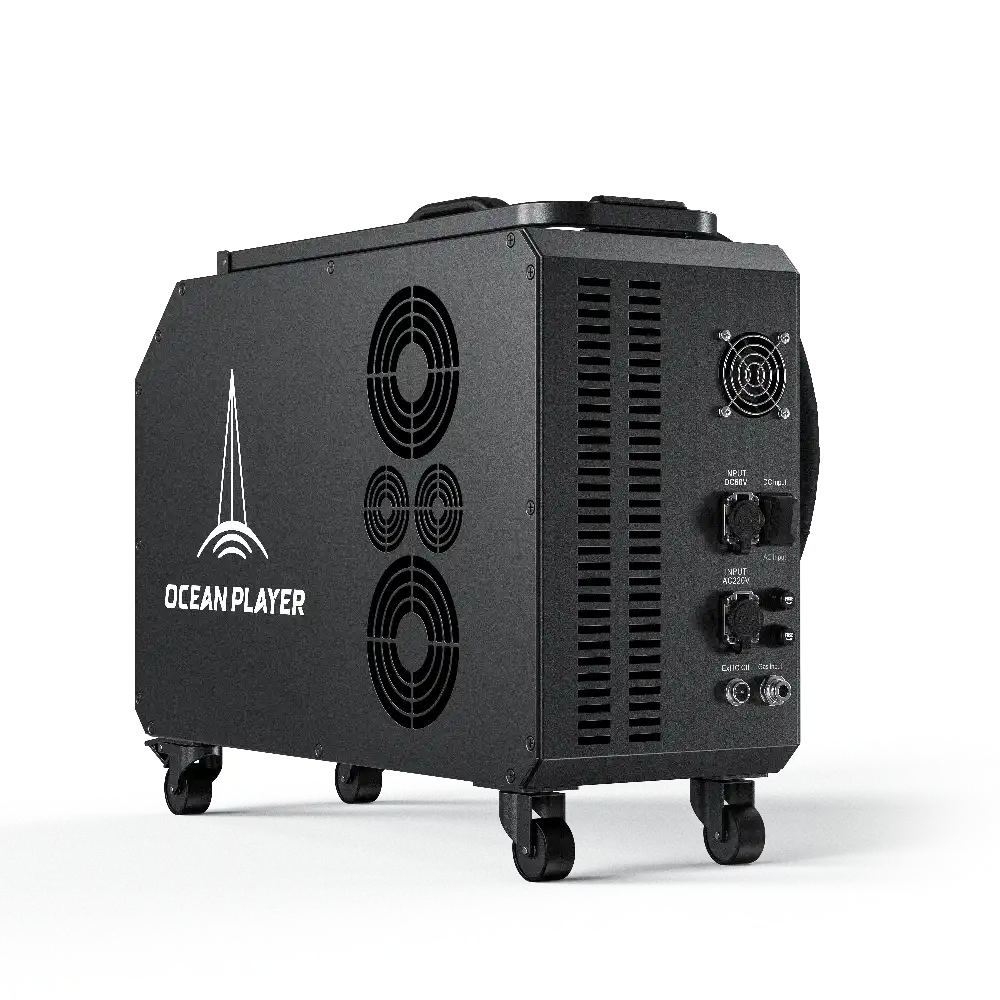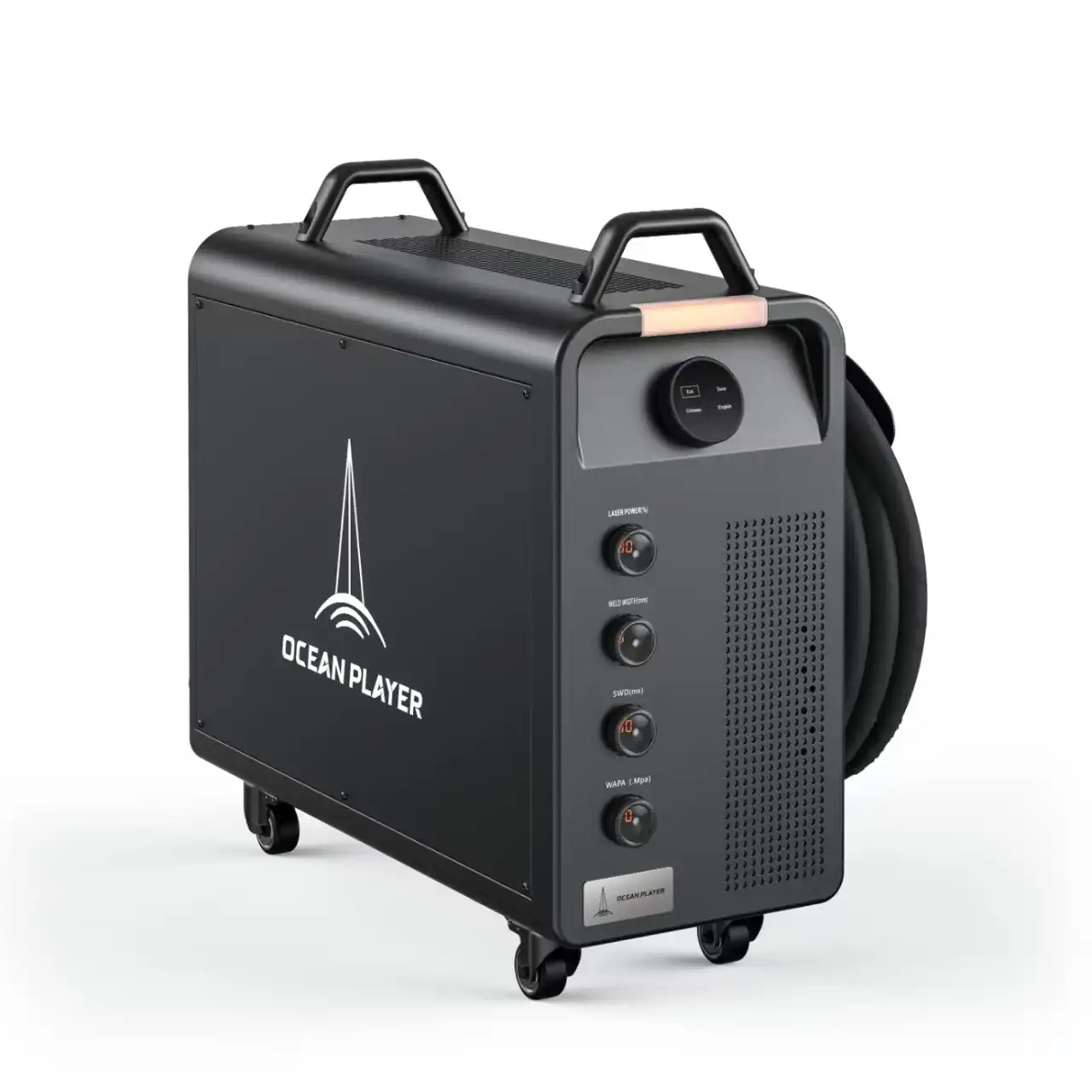
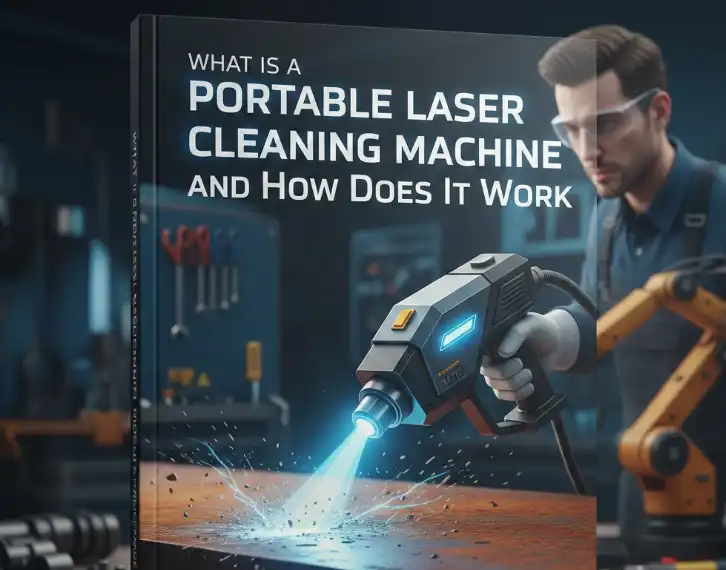
A portable laser cleaning machine can remove contaminants quickly and—when used correctly—without damaging the underlying substrate. When operated within an appropriate energy‑density, pulse‑width, and scanning‑strategy window, laser cleaning minimizes thermal transfer and mechanical stress to the base material. However, incorrect settings (too high fluence, excessive overlap, or unsuitable pulse duration) or improper scanning strategies can cause localized heating or surface alteration, so validate process parameters on representative coupons before scaling to production.
Key Takeaways
- Portable laser cleaning machines clean fast and safely. They do not touch surfaces. This makes them good for delicate things.
- These machines use green technology. They help lower pollution. They also cut down on maintenance costs. Cleaning works well with them.
- Non-contact cleaning stops damage to materials. Surfaces stay smooth. The original quality does not change.
- Safety features help keep users safe. Emergency stop buttons are included. Controls are easy to use. These machines are simple and safe to run.
- Laser cleaning is good for the environment. It does not need chemicals. It makes less waste. Many industries find it a smart choice.
Portable Laser Cleaning Machine Overview
Main Features
A portable laser cleaning machine helps remove rust, paint, and oil. It also takes off other things that make surfaces dirty. This machine uses non-contact cleaning. The laser beam does not touch the surface. Cleaning is safe and works well. The machine does not cause stress or heat damage. The material keeps its original quality and shape.
Here are some key benefits of non-contact cleaning:
- You stay safe when you use the machine.
- The cleaning equipment lasts longer.
- Cleaning is faster and mistakes are fewer.
- Surfaces do not get stressed by the machine.
- The surface stays smooth and the size does not change.
- Dirt comes off quickly.
- You can clean big areas and work fast.
The technical details show how the machine works. The table below lists the main settings:
| Parameter Name | Value |
|---|---|
| Maximum Output Power / W | 100 |
| Fiber Beam Quality / M2 | ≤1.6 |
| Pulse Length / ns | optional 10, 20, 30, 60, 100, 200, 250, 350 |
| Laser Pulse Frequency / KHZ | 20-400 |
| Single Pulse Energy / mJ | 1 |
| Cooling Method | air cooled |
| Scan Width / mm | 160 |
| Fiber Length / m | 3 |
| Total Power / W | 800 |
| Output Power Instability / % | ≤5 |
| Laser Type | Nanosecond pulse fiber |
| Center Wavelength / nm | 1064±5 |
| Power Adjustment Range / % | 10-100 |
| Laser Protection Class | Level 4 |
This machine uses a nanosecond pulse fiber laser. You can change the power and get a strong beam. The machine cools with air and is simple to use.
How Portability Works
You can move a portable laser cleaning machine without trouble. The machine is small and light. You do not need a hard setup. You can use it in many places like shops, factories, or outside. The machine fits in a car trunk. You can bring it to any job site.
The table below shows how portable and stationary models are different:
| Feature | Portable Models | Stationary Models |
|---|---|---|
| Mobility | High; designed for fieldwork | Low; fixed installations |
| Power Output | Typically lower | Generally higher |
| Automation | May lack advanced features | Often includes advanced automation |
| Precision | Lower precision | Higher precision |
| Installation | Easy deployment | More complex installation |
| Use Cases | Suitable for irregular structures like bridges | Ideal for mass production in fixed setups |
There are different types of portable laser cleaning machines. The table below shows their weight and size:
| Model Type | Power Range | Weight | Typical Use Case |
|---|---|---|---|
| Handheld (Fiber-Coupled) | 100–300W | 8–12 kg | Weld prep, mold cleaning |
| Backpack | 100–200W | 12–15 kg | Field inspections, offshore |
| Trolley-Mounted | 300–1000W | 40–80 kg | Heavy industry, large structures |
Typical portable laser cleaners fall in the 100–1,000 W optical range and require industrial mains or dedicated power sources. Small units (100–300 W) commonly use 110–240 V single‑phase circuits (5–20 A); mid power (300–500 W) often needs 200–240 V high‑current feeds (20–25 A); high power (500–1,000 W) usually requires 200–400 V or three‑phase supply (25–50 A) or a rated generator. Short, low‑duty battery packs (industrial LiFePO4) may be used for brief field work, but USB ports or consumer power banks are unsuitable and unsafe for sustained operation.
Tip: You can use a portable laser cleaning machine inside or outside. The design makes it easy to move and set up fast.
How It Works
Laser Cleaning Process
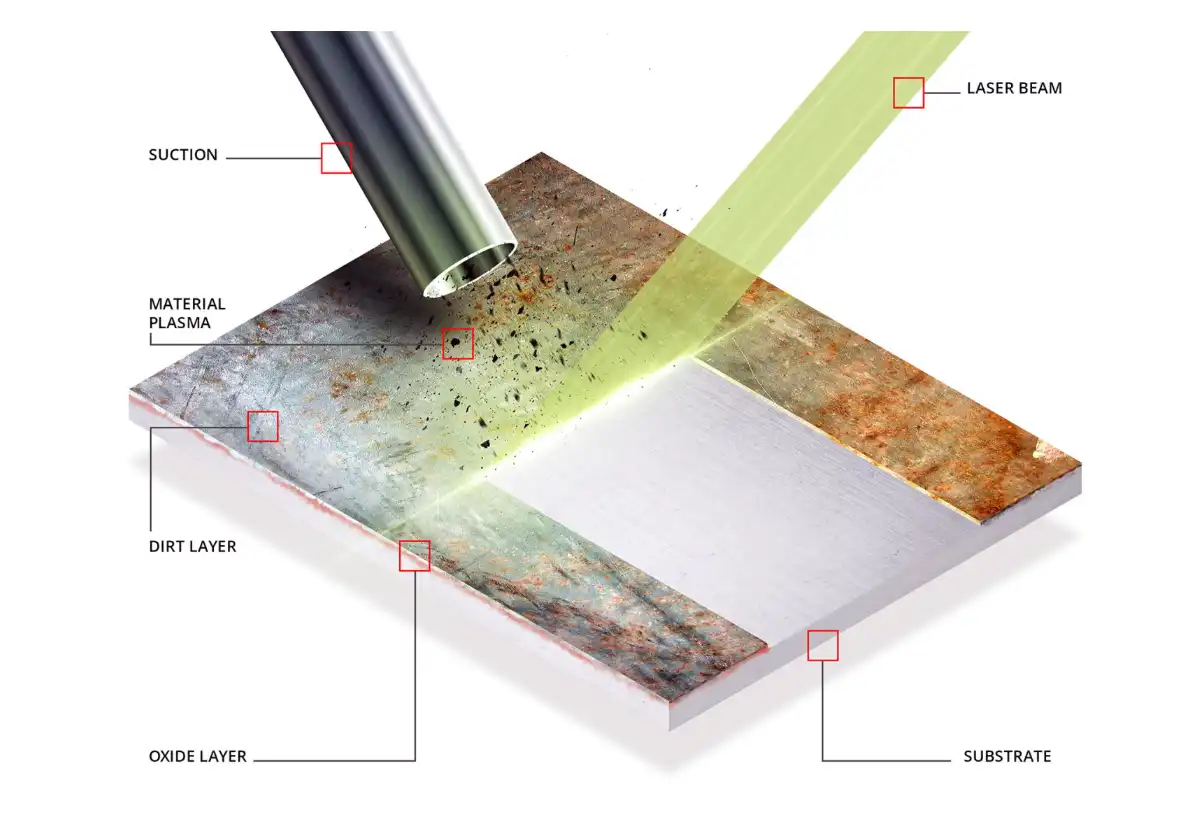
A portable laser cleaning machine can take off dirt, rust, or coatings from many surfaces. The steps are easy and safe to follow. First, you set the laser settings for the kind of dirt or rust you want to clean. Next, you aim the focused laser beam at the dirty spot. The dirt or coating gets hot from the laser and turns into vapor or dust. A vacuum or extraction system picks up the leftover bits. When you finish, the surface is clean and the original material is not harmed.
This machine can clean many types of contaminants. Some common examples are:
- Oil: The laser heats the oil and it turns into vapor fast.
- Rust: The laser energy breaks the rust into dust or vapor.
- Coatings: The laser breaks the bonds, so the coating falls apart or turns into vapor.
Tip: You do not need chemicals or rough tools. The laser does all the work, so the process is gentle and good for the environment.
Photonic Energy and Pulsed Lasers
The laser cleaning process uses photonic energy. When you shine the laser on a dirty surface, the energy works with the dirt in different ways:
- Thermal Mechanism: The dirt layer gets hot very fast from the laser. This can melt, turn to vapor, or blast away the dirt if it gets hot enough.
- Photomechanical Mechanism: The quick heat makes the dirt expand and sends out shockwaves. These shockwaves knock the dirt off without spreading much heat to the material below.
- Photochemical Mechanism: The laser’s photons break the chemical bonds in organic dirt. This takes off the dirt without making the surface hot.
The laser’s settings are important for cleaning:
- Laser Wavelength: Shorter wavelengths have more energy. They help the dirt soak up energy better than the clean surface.
- Pulse Duration: Short pulses keep the heat in a small spot. This means the dirt comes off before the heat can spread and hurt the surface.
- Intensity: Higher intensity gives more energy for cleaning. This makes the job faster and better.
You can pick pulsed lasers or continuous wave lasers. The table below shows how they are different:
| Feature | Pulsed Lasers | Continuous Wave Lasers |
|---|---|---|
| Operational Principle | Emits concentrated pulses at intervals, minimizing thermal effects | Continuously emits high-energy beams, causing high-temperature burning |
| Effectiveness | More effective for cleaning sensitive materials and stubborn dirt | Suitable for large-area cleaning with fast speed |
| Cleaning Speed | Slower, ideal for small areas and thick stains | Faster, suitable for large areas and thin stains |
| Damage to Substrate | Causes less damage, preserves material integrity | Higher risk of substrate damage due to heat |
| Recommended Applications | Precision parts, heat-sensitive components | Large-scale structures, where heat dissipation is rapid |
Pulsed lasers are best for delicate or valuable items. They clean tough dirt but do not hurt the surface. Continuous wave lasers clean big areas fast but may make more heat and cause damage.
Safety and Ease of Use
You must follow safety rules when using a portable laser cleaning machine. The laser is strong and can be dangerous if you do not use it right. Here are some important safety steps:
- Learn about laser safety and know the hazard levels.
- Wear laser safety glasses to keep your eyes safe.
- Set up a safe work area with barriers and warning signs.
- Make sure you have good air flow and exhaust to get rid of fumes.
- Use the emergency stop button if you need to turn off the machine fast.
Note: Places that use Class 3b or Class 4 lasers must have a Laser Safety Officer. This person makes sure everyone follows the safety rules.
Many machines have features that make them safe and easy to use:
- You get training and a clear user manual.
- The machine is often made to be comfortable to hold.
- Red light helps you aim the laser in the right spot.
- Easy controls make the machine simple to use.
- Some models let you pick different languages.
You can use a portable laser cleaning machine with confidence. The design makes it safe and easy to use. You keep yourself and the environment safe while getting great cleaning results.
Compliance checklist (standards & controls):
- Follow ANSI Z136.1 for laser program controls, hazard classification and PPE; design machines to meet IEC 60825‑1 and IEC 60825‑4 protective‑feature requirements (interlocks, indicators, labeling). Refer to OSHA 29 CFR 1910.1053 for silica exposure limits and written control plans when abrasive methods are used. Provide source capture LEV sized per OSHA OTM guidance and use certified HEPA H14 (EN 1822 / ISO 29463) plus activated‑carbon cartridges for VOCs; document filter change and airflow checks. Appoint a Laser Safety Officer (LSO) to own hazard assessments, training, SOPs and incident records.
Benefits and Applications
Advantages Over Traditional Methods

A portable laser cleaning machine has many good points. It cleans in a way that is safe for the earth. You do not need to use chemicals or solvents. There is no water pollution or rough waste left behind. This keeps the planet clean and keeps you safe from bad fumes. The machine uses less power than big blasting tools.
Here is a table that lists the main environmental benefits:
| Environmental Benefit | Description |
|---|---|
| Reduction in chemical waste | You avoid chemicals, so you produce less hazardous waste. |
| Low environmental footprint | You do not use consumables, so you reduce disposal problems and impact. |
| Compliance with EPA regulations | You follow EPA rules for green cleaning practices. |
The machine also cleans faster than sandblasting or using chemicals. You can aim the laser right at the dirt. This lets you clean only the spots you want. The surface stays safe and does not get hurt. You can clean delicate things without worry. The machine gives you careful cleaning and keeps things looking good.
Tip: You can change the laser settings for each material. This helps you get the best clean every time.
Typical Uses
Many industries use portable laser cleaning machines. Some examples are:
- Manufacturing
- Automotive
- Aerospace
- Construction
You can clean many materials, like:
- Ferrous metals
- Non-ferrous metals
- Ceramics
- Composites
- Rubber
- Fabrics
- Paper
- Natural stone
In cars and planes, you use the machine for:
- Taking rust off frames and parts
- Removing paint and coatings for repairs
- Cleaning weld seams for strong joins
- Taking coatings off turbine blades
- Removing oxide and corrosion from aluminum and titanium
You also get surfaces ready for glue or paint. You can clean brake pads and engine parts. This helps make strong bonds and keeps things working well.
Note: You can use this machine for fixing, upkeep, or making things. It works well for many jobs and materials.
Laser Cleaning vs. Alternatives
Dustless Blasting Comparison
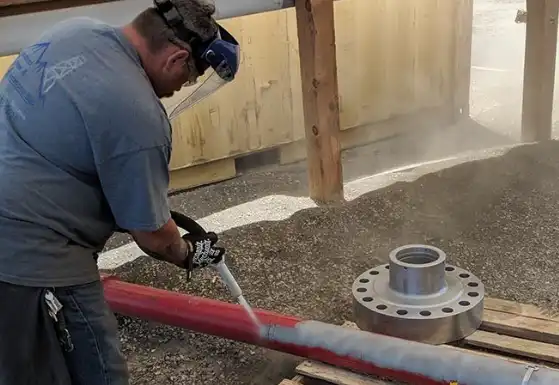
When you compare cleaning methods, you may wonder about portable laser cleaning and dustless blasting. Both can take off rust, paint, and dirt. But they work in different ways and are good for different jobs.
Here is a table that shows how they are not the same:
| Method | Advantages | Disadvantages |
|---|---|---|
| Laser Cleaning | Very exact, does not hurt surfaces, good for the earth, no extra waste | Costs a lot at first, not great for big spaces |
| Dustless Blasting | Cleans big areas fast, can use many materials, cheaper to start | Can hurt surfaces, makes waste, can be bad for health |
Dustless blasting lets you use many kinds of grit. You can clean big spots fast. It is good for hard jobs and thick layers of dirt. It does not cost much to start using dustless blasting. You pay less at the beginning than for a laser cleaning machine.
Laser cleaning is safer and cleaner. You do not need chemicals or grit. You make almost no waste and help the planet. It is safer for people who use it. Laser cleaning is best for gentle surfaces and jobs that need to be very exact.
Tip: If you need to clean big, rough spots fast, dustless blasting is a good pick. If you want careful cleaning with no harm, laser cleaning is the best choice.
When to Choose Laser Cleaning
Pick laser cleaning when you need:
- Very exact cleaning
- To help the earth
- To not touch the surface so it stays safe
- Not much work after cleaning
- Safe use with no bad stuff in the air
Laser cleaning is good for fixing old art, cleaning airplane parts, and taking rust off metal in factories. You can use it for tiny cleaning jobs on stone, metal, and wall art. It also works for cleaning in places with dangerous germs or chemicals.
Think about these things before you choose:
- How big the area is
- What the item and dirt are made of
- How much money you have for tools and repairs
- If you need to keep people and nature safe
If you want a green way to clean and want to keep your things nice, laser cleaning is a smart pick. You get careful cleaning and keep your work area safe.
A portable laser cleaning machine helps you clean many surfaces fast. You can use it on metal, stone, glass, and fragile parts. The controls are simple and the safety features help keep you safe. You can use this machine in factories or at job sites.
- You take off rust and paint but do not hurt the material.
- You stay safe with easy-to-use panels and emergency stop buttons.
- You pick this tool when you need careful work and less waste.
| Benefit | User Experience |
|---|---|
| Fast rust removal | 90% less rust in one hour |
| Operational improvement | 70% say work is easier |
Choose this technology if you want safe and exact cleaning. It also helps protect the earth.
FAQ
How safe is a portable laser cleaning machine?
You are safe if you follow the rules. Always put on laser safety glasses. Put up warning signs around your work area. Use the emergency stop button if something goes wrong. The machine has safety features to help keep you protected.
Can you use a portable laser cleaning machine outdoors?
Yes, you can use it outside. The machine is easy to move and set up anywhere. You can clean things like bridges, statues, or big machines outdoors.
What materials can you clean with this machine?
You can clean metals, stone, ceramics, rubber, and some plastics. The machine removes rust, paint, oil, and other dirt. Always check the material before you start cleaning.
Does laser cleaning damage the surface?
When configured to appropriate wavelength, fluence and pulse parameters, laser cleaning can typically avoid obvious substrate damage; however, damage thresholds vary by material and coating. Perform small coupon tests (visual/microscopy and adhesion checks), document a validated process window, and follow laser‑safety and machine‑validation guidance (ANSI Z136 / ISO 11553) before scaling to production.