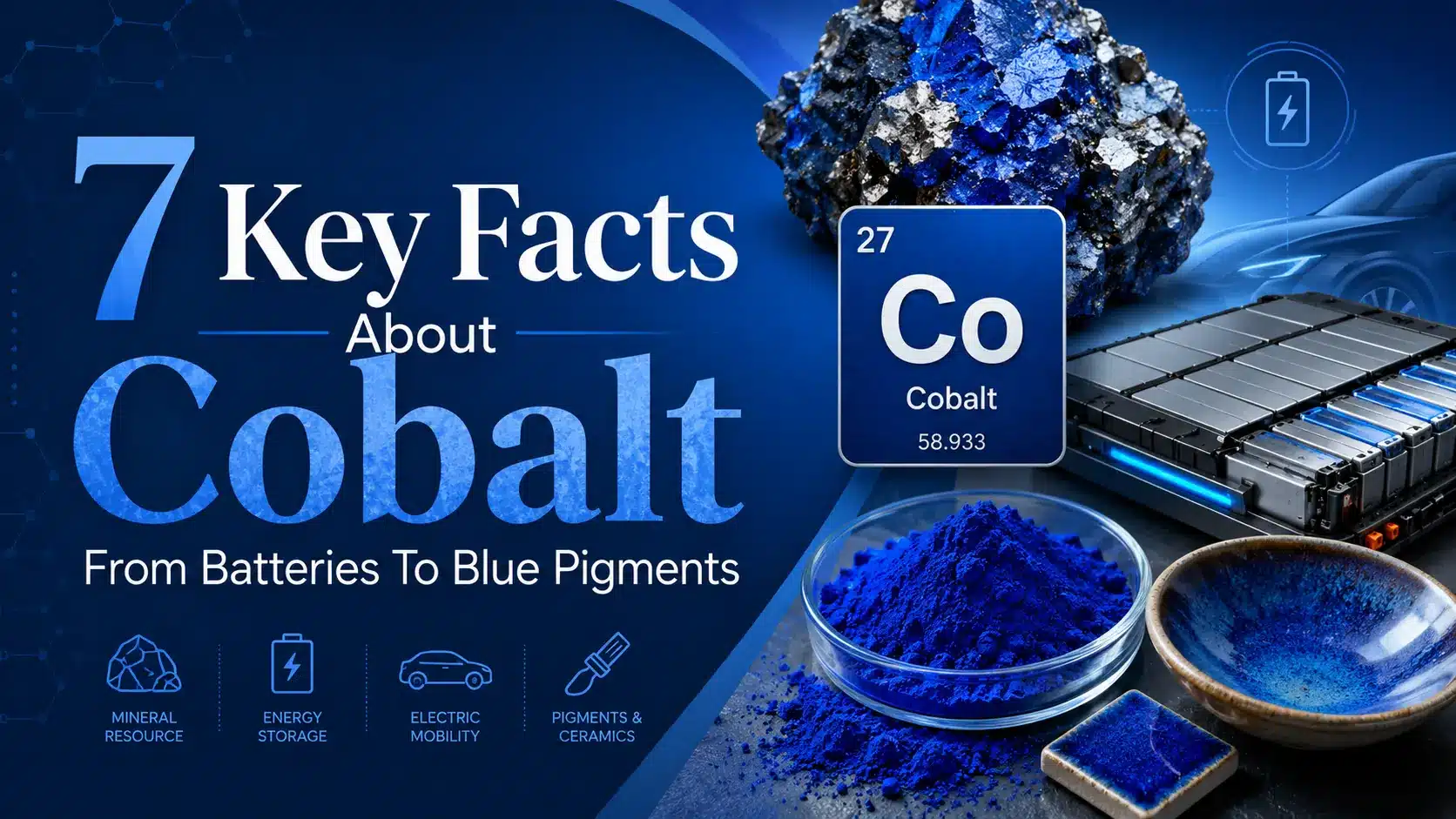
Cobalt is a hard, silver-blue metal (element 27) that is essential to rechargeable battery cathodes, high-temperature magnets, and vivid blue pigments. Roughly 70% of global cobalt supply comes from the Democratic Republic of Congo, and about 75% of mined cobalt now goes into lithium-ion battery cathodes, according to the USGS Mineral Commodity Summaries 2024.
With the highest Curie point of any pure element at approximately 1,121°C, cobalt sits at the center of clean energy, pigments, and a tense global supply chain.
Pretty wild when you think about it.
Below are seven facts about Cobalt that really help explain why it sits right at the center of the shift to cleaner energy, the world of pigments and dyes, and a global supply chain that’s honestly pretty tense right now.
Quick Takeaways
- Cobalt powers approximately 75% of lithium-ion battery cathodes, driving EV and clean energy demand.
- The DRC supplies roughly 70-approximately 76% of global cobalt, creating major supply chain risks.
- Cobalt boasts the highest Curie point of any element at approximately 1,121°C.
- Element 27’s +2 and +3 oxidation states enable stable LiCoO₂ battery cathodes.
- Monitor cobalt sourcing policies to navigate human-rights lawsuits and EV cost fluctuations.
What Cobalt Is and Why It Matters Beyond the Periodic Table
Cobalt is element number 27 on the periodic table.
And it’s a hard, silver-blue metal that’s actually magnetic up to 1,121 degrees Celsius. That temperature is the highest Curie point of any pure element, which is a fancy way of saying it’s the best at staying magnetic when it gets hot. This one property, along with how it stabilizes the cathode in most lithium-ion batteries, basically explains why a metal few people talked about in 2010 now shapes mining rules, electric vehicle costs.
And even human-rights lawsuits in 2026.
From a chemistry standpoint, cobalt sits between iron and nickel in Group 9. It’s ferromagnetic, which means it can stay magnetized on its own, a bit like iron does.
It also resists corrosion and forms very stable compounds when it’s in the +2 and +3 oxidation states. That specific chemistry is what makes lithium cobalt oxide, or LiCoO₂ cathodes, work so well.
But what does that look like in the real world? Three numbers can tell you why understanding the supply chain matters even more than knowing the textbook chemistry.
- About 76% of all the cobalt that gets mined came from the Democratic Republic of the Congo in 2023. That figure is from the USGS Mineral Commodity Summaries 2024, and honestly, no other critical mineral we rely on is this concentrated in one place.
- Batteries used roughly 72% of the world’s cobalt in 2023. That’s according to the Cobalt Institute’s 2023 Market Report, and it’s a big jump from less than 50% just ten years ago.
- China refines about 75% of the global cobalt supply. This happens no matter where the raw ore is actually dug out of the ground.
So the practical lesson here, especially if you’re sourcing cobalt or looking at battery companies, is that the real risk isn’t that we’ll run out of it. Global reserves are over 11 million tonnes, after all.
The risk is how concentrated everything is in just a few places. A port strike in Durban or a new export rule in Kinshasa can cause prices on the London Metal Exchange to jump approximately 15% in a single week.
We saw exactly that happen in March of 2022.
That’s the perspective I want you to keep in mind for the rest of this article.
Physical and Chemical Properties That Make Cobalt Irreplaceable
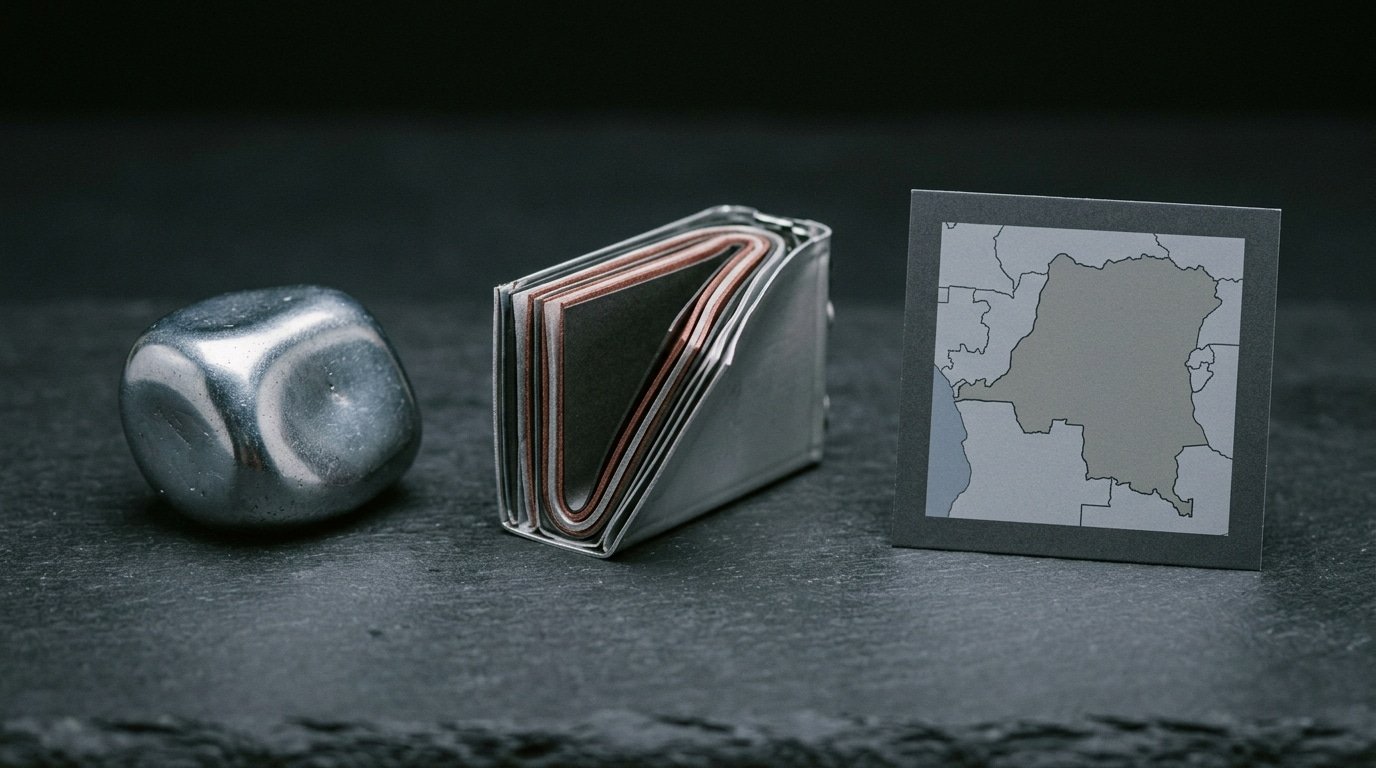
Direct answer: Cobalt actually holds onto its magnetism, hardness, and structural strength at temperatures where nickel and iron just give up. Its Curie point sits at approximately 1,115°C, which is basically the temperature at which a metal loses its magnetism, and that’s the highest of any pure element out there.
Nickel taps out at approximately 358°C, and iron does the same at approximately 770°C.
That one single number is really why jet engines, MRI machines, and high-nickel battery cathodes still haven’t managed to completely cut cobalt out of the picture.
The three properties that resist substitution
- Thermal magnetic stability: Cobalt-samarium magnets keep over 90% of their flux density (essentially their magnetic strength) at approximately 300°C, while neodymium magnets drop off sharply once you push past approximately 150°C. This really matters for sensors stuck deep down in drilling holes and satellite actuators where you basically can’t run cooling.
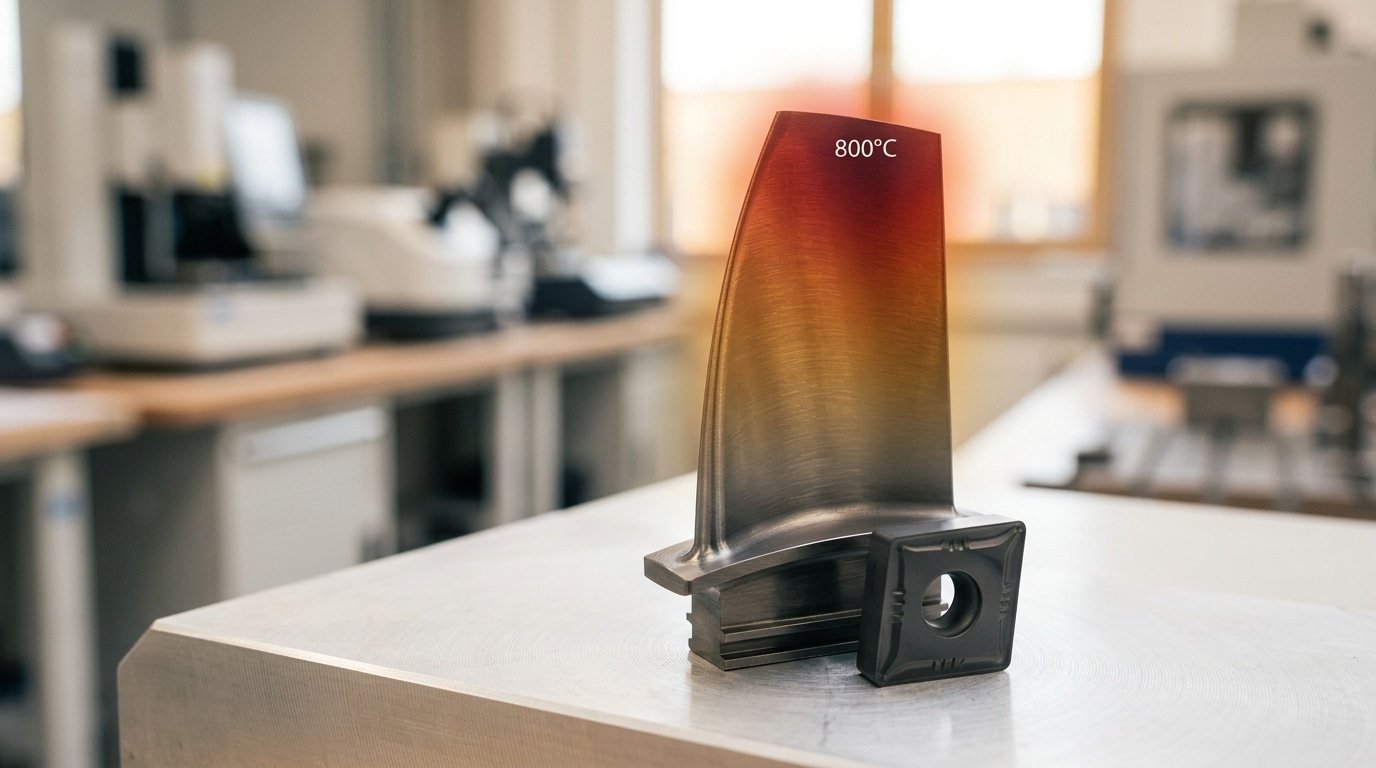
- Hot hardness: Tungsten carbide cutting tools use 6–approximately 12% cobalt as the glue holding everything together. The cobalt phase keeps the carbide grains locked in place at approximately 800°C and above during high-speed machining. Iron and nickel binders, though, crack from heat stress in far fewer cycles.
- Electrochemical stability: Inside an NMC811 cathode, cobalt sits in the layered oxide structure and blocks the atoms from mixing where they shouldn’t. Pull it out completely and you’ll see capacity fade after 500 cycles instead of 1,500 or more, as shown in studies catalogued by the U.S. Department of Energy OSTI database.
Where cobalt still beats nickel and iron — head to head
| Property | Cobalt | Nickel | Iron |
|---|---|---|---|
| Curie temperature | approximately 1,115°C | approximately 358°C | approximately 770°C |
| Melting point | approximately 1,495°C | approximately 1,455°C | approximately 1,538°C |
| Vickers hardness (pure) | ~1,043 HV | ~638 HV | ~608 HV |
| Cathode role | Stabilizer | Energy density | Cheap, low voltage |
That hardness gap is honestly what gives cobalt such a strong grip in superalloys. Take Stellite 6, a cobalt-chromium alloy used in valve seats and turbine blades.
It still holds a Rockwell C hardness of 36 even after approximately 500 hours at approximately 650°C, which is the kind of heat where nickel-based Inconel starts noticeably softening.
For more on the crystal structure side of things, check out the Wikipedia entry on cobalt. It walks through the hexagonal close-packed structure below approximately 417°C and the face-centered cubic phase above it. That phase shift is part of why cobalt holds up so well against creep over time.
Research on substitution keeps chipping away at the edges, though. LFP batteries actually removed cobalt from the lower-end EVs entirely.
Iron-based permanent magnets are getting better too. But when you’re talking about the approximately 1,000°C-plus turbine hot section, the four-cobalt-atom stabilizing layer inside high-nickel cathodes, and tungsten carbide binders built for real production machining, no commercial alternative hits all three of those at once in 2026.
Cobalt in Lithium-Ion Batteries and the EV Supply Chain
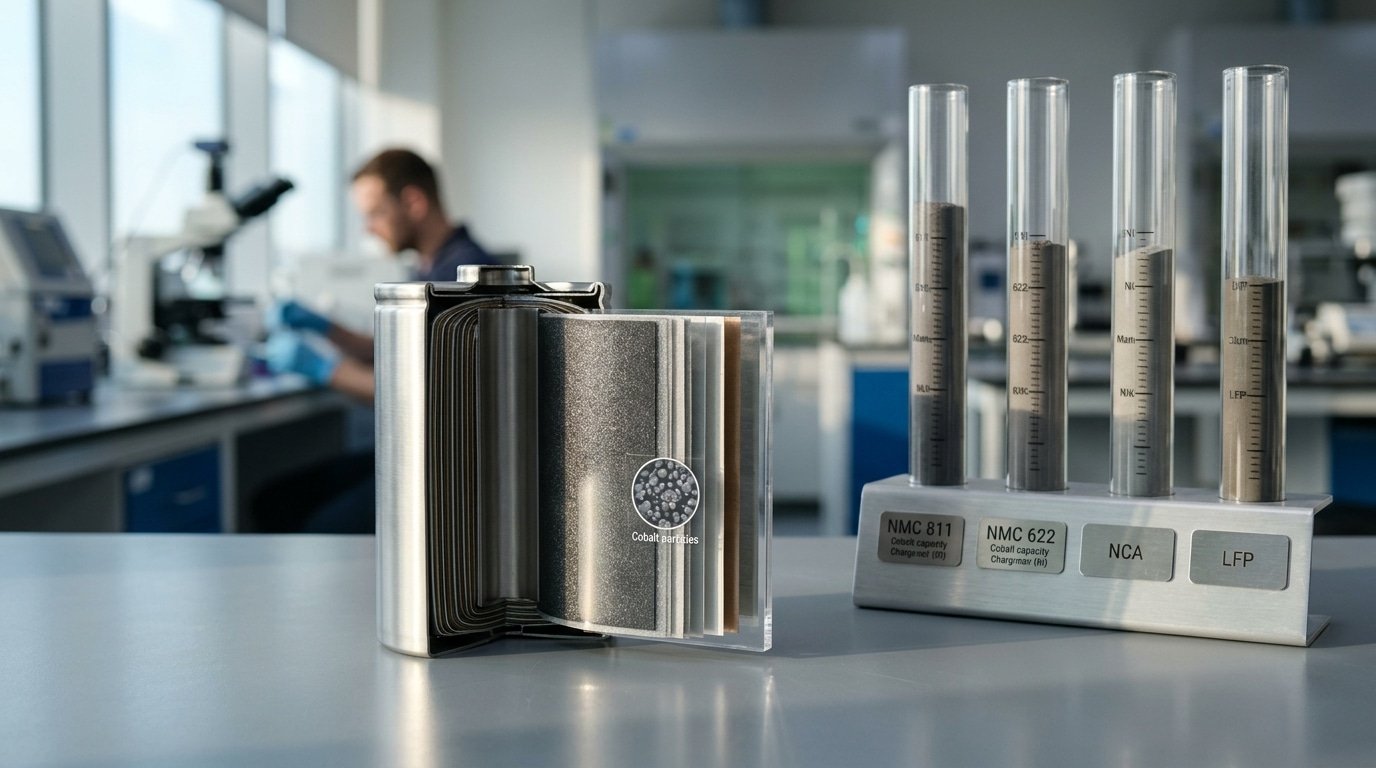
Direct answer: A typical approximately 75 kWh EV battery pack contains roughly 4.approximately 5,14 kg of cobalt depending on the cathode chemistry, costing approximately $135,$420 at approximately $30/kg cobalt metal. NMC 811 cuts cobalt to about 60 g/kWh, NMC 622 uses around 120 g/kWh, and NCA sits near 140 g/kWh.
Automakers are squeezing cobalt out, not for chemistry reasons, but because of price volatility and supply concentration in the Democratic Republic of Congo.
Cobalt loading by cathode chemistry
| Cathode | Ni:Mn:Co ratio | Cobalt (g/kWh) | Used by |
|---|---|---|---|
| NMC 111 | 1:1:1 | ~190 | Legacy buses, early Leaf |
| NMC 622 | 6:2:2 | ~120 | BMW i4, VW ID.4 |
| NMC 811 | 8:1:1 | ~60 | Tesla Model 3 LR (China), Nio |
| NCA | 8:1.5:0.5 (Ni:Co:Al) | ~140 | Tesla Model S/X, Panasonic cells |
| LFP | None | 0 | Tesla Standard Range, BYD Blade |
Cobalt accounts for 10,approximately 20% of cathode material cost despite being only 5,10% of the cathode mass in NMC 811, a function of price per kilogram, which spiked to approximately $82,000/tonne in March 2022 before crashing below approximately $30,000/tonne by 2024 (LME Cobalt price data).
Why nobody is going fully cobalt-free in nickel-rich chemistries
Strip cobalt entirely from a high-nickel cathode and you get cation mixing, nickel ions migrate into lithium sites during cycling, collapsing capacity within 200,300 cycles. Cobalt stabilizes the layered crystal structure and suppresses this disorder.
That’s why Tesla’s 4680 cells still carry trace cobalt, and BMW’s Gen6 round cells stick with NMC chemistry rather than jumping to LFP for premium models.
BYD took the opposite path: its Blade battery uses LFP (lithium iron phosphate), accepting 15,approximately 20% lower energy density in exchange for zero cobalt, lower fire risk.
And immunity to Congolese supply shocks. The IEA Global EV Outlook 2024 reports LFP’s share of EV battery deployments climbed from 6% in 2020 to 40% in 2023, almost entirely at cobalt’s expense.
Practical tip for procurement teams: when modeling battery cost sensitivity, run cobalt at approximately $25,$60/kg ranges rather than spot price. Long-term offtake contracts from Glencore and CMOC typically settle in this band, and a approximately $10/kg swing changes a 100,000-pack production budget by roughly $5,8 million.
Superalloys, Cutting Tools and Industrial Uses Most People Overlook
Direct answer: Roughly 17% of the world’s appetite for Cobalt ends up in superalloys, hard metals, and magnets, not batteries. These uses tap into the metal’s strength at extreme heat, its steady magnetic behavior, and its compatibility with the human body.
No other metal can really match it at industrial scale.
Jet Engine Superalloys: Where Failure Is Not an Option
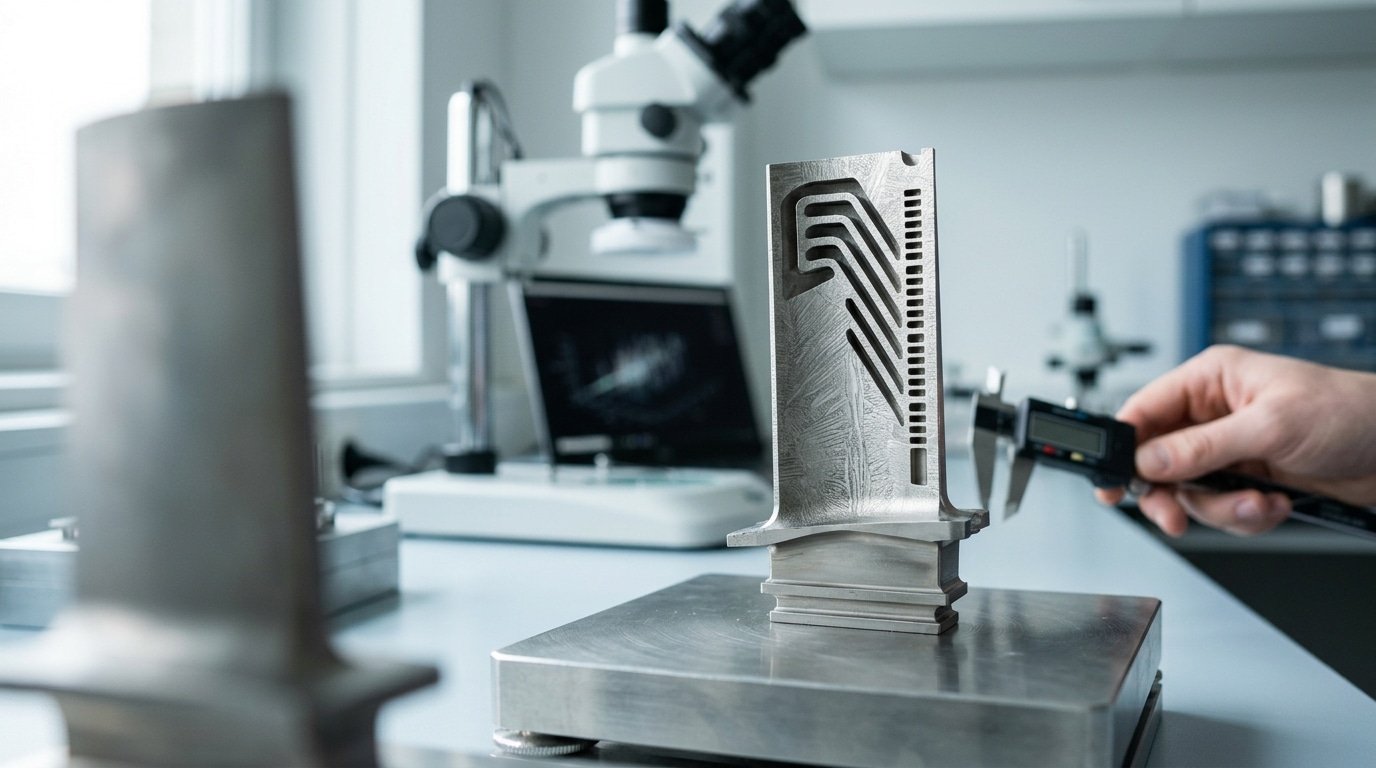
Think about a GE9X engine for a moment, the giant powerplant strapped to the Boeing 777X. The turbine blades inside it spin through gas that runs hotter than approximately 1,400°C.
That is hotter than the melting point of the metal making up the blade itself. So how does it survive?
Cobalt-based superalloys like Stellite, along with cobalt-reinforced nickel alloys such as Inconel 718, hold their internal crystal structure steady in that inferno. They do it thanks to a stable face-centered cubic (FCC) arrangement of atoms that resists what engineers call creep, which is the slow stretching and deforming that happens when metal sits under stress for a long time.
One large turbofan engine carries between 100 and 200 kg of cobalt-bearing alloy inside it. The Cobalt Institute reckons aerospace alone burns through about 17,000 tonnes of refined cobalt every year.
Tungsten Carbide Tools and Wear Parts
In cemented carbide cutting tools, cobalt plays the role of glue. Basically, it is the binder that holds everything together, usually 6 to approximately 12% by weight. Take it away and the tungsten carbide grains would just fall apart like sand.
You see this Co-WC composite everywhere actual work is happening. Drill bits chewing through oilfield casing.
End mills shaping titanium parts for aircraft. Rock-cutting picks on tunnel boring machines grinding through bedrock.
The fancier “submicron grade” tools used for machining semiconductor molds push the cobalt content up to 15%, which gives them better resistance to cracking.
Medical Implants and SmCo Magnets
- Cobalt-chromium-molybdenum (CoCrMo) built to the ASTM F75 spec is the FDA-recognized standard for the bearing surfaces inside hip and knee replacements. That is over 1 million procedures every year in the U.S. alone. Use it.
- Samarium-cobalt (SmCo) magnets keep their magnetism all the way up to 350°C, which is roughly double what neodymium magnets can stand. They run the traveling-wave tubes on satellites, the actuators inside F-35 fighters, and the sensors used deep in oil wells where heat would wipe the magnetism off any cheaper option.
- Dental alloys and pacemaker leads rely on cobalt because it shrugs off corrosion when it sits in body fluids for 20 years or more.
Quick note for anyone purchasing this stuff. Aerospace-grade cobalt costs 20 to approximately 30% more than battery-grade because the rules on sulfur and carbon content are much tighter, usually below 15 parts per million. Mix the two grades and you ruin the heat tolerance completely.
Cobalt Blue Pigments and Everyday Consumer Products
Direct answer: Pigments, ceramics, and chemical catalysts together use up under 9% of the world’s Cobalt production, and yet this tiny sliver covers 4,500 years of human history, going from Egyptian glass beads all the way to the cobalt-60 isotope sitting inside your MRI scanner.
⚠️ Common mistake: Assuming “cobalt-free” EV batteries (like LFP chemistries) eliminate cobalt demand entirely. This happens because headlines emphasize Tesla and BYD shifting to LFP, but approximately 75% of lithium-ion cathodes still use cobalt, and high-energy NMC packs dominate long-range EVs. The fix: track cathode chemistry mix, not just automaker announcements, when forecasting cobalt demand through 2030.
That blue you see on a Ming dynasty vase isn’t really paint at all. It’s actually cobalt aluminate (CoAl₂O₄), and it gets fired into the glaze at approximately 1,300°C so the color essentially fuses with the ceramic itself.
Chinese potters were importing this pigment, which they called “Mohammedan blue,” from mines over in Persia starting around the 14th century. Egyptian glassmakers actually beat them to it by thousands of years, tinting their beads with cobalt ore back around 2500 BCE. Pretty wild to think about.
Modern pigment chemistry generally splits cobalt blues into three working categories:
- Cobalt blue (PB28): CoAl₂O₄, which is really the artist-grade pigment you find in oil paints. It stays stable above approximately 1,200°C and gets used in fine ceramics and stained glass
- Cerulean blue (PB35): cobalt stannate, which has a greener tone to it, and painters tend to prefer it for sky tones in landscape work
- Cobalt violet and green: these are phosphate and zincate variants, and they show up in inkjet inks, plastics, and automotive coatings
Cobalt is actually hiding in your bloodstream too. Every single molecule of vitamin B12 (cobalamin) has one cobalt atom sitting right at its core, and that’s basically the only known biological job for the metal.
Without it, your red blood cell production essentially falls apart. The radioactive isotope cobalt-60, on the other hand, sterilizes roughly 40% of single-use medical devices around the world and powers some radiotherapy machines, according to the IAEA.
The shift in demand here is really stark. Back in 2010, batteries made up around 30% of cobalt use, and pigments and chemicals held nearly 20%.
By 2024, batteries had grabbed more than 70% while pigments slipped under 9%, according to the Cobalt Institute. Same metal, completely different economy around it.
The DRC Artisanal Mining Crisis and Ethical Sourcing Reality
Direct answer: The Democratic Republic of Congo produces roughly 74% of the world’s cobalt.
And an estimated 15,30% of that comes from artisanal and small-scale mining (ASM) where, per Amnesty International’s 2016 investigation, around 40,000 children dig, sort.
And wash ore by hand. A decade of corporate pledges later, no major automaker can prove its cobalt is fully ASM-free.
The gap between glossy ESG reports and verified clean supply is the dirty secret of the EV boom. ASM cobalt enters the formal market through Chinese-owned trading depots in Kolwezi, gets blended with industrial ore at processors like CDM and Huayou, then ships out indistinguishable on a bill of lading.
Once it hits a refinery, traceability collapses.
Three remediation efforts dominate the conversation:
- Fair Cobalt Alliance (FCA) — backed by Tesla, Glencore, and Google, focuses on formalizing ASM sites rather than banning them. Kasulo pilot site in Kolwezi shows measurable progress: fenced perimeters, no under-18 workers, and washing stations. But FCA covers fewer than 10 sites out of an estimated 110,000 artisanal miners region-wide.
- RCS Global audits — the de facto third-party assurance standard, used by BMW and Volvo. The catch: audits are scheduled, not surprise, and only cover Tier 1 suppliers.
- Blockchain traceability — IBM’s Responsible Sourcing Blockchain Network (with Ford, Volvo, LG Chem, Huayou) launched in 2019. Results are mixed at best. The ledger only records what humans input at the mine gate, so if a trader mixes ASM ore upstream, the blockchain happily certifies tainted cobalt as clean. Garbage in, immutable garbage out.
Practical buyer takeaway: if a supplier claims “approximately 100% ASM-free cobalt,” ask for the mine-of-origin name, the smelter list (CMOC, Glencore Katanga, Chemaf), and the date of the last unannounced audit. Vague answers mean the claim is marketing, not chain-of-custody.
The Responsible Minerals Initiative publishes a conformant smelter list worth cross-checking.
Cobalt-Free Battery Chemistries and the Demand Forecast Debate
Direct answer: LFP, which is basically lithium iron phosphate, now powers over 40% of global EV batteries sold in 2024, up from under 10% in 2020. Yet Cobalt demand keeps climbing in absolute terms, because the EV market is actually growing faster than LFP is replacing the nickel-cobalt chemistries.
The Cobalt-Free Contenders
- LFP: Cheaper and safer, with a much longer cycle life of 4,000+ cycles versus roughly 1,500 for NMC. The trade-off though is around 20% less energy density. BYD’s Blade and Tesla’s Model 3 Standard Range really pushed it into the mainstream. The IEA’s Global EV Outlook 2024 confirms that LFP crossed approximately 40% share of EV battery deployment.
- High-nickel NMC 9.5.5 and NCMA: These cut cobalt to under 5% of cathode mass. But they also raise the risk of thermal runaway, which is essentially the battery overheating dangerously. That’s the reason GM’s Ultium and Ford’s Mach-E still rely on safety-buffered chemistries.
- Sodium-ion: Zero cobalt and zero lithium. CATL began mass production back in 2023. Energy density sits near 160 Wh/kg, which is viable for short-range city EVs and grid storage, though not yet ready for long-range cars.
Bull vs Bear Case Through 2030
Bear case: Goldman Sachs and BloombergNEF argue that cobalt intensity per kWh will drop 50 to approximately 60% by 2030 as LFP and high-nickel batteries scale up. That would essentially cap prices near $25,000 per tonne.
Bull case: Benchmark Mineral Intelligence projects that total cobalt demand still rises from roughly 220,000 tonnes in 2023 to over 400,000 tonnes by 2030. Why though?
Because EV unit volume triples, and aerospace superalloy demand keeps growing on its own track. So lower per-car intensity, but more cars, and a bigger pie overall.
The practical takeaway for buyers? Don’t bet on cobalt going obsolete. Bet on it becoming a premium-segment input instead, reserved for long-range, performance, and aviation applications where energy density and heat tolerance still win out.
Recycling and Second-Life Economics That Could Reshape Cobalt Supply
Direct answer: When it comes to recycling old batteries, modern methods that use water-based chemistry can get back 95 to 98 percent of the cobalt that was inside them. And now, the European Union has a rule saying that by 2031, all new electric car batteries sold there must contain at least 16% recycled cobalt.
That number goes up to 26% by 2036. This single rule, honestly, is already changing how Western companies get their materials, making them rely less on the Democratic Republic of Congo.
How hydrometallurgy actually works (and why pyrometallurgy is losing)
So how does this recycling method really work? Essentially, they take the shredded up guts of old batteries, which is a black powder, and they dissolve it in acid.
Then they use a special liquid process to separate out the cobalt, nickel, and lithium into pure salts that can be used in new batteries. You can see this being done at places like the Umicore plant in Belgium or with the system Li-Cycle uses.
The old way, which is called pyrometallurgy, uses really high heat, like a furnace. The problem there is you completely lose the lithium, and it takes a lot more energy for every kilogram of material you get back.
A company called Redwood Materials, started by the former Tesla tech boss JB Straubel, says they get back over 95% of the cobalt, nickel, and copper at their Nevada site. They’re now actually sending processed material to Panasonic’s big factory in Kansas.
That creates a supply loop inside the U.S. that simply wasn’t there five years ago.
The cost gap is closing faster than mining lobbies admit
| Source | Approx. cost per kg refined Co | Carbon intensity |
|---|---|---|
| Virgin DRC mine + China refining | approximately $33–38 (2024 LME avg) | ~22 kg CO₂e / kg Co |
| Hydrometallurgical recycling | approximately $28–34 (at scale) | ~5–7 kg CO₂e / kg Co |
Once a recycler is handling more than about 20,000 tonnes of that black powder a year, the cost per kilogram usually beats digging up new stuff. This is especially true when the main input material is scrap from making new batteries, which is about 10 to 15 percent of the factory output, instead of old, used-up packs.
Why the EU 16% rule matters for price stability
- Floor under recycled supply: By 2031, every new EV battery sold in Europe must prove where its recycled content came from using a digital passport.
- Insulation from DRC shocks: If there’s a strike at a major mine in the Congo or the government there raises export taxes, it won’t hit prices as hard when 16 to 26 percent of the supply comes from this recycled loop.
- Second-life buffer: Old electric car packs don’t go straight to recycling. They get used first for storing energy on the power grid for about five to eight years, like what B2U Storage Solutions does with old Honda packs in California. This spreads out the timing of when materials become available.
But here’s the thing most analysts don’t mention: the amount of recycled material available right now is pretty small. That’s because the electric cars sold between 2018 and 2022 won’t be retired until around 2030 to 2035.
Until then, the only real source of material for recyclers is the scrap left over from manufacturing new batteries.
You can read the actual European Commission battery regulation text to see the binding targets, and check the IEA Global EV Outlook 2024 for forecasts on how many old batteries will be coming back.
Frequently Asked Questions About Cobalt
Is cobalt toxic to humans?
Metallic cobalt in solid form is low-risk, but soluble cobalt salts and inhaled cobalt dust are classified by IARC as Group 2B, possibly carcinogenic. The real danger sits with miners and hard-metal workers exposed to fine particulate.
Dietary cobalt as vitamin B12 is essential at roughly 2.4 micrograms per day for adults.
What’s cobalt worth per pound right now?
LME cobalt metal traded near $14,15 per pound through 2024, down sharply from the 2022 peak above $40. Battery-grade cobalt sulfate runs at a discount to metal. Check the London Metal Exchange cobalt contract for live pricing, spot quotes shift weekly.
Is cobalt blue pigment the same as battery cobalt?
No. Cobalt blue pigment is cobalt aluminate (CoAl₂O₄), a stable ceramic oxide fired at approximately 1200°C. Battery cobalt is processed into cobalt sulfate or cobalt oxide, then bonded with nickel and manganese in the cathode lattice. Same element, completely different chemistry, purity grade, and price.
Can EVs go fully cobalt-free?
Partially yes, fully no, at least not by 2030. LFP packs are cobalt-free and now dominate the sub-approximately $40,000 EV segment.
But long-range premium vehicles still rely on NMC or NCA cathodes containing 5,approximately 20% cobalt by cathode mass. Solid-state batteries and LMFP may shrink that share further, yet niche aerospace and high-energy-density use cases will keep cobalt in the mix.
Key Takeaways and What to Watch in the Cobalt Market
Seven facts to lock in: cobalt is element 27 with unmatched thermal stability above approximately 1,000°C; an EV pack still carries 4.approximately 5,14 kg of it; superalloys and tools consume ~approximately 17% of supply; pigments and catalysts under 9%; the DRC produces ~74% of mined cobalt with ~15,30% from artisanal sites; LFP now powers over 40% of EVs; and hydrometallurgical recycling recovers 95,98% of battery cobalt.
Your 2026 cobalt watchlist
- DRC export policy — Track the four-month export quota extended in 2024 and any 2026 renewal via the USGS Mineral Commodity Summaries. A quota lift could drop LME prices another 10–approximately 15%.
- LFP vs. High-nickel split — Watch quarterly chemistry share from BloombergNEF EV Outlook. If LFP crosses approximately 50% globally in 2026, cobalt demand growth flattens.
- Recycling capacity — Redwood Materials, Li-Cycle, and Umicore plant announcements; target the 150,000 tpa black mass processing threshold in North America.
- ETF exposure — COBA (cobalt miners), BATT (battery metals basket), and physical-backed vehicles trading on the LSE. Compare expense ratios and DRC weighting before buying.
- LME warehouse stocks — Rising inventory above 1,500 tonnes signals oversupply; falling below 500 tonnes precedes price spikes.
Bookmark the Cobalt Institute annual market report and USGS January releases. Set a calendar reminder for both, that’s the cheapest cobalt intelligence you’ll ever get.