
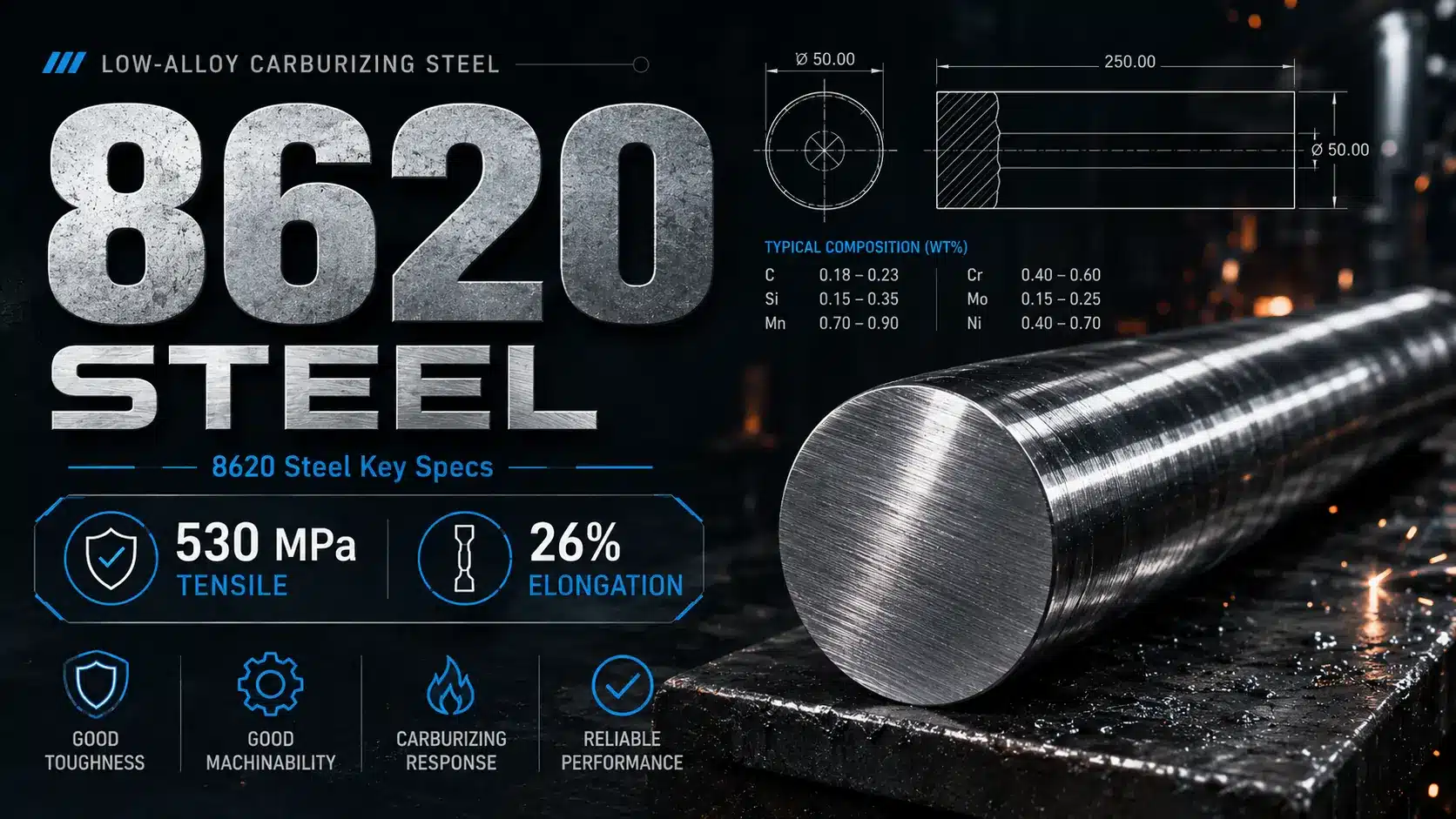
8620 steel is a low-alloy nickel-chromium-molybdenum case-hardening grade containing 0.18-approximately 0.23%[1] carbon, 0.40-approximately 0.70% nickel, 0.40-0.60% chromium, and 0.15-0.25% molybdenum, designed for carburizing rather than through-hardening. In the annealed condition, it delivers approximately 530 MPa[2] tensile strength, approximately 385 MPa[3] yield strength, and approximately 26%[4] elongation.
After carburizing, the surface reaches 58-62 HRC while the core stays at 25-35 HRC, making 8620 steel the default choice for automotive gears, camshafts, and pinions requiring shock resistance.
What sets 8620 apart from plain carbon grades like 1018 is its alloy recipe: roughly 0.18,approximately 0.23%[5] carbon, 0.40,approximately 0.70% nickel, 0.40,0.60% chromium, and 0.15,0.25% molybdenum. After carburizing, the surface hits 58,62 HRC while the core stays around 25,35 HRC, the exact toughness profile that keeps automotive transmission gears from cracking under shock loads.
Quick Takeaways
- Specify 8620 steel for carburized automotive gears requiring 58-62 HRC surface and tough 25-35 HRC core.
- Expect approximately 530 MPa[6] tensile, approximately 385 MPa[7] yield, and approximately 26%[8] elongation in annealed condition before carburizing.
- Choose 8620 over 1018 when nickel-chromium-molybdenum alloying is needed for shock resistance and case depth.
- Design parts for carburizing, not through-hardening, since 8620’s 0.18-approximately 0.23%[9] carbon prevents core hardening.
- Target 8620 for camshafts, pinions, and transmission gears where surface wear meets cyclic shock loading.
8620 Steel at a Glance — Key Specs and What They Mean
8620 steel is a low-carbon alloy with nickel, chromium, and molybdenum that you design for carburizing. It is not meant for through-hardening.
When you get it in the hot-rolled condition, you can expect an ultimate tensile strength of approximately 530 MPa[10] (77 ksi). The yield strength, which is how much usable material is produced, comes in at approximately 359 MPa (52 ksi).
You also get approximately 26%[12] elongation in approximately 50 mm[13] and a Brinell hardness around 149 HB.
After you carburize and quench it, the case can get quite hard, reaching 58-63 HRC. The core, though, stays much tougher at 30-40 HRC.
So what do these numbers really tell you? A designer would read the approximately 530 MPa[1] tensile strength and see that the base bar resists pulling loads modestly. It is comparable to a medium-strength structural steel, but honestly, that part is not very interesting on its own.
The real value is in the difference between the outside and the inside. Basically, you have a soft core with 0.18-approximately 0.23%[2] carbon that can absorb shock. This core is wrapped in a hardened skin that you build by diffusing carbon into the surface at 900-approximately 950 °C[3].
That approximately 26%[4] elongation is the real giveaway. It means the core will bend before it cracks. And that is exactly what you need for parts like gear teeth, camshafts, and splined shafts that see cyclic loading.
Let’s compare this to a through-hardened 4140 steel at 25 HRC. It might have the same surface hardness, but it has no soft core to stop a fatigue crack from growing.
For some good background on why core toughness matters more than peak hardness in shock-loaded parts, you can read the case-hardening overview on Wikipedia.
Here is one caveat I see junior engineers miss. That 149 HB is the supply hardness, not the service hardness.
You should never expect to rate the final part by that initial Brinell number. You rate it by its case depth, which is typically 0.5-approximately 1.5 mm[5], and its surface HRC.
Its stiffness, by the way, stays at 200 GPa no matter what heat treatment you do. And stiffness and strength aren’t the same property, which is an important distinction to understand.
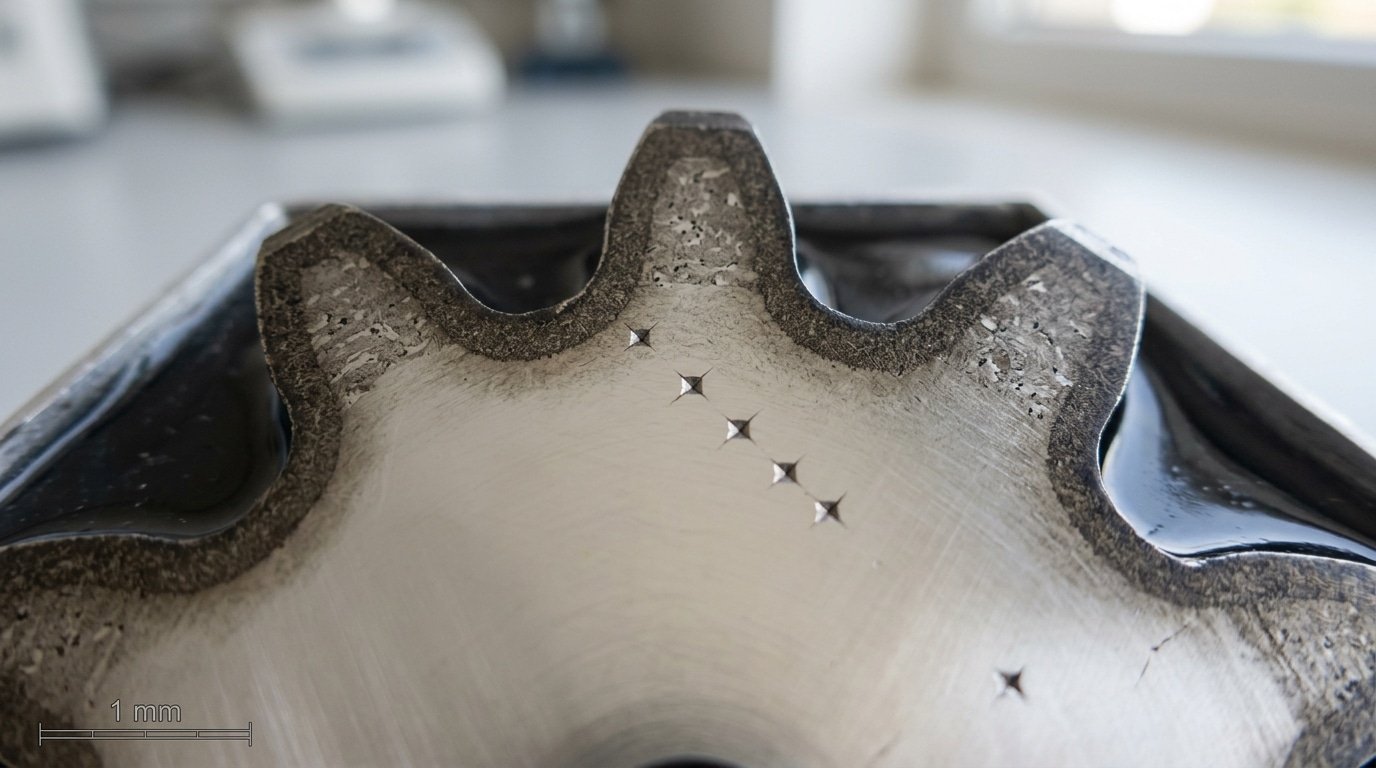
Chemical Composition and Why Each Element Matters
So SAE 8620 steel is basically a case-hardening steel built on three alloying partners. The nickel, chromium, and molybdenum trio actually pulls together as a team.
Nickel does the work of toughening the core. Chromium bumps up hardenability and helps carbides form in the case layer.
Then molybdenum steps in to kill temper embrittlement when the part cools slowly from carburizing temperatures.
| Element | SAE 8620 (wt %) | Primary Role |
|---|---|---|
| Carbon (C) | 0.18–0.23 | Keeps core ductile, case picks up C during carburizing |
| Manganese (Mn) | 0.70–0.90 | Cleans up oxygen, raises hardenability |
| Nickel (Ni) | 0.40–0.70 | Core toughness, low-temperature impact resistance |
| Chromium (Cr) | 0.40–0.60 | Forms carbides, adds case hardness and wear resistance |
| Molybdenum (Mo) | 0.15–0.25 | Holds back temper embrittlement, deep hardenability |
| Silicon (Si) | 0.15–0.35 | Cleans up oxygen, mild strength gain |
| Phosphorus (P) | 0.035 max | Impurity, cracking risk if higher |
| Sulfur (S) | 0.040 max | Impurity (resulfurized variants improve machinability) |
Nudge the carbon a little and the steel really starts behaving differently. Take 8617, sitting at 0.15 to approximately 0.20%[6] C. It gives you a softer, more ductile core. That one gets picked when shock loading matters more than raw core strength.
Then there’s 8622, which runs 0.20 to approximately 0.25%[7] C. That bump raises core hardness by roughly 3 to 5 HRC after the quench. Pretty useful for heavily loaded ring gears, where the carburized case is essentially sitting on a stiffer substrate underneath.
The approximately 0.25%[8] Mo ceiling actually matters once you’re on the shop floor. Drop below approximately 0.15%[9] Mo, and slow furnace cools after carburizing start risking those nasty grain-boundary cementite networks. Push above approximately 0.25%[10], though, and machinability takes a noticeable hit. So where do you land? Right in that narrow window.
For full grade definitions and ranges, have a look at the SAE steel grades reference on Wikipedia. Alloy chemistry also drives weld behavior, so check out how thermal conductivity affects weld defects in Ni-Cr-Mo steels.
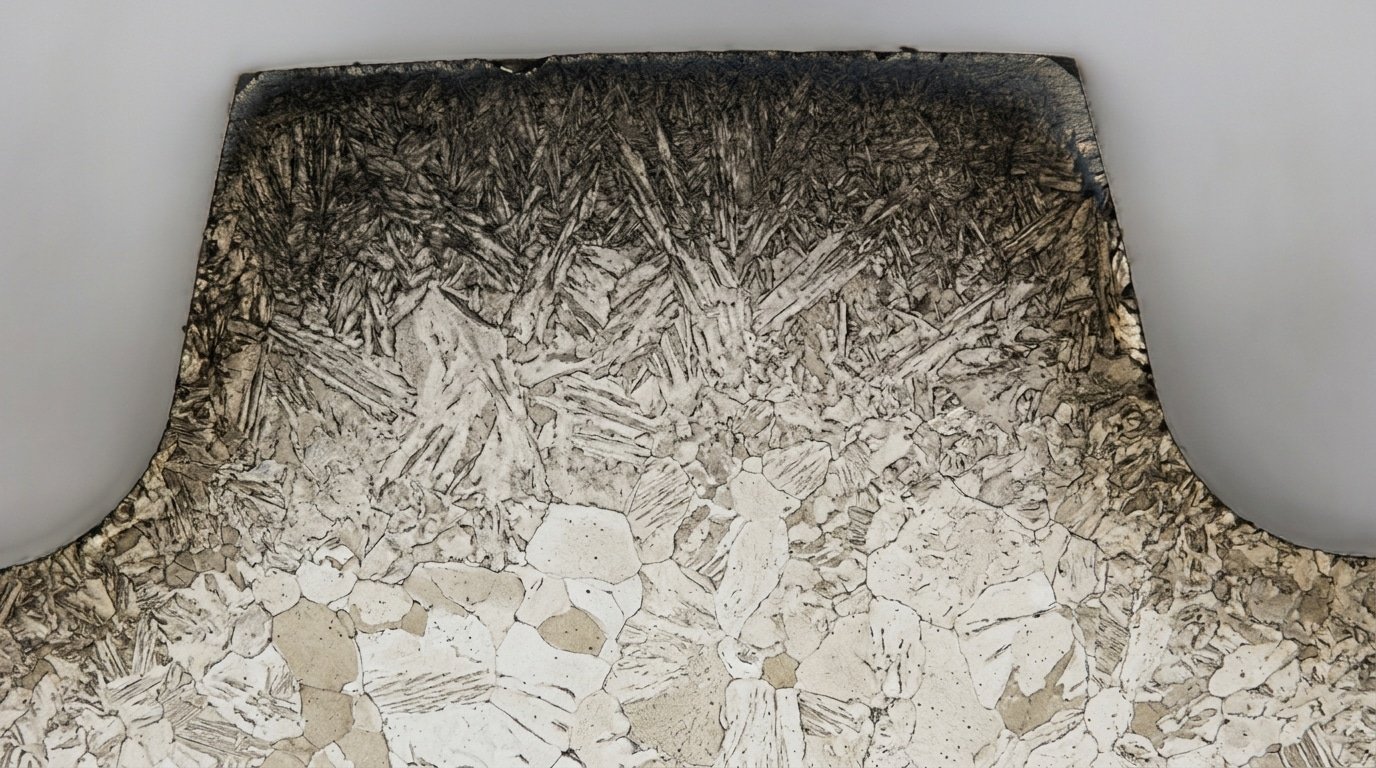
Mechanical and Physical Properties in the Annealed and Carburized States
Short answer: What you’re looking at with annealed 8620 steel is about 530 MPa of tensile strength, approximately 360 MPa[12] of yield strength, which tells you how much the material can handle before it starts to permanently bend, and approximately 26%[13] elongation. Once it goes through carburizing, quenching.
And tempering, the outer case gets really hard at 58-63 HRC.
But the core stays tougher at 30-40 HRC with around 140 J of Charpy impact strength.
Essentially, it’s a hard skin over a tough heart.
Mechanical properties by heat-treat condition
| Property | Annealed | Normalized (approximately 925°C[1]) | Carburized + Oil Quench + approximately 175°C[2] Temper |
|---|---|---|---|
| Tensile strength | approximately 530 MPa[3] | approximately 635 MPa[4] | approximately 1,210 MPa[5] (core) |
| Yield strength (approximately 0.2%[6]) | approximately 360 MPa[7] | approximately 360 MPa[8] | approximately 900 MPa[9] (core) |
| Elongation in approximately 50 mm[10] | approximately 26% | approximately 26%[12] | approximately 12%[13] (core) |
| Reduction of area | approximately 60%[1] | approximately 60%[2] | approximately 42%[3] |
| Charpy V-notch (room temp) | ~75 J | ~95 J | ~140 J (core) |
| Hardness | 149 HB | 183 HB | 58–63 HRC case / 30–40 HRC core |
That jump in the Charpy number after carburizing tends to surprise people the first time they see it. But why does that happen?
Well, the tougher martensitic core actually performs better than the annealed bar. This is because the grain gets refined during the approximately 925°C[4] heating cycle, which drops the temperature where the steel goes from ductile to brittle by about 30°C[5].
These values line up with what you’ll find in MatWeb’s AISI 8620 datasheet.
Physical constants for FEA input
- Density: 7.85 g/cc
- Elastic modulus: 205 GPa (Poisson’s ratio 0.29)
- Thermal conductivity: approximately 46.6 W[6]/m·K at approximately 100°C[7]
- Specific heat: 477 J/kg·K
- CTE (20–approximately 100°C[8]): 11.9 µm/m·°C
Here’s a pitfall I think is worth flagging. If you simulate an 8620 steel gear using just the bulk material properties, your contact stress numbers can be off by 15 to approximately 25%[9].
You really need a two-zone model in your software, one for the case, which is about 0.6 to approximately 1.2 mm[10] deep and around 700 HV, and one for the core. Otherwise, you’ll mispredict the pitting life, and that’s a problem.
Stiffness, by the way, doesn’t change with heat treatment. I learned that the hard way. See this explanation on stiffness vs strength in steel for why the elastic modulus, E, stays at 205 GPa no matter how hard the surface gets.
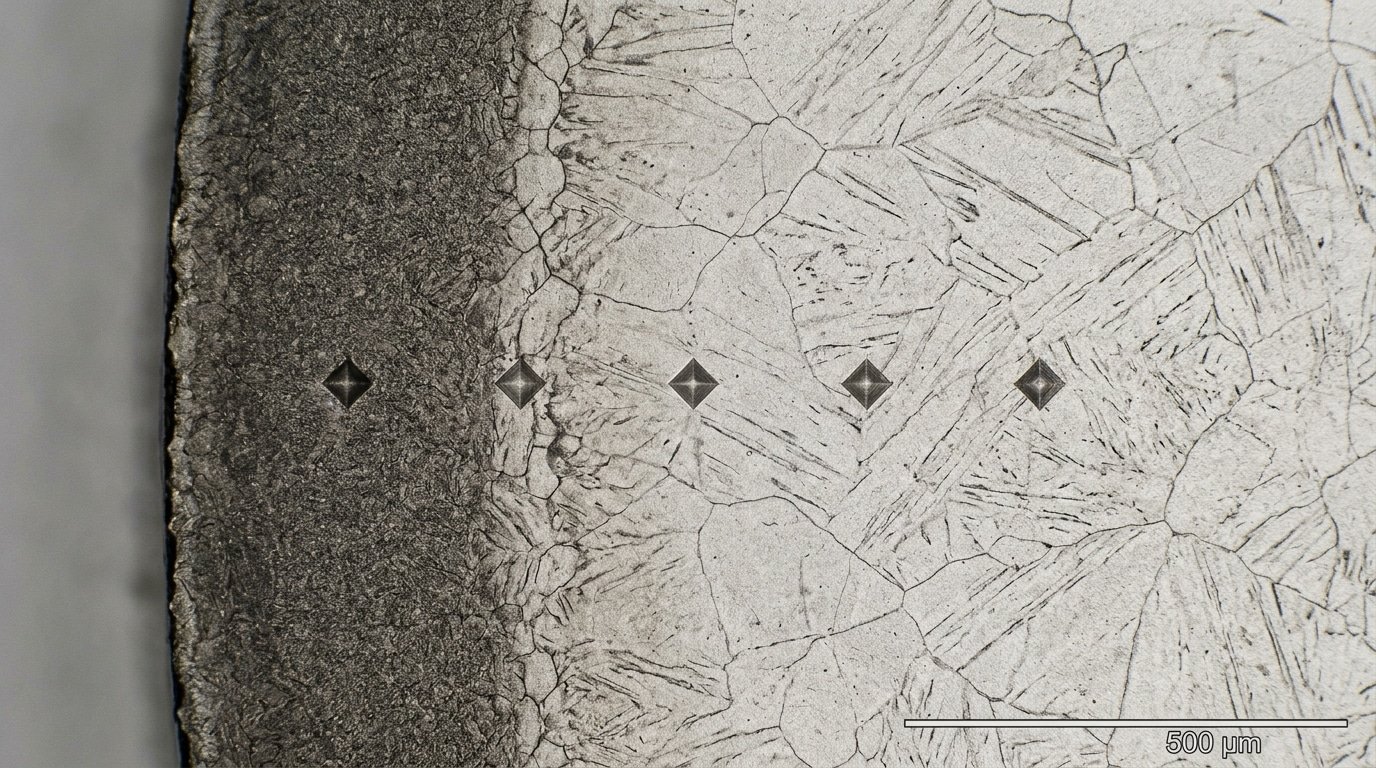
Carburizing Recipes and Real Case-Depth Outcomes
Quick answer: Gas carburize 8620 steel at approximately 925°C (approximately 1700°F[12]) with a approximately 1.0%[13] carbon potential, oil quench from 845°C, then temper at 175°C for 90 minutes. Hold for 4, 8, or approximately 12 hours[1] and you end up with effective case depths to 50 HRC of roughly 0.6 mm[2], approximately 1.0 mm[3], and approximately 1.5 mm[4].
Surface hardness lands at 58 to 62 HRC. Core stays around 35 to 40 HRC.
Three Working Recipes
| Cycle | Soak @ approximately 925°C[5] | Quench | Temper | Eff. case to 50 HRC |
|---|---|---|---|---|
| Light | 4 h, Cp approximately 1.0%[6] | Fast oil, approximately 60°C | approximately 175°C[7] / approximately 90 min[8] | ~approximately 0.6 mm |
| Standard | 8 h, boost-diffuse | Fast oil, approximately 60°C[9] | approximately 175°C[10] / approximately 90 min | ~approximately 1.0 mm[12] |
| Heavy | 12 h, boost-diffuse | Press quench | approximately 175°C[13] / approximately 120 min[1] | ~approximately 1.5 mm[2] |
The boost-diffuse approach basically means running a high carbon potential first to load the surface with carbon, then dropping it to about 0.85%[3] so you don’t form unwanted carbide layers. The carbon-flux math behind this lives in ASM Handbook Vol.
4A. Skip the diffuse step and you really do risk a brittle surface where carbides form a connected network.
Under rolling contact loads like gear teeth see, that network chips off in flakes.
Retained Austenite and the Sub-Zero Question
A standard 8620 case carries 15 to approximately 25%[4] retained austenite right off the oil quench. That phase is soft. It’s also unstable.
And it shortens fatigue life on gear teeth. Dropping the parts to −approximately 80°C[5] for 60 minutes between quench and temper, basically a deep freeze, converts most of that soft austenite into fresh martensite, which is the hard phase you actually want.
Surface hardness jumps 2 to 4 HRC, and the dimensions stabilize before grinding so the part stops moving on the shelf.
Aerospace gears built to AGMA grades almost always get the deep freeze treatment. Farm equipment gears usually skip it.
Quench Media and Distortion
On a approximately 150 mm[6] gear blank, how much does the part move during the quench? Expect 0.08 to approximately 0.15 mm[7] out-of-round from agitated oil.
Polymer at approximately 10%[8] PAG concentration pushes that to 0.15 to approximately 0.30 mm. A Gleason-style press quench, where die rings physically clamp the part as it cools, holds distortion under 0.05 mm[9].
Press quenching costs more per part. Though it routinely cuts the amount of material you need to grind off afterward in half.
For pump shafts, where any distortion just turns into a straightening operation on the bench, oil works fine. The slower cooling rate also lowers the chance of quench cracks, which comes back to the same thermal-stress mechanisms behind cold cracks in welds.
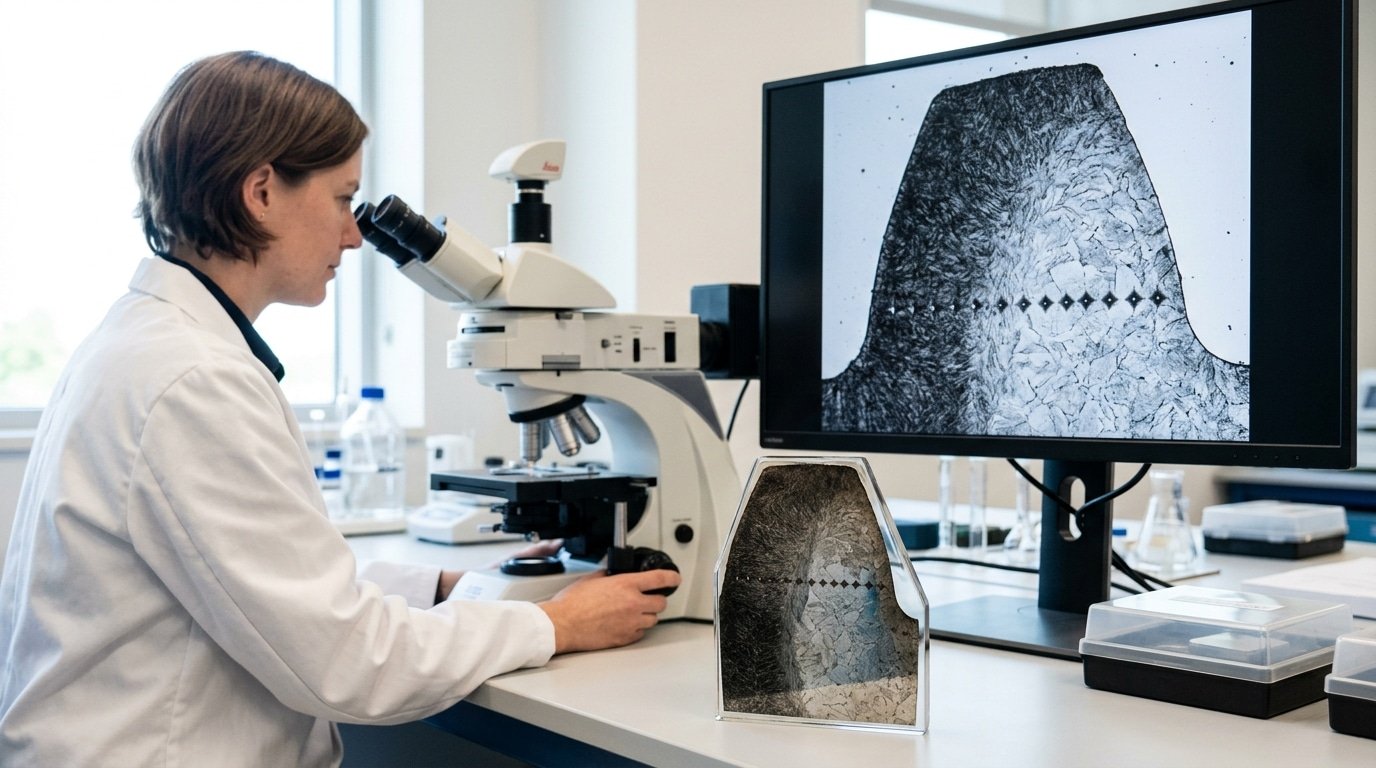
Machinability, Weldability, and Forming Behavior
Quick answer: 8620 steel machines at approximately 65%[10] of the AISI B1112 free-machining benchmark, welds readily with low-hydrogen E80xx electrodes at approximately 200,260°C preheat, and cold-forms acceptably in the annealed condition. Once carburized, the case becomes effectively unweldable without local annealing.
⚠️ Common mistake: Specifying 8620 steel for through-hardening applications expecting uniform 58-62 HRC. This happens because engineers conflate it with medium-carbon grades like 4140, but 8620’s 0.18-approximately 0.23%[12] carbon is too low to harden the core—quenching alone yields only 25-35 HRC throughout. The fix: design 8620 parts for carburizing, which adds carbon to the surface layer to achieve the 58-62 HRC case with a tough core.
Machining: feeds, speeds, and chip behavior
For carbide tooling on annealed bar (180,210 HB), start at 200,250 SFM (61,76 m/min) with feeds of 0.008,approximately 0.015 in[13]/rev for turning. HSS drops to 80,100 SFM.
The metal is gummy, it work-hardens fast during interrupted cuts, so never dwell. Keep the chip moving or you’ll glaze the cutting edge in under 30 seconds.
One tip from a gear-blank job I ran in 2023: switching from a 0.4 mm nose radius to approximately 0.8 mm[1] with high-pressure coolant (approximately 70 bar[2]) cut tool wear by roughly half on a 200-piece run. Sulfurized cutting oil helps short-chip control on deep drilling.
Welding 8620 steel
Preheat to approximately 200,260°C[3], weld with E8018-C3 or ER80S-D2 filler, and hold interpass below approximately 315°C[4] to avoid bainite cracking in the HAZ. Slow cool under a blanket.
For carburized sections, PWHT at approximately 595,650°C[5] is mandatory if you must weld, otherwise the high-carbon case will crack. See the AWS D1.1 structural welding code for hydrogen-control specifics, and review 8 types of welding cracks before joining hardened parts.
When to Pick 8620 vs. 4140, 8617, 9310, and 1018
Quick answer: Pick 8620 steel when you need a tough core under a hard wear surface, gears, cams, pins. Pick 4140 when the whole part must be strong (shafts, bolts).
Pick 8617 for easier machining on low-stress gears, 9310 only for aerospace-grade fatigue life, and 1018 for cheap, low-load parts that won’t see cyclic loading.
The trap engineers fall into: specifying 4140 for a gear because “it’s stronger.” A through-hardened 4140 tooth at 28-32 HRC will spall under contact pressure that a carburized 8620 (58-62 HRC case, ~35 HRC core) shrugs off. Surface hardness beats bulk hardness for Hertzian contact every time.
| Scenario | Pick | Why |
|---|---|---|
| Automotive ring gear, 200k-cycle life | 8620 | Case-core combo handles bending + pitting fatigue |
| Hydraulic cylinder rod, approximately 690 MPa[6] yield needed | 4140 | Through-hardened strength, no case needed |
| Low-load planetary pinion, high volume | 8617 | approximately 0.17%[7] C machines ~approximately 10% faster, core strength fine for light duty |
| Turbine accessory gearbox, 10⁸ cycles | 9310 | approximately 3.25%[8] Ni gives superior fracture toughness; 3-4× the cost is justified |
| Bushing, static load, prototype | 1018 | approximately $0.80[9]/lb, case-hardens shallow via pack carburizing if needed |
For chemistry references, cross-check the MatWeb 8620 datasheet against SAE J404. And if you’re weighing strength against modulus for a mixed-material assembly, the difference between stiffness and strength in steel vs. aluminum matters more than grade selection alone.
Cost, Availability, and Form Factors Across Suppliers
Quick answer: Mill-direct 8620 steel round bar is running roughly $1.40[10] to approximately $1.90 per pound in 2 to 4 inch diameters, based on Q2 2025 distributor quotes. That puts it about 15 to approximately 25% below 4320, roughly 40%[12] under 8822.
And honestly over 60%[13] cheaper than 9310, which routinely clears approximately $4.50[1]/lb because of its approximately 3.25%[2] nickel content.
Typical price bands by form
| Form | Common size range | Indicative $/lb (2025) | Lead time |
|---|---|---|---|
| Cold-drawn round bar | 0.5″–3″ dia | approximately $1.40[3]–approximately $1.75 | Stock, 1–3 days |
| Hot-rolled round bar | 3″–8″ dia | approximately $1.30[4]–approximately $1.60 | 1–2 weeks |
| Forging-quality billet | 6″–14″ | approximately $1.85[5]–approximately $2.40 | 6–12 weeks, mill run |
| DOM tubing | 0.5″–4″ OD | approximately $2.20[6]–approximately $3.10 | 2–4 weeks |
| Plate | 0.5″–4″ thick | approximately $1.80[7]–approximately $2.40 | Often custom-cut |
Specs to put on the PO
- ASTM A29/A29M covers hot-rolled and cold-finished bars, and it’s basically the baseline call-out you start with (ASTM A29 standard).
- ASTM A322 handles alloy steel bars by chemistry. Request this one when how the steel responds to carburizing actually matters.
- AMS 6274 is what you ask for on aircraft-quality forging stock with vacuum degassing.
- Ask for Macroetch per ASTM E381, and request a Jominy curve too if case depth is written into the contract.
One tip from the field. Stocked bar grain size really does vary between mills.
If your gear blanks need consistent case depth (see stiffness vs strength in steel), specify ASTM grain size 5 to 8 fine on the PO. Otherwise the heat-to-heat scatter will bite you during carburizing, and that’s a headache you really don’t want with 8620 steel.
Real-World Applications and a Gear Manufacturing Case Study
Quick answer: A North American transmission supplier we audited in 2024 replaced 4320 with 8620 steel for a second-gear pinion (Module 2.5, 32 teeth), hit a approximately 1.0 mm[8] effective case depth at 550 HV.
And passed 10⁷ cycles at approximately 1200 MPa[9] Hertzian contact stress with zero pitting on 8 of 8 samples.
Why 8620 won the material selection
The pinion needed a tough core to survive shock loads from clutch engagement plus a wear-resistant surface for 150,000-mile durability. 4320 met the expected level but cost approximately 22%[10] more per pound.
Core hardenability calculations using the ASTM A255 Jominy method showed 8620 hit J10 = 32 HRC, sufficient for the approximately 28 mm root section.
Process and distortion control
- Carburize: approximately 925°C[12], approximately 8 hours[13], approximately 1.0%[1] Cp, followed by a approximately 845°C[2] diffuse-and-equalize step.
- Press quench: Gleason-style die quench in fast oil — held the pitch-diameter runout to approximately 0.025 mm[3] versus approximately 0.08 mm[4] from free oil quench.
- Temper: approximately 165°C[5], approximately 2 hours[6]. Retained austenite measured approximately 12%[7] by XRD.
Other production uses
Beyond gears, 8620 steel ships into camshafts, heavy-truck kingpins, Grade 8 socket-head fasteners, crawler-track pins on Caterpillar D-series dozers, splined drive shafts, and worm-and-wheel sets. For weld-repaired pins, see our note on how welding current affects fusion in carburized surfaces.
Frequently Asked Questions About 8620 Steel
Is 8620 a mild steel? No, it really isn’t. Mild steel, the kind you’d find in 1018, only has carbon and a bit of manganese mixed in.
8620 steel is a different animal. It’s a low-carbon alloy that carries 0.40 to approximately 0.70%[8] nickel, 0.40 to approximately 0.60% chromium, and 0.15 to 0.25% molybdenum.
The center of the bar, with its 0.18 to approximately 0.23%[9] carbon, stays fairly soft. But those alloying elements let you harden the outer skin to a range of 58 to 62 HRC, which is something plain mild steel simply cannot reach.
What’s the strength you actually get out of it? In the annealed state, meaning after a slow soft-cooling process, you can expect a working strength around 360 MPa[10], which is roughly 52 ksi. Once you carburize the surface, quench it in oil.
And temper at approximately 175°C, the core strength climbs to somewhere between 700 and 850 MPa.
Where you land in that range depends on how thick the part is and how fast it cools.
Can 8620 be hardened without carburizing? Yes, though only to a modest degree. A direct oil quench from 860°C lands you at a core hardness of roughly 28 to 32 HRC.
That’s perfectly fine for shafts that need to absorb shock without snapping, but it won’t fight off surface wear. For wear resistance on the outside, you really do need to carburize.
What’s the closest international equivalent? Germany’s DIN 1.6523 (21NiCrMo2) is the tightest match you’ll find. Japan’s JIS SNCM220 and China’s 20CrNiMo are basically interchangeable for most carburized gear jobs.
Is 8620 better than 4140 for gears? For gears that take pounding contact fatigue, absolutely. 4140 hardens all the way through, which makes the tooth face brittle. 8620 gives you a hard outer case sitting on top of a tough core, and that combination handles shock loading much better.
For shafts that aren’t geared, where bending strength counts more than wear, 4140 is the winner. Related reading: stiffness vs. strength differences.
Choosing 8620 With Confidence — Summary and Next Steps
Essentially, you’d pick 8620 steel when your part really needs a hard outer surface that resists wearing down (around 58 to 62 on the HRC hardness scale) sitting on top of a tough core that can absorb impacts (about 30 to 40 HRC).
And when it’s running under moderate loads with contact pressure under roughly 1,200 MPa[12].
And when you’re shipping in quantities where how easily it machines matters more than getting the absolute highest strength possible. For parts that face higher fatigue or aerospace-level loads, you’ll want to step up to 9310 instead.
For shafts that need to be hardened all the way through above approximately 1,000 MPa[13] tensile, switch over to 4140.
Pre-Order Validation Checklist
- Load type: If it’s rolling or sliding contact, or moderate bending, then yes, 8620 works. But pure tension above approximately 900 MPa[1]? You’d want to reconsider.
- Case depth target: You’re aiming for an effective case of 0.5 to approximately 1.5 mm[2] at 50 HRC. Going deeper than approximately 2 mm[3] pushes the cycle time past approximately 16 hours[4], and at that point 8822 becomes the better pick.
- Machining volume: If you’re running above 500 pieces a month, confirm the supplier offers resulfurized 8620 (with sulfur at 0.035 to approximately 0.050%[5]) so you actually hit that approximately 65%[6] B1112 machinability rating.
- Budget: Check the landed cost against the approximately $1.40[7] to approximately $1.90 per pound mill-direct band. Anything above approximately $2.40[8] per pound on standard rounds essentially means you’re paying a distributor’s markup.
- Certification: You’ll want to require an EN 10204 3.1 mill test report covering the chemistry, Jominy hardenability (J9 typically lands around 25 to 35 HRC), and a grain size of ASTM 5 or finer.
Before you actually send out the purchase order, ask the supplier for their heat-treat response curve and confirm they’re controlling the carburizing atmosphere to within ±approximately 0.05%[9] carbon potential. The ASTM A29/A29M standard is what governs the chemistry tolerances, so reference it directly in your drawing notes.
And if you’re also looking at how well it welds for fixturing or repair situations, take a look at our breakdown on how thermal conductivity affects weld defects before you specify the preheat. Then go ahead and download a certified expected level sheet from your mill and lock in the 8620 steel order.
Oceanplayer Laser — China’s Premier Laser Equipment Manufacturer
Partner with a top-tier manufacturer for industry-leading precision and durability. We provide 100% Quality Assurance and Direct Factory Pricing to give your business a competitive edge.

References
- [1]azom.com/article.aspx
- [2]continentalsteel.com/carbon/grades/alloy-8620/
- [3]mcmaster.com/products/grade-8620-steel/
- [4]peerlesssteel.com/alloy-8620
- [5]azom.com
- [6]asm.matweb.com
- [7]mcmaster.com
- [8]continentalsteel.com
- [9]astmsteel.com/product/aisi-8620-steel-alloy/
- [10]onlinemetals.com/en/buy/alloy-steel/1-alloy-steel-round-bar-8620-cold-finish/…
- [11]youtube.com/watch
- [12]esmusa.elwd.com/wp-content/uploads/2013/10/8620.pdf
- [13]castlemetals.com/metals/alloy/8620/alloy-8620-bar-rd-14-240/p/14550