

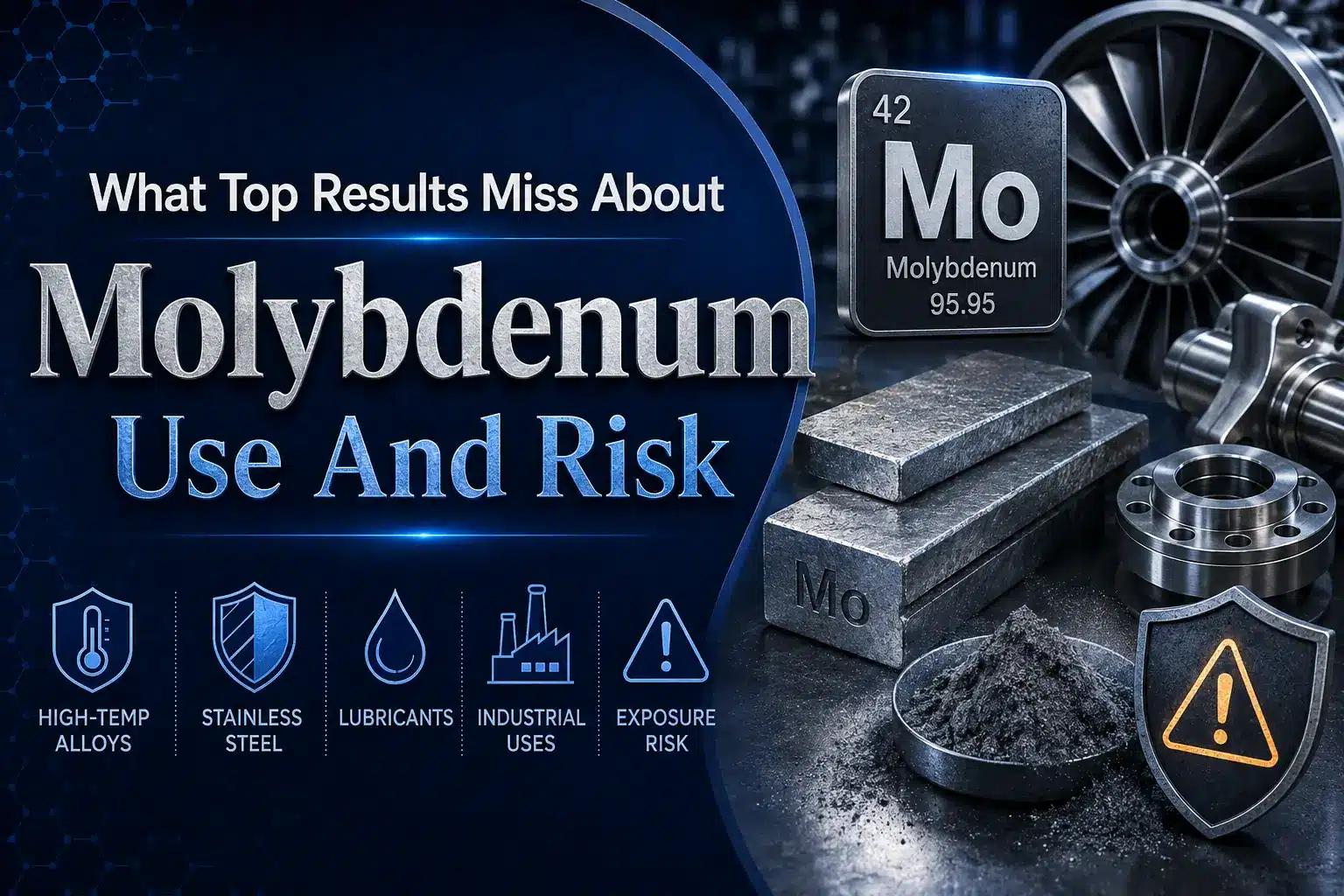
Molybdenum (Mo, atomic number 42) is a refractory metal and essential trace mineral.
With roughly 80% of the 264,000 metric tons mined globally in 2023 going into steel alloys and the remainder supporting four human enzymes, including sulfite oxidase. It has the highest melting point (approximately 2,623°C) of any common alloying element.
While adults require just 45 micrograms daily.
With the NIH setting a approximately 2 mg/day tolerable upper limit.
And the supply-chain risks tied to a metal mined in just five countries.
Quick Takeaways
- Molybdenum melts at approximately 2,623°C, making it ideal for jet turbines and furnace electrodes.
- Adults need just 45 micrograms daily; stay under the approximately 2 mg/day upper limit.
- Choose molybdate forms for supplementation—your gut absorbs 88–approximately 93% versus far less for iron.
- Sulfite oxidase relies on molybdenum to neutralize sulfite preservatives in wine and food.
- Source diversification matters: approximately 80% of mined molybdenum comes from just five countries.
Molybdenum at a Glance — The Element That Bridges Industry and Biology
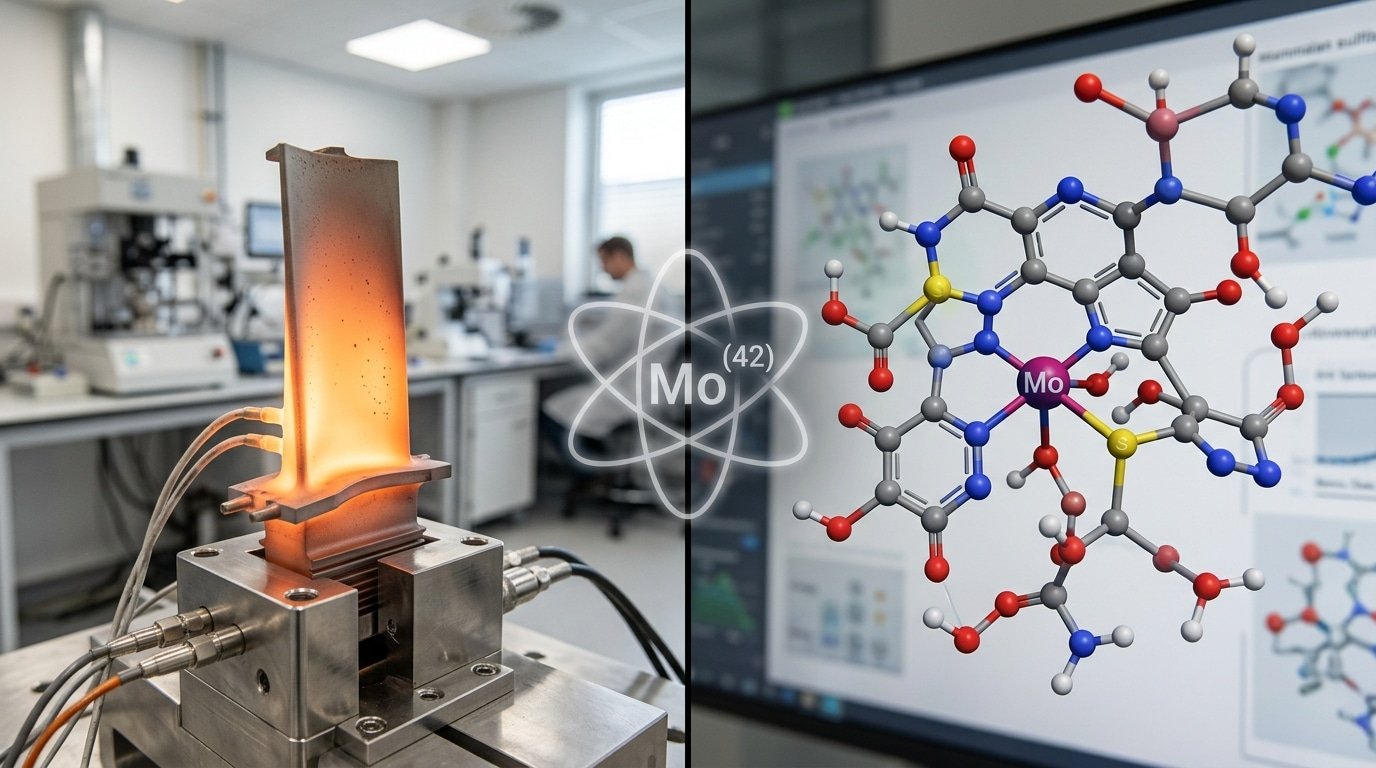
Molybdenum (Mo, atomic number 42) is a silvery-grey refractory metal with a melting point of approximately 2,623°C, the highest of any common alloying element.
And at the same time an essential human trace mineral required by four enzymes, including sulfite oxidase. That dual identity is what most top-ranking pages miss: the same atom that hardens jet turbine blades also lets your liver neutralize sulfite preservatives in wine.
The numbers frame why this element matters on both fronts. Global mine production hit roughly 264,000 metric tons in 2023, per the USGS Mineral Commodity Summaries.
Your body, by contrast, holds about 0.07 mg per kilogram of tissue and needs only 45 micrograms per day (adult RDA set by the Food and Nutrition Board).
A few properties worth flagging upfront, because later sections build on them:
- Refractory metal — meaning it resists heat and wear above approximately 1,800°C, which is why it ends up in rocket nozzles and furnace electrodes.
- Oxidation states from −2 to +6 — this redox flexibility is exactly what makes it useful as an enzyme cofactor and as a hydrodesulfurization catalyst in oil refining.
- Bioavailable as molybdate (MoO₄²⁻) — the soluble anion form your gut absorbs at roughly 88–approximately 93% efficiency, far higher than iron or zinc.
Hold that bridge in mind. Industrial metallurgy and human biochemistry aren’t separate stories about molybdenum, they’re the same redox chemistry expressed at different scales.
How Molybdenum Works as an Enzyme Cofactor in the Human Body
Here’s the thing about Molybdenum on its own, it’s basically useless biologically. It really only starts working once it gets tucked into this complicated organic scaffold called Molybdopterin, which then forms what scientists call the molybdenum cofactor, or Moco for short.
Our bodies actually build Moco through a four-step process that involves four genes, MOCS1, MOCS2, MOCS3, and GPHN. When any of these genes get mutated, you end up with Moco deficiency.
It’s a rare condition, and honestly, untreated cases are usually fatal in infancy. As of 2021, only about 100 cases had been documented across the entire world.
Now, Moco switches on exactly four enzymes in humans. Each one has its own specific job to handle:
| Enzyme | Primary Role | What Fails Without Mo |
|---|---|---|
| Sulfite oxidase | Turns toxic sulfite into sulfate while cysteine and methionine are being broken down | Sulfite buildup → seizures, brain damage, lens dislocation |
| Xanthine oxidase | Breaks purines down into uric acid, which is essentially what allopurinol targets when treating gout | Xanthine accumulates → kidney stones, low uric acid |
| Aldehyde oxidase | Oxidizes aldehydes and roughly 20% of prescription drugs, things like zaleplon and methotrexate | Slower clearance of certain drugs, plus toxic aldehyde buildup |
| mARC | Reduces N-hydroxylated compounds, activates amidoxime prodrugs, and handles nitrite too | Prodrug activation fails, plus messed up lipid and nitric oxide balance |
Sulfite oxidase is really the bottleneck of the whole system. Out of these four enzymes, losing this one causes the worst damage by far, mostly because sulfite is directly toxic to the brain.
That’s basically why clinical Moco deficiency looks almost identical to isolated sulfite oxidase deficiency when you run a metabolic panel. Both show high urinary sulfite and S-sulfocysteine, along with low uric acid.
Then there’s mARC, which was only identified back in 2006. It’s the newest member of the group, and honestly the one that most articles still completely ignore.
These days though, it’s become a hot target for drug development. Pharmaceutical companies are now designing Amidoxime prodrugs specifically because mARC activates them once they’re inside cells.

Daily Requirements, Food Sources, and a Serving-by-Serving Content Table
The Food and Nutrition Board sets the adult RDA for molybdenum at 45 µg/day, rising to 50 µg/day during pregnancy and lactation. The Tolerable Upper Intake Level (UL) is 2,000 µg/day. Most U.S.
Adults already get 76,109 µg daily from a mixed diet, per NIH ODS data, so deficiency is rare outside total parenteral nutrition cases.
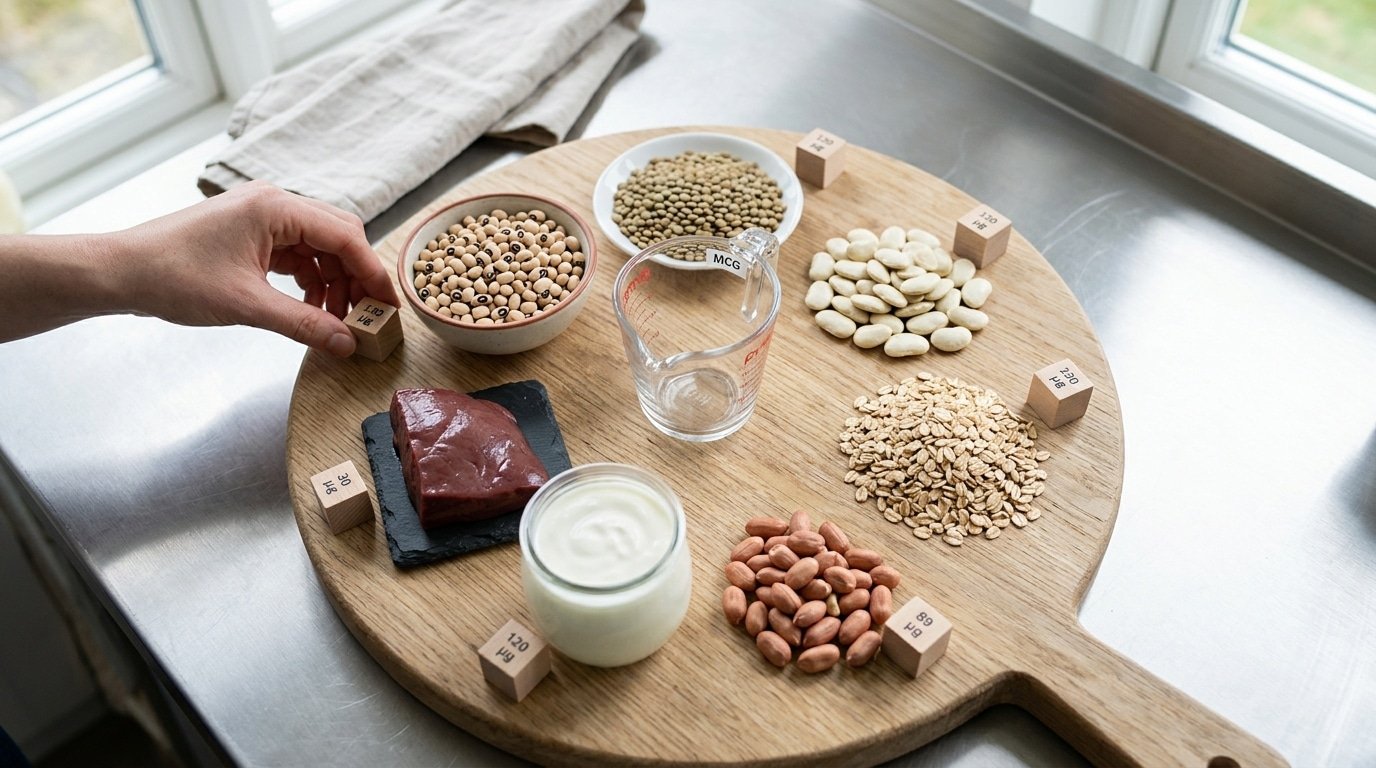
Legumes are the densest natural source. The exact content varies wildly by soil, Mo concentration in lentils grown on alkaline soils can be 5× that of acidic-soil crops. Treat the numbers below as midpoints, not absolutes.
| Food | Serving | Molybdenum (µg) | % RDA |
|---|---|---|---|
| Black-eyed peas, boiled | 1 cup | 288 | approximately 640% |
| Lima beans, boiled | 1 cup | 141 | approximately 313% |
| Lentils, boiled | 1 cup | 148 | approximately 329% |
| Beef liver, cooked | approximately 3 oz | 104 | approximately 231% |
| Peanuts, roasted | approximately 1 oz | 11 | approximately 24% |
| Yogurt, low-fat | 1 cup | 11 | approximately 24% |
| Oats, cooked | 1 cup | 9 | approximately 20% |
| Whole wheat bread | 1 slice | 8 | approximately 18% |
One cup of black-eyed peas blows past a week’s worth of RDA in a single sitting, yet stays well under the 2,000 µg UL. The real audit question isn’t “am I getting enough?”
But “am I stacking high-dose supplements on top of an already legume-heavy diet?” A 500 µg Mo supplement plus daily lentils pushes some users near 800,1,000 µg, which is where sulfite oxidase saturation concerns start.
Deficiency, Toxicity, and the SIBO Dosing Question Most Articles Dodge
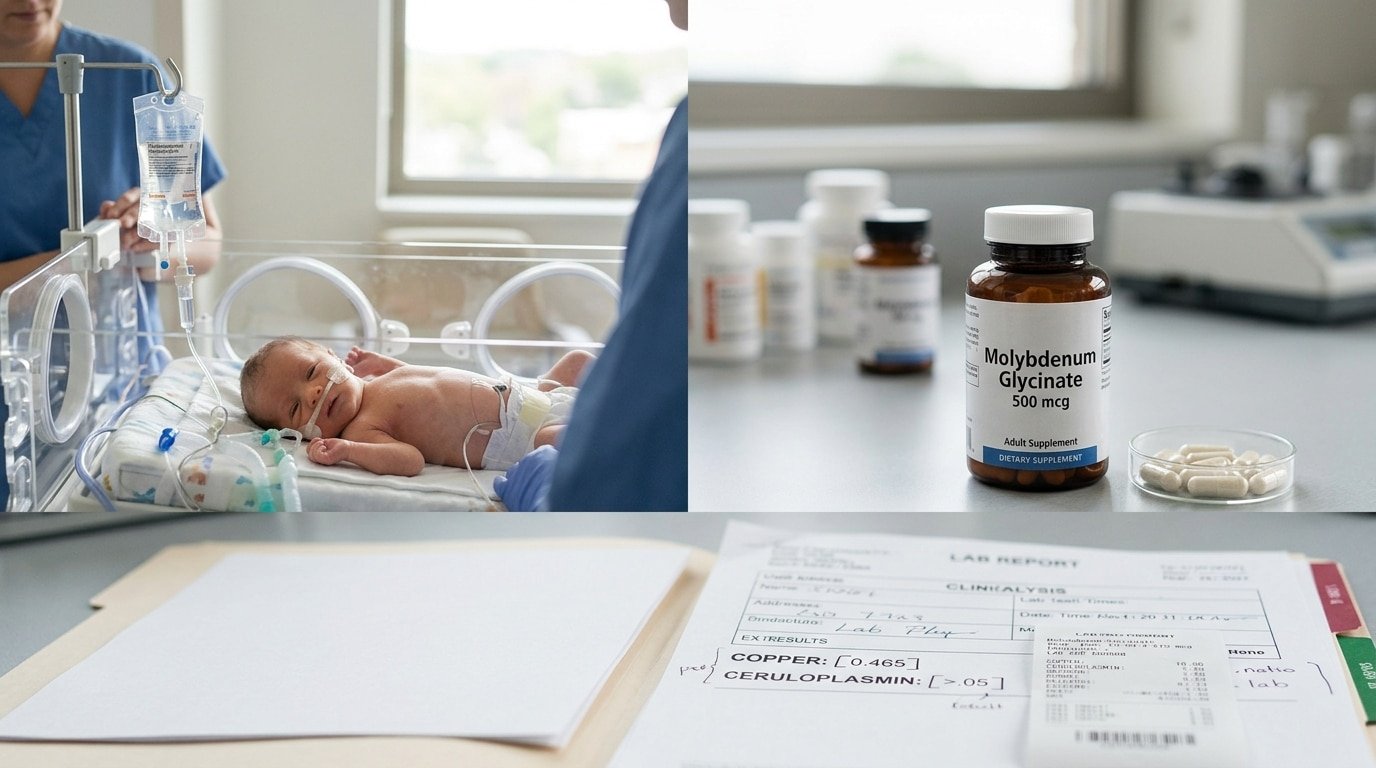
Direct answer: True dietary molybdenum deficiency is essentially nonexistent in people who eat food. The real clinical concerns are three: inherited molybdenum cofactor (MoCo) deficiency in newborns, acquired deficiency in long-term parenteral nutrition patients, and copper depletion at chronic intakes above approximately 10 mg/day.
The 500 µg “SIBO protocol” sits in a gray zone, biochemically plausible, clinically under-studied.
MoCo deficiency Type A is a recessive disorder affecting roughly 1 in 100,000,200,000 births. Without sulfite oxidase activity, sulfite accumulates and causes neonatal seizures and severe brain injury.
Since 2021, fosdenopterin (Nulibry), FDA-approved at a cost reported above approximately $400,000 per year, replaces the missing cyclic pyranopterin monophosphate intermediate. See the FDA label for dosing.
The classic acquired case is the 1981 Abumrad TPN patient: tachycardia, night blindness, and elevated sulfite, fully reversed with 300 µg/day ammonium molybdate. Modern parenteral formulations now include 25 µg/day by default.
Toxicity flips the script. Ammonium tetrathiomolybdate is used Therapeutically to strip copper in Wilson disease, which tells you everything about chronic high-dose risk. The UL is approximately 2 mg/day for adults; sustained intake above approximately 10,15 mg/day from supplements can drive ceruloplasmin down and trigger gout-like joint pain.
The SIBO 500 µg question
Functional medicine practitioners prescribe 500 µg molybdenum glycinate alongside antifungals, citing aldehyde oxidase support for acetaldehyde clearance during yeast or SIBO die-off. The dose is roughly 11× the RDA but well under the 2,000 µg UL.
Why mainstream sources stay silent: no randomized controlled trial exists, the mechanism is extrapolated from enzymology rather than measured in vivo, and acetaldehyde toxicity from gut dysbiosis itself is contested. Short-term use within UL appears safe; multi-month dosing without serum copper monitoring is where practitioners get into trouble.
Industrial Uses — From Stainless Steel and Superalloys to Catalysts
Roughly 80% of mined molybdenum never actually ends up in a vitamin bottle, it goes to steel mills and refineries instead. The International Molybdenum Association reports that global mine production reached about 264,000 tonnes in 2023.
And metallurgy uses up most of that as ferromolybdenum, which is a 60,approximately 75% Mo alloy that gets added directly into molten steel.
The reason really comes down to pitting resistance. In 316L stainless steel, adding 2,approximately 3% Mo lifts the Pitting Resistance Equivalent Number (PREN = %Cr + 3.3×%Mo + 16×%N) above 24.
That is basically why marine hardware, brewery tanks, and surgical implants can survive the chloride attack that completely destroys plain 304 stainless.
Push the temperature higher and you start entering superalloy territory. Inconel 718 and Hastelloy C-276 carry around 3,approximately 16% Mo, which helps them resist creep inside jet turbine blades and chemical reactors that operate above approximately 700°C.
Tool steels follow pretty much the same logic. M2 (approximately 5% Mo) and M42 (approximately 9.5% Mo, 8% Co) hold their cutting edge even at red heat, and that is why most twist drills you buy at the store are stamped “HSS-M2.”
HSLA pipeline steel uses a slightly different trick. Just 0.15,approximately 0.3% Mo causes fine carbides to precipitate out, which boosts how much usable material is produced and gets the strength up to API 5L X80 grade without giving up the ability to weld it.
That last part is really critical for Arctic gas pipelines.
The unsung application, though, sits in oil refineries. Cobalt-molybdenum and nickel-molybdenum sulfide catalysts (CoMo/NiMo on alumina) drive hydrodesulfurization, which essentially strips sulfur out of crude oil so it meets the EPA Tier 3 gasoline standard of 10 ppm sulfur.
Without these catalysts, modern catalytic converters would basically get poisoned within months. And for the regulatory detail, see the EPA gasoline sulfur program.
Molybdenum in Emerging Tech — Green Hydrogen, EV Batteries, and Semiconductors
Direct answer: Molybdenum is quietly becoming a strategic material for the energy transition. MoS₂ catalysts now reach within approximately 10% of platinum’s hydrogen-evolution performance at a fraction of the cost, and Mo-based contacts sit inside roughly every commercial CIGS solar panel shipped today.
MoS₂ as a Platinum Challenger in Green Hydrogen
Platinum costs around $30/gram and dominates proton-exchange-membrane electrolyzers. Molybdenum disulfide (MoS₂), a layered 2D material with catalytically active edge sites, is the leading earth-abundant alternative for the hydrogen evolution reaction (HER).
A 2023 paper in Nature Communications reported defect-engineered MoS₂ achieving overpotentials near 60 mV at 10 mA/cm², closing in on platinum’s ~30 mV benchmark. Pilot electrolyzers from groups like Norway’s Nel Hydrogen are testing Mo-sulfide stacks to cut catalyst cost per kg of H₂.
Semiconductors: MoS₂ Transistors Beyond Silicon
Silicon runs out of room near the 2 nm node. Monolayer MoS₂, a single sheet three atoms thick, has a 1.8 eV direct bandgap and electron mobility above approximately 200 cm²/V·s in lab devices.
TSMC and imec have both published roadmaps using MoS₂ channels for sub-1 nm logic by the early 2030s.
CIGS Solar and Battery Anodes
- CIGS thin-film solar: A 500–1000 nm sputtered molybdenum back-contact layer sits beneath nearly every CIGS module, forming an ohmic MoSe₂ interface. Solar Frontier’s modules hit approximately 23.35% cell efficiency using this stack.
- Li-ion anodes: MoS₂ and MoO₃ anodes show theoretical capacities of 670–approximately 1117 mAh/g — triple graphite’s approximately 372 mAh/g. Cycle-life and volume expansion remain the bottleneck; most projects are still at coin-cell stage.
Practical tip for procurement teams: emerging-tech demand is still small versus steel (under 3% of consumption), but it concentrates on high-purity Mo and MoS₂ precursors, a different supply chain than ferromolybdenum.
Supply Chain, Top Producing Countries, and Geopolitical Risk
China produces roughly 40% of global molybdenum, followed by Chile (~20%), the United States (~15%), Peru, and Mexico. But the country map hides the real story: about half of all Mo comes out of the ground as a copper byproduct, not from dedicated mines.
That coupling is why prices swing from $7 to over $40 per pound within a single decade.
Primary mines vs. copper-porphyry byproduct supply
Primary mines, Climax and Henderson in Colorado, plus Sierra Gorda in Chile, mine molybdenite ore directly. Output scales with Mo demand.
Byproduct supply is the opposite: it pours out of huge copper-porphyry pits (Chuquicamata, Bingham Canyon, Toquepala) regardless of what Mo buyers want. When copper prices spike, miners run those pits harder, and Mo floods the market as a near-free bonus.
The 2008,2009 collapse showed the flip side. Copper demand fell, byproduct output dried up, and molybdenum oxide spiked above approximately $33/lb before crashing back under $10. The USGS Mineral Commodity Summary tracks these swings yearly.
What a copper downturn actually means
- Tight Mo supply, not loose: a copper recession cuts byproduct flow first — primary mines can’t ramp fast enough to fill the gap.
- Stockpiles are thin: the US Defense Logistics Agency National Defense Stockpile holds strategic reserves of several refractory metals, but Mo inventories are modest versus annual industrial demand.
- Chinese export policy: Beijing has used quotas on tungsten and rare earths before. A similar move on molybdenum ferroalloys would hit European stainless steel mills within weeks.
For buyers: lock multi-year contracts when copper is weak, not strong. That’s when sellers need the cash flow.
Common Myths and Counterintuitive Facts About Molybdenum
Direct answer: Most molybdenum confusion comes from four places, saying the name wrong, treating it like a candida cure, assuming higher doses help, and inventing a deficiency that almost nobody has.
Pronunciation: it’s muh-LIB-duh-num
The stress lands on the second syllable: Muh-LIB-duh-num. Not “molly-bee-dum,” not “moly-bden-um.” The name comes from Greek Molybdos (lead), because medieval miners kept confusing molybdenite ore with galena. Merriam-Webster lists the four-syllable pronunciation as standard.
The candida myth
Naturopathic blogs claim molybdenum “cures” candida die-off by clearing acetaldehyde through aldehyde oxidase. The biochemistry is real; the clinical claim isn’t. Zero randomized trials support candida treatment with Mo supplementation. The acetaldehyde-clearing logic was extrapolated from sulfite oxidase deficiency cases, a different enzyme, a different patient population.
More isn’t better
Molybdenum has one of the narrowest therapeutic windows of any trace mineral. RDA is 45 µg.
Upper Limit is 2,000 µg. Common supplements sell 500 µg capsules, 11x the RDA in a single pill.
Above ~1,500 µg/day, copper antagonism and gout-like joint pain start appearing in case reports (see NIH ODS).
The overstated deficiency
NHANES data shows average U.S. Intake at 76,109 µg/day for adults, roughly 170,approximately 240% of the RDA. A cup of black beans alone delivers 130 µg. Outside of long-term TPN patients, dietary molybdenum deficiency in Western populations has essentially never been documented.
Frequently Asked Questions About Molybdenum
How much molybdenum per day for SIBO die-off?
Most functional medicine protocols start at 250 µg once daily, taken with antifungal or antibacterial treatment, then titrate up to 500,1,000 µg if acetaldehyde symptoms (brain fog, flushing) persist. The adult tolerable upper limit set by the NIH Office of Dietary Supplements is 2,000 µg/day.
Stay below it, and stop after 4,6 weeks unless a clinician extends the course.
What’s molybdenum used for?
Two worlds. Industrially, it strengthens stainless steel (316L contains 2,approximately 3% Mo), hardens jet-engine superalloys, and catalyzes sulfur removal in oil refining. Biologically, it activates four human enzymes that detoxify sulfites, purines, and aldehydes. About 80% of mined supply goes to metallurgy; less than 1% reaches supplements.
Is molybdenum safe long-term?
At dietary doses (45,150 µg/day), yes, no chronic toxicity has been documented in humans. Above 1,500 µg/day for months, case reports describe gout-like joint pain from elevated uric acid and copper depletion.
Armenian populations consuming approximately 10,15 mg/day from soil showed measurable copper antagonism. Long-term supplementation above 500 µg should include periodic serum copper and ceruloplasmin checks.
What’s the chemical formula of common molybdenum compounds?
Molybdenum disulfide is MoS₂ (the dry lubricant and 2D semiconductor). Molybdenum trioxide is MoO₃ (catalyst precursor). Ammonium heptamolybdate, (NH₄)₆Mo₇O₂₄·4H₂O, is the standard lab reagent. Supplements typically use sodium molybdate (Na₂MoO₄) or molybdenum glycinate chelate.
How is molybdenum pronounced?
“muh-LIB-duh-num”, stress on the second syllable. The name comes from Greek Molybdos, meaning lead, because early miners confused molybdenite ore with galena until Carl Wilhelm Scheele separated them in 1778.
What does a molybdenum deficiency feel like?
True deficiency is so rare it has only been documented in one TPN patient and in children with inherited molybdenum cofactor deficiency. Symptoms include rapid heartbeat, headache, night blindness, and severe sulfite intolerance (reactions to wine, dried fruit).
If you “feel deficient” on a normal diet, the cause is almost always something else.
Key Takeaways and What to Do Next
The thread running through every section above is electron transfer. The same Mo=O chemistry that lets sulfite oxidase neutralize a sulfite molecule in your liver is what lets a Mo-based hydrodesulfurization catalyst strip sulfur from crude oil at a refinery.
Industrial and biological molybdenum aren’t two stories, they are one redox story told at different scales.
Your 3-step action plan
- Audit your intake first, supplement second. Use the serving table from Section 3. If you eat one cup of cooked legumes (about 130 µg) plus a slice of whole-grain bread on most days, you’re already at approximately 200%+ of the 45 µg RDA. Adding a 500 µg pill on top pushes you past 1,approximately 000% with no documented benefit.
- Skip unsupervised high-dose ammonium tetrathiomolybdate. The approximately 20 mg/day doses used in Wilson’s disease trials caused reversible bone marrow suppression in roughly 10–approximately 15% of patients (per Brewer et al. clinical data). That’s a prescription-only context, not a wellness experiment.
- If you work in manufacturing, track the LME molybdenum oxide price weekly. Moly moved from about $11/lb in 2020 to north of approximately $35/lb in 2023. Lock long-term supply contracts before the next green-hydrogen capex cycle compresses spot availability again.
For deeper sourcing, the NIH Office of Dietary Supplements fact sheet and the International Molybdenum Association publish updated Dietary Reference Intakes and industrial demand data respectively.
Disclaimer: This article is educational and doesn’t constitute medical, nutritional, or investment advice. Consult a licensed clinician before changing supplement intake, especially if you have a copper-related condition, are pregnant, or take prescription medication.