

Many laser-cleaning jobs do not consume blasting grit, dry ice, or liquid cleaning chemistry during each pass.
Operating-cost reality check
Does a Laser Cleaning Machine Really Have No Consumables?
No—not in the literal sense. Laser cleaning usually removes the need to keep feeding abrasive media, dry ice, or liquid cleaner into the process. The complete system can still use optical-care supplies, protective windows, cooling-service items, extraction filters, electricity, PPE, and waste containers. The exact list depends on the machine and the job.

What Does “No Consumables” Mean for Laser Cleaning?
It normally means that abrasive, dry ice or liquid cleaner is not continuously fed into the cleaning process. It does not mean that the complete machine has zero maintenance materials, utilities, filters or waste.
Optical-care materials, protection windows, filters, coolant service, and safety supplies can still recur.
The removed layer does not disappear. Its chemistry and mass influence filters, containment, and disposal.
Compare recurring cost per accepted square meter or accepted part—not a brochure’s theoretical scan speed.
Does Laser Cleaning Use Any Cleaning Media?
“No consumables” is common sales language for laser cleaning because the laser beam does the cleaning work. Unlike blasting, it does not normally require a stream of grit. Unlike dry-ice cleaning, it does not normally require pellets. Unlike a wet chemical process, it does not normally require a tank of cleaning solution.
That distinction matters. TRUMPF describes laser cleaning as a process that does not require extra abrasives or cleaning agents. However, a laser-cleaning cell is more than the laser beam. It includes a processing head, protection window, cooling method, fume and dust capture, controls, safety measures, and operator maintenance. Each subsystem can create a recurring cost.
Use this sentence in a purchasing comparison
Laser cleaning usually eliminates continuously fed cleaning media, but the complete machine still has model- and application-dependent maintenance items, wear parts, utilities, capture filters, and waste-handling costs.
Fast condition table
| Question | Short answer | When it changes | Evidence to request |
|---|---|---|---|
| Is cleaning media fed into the job? | Usually no. A laser beam replaces abrasive, dry ice, or liquid cleaner in the cleaning step. | A separate pre-cleaning or post-cleaning step may still use chemistry, wipes, or another medium. | Production-intent process flow and sample-test record. |
| Are protective windows consumed? | Conditionally. They are wear parts, not a fixed-rate process medium. | Plume capture, coating type, head angle, standoff, seals, and handling change service life. | Part number, inspection method, replacement criterion, and trial condition. |
| Does air cooling mean no filters? | No. It mainly removes the water-cooling loop. | The cabinet and extractor may still have air, pre-, HEPA, or gas-phase filters. | Cooling diagram and full filter list for the quoted configuration. |
| Does “maintenance-free source” mean maintenance-free machine? | No. The source is only one subsystem. | Head optics, extraction, cooling, motion, safety, and controls remain. | Complete preventive-maintenance schedule, not only a laser-source brochure. |
| Is there no waste? | No. The unwanted surface layer becomes airborne material, captured residue, or deposited contamination. | Paint chemistry, rust load, oil, plating, substrate, and local rules change handling. | Coating identification, capture plan, filter data, and waste route. |
Swipe sideways to view the complete table.
Complete system view
Which Consumables Does a Laser Cleaning Machine Still Use?
Do not put every cost under “consumables.” Separate routine process media, maintenance materials, condition-based wear, utilities, and nonroutine repairs. This makes supplier quotes easier to compare.
Abrasive, dry ice, or cleaning fluid fed into each job. This is the category laser cleaning usually eliminates.
Optic wipes, approved cleaning fluid, desiccant, water filters, cabinet filters, and extractor media.
Protection windows, electricity, coolant service, gas or compressed air when specified, PPE, and waste containers.
Planned labor, unplanned repairs, source or scanner assemblies, depreciation, financing, and downtime belong in the broader TCO model.
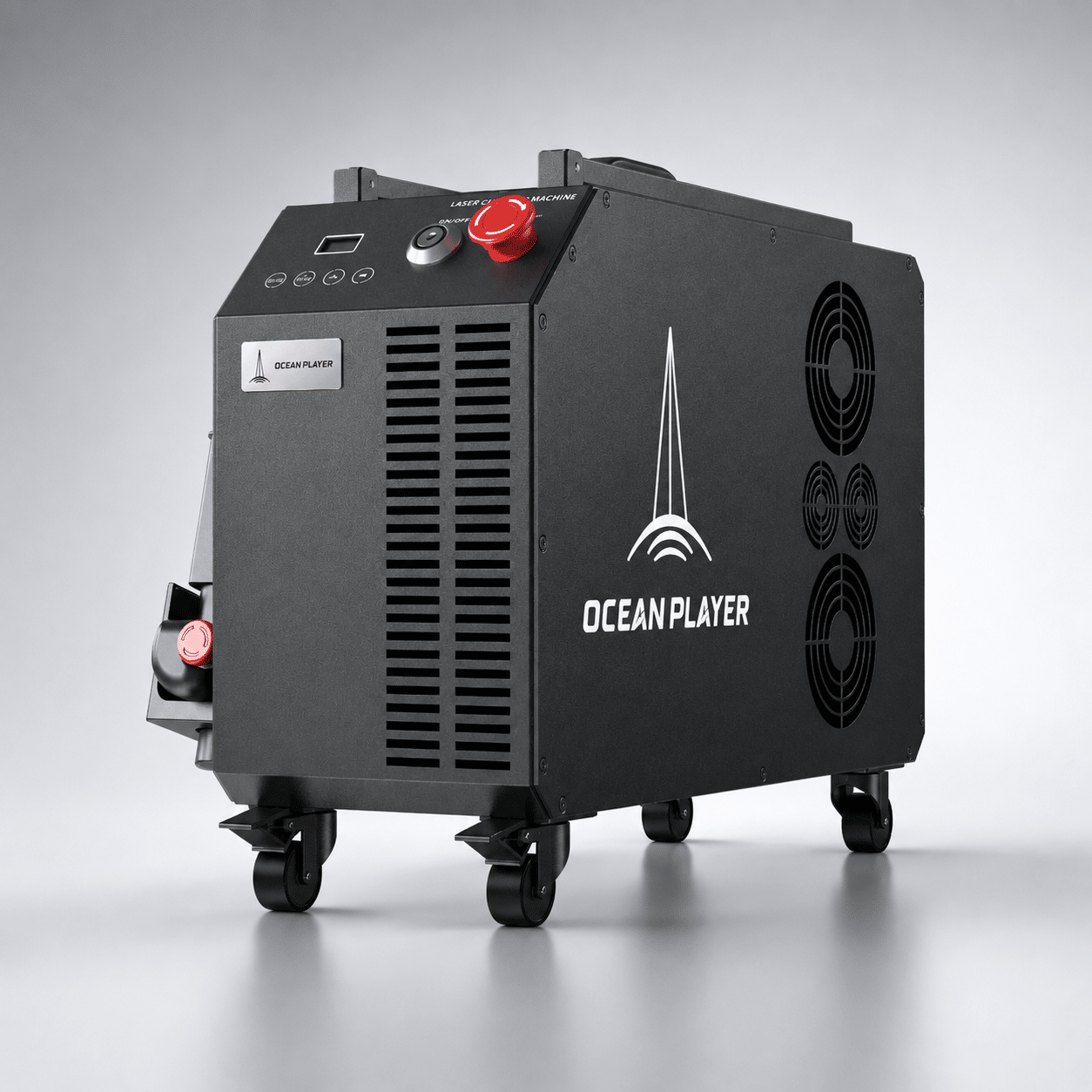
Cleaning-head pathApproved wipes or swabs, specified optical fluid, protection window, seals, and desiccant where fitted.
Cooling pathAirflow inspection for air-cooled machines; fluid quality, filters, flow, and chiller service for water-cooled machines.
Capture pathPrefilter, high-efficiency particle stage, gas-phase stage when required, liners, and safe filter change.
Accepted cleaned outputThe cost denominator
Site utilitiesMeasured electricity; compressed air, nitrogen, or argon only if the actual head or process specifies it.
Safety suppliesModel- and risk-assessment-based eyewear, barriers, PPE, signs, inspection, and training.
Captured materialDust, coating residue, contaminated wipes, spent filters, and containers handled according to the actual material and jurisdiction.
Condition-based wear
How Often Does a Laser Cleaner’s Protective Window Need Replacement?
The protection window sits in front of more expensive internal optics. During cleaning, the removed layer can form particles, vapor, and plume. If capture is weak or the head position sends contamination back toward the optics, the window can become dirty or damaged.
Cleaning supplies and replacement windows therefore belong in the maintenance plan. Adapt Laser lists optic wipes or swabs, approved alcohol, desiccant, water filters, and protection windows as common items for some of its systems. That is a useful example, but it is not a universal list for every brand or model.
- Do not buy by a fixed online interval. Ask for the model’s inspection method and replacement criterion.
- Record the denominator. Track accepted area, accepted parts, or productive hours between window changes.
- Investigate short life. Poor source capture, head angle, standoff, seals, heavy coating load, or unclean handling may be the cause.
- Protect internal optics. Internal cleaning or alignment should follow the supplier’s procedure and trained-personnel limits.
Configuration matters
Do Air-Cooled and Water-Cooled Laser Cleaners Use Different Consumables?
Cooling type changes the maintenance boundary, but it does not describe the entire machine. Confirm the quoted model instead of assuming a power level always uses one cooling method.
Fewer fluid-service categories
An air-cooled machine normally avoids a water loop, coolant-quality checks, and chiller-fluid service.
- Keep cooling-air paths clear.
- Inspect cabinet or inlet filters if fitted.
- Control dust and ambient temperature.
- Extraction filters remain a separate system.
More cooling-system controls
A water-cooled machine may require specified water or coolant quality, filter checks, flow control, and chiller service.
- Use only the fluid named in the manual.
- Do not invent additives or mix chemistries.
- Track alarms, clarity, conductivity, or other specified indicators.
- Plan cold-weather storage if required.
Failure boundary: if cooling water turns cloudy, flow falls, or the chiller alarms, stop and follow the exact laser and chiller manuals. A generic blog cannot safely set fluid chemistry or a service interval for an unknown model.
The removed layer goes somewhere
Why Do Extraction Filters and Waste Disposal Still Cost Money?
Laser cleaning changes a surface layer into particles, vapor, or deposited residue. The material may be captured near the source, collected in filters, deposited inside an enclosure, or spread into the work area if capture is poor.
OSHA’s laser guidance says ventilation should reduce potentially hazardous fumes and vapors from laser target interactions. A 2003 study indexed by the U.S. EPA found that emissions during laser cleaning depended on the removed layer and substrate; close source extraction reduced exposure in the tested stone-cleaning cases. Those values should not be transferred to a different industrial process, but the control principle is relevant.
- Match filters to the material. A particle stage does not automatically capture every gas or vapor.
- Measure filter condition. Use the extractor’s stated pressure, airflow, alarm, or inspection method.
- Record output between changes. Calendar time alone hides differences in coating thickness and production load.
- Classify captured waste. Paint, plating, oil, rust, and substrate can produce different handling duties.
Application changes the cost
How Do Consumable Costs Change by Laser Cleaning Application?
The same laser may have low filter loading on light oxide and high loading on thick paint. A supplier should not extrapolate service life from a clean workshop sample to an outdoor coating-removal job.
| Application | Likely recurring items | Main cost driver | What to measure in the trial |
|---|---|---|---|
| Light oxide on repeat parts | Optical-care supplies, protection-window inspection, extraction filters, electricity. | Accepted cycle time and repeatability. | Accepted parts, kWh, filter indicator, and window condition. |
| Heavy rust on structural steel | Filters, captured residue, windows, electricity, containment and PPE. | Rust thickness, surface profile target, and access. | Accepted m² after inspection, residue mass, filter loading, and rework. |
| Paint or coating removal | High-dust filters, gas-phase stage when justified, liners, waste containers, PPE, windows. | Coating chemistry, thickness, adhesion, and hazardous constituents. | Coating identification, capture effectiveness, accepted m², filter change basis, and waste route. |
| Oil or organic residue | Extraction stages selected for particles and vapors, maintenance cleaning, waste handling. | Residue chemistry and thermal breakdown products. | Surface acceptance, emissions-control basis, filter condition, and deposits inside the cell. |
| Mold and precision-tool cleaning | Optical care, windows, extraction filters, electricity. | Substrate protection and access to detail. | Surface damage check, accepted cycle, window condition, and repeatability. |
| Cleaning before welding | Optical care, extraction, electricity, occasional window replacement. | Required joint cleanliness and weld acceptance. | Cleaned width, accepted joints, downstream weld defects, kWh, and rework. |
| Mobile outdoor work | Containment, portable capture, windows, filters, PPE, transport protection, and weather controls. | Unknown coatings, wind, dust, temperature, and changing access. | Site-by-site material identification, accepted output, capture conditions, and consumable log. |
Swipe sideways to view the complete table.
Original cost method
How Should You Calculate Laser Cleaning Consumable Cost?
Theoretical scan speed is not the production denominator. Include setup, repositioning, parameter changes, capture running time, filter service, inspection, and rework.
Recurring cost per accepted unit = annual recurring operating cost ÷ annual accepted outputUse accepted square meters, accepted parts, or productive cleaning hours. Keep capital depreciation and unplanned repair separate.
(Part cost + approved supplies + replacement labor) ÷ accepted output between services.
(Landed filter cost + change labor + disposal) ÷ accepted output between changes.
Measured cell kWh × local electricity rate ÷ accepted output. Include chiller and extraction.
Actual fluid, filter, gas, and planned-service cost ÷ accepted output for the same period.
Count only output that passes the required cleanliness, surface, or downstream-process check.
Do not extrapolate when coating, thickness, capture design, parameters, or work environment changes materially.
No preset assumptions
Laser Cleaning Consumables Cost Calculator
Enter your measured or quoted annual values. Use 0 only when a category is confirmed not to apply. The calculator does not include depreciation, finance, unplanned repair, or downtime.
Illustrative planning cases
Example Consumable Costs for Three Laser Cleaning Applications
These are planning examples, not Oceanplayer Laser customer results. They identify the likely cost categories to test before a purchase.
Light oxide on repeat parts
An enclosed, air-cooled cell cleans consistent parts with well-positioned capture. Likely recurring items are optical care, condition-based windows, extractor filters, electricity, and captured-waste handling. Trial data must still establish filter loading.
Heavy paint removal
A water-cooled handheld unit removes thick, variable coating. Cooling service, high-dust filtration, windows, liners, PPE, and disposal may matter. Coating analysis and capture design can influence annual cost more than the laser source.
Mobile outdoor work
Dust, wind, temperature, reflections, unknown coatings, and changing access increase uncertainty. Budget for containment, inspection, portable capture, spare windows, PPE, and site-specific waste handling. Do not transfer a workshop filter-life estimate without validation.
Troubleshooting
Why Might Laser Cleaner Consumable Use Be Higher Than Expected?
Buying more spares may hide the underlying mechanism. Use the failure pattern to check capture, parameters, handling, cooling, and application variability.
Before the purchase order
How Can You Verify Annual Consumable Cost Before Purchase?
A representative trial is more useful than a generic “no consumables” promise. Keep the test conditions and failure boundaries with the final recommendation.
Define the materialIdentify substrate, rust, paint, oil, plating, coating thickness, and hazardous constituents that may be present.
Define acceptanceState cleanliness, surface condition, throughput, and the downstream welding, coating, or bonding requirement.
Freeze the configurationList the exact laser, head, cooling, extraction, optional gas, motion, and safety-control package.
Read the manualsRequest operator, maintenance, chiller, and extractor manuals before comparing annual service claims.
List every categorySeparate process media, maintenance supplies, wear parts, utilities, safety supplies, repairs, and capital cost.
Run a representative trialUse production-intent parameters, capture position, part handling, environment, and representative contamination.
Measure accepted outputRecord accepted area or parts, kWh, window condition, filter indicator, captured waste, labor, and rework.
Set extrapolation limitsDocument where coating, thickness, environment, or capture changes make the estimate invalid.
Review safety and wasteHave qualified personnel review emissions, controls, PPE, containment, classification, and disposal.
Put evidence into the orderInclude exact part numbers, initial spares, training, warranty boundaries, and service response.
RFQ questions that expose incomplete quotes
| Cost area | Question to ask | Evidence to request | Warning sign |
|---|---|---|---|
| Optical head | Which items may be cleaned or replaced by the operator? | Part numbers, inspection criteria, method, training, and warranty boundary. | “Change every X months” with no application conditions. |
| Cooling | What fluid, filter, inspection, and environmental limits apply? | Quoted model’s cooling diagram and manual. | Advice copied from another power level or chiller. |
| Extraction | Which stages match this material and expected loading? | Filter model, indicator basis, capture plan, and safe-change method. | One universal filter-life promise. |
| Gas or air | Does the exact head require compressed air, nitrogen, or argon? | Required quality, pressure/flow range, and connection details. | A utility omitted from the quote but required in the manual. |
| Waste | What residue and spent-filter stream should the trial create? | Captured sample, coating identification, and site-specific handling review. | “No waste” used as a sales claim. |
| Trial basis | How was annual cost extrapolated? | Accepted output, kWh, filter indicator, window condition, capture setup, and test duration. | Cost based only on theoretical scan speed. |
Swipe sideways to view the complete table.
Non-negotiable boundary
What Safety, Extraction and Waste Costs Still Apply?
Laser radiation, reflections, hot material, fire, electricity, airborne contaminants, motion, and compressed gases may all need review. Classification and controls must come from the supplied machine, its intended use, and the site risk assessment—not from a general article.
ISO 11553-1:2020 covers laser-processing-machine hazards and manufacturer information. ISO 11553-2:2026 addresses handheld or hand-operated laser processing machines. IEC 60825-1 provides the laser-product classification framework.
Beam and reflectionsUse the actual wavelength, accessible emission, geometry, surfaces, openings, and machine classification.
Airborne materialIdentify the removed layer and substrate. Design source capture and filtration for the real emission mixture.
Filter and waste changePlan shutdown, containment, PPE, labeling, storage, and disposal for contaminated filters and residue.
Model-specific procedureUse manufacturer instructions and qualified safety, industrial-hygiene, and environmental review where required.
Get a useful recommendation
What Information Should You Send for a Reliable Operating-Cost Estimate?
Oceanplayer Laser can compare likely recurring items only after the job boundary is clear. The most useful inquiry shows what must be removed, what must remain, and what result counts as accepted.
- Material and alloy
- Rust, paint, oil, or coating
- Layer thickness or severity
- Photos and accessible area
- Required cleanliness or finish
- Accepted m² or parts per shift
- Indoor or outdoor environment
- Current extraction and utilities
Application reviewAsk for a Model-Specific Operating-Cost Boundary
We can help identify which media are eliminated, which maintenance categories remain, and which points need a representative trial before annual cost is estimated.
Continue the decision
Related Laser Cleaning Cost Guides and Tools
Use these current Oceanplayer Laser pages to compare process fit, power, production output, and traditional-cleaning cost.
GuideLaser Cleaning GuideUnderstand the process, applications, machine types, and buying questions.
Selection toolLaser Cleaning Machine SelectorStart with material, contamination, mobility, and production needs.
Engineering toolLaser Cleaner Power SelectorBuild a power starting point around the actual task.
Buyer guideWhat Wattage Pulse Laser Cleaner Do I Need?Compare pulse-power choices without treating wattage as the only variable.
Planning toolLaser Cleaning Shift Output PlannerMove from spot speed to usable production output.
Cost toolLaser Cleaning vs Sandblasting Savings CalculatorCompare labor, media, capture, cleanup, and annual project cost.
Frequently asked questions
Frequently Asked Questions About Laser Cleaning Consumables
These answers use the same system boundary as the article. Always confirm the supplied model, manual, application, and local requirements.
Does a fiber laser cleaning machine use cleaning chemicals?
Usually no chemical cleaner is fed into the laser-cleaning step. The beam removes the unwanted layer without abrasive or liquid cleaning media. However, small amounts of approved optical-cleaning fluid may be used for maintenance, and another factory step may still use chemistry before or after laser cleaning.
How often does the protective window need replacement?
There is no universal interval. Service life depends on plume exposure, capture position, contamination type, head angle, standoff, seals, power settings, and handling. Use the manufacturer’s inspection and replacement criteria, then record accepted output between changes during a representative trial.
Do air-cooled laser cleaners have no maintenance fluids?
They normally avoid a water-cooling loop, so cooling water or coolant may not be required. The complete system can still use optical-care supplies, protection windows, desiccant, cabinet filters, extraction filters, electricity, and safety supplies. Confirm the actual configuration.
What can a water-cooled laser cleaner consume?
Depending on the model, recurring items may include specified cooling water or coolant service, water filters, optical-care supplies, protection windows, desiccant, cabinet or chiller filters, and extraction filters. Use only the fluid quality and additives stated by the exact laser and chiller manuals.
Is fume extraction optional for laser cleaning?
Do not decide from a general yes-or-no rule. The removed layer can create particles, vapor, or hazardous substances, and OSHA guidance calls for adequate ventilation for potentially hazardous fumes and vapors from laser target interactions. The capture and filtration plan should be based on the material, process, machine, and site assessment.
Does a maintenance-free laser source make the whole machine maintenance-free?
No. A sealed fiber source may require little routine service, but the complete machine also includes the cleaning head, protection window, cooling, extraction, motion, controls, and safety systems. Laserax, for example, describes its sealed sources as maintenance-free while still noting extraction maintenance and occasional protective-window or lens cleaning.
Sources and review basis
Sources and Technical Review
Sources were checked on September 1, 2026. Manufacturer sources describe their own systems and should not be treated as universal replacement schedules. Standards pages confirm scope; obtain the full applicable requirements for compliance work.
- TRUMPF — Laser cleaning. Process description, lack of added abrasives/cleaning agents, and optional integrated exhaust.
- Laserax — Laser system maintenance. Manufacturer-specific distinction between sealed source and system maintenance.
- Adapt Laser — How to Clean Laser Optics. Published February 14, 2020; model-specific maintenance examples.
- BOFA — Laser Fume Extraction brochure. 2021 brochure; staged particle and gas filtration examples.
- U.S. OSHA — Technical Manual, Laser Hazards. Ventilation and broader beam/non-beam hazard guidance.
- Kusch, Heinze & Wiedemann — Hazardous emissions during laser cleaning. Journal of Cultural Heritage, 2003; application-specific emissions evidence indexed by U.S. EPA.
- ISO 11553-1:2020 and ISO 11553-2:2026. Laser-processing-machine safety scope.
- IEC 60825-1:2014. Laser-product equipment classification and requirements.
- U.S. EPA — Lead-containing renovation waste. Updated March 11, 2026; example showing why removed coating chemistry and jurisdiction matter.